

Power Factor Is Not Jargon, It Is Money Leaving Through The Meter
Power factor is one of those terms that shows up on an electricity bill or a technical audit and gets quietly ignored, filed away as something only an electrical engineer needs to understand. In reality, it is one of the more direct ways a business ends up paying for electricity it never actually used for anything productive.
Choose your narrator
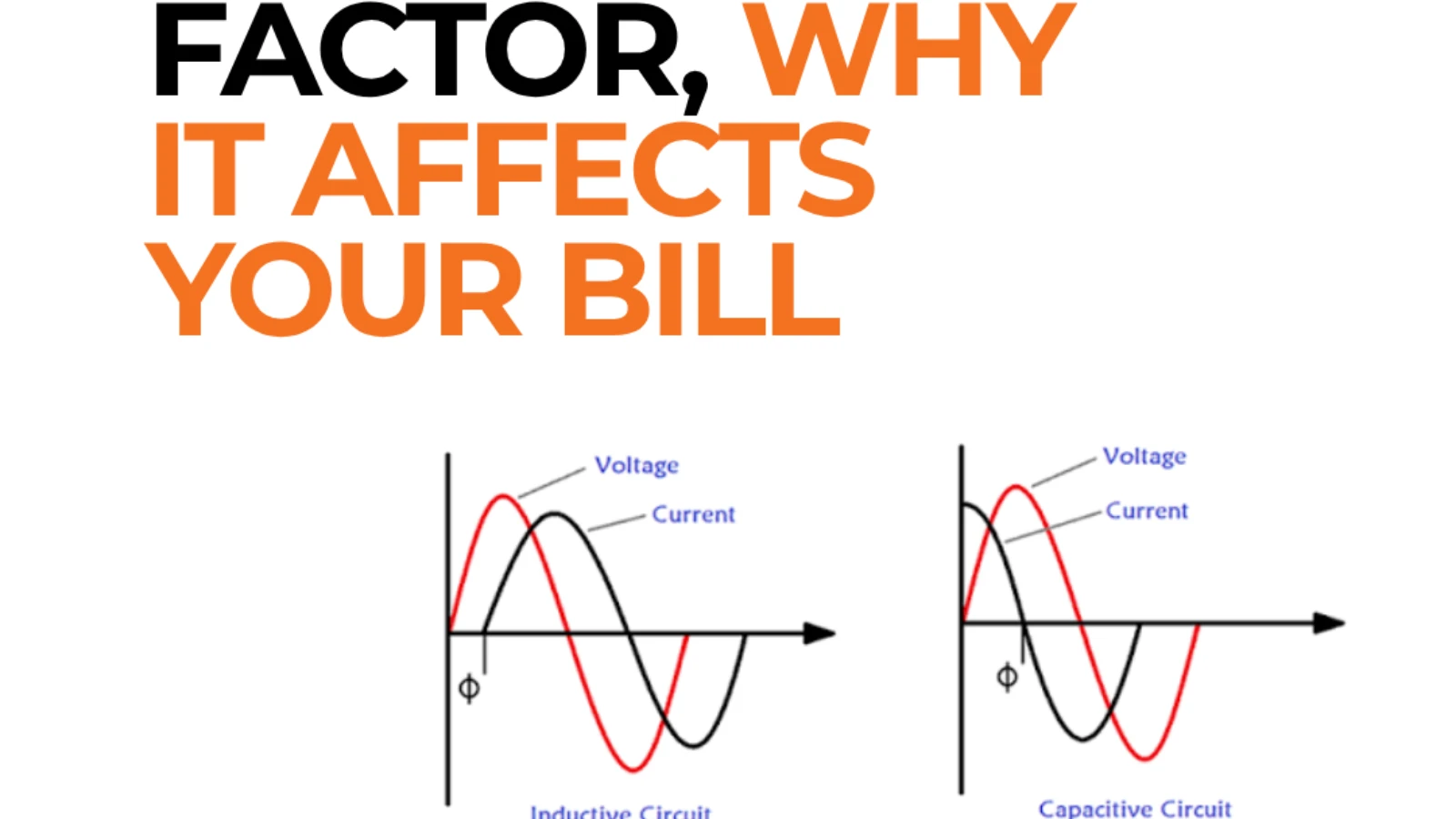
In short
Power factor measures how efficiently electricity is turned into useful work, on a scale of 0 to 1. A low power factor means you draw more current than the work needs, which can raise demand charges and strain cables and transformers. Power factor correction fixes it.
- Desk:
- tech
- Format:
- article
- Author:
- Eniola Unfiltered
WHAT POWER FACTOR ACTUALLY MEASURES
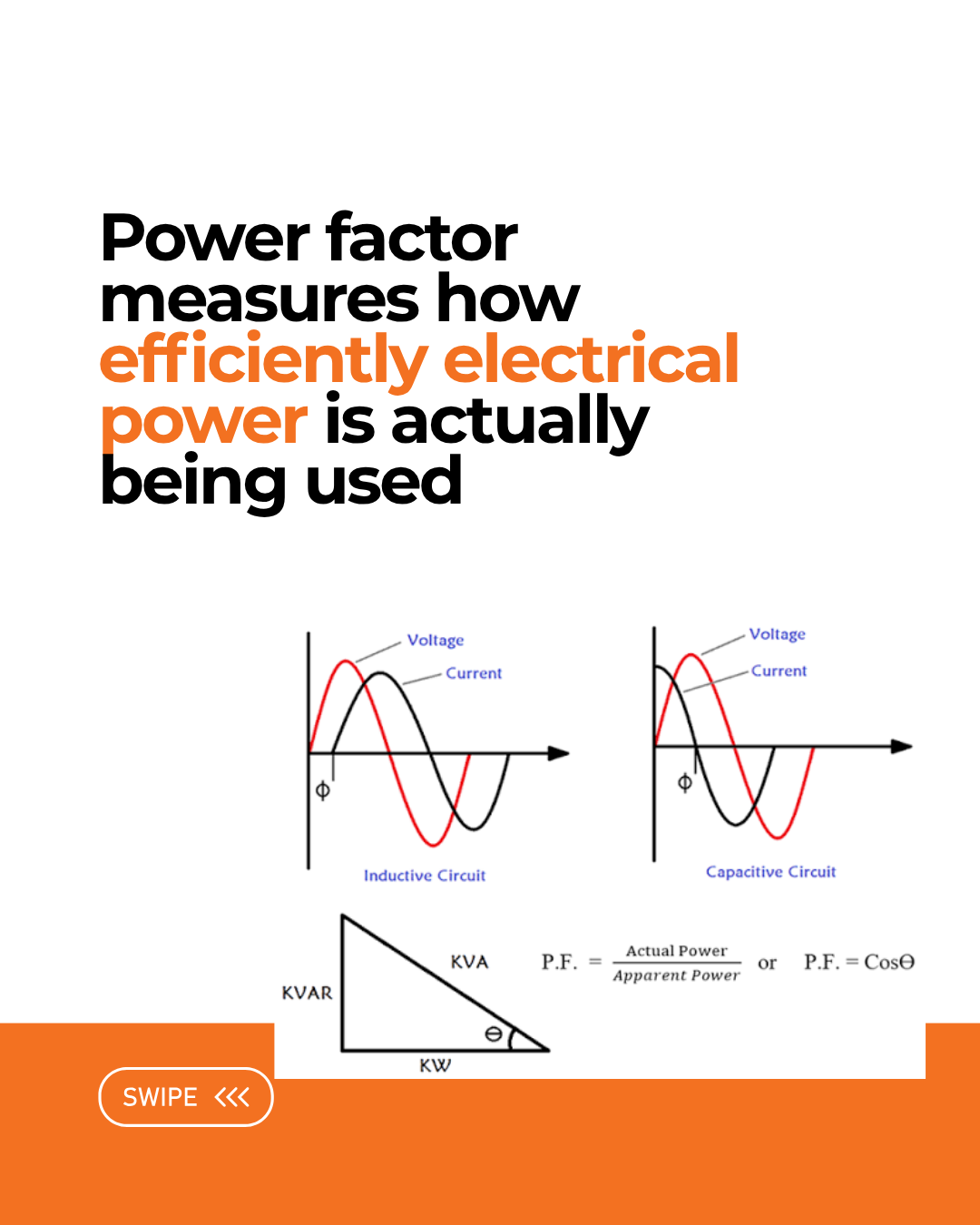
Power factor measures how efficiently electrical power is being converted into useful work. It is expressed as a number between 0 and 1, where 1 represents perfect efficiency, every unit of power drawn is doing useful work, and anything below that represents a gap between power supplied and power actually used productively.
That gap is not an accounting trick, it is a real physical phenomenon. The power system still has to generate, transmit and deliver the full amount of current a low power factor load draws, even though only part of it ends up doing anything useful. The rest, sometimes called reactive power, circulates through the system without directly performing work, but it still occupies capacity and still, depending on the billing structure, still costs money.
WHAT ACTUALLY CAUSES A LOW POWER FACTOR
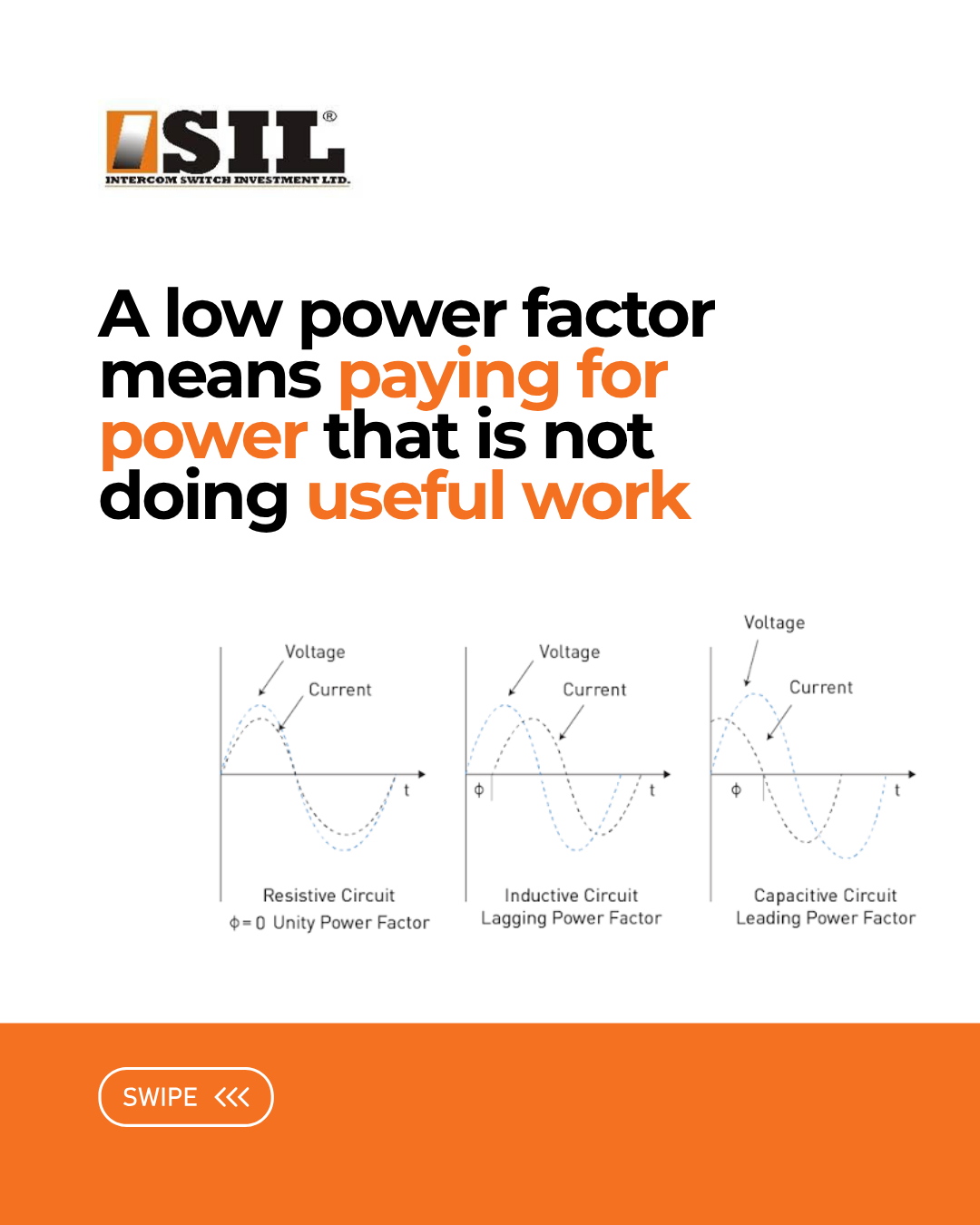
The usual culprits are inductive loads, equipment with motors, coils or windings, such as motors, transformers and certain types of lighting ballasts. These loads draw current in a way that is out of step with the voltage waveform, creating that gap between apparent power and real, usable power. A site with a large number of motors running, a factory floor full of machinery, for instance, is far more likely to have a power factor problem than a site dominated by simple resistive loads like heating elements.
WHY THIS ACTUALLY SHOWS UP ON A BILL
Many utilities and private power suppliers apply a penalty, directly or indirectly, when a customer's power factor drops below a certain threshold. Even where there is no explicit penalty line item, a poor power factor means a facility is drawing more current than it needs to for the actual work being done, which translates into higher demand charges, additional stress on cabling and transformers, and in some cases avoidable capacity upgrades that would not have been necessary with a corrected power factor.
HOW POWER FACTOR CORRECTION ACTUALLY WORKS

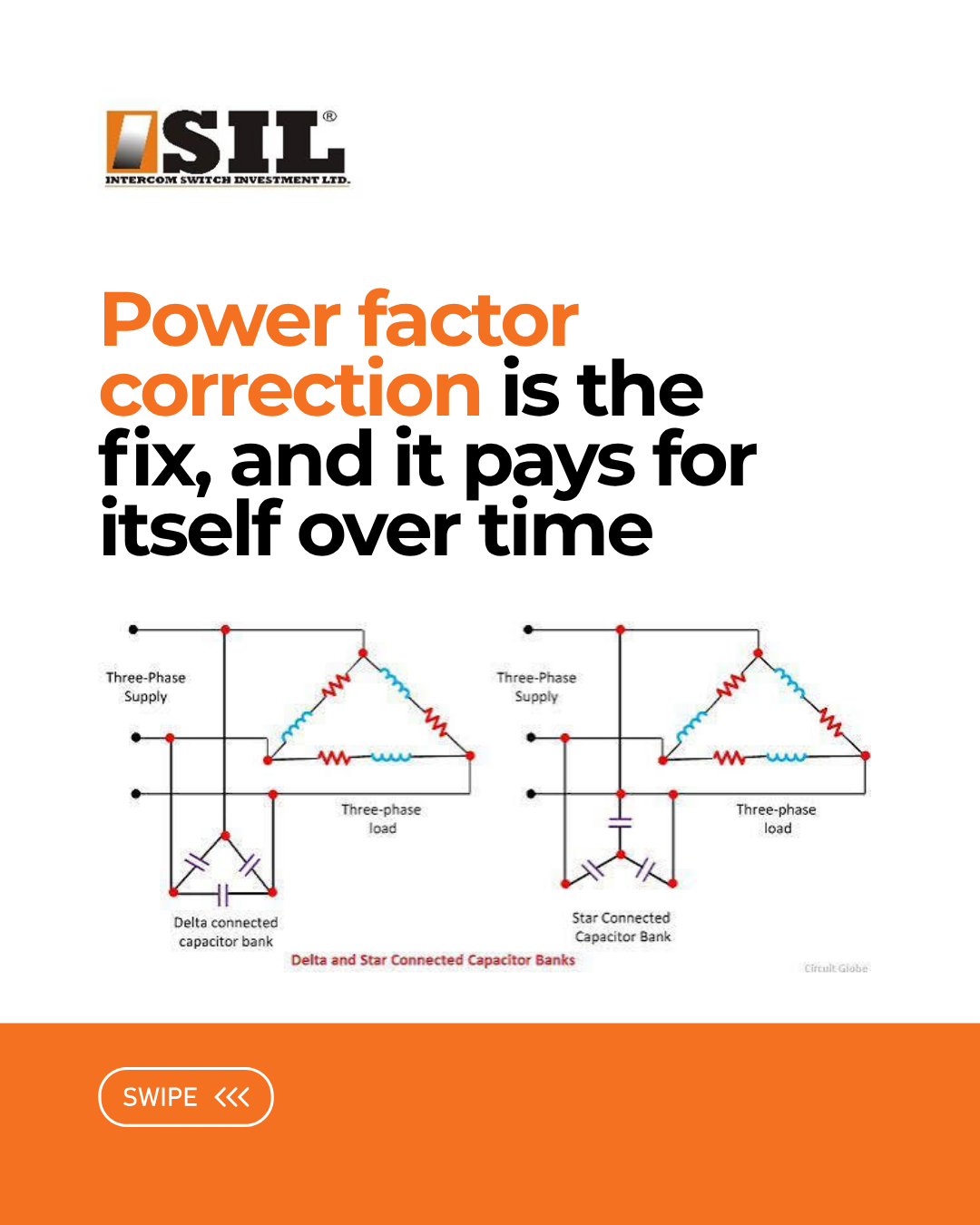
Power factor correction typically involves installing capacitor banks, or in some cases active correction equipment, sized to offset the reactive power drawn by inductive loads. This brings the power factor closer to 1, meaning less wasted capacity and, in most billing structures, a measurably lower cost per unit of useful electricity delivered.
Correction is not a one size fits all installation. It needs to be sized to the actual load profile of the site, and in sites where that load profile changes significantly throughout the day, the correction equipment often needs to be able to adjust automatically rather than applying a single fixed value.
THE PRACTICAL TAKEAWAY
A low power factor is not an abstract inefficiency sitting somewhere in the electrical system, it is a measurable, correctable cost showing up on a bill every month. Assessing power factor and correcting it where needed is one of the more straightforward ways a facility can reduce its electricity cost without changing a single thing about how it actually operates.
- ISIL
- Consultancy
- Intercomswitch
- Power Factor
- Engineering
Tip: highlight any line in the story to turn that line into a share card.
Frequently asked
- What is “Power Factor Is Not Jargon, It Is Money Leaving Through The Meter” about?
- Power factor is one of those terms that shows up on an electricity bill or a technical audit and gets quietly ignored, filed away as something only an electrical engineer needs to understand. In reality, it is one of… Power factor is one of those terms that shows up on an electricity bill or a…
- Who covers tech on PINCHED?
- Eniola Unfiltered reports this piece for the PINCHED tech desk.
- Where can I read “Power Factor Is Not Jargon, It Is Money Leaving Through The Meter”?
- Read it in full at https://staypinched.site/read/power-factor-is-not-jargon-it-is-money-leaving-through-the-meter.