
Why Harmonics Deserve a Place in Every Power Quality Conversation
Ask most people on site what harmonics are and you will get a vague answer at best. It is one of those terms that gets used constantly in engineering conversations without much explanation attached to it, and that gap in understanding is exactly why it is worth unpacking properly. This piece walks through what a harmonic actually is, where it comes from, why it matters, and what a facility or site manager can reasonably do about it.
Choose your narrator
In short
Harmonics are distortions layered on the normal power waveform, mostly caused by electronic loads such as variable speed drives and UPS systems. They overheat motors and cables and can trip protection, and a power quality assessment is how you find them.
- Desk:
- tech
- Format:
- article
- Author:
- Eniola Unfiltered
WHAT A HARMONIC ACTUALLY IS
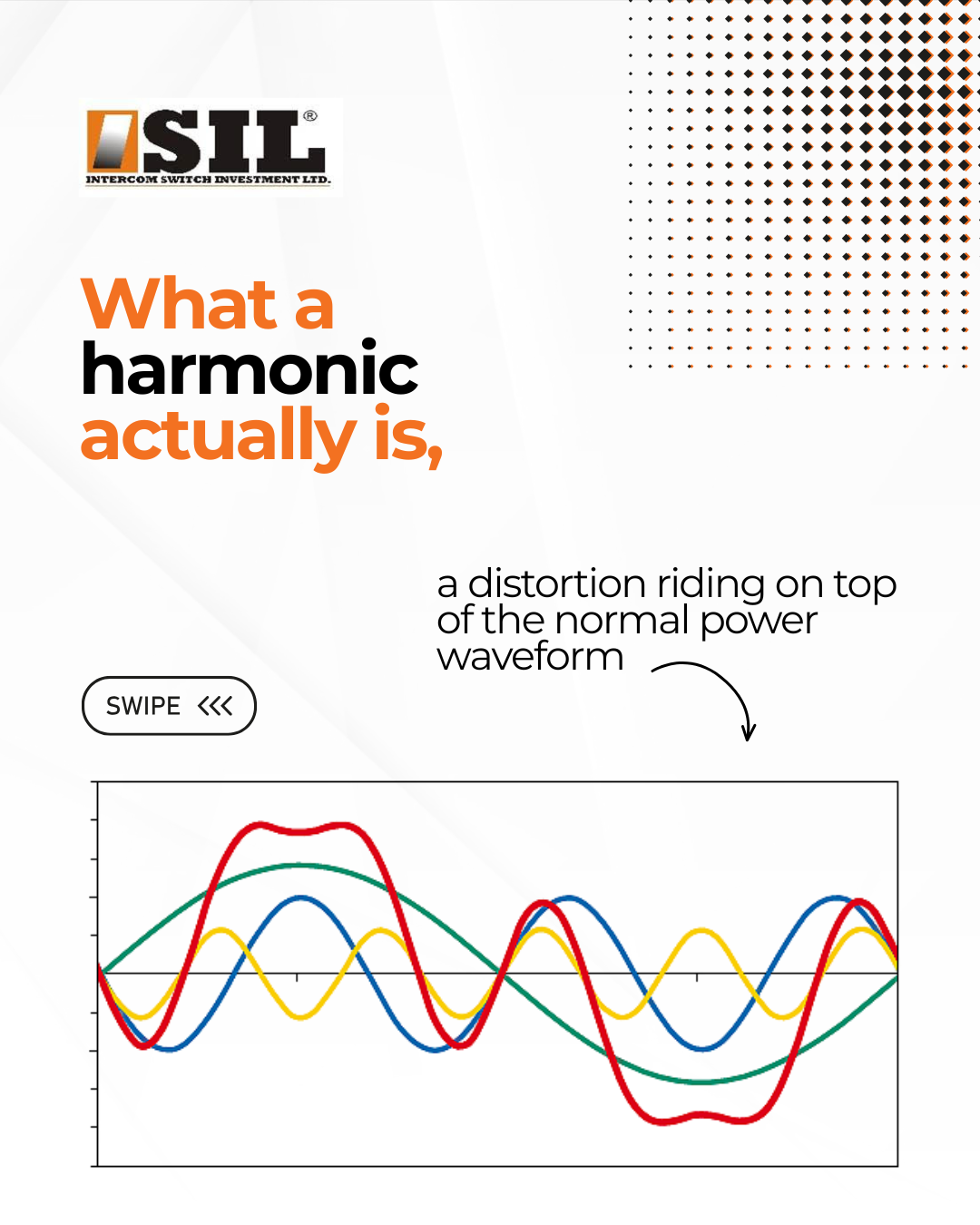
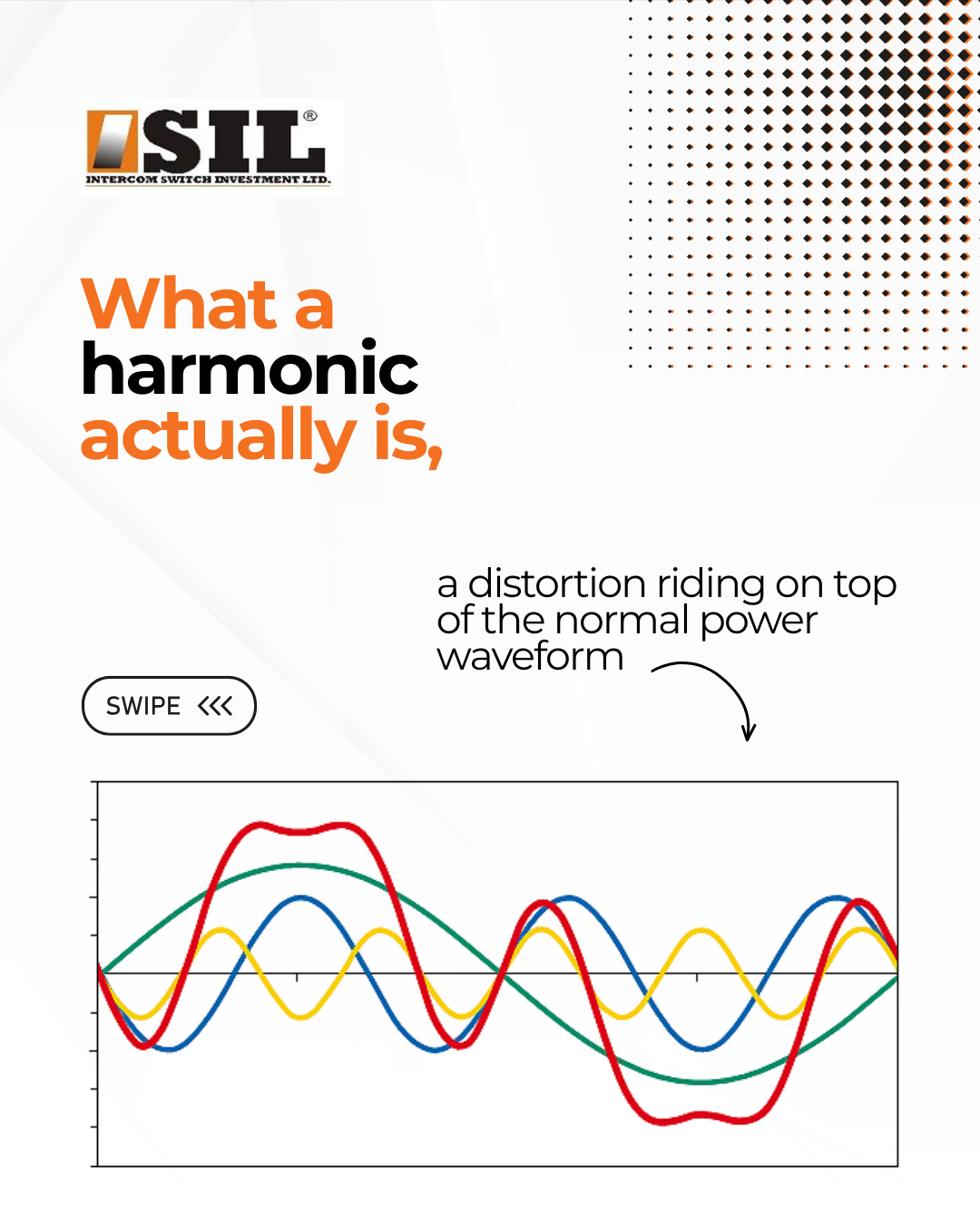
At its simplest, a harmonic is a distortion riding on top of the normal power waveform. Electrical systems are designed around a clean, predictable sine wave, a smooth, repeating curve that equipment is built to expect. Harmonics disturb that pattern, layering additional frequencies, multiples of the fundamental frequency, on top of the original one. The result is a waveform that no longer behaves the way the system was designed to expect, even though the supply voltage might look perfectly normal on a basic meter.
It helps to think of it the way a musician would think of an overtone. A single clean note is the fundamental. Harmonics are the additional, higher pitched tones layered on top that change the character of the sound without changing the note being played. In an electrical system, those additional layers translate into real physical stress on equipment rather than a change in tone.
WHERE HARMONICS ACTUALLY COME FROM
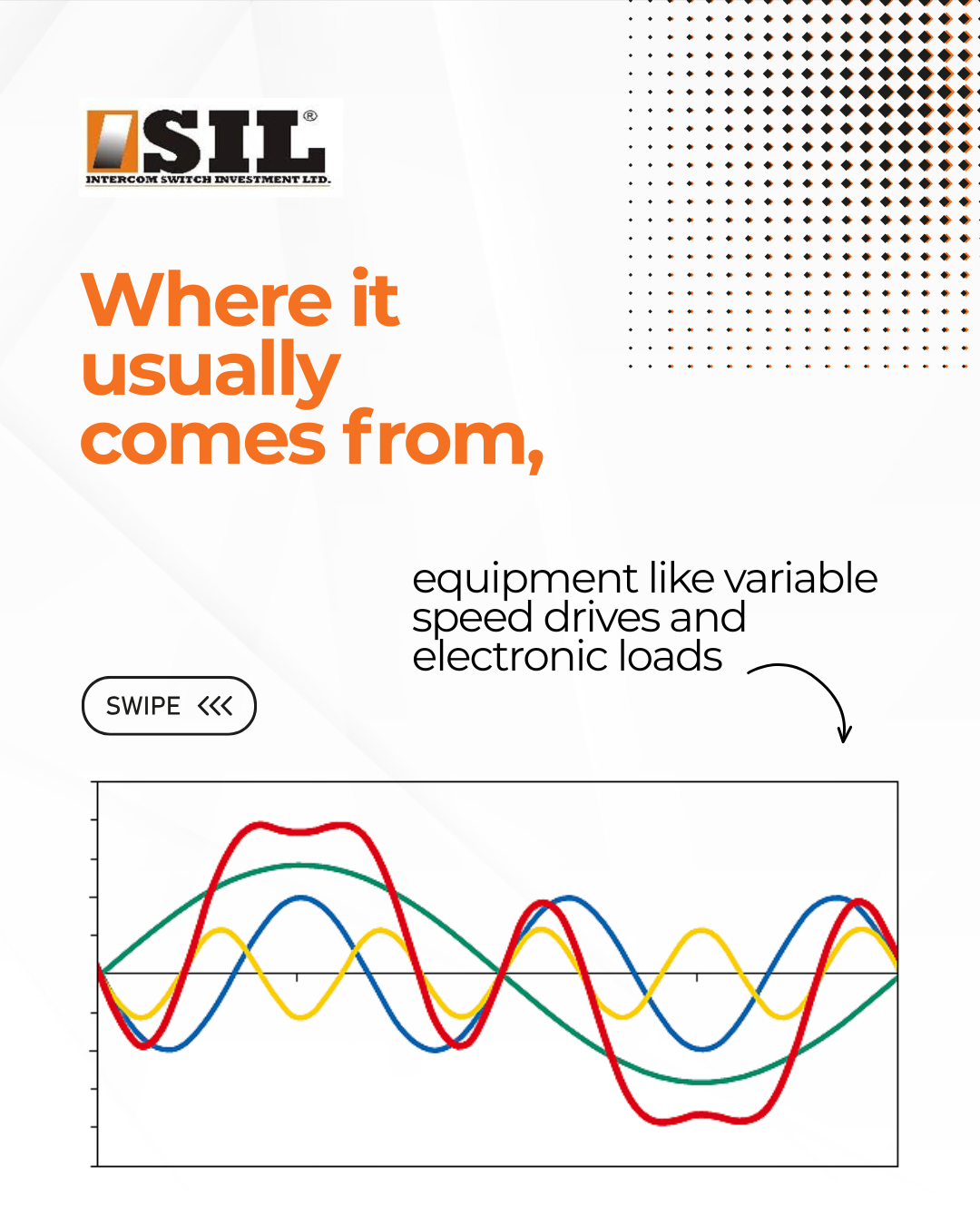
Harmonics are, in most cases, introduced by equipment that does not draw power in a smooth, continuous way. Variable speed drives are one of the most common sources, since they work by rapidly switching the power supplied to a motor rather than supplying it in one continuous flow. Other electronic loads behave similarly, including computers, UPS systems, certain types of modern lighting, and switch mode power supplies found in much of today's electronic equipment.
None of this makes such equipment faulty or poorly designed. It is simply how modern electronics are built. The practical consequence is that as more of this kind of equipment finds its way onto a site or into a building, which is exactly the direction most facilities are moving in, the harmonic content on that system tends to rise along with it. A building that had very little harmonic distortion ten years ago may have a noticeably different profile today simply because of what has been plugged in since.
WHY IT MATTERS BEYOND THE THEORY
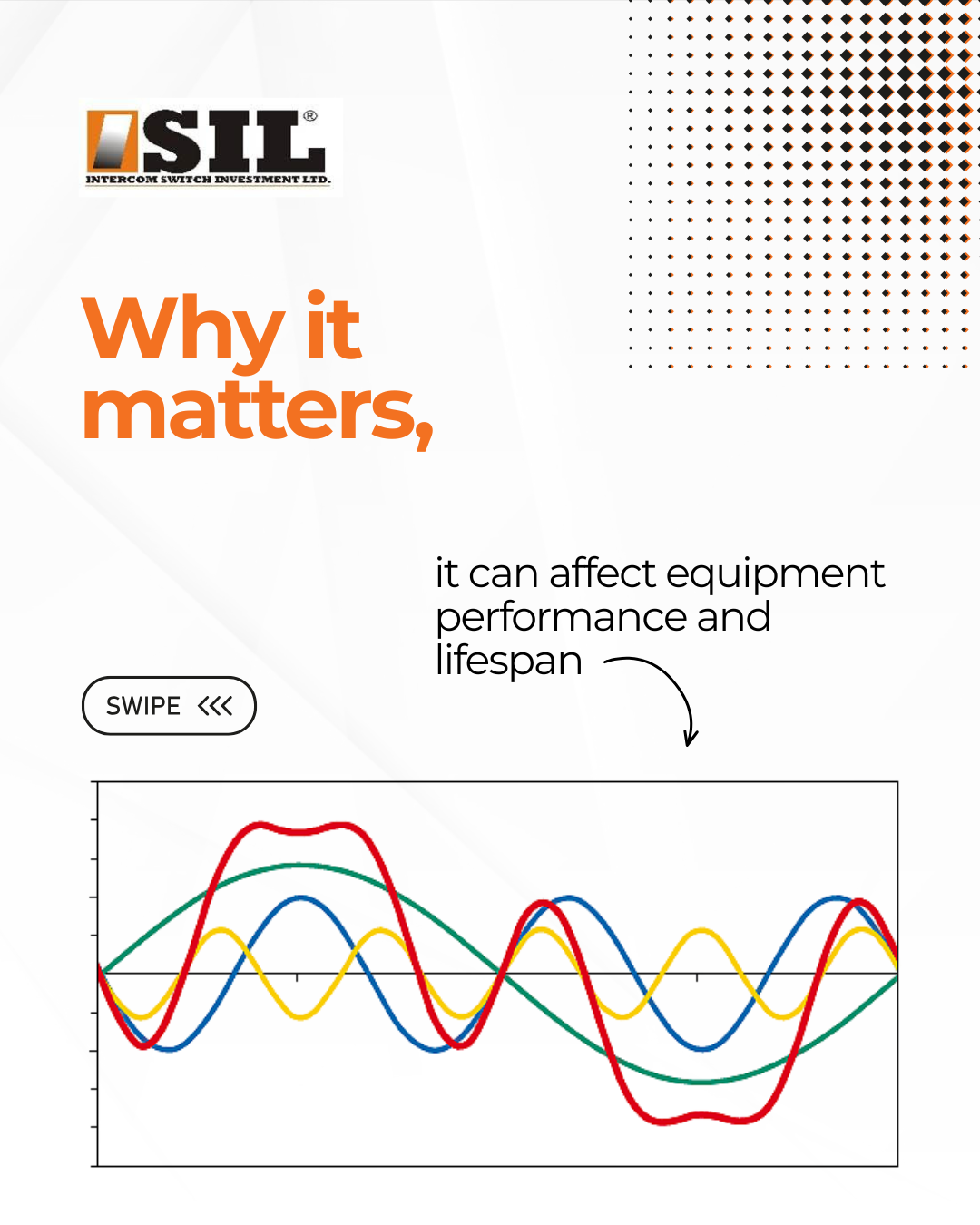
The reason this matters goes beyond a technical curiosity. Harmonics can affect equipment performance and shorten its lifespan in ways that are easy to misdiagnose as something else entirely. Motors run hotter than they should, often attributed to ambient temperature or poor ventilation rather than the actual cause. Cables carry more current than the connected load alone would suggest, because harmonic currents add to the overall load in ways a simple calculation misses. Protective devices can behave unpredictably, tripping when they should not, or failing to trip when they should. Neutral conductors, in particular, can end up carrying more current than expected in systems with a high proportion of single phase, non linear loads.
None of these effects happen overnight. They build gradually, which is part of what makes harmonics easy to overlook until a piece of equipment starts failing earlier than expected, or an energy bill starts creeping up without an obvious explanation.
WHAT A FACILITY MANAGER CAN ACTUALLY DO
For anyone managing a facility with a growing mix of electronic and variable speed equipment, it is worth asking a simple question, has anyone actually assessed the harmonic content on this system. This is not a complicated thing to check. A power quality assessment, carried out with the right instrumentation, can measure harmonic distortion directly and identify which loads are contributing most to it. The answer can explain problems that otherwise look completely unrelated to each other.
Where harmonic distortion is found to be a real issue, there are established engineering responses, from harmonic filters to changes in how certain loads are connected and grouped. The right response depends entirely on what the assessment actually finds, which is why the assessment itself is the starting point rather than a formality.
THE BROADER LESSON
Good engineering is not only about building a system correctly the first time. It is about understanding what happens to that system as the equipment connected to it changes over the years. Harmonics are a useful reminder that power quality is not a one time consideration settled at the point of installation, it is something worth revisiting as a site evolves and as the equipment plugged into it changes.
Have a system you suspect may be carrying more harmonic distortion than it should. Reach out to ISIL Consultancy to discuss it.
- ISIL
- power
- solar
- technology
- harmonics
Tip: highlight any line in the story to turn that line into a share card.
Frequently asked
- What is “Why Harmonics Deserve a Place in Every Power Quality Conversation” about?
- Ask most people on site what harmonics are and you will get a vague answer at best. It is one of those terms that gets used constantly in engineering conversations without much explanation attached to it, and that gap… Ask most people on site what harmonics are and you will get a vague answer at…
- Who covers tech on PINCHED?
- Eniola Unfiltered reports this piece for the PINCHED tech desk.
- Where can I read “Why Harmonics Deserve a Place in Every Power Quality Conversation”?
- Read it in full at https://staypinched.site/read/harmonics-explained-for-facility-managers.