
The Dirty Math of Global Streaming: Why Creators Can Look Famous and Still Go Broke
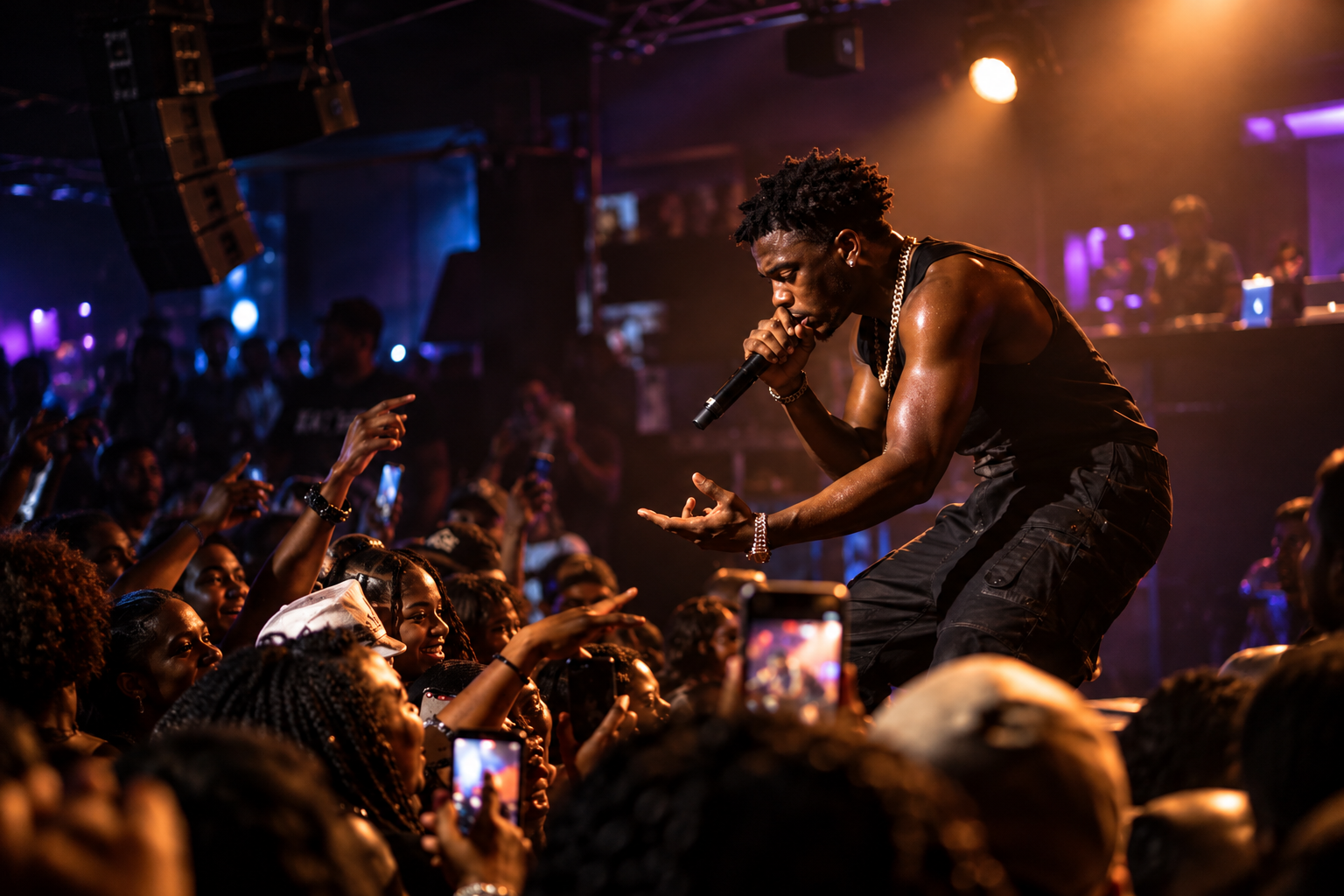
Millions of streams, sold-out appearances and viral moments can create the impression of financial success. But for many African creators, visibility and income remain two very different things.
Choose your narrator
In short
Streams are not the same as income. Spotify pays by streamshare, not a fixed rate per stream, and contractual splits, distribution terms and local production costs decide how much an African creator keeps.
- Desk:
- culture
- Format:
- article
- Author:
- Praise_writes
You can have millions of streams and still struggle to pay for your next project.
An artist in Lagos releases an album. A filmmaker in Nairobi drops a new series. A musician in Accra watches a song travel from local radio to international playlists. Their numbers climb. Their social media following grows. Their faces become familiar, and people begin to treat their success as a settled fact.
Then the bills arrive.
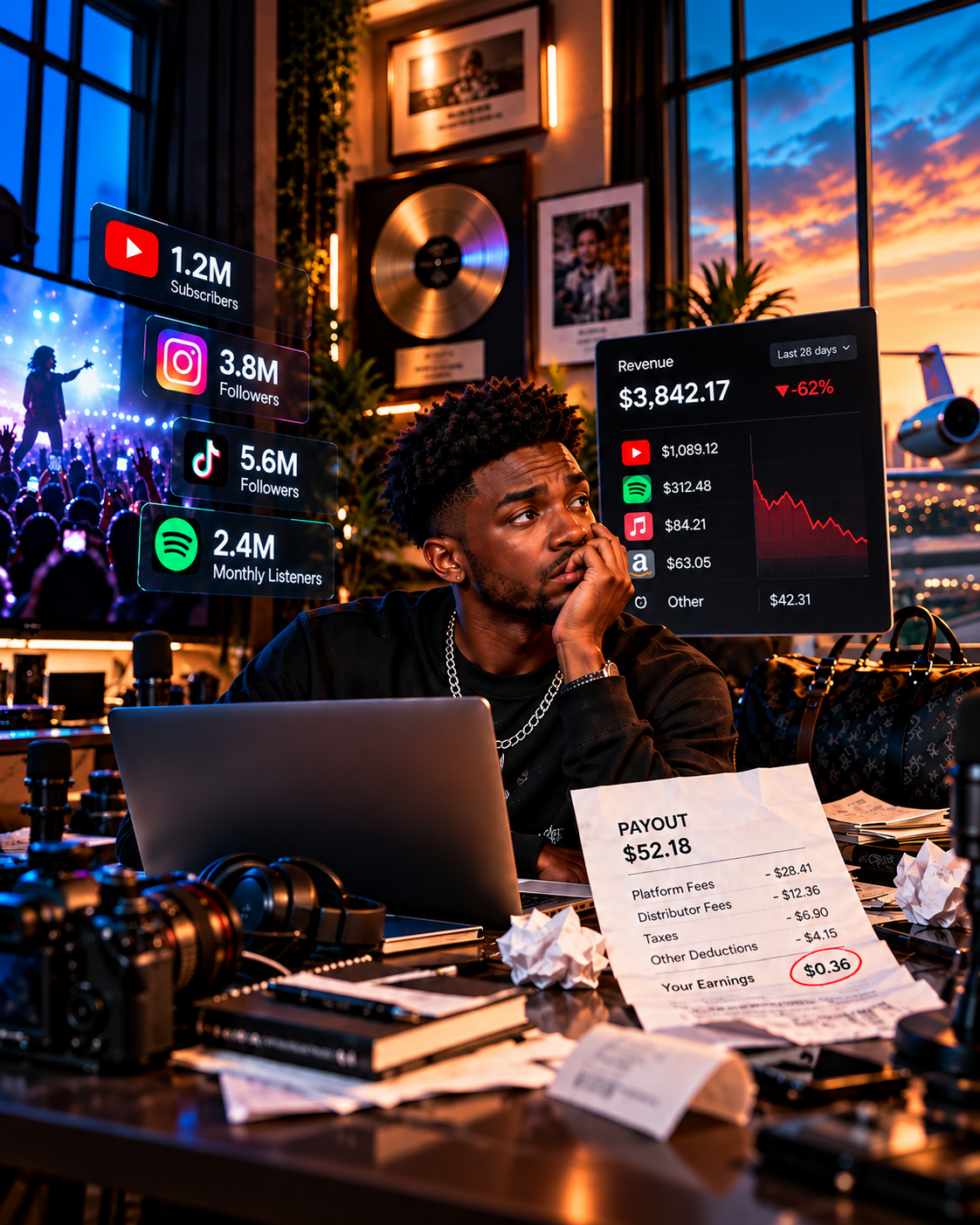
There is studio time to pay for, equipment to maintain, collaborators waiting for their fees, a marketing campaign that needs another round of funding and, eventually, another project to produce. The streaming statement arrives, but the money available after contractual splits, distribution fees and other deductions may be nowhere near what the public attention suggests.
The creator is visible. The business behind the visibility is struggling.
This is one of the uncomfortable contradictions of the digital creative economy: an audience can be enormous without generating enough income to sustain the person who built it.
For African creators, the problem is not simply that streaming pays poorly. It is that streaming is often expected to do too many jobs at once. It must introduce an artist to the world, build a fan base, generate income, finance the next release and, somehow, provide the financial stability that the creator needs to keep working.
That is a lot to ask of a single revenue stream.
The more useful question, then, is not whether streaming is good or bad for African creativity. It is whether the way creators earn from streaming is sufficient to build sustainable creative businesses.
The Numbers Are Real. The Money Is More Complicated.
Streaming has transformed music distribution. A creator can reach listeners across borders without pressing thousands of physical records or securing shelf space in a foreign market. That access is significant, and the industry's financial growth is real.
According to the International Federation of the Phonographic Industry (IFPI), global recorded-music revenue reached US$31.7 billion in 2025, with subscription streaming remaining a major driver of growth. Sub-Saharan Africa's recorded-music revenue also grew by 15.2% that year, reaching US$120 million.
Those figures tell an encouraging story about the market. They do not, by themselves, tell us how much an individual creator earns, how much they retain or whether their income covers the cost of making their work.
That distinction matters.
A streaming platform does not ordinarily pay an artist a fixed amount every time a song plays. On Spotify, for example, royalties are calculated using a streamshare model: the rights holders receive a share of the relevant royalty pool based on their share of total streams. The money is then distributed according to agreements between rights holders, labels, distributors, publishers and artists.2
In other words, the number on the streaming dashboard is not the same as the amount in the creator's bank account.
Between the two are questions of ownership, contractual splits, royalty categories, distribution arrangements and, in some cases, unpaid or uncollected rights.
An independent artist with a favourable distribution agreement may retain substantially more of their royalties than an artist signed to a deal that requires them to share income or recoup advances and expenses. Two artists with similar streaming figures can therefore end up with very different financial outcomes.
This is why blanket claims that every platform takes a fixed percentage, or that every artist loses the same proportion of their earnings, miss the point. There is no universal deduction rate that applies to every creator.
The underlying problem is more revealing: the value of a creator's attention does not automatically translate into money the creator can keep.
The Geography of a Stream
Consider the economics of a fan listening from Lagos and a fan listening from London.
Their enthusiasm for the same song might be identical. They might share it with the same number of friends, attend the same virtual listening party and follow the artist with equal loyalty.
But the commercial circumstances surrounding their streams may differ.
Streaming services operate across markets with different subscription prices, advertising revenues, purchasing power and patterns of consumption. Spotify's published Premium prices, for instance, differ between Nigeria and Kenya. Those differences are one reason a single universal per-stream payment figure cannot accurately describe what every stream is worth.3
The system does not simply assign every play an identical cash value. Revenue depends on the market, the type of account, the size of the relevant royalty pool and the distribution of streams, among other factors.
This creates a commercial challenge for creators whose strongest audiences are in markets where consumers have less money to spend on subscriptions.
An artist may be genuinely popular at home, with a devoted local audience and strong cultural relevance, yet find that the resulting streaming income is insufficient to fund a professional production cycle.
That is not evidence that the audience is unimportant. It is evidence that popularity and purchasing power are not the same thing.
Nor does it mean that an African stream is inherently worthless. Local audiences can drive concert attendance, merchandise sales, sponsorships, licensing opportunities and international discovery. The mistake is to judge the financial value of those audiences solely by their streaming royalties.
The deeper issue is whether the creator has enough ways to turn that attention into sustainable income.
When Global Reach Meets Local Costs
The financial pressures become more visible when the creator has to produce work in an economy where costs can be difficult to predict.
A music video may require transport, lighting, locations, equipment hire, catering and a crew. A film production may need accommodation, post-production, sound design, colour grading and distribution. An independent publisher may have to pay writers, editors, designers and developers before a single reader arrives.
These expenses do not disappear because the finished work is uploaded to a global platform.
In Nigeria, for example, a creator can face production expenses denominated in naira while earning part of their revenue through international platforms and intermediaries. Depending on the creator's contracts and payment arrangements, the conversion process, withdrawal fees and timing of payments can affect the amount ultimately available for local expenses.
The details vary by platform, distributor, bank and payment provider. It would be misleading to suggest that every African creator faces the same restrictions or loses a standard percentage to foreign exchange charges.
But the business principle is straightforward: revenue that arrives late, in an uncertain amount or through a costly payment route is harder to use for planning the next project.
A creator who cannot reliably forecast cash flow may struggle to book a studio, pay collaborators on time, invest in marketing or take on a larger production.
The result is a familiar cycle. The creator produces work, spends money to build an audience, waits for revenue, reinvests whatever arrives and starts the next project under financial pressure.
From the outside, this can look like momentum. Behind the scenes, it can be a business surviving one release at a time.
The Middlemen Are Not the Whole Problem
It is tempting to conclude that the solution is simply to remove every intermediary.
That would be too easy.
Distributors, labels, publishers, payment providers and streaming services can perform valuable work. They can help creators reach audiences, manage rights, market releases, collect royalties and process transactions across jurisdictions. Some provide services that independent creators would struggle to build themselves.
The issue is not that every intermediary is unnecessary. It is that creators need to understand what each intermediary contributes, what it costs and whether the arrangement makes commercial sense for their particular stage of growth.
A distribution deal that offers international reach and meaningful marketing support may be worthwhile. An expensive arrangement that delivers little beyond uploading a project may be harder to justify.
The same principle applies to streaming platforms. They can be excellent discovery and distribution channels without being sufficient as a creator's entire business model.
The mistake is not using global platforms. The mistake is depending on them to solve every financial problem.
Creators need more control over how they package their work, how they serve their most committed fans and how they earn between major releases.
That means thinking beyond the stream.
One Thousand Casual Listeners or One Hundred Committed Backers?
Imagine a creator with a community of people who genuinely value their work.
Some follow every release. Some attend live sessions. Others want early access, exclusive material, behind-the-scenes footage, a chance to support a new film or a closer relationship with the person making the work.
Those relationships can create a different commercial opportunity.
Consider a simple illustration. If 500 people each pay ₦2,000 for a project, the gross revenue is ₦1 million. If 100 supporters each contribute ₦5,000 per month, the gross revenue is ₦500,000 per month.
These are illustrative calculations, not predictions of what a typical creator can earn. They also represent gross receipts, not guaranteed take-home income: payment processing, platform fees, taxes, production expenses and other obligations may still apply.
But the point is important.
A creator does not necessarily need millions of people to make every project financially viable. Depending on the work, the price, the costs and the strength of the community, a smaller group of committed supporters may provide meaningful revenue.
The economics change when the creator can offer something that fans are willing to pay for directly, rather than relying exclusively on a share of a large platform's pooled advertising or subscription revenue.
This model is not a replacement for discovery. It is another layer of the business.
Free content can attract new audiences. Streaming can introduce music to new listeners. Social media can build awareness. Direct support can help turn the most engaged members of that audience into a community that contributes to the work's continued existence.
Each channel has a job. The goal is to stop asking one channel to do everything.
What African Creators Need to Build Next
A sustainable creative industry requires more than talented people and global distribution. It requires the commercial infrastructure that allows talent to become a viable business.
That infrastructure should make it easier for creators to reach their audiences, offer work in formats people value, receive payments, build recurring relationships and retain a meaningful share of the income their work generates.
It should also recognise that African creativity is not a single market. A filmmaker in Accra, a musician in Lagos, a photographer in Nairobi and a digital storyteller in Cape Town may need different ways to package and monetise their work.
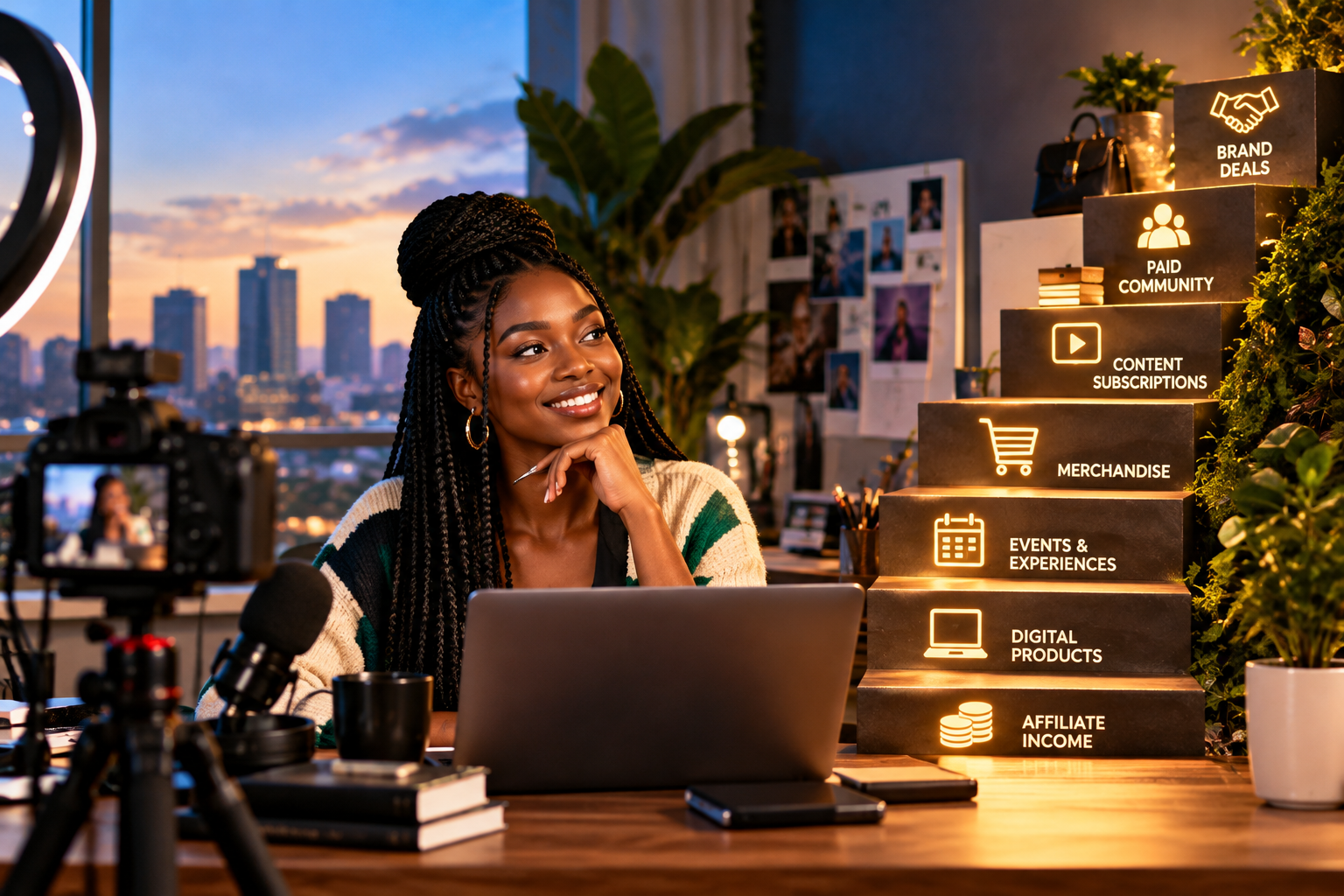
Some will benefit from subscriptions. Others may do better with individual purchases, exclusive releases, live experiences, licensing, sponsorships or a combination of revenue streams.
The objective should not be to force every creator into one monetisation model. It should be to give creators more viable options and more control over how they build their businesses.
For creators, that means treating audience development and revenue development as connected but distinct activities. It means knowing who owns the work, understanding the terms of distribution agreements, tracking costs and identifying what the most engaged fans are willing to support.
For platforms, it means building payment and monetisation systems that make sense for the markets they serve, while being transparent about fees, eligibility and payout conditions. For the wider industry, it means measuring success not only by streams, followers and viral moments, but also by whether creators can afford to keep creating.
Why We Built PINCHED
At PINCHED, this is the question behind the work: what happens when African creators have more ways to connect with the people who value what they make?
PINCHED is being built around African storytelling, creative work, community and the relationship between creators and their audiences. The idea is to give people more ways to discover work, engage with creators and support the creative ecosystem beyond the fleeting attention of a viral moment.
That ambition matters because a creator's career is not a single release, a trending hashtag or a screenshot of a streaming dashboard. It is the body of work they build over time, the people who return to it and the commercial relationships that make the next project possible.
Direct support is not a magic solution. It still requires an audience willing to pay, a compelling offer, reliable transactions and a business model that works after expenses. Nor does it mean abandoning the global platforms that help African work travel.
It means broadening the options available to creators.
The next phase of African creative growth should not be measured only by how far our stories travel, but also by whether the people who make them can build sustainable businesses from the journey.
Because visibility is valuable. Reach is valuable. Cultural influence is valuable.
But none of those things should be confused with financial security.
The real measure of a thriving creative industry is not just how many people consume the work. It is whether the people who make it can afford to keep going.
Quick FAQs
1. Why can African creators have millions of streams and still struggle financially?
Streaming income depends on contractual splits, distribution arrangements, royalty categories and the market a stream comes from, while production costs stay local. Visibility and income are different things.
2. Does Spotify pay a fixed amount per stream?
No. According to Spotify’s own explanation, royalties are based on streamshare, and what an artist receives depends on agreements with rights holders, labels and distributors.
3. What can creators do besides relying on streaming income?
They can add direct fan support, individual purchases, exclusive releases, live experiences, licensing and sponsorships, using the mix that suits their work, as explained above.
- Streaming
- Creator economy
- African creators
- Spotify
- Music business
- Nigeria
Tip: highlight any line in the story to turn that line into a share card.
Frequently asked
- What is “The Dirty Math of Global Streaming: Why Creators Can Look Famous and Still Go Broke” about?
- Millions of streams, sold-out appearances and viral moments can create the impression of financial success. But for many African creators, visibility and income remain two very different things.
- Who covers culture on PINCHED?
- Praise_writes reports this piece for the PINCHED culture desk.
- Where can I read “The Dirty Math of Global Streaming: Why Creators Can Look Famous and Still Go Broke”?
- Read it in full at https://staypinched.site/read/the-dirty-math-of-global-streaming-why-creators-can-look-famous-and-still-go.