
I Was Handed the Seating Chart for 400 Guests at a Lagos Charity Gala
Four hundred guests, two retired generals, one governor's wife, and a seating chart that kept changing until the doors opened.
Choose your narrator
In short
Build three lists before you place a single name: who must sit together, who must never sit together, and who must be seen. Then keep one spare table set but left off the printed chart, so unexpected guests never cause a scene.
- Desk:
- lifestyle
- Format:
- article
- Author:
- Eniola Unfiltered
My manager slid the laptop across her desk on a Tuesday afternoon, three weeks before the gala, and said, “It is just a spreadsheet.”
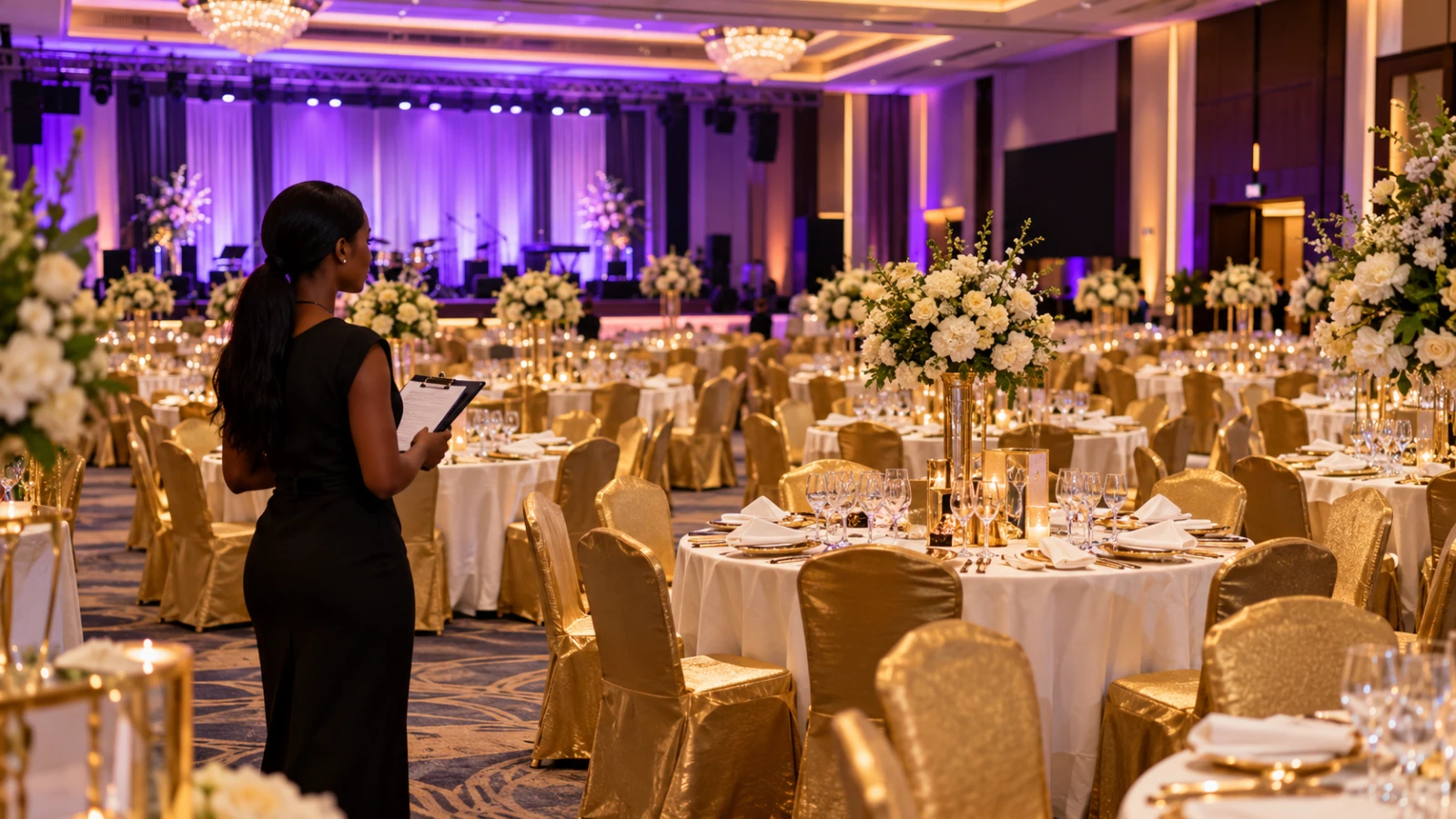
I was twenty six, eight months into my first job at a small events company in Yaba, and I believed her. The gala was an annual charity dinner for a children’s hospital fund, held in a hotel ballroom in Victoria Island. Forty tables of ten. Four hundred guests. My job, she said, was to make sure everyone had a seat.
I opened the file. There were four hundred and twelve names, a column for company, a column for sponsor tier, and a column headed “Notes”. Most notes were blank. A few were not.
Row 87 said: “Do NOT seat near row 203.” Row 203 said nothing at all.
I walked back to her desk. “Who is row 203?”
She looked at me for a moment the way you look at someone about to step into a gutter. “Ask Mr Balogun,” she said.
The man who had seen thirty years of galas
Mr Balogun was the hotel’s banquet captain. He wore a grey waistcoat and moved through a ballroom like a man who had personally laid every tile. I found him checking chair covers, and I asked my question in a whisper, as if the chairs might report me.
He laughed softly. “Row 87 is a retired general. Row 203 is another retired general. They have not spoken since a land matter in 2009. If they sit in the same half of the room, someone will leave early, and the one who stays will be the one who tells the newspapers.”
“Nobody wrote that down.”
“Nobody writes it down,” he said. “That is what you are for.”
Over the next week he taught me what he called the three lists. The first list is who must sit together: the governor’s wife and her sister, the two founders of the hospital fund, the sponsor’s whole delegation. The second list is who must never sit together: the generals, two bank managing directors who were rivals, a pastor and a comedian who had once argued on live radio. The third list is who must be seen. Every sponsor wanted a table where the cameras would find them. Every guest of honour wanted a table that felt like the centre of the room, even though a room has only one centre.
“A seating chart is not a map,” Mr Balogun said. “It is a peace treaty.”
Sixty two changes
The changes began on the Thursday and did not stop. A sponsor asked to move from table twelve to table four. A guest cancelled and then un cancelled. A husband was added to a wife’s invitation, then a second husband, which turned out to be a typing error. Someone called to say their mother was ninety one and must sit near the exit, but not too near, and not near the speakers, and not near anyone who would talk too loudly.
I kept a tally in the corner of my notebook. By the Wednesday before the gala I had made sixty two changes, and I had stopped sleeping properly. I dreamed in table numbers.
On the Wednesday night, a sponsor’s assistant called me at nine o’clock. She was polite and very tired. “Oga says he is not comfortable at table nine,” she said. “He did not say why.”
I stayed on the phone for twenty minutes. I did not argue. I asked her, gently, what would make him comfortable, and she said, after a long pause, “Not next to the man in the green agbada.” I opened the file. The man in the green agbada was his former business partner. I moved him two tables away and sent a message to say it was done. She replied with three praying hands.
That was when I understood Mr Balogun’s treaty. People do not complain about where they are sitting. They complain about who they are sitting with, and the second half of the sentence is almost always private.
The ghost table
On the Thursday, Mr Balogun looked at my final chart, tapped a table at the very back, and said, “This one stays empty.”
“We are short on space already.”
“It stays empty,” he said. “Set it. Full cutlery, full glasses, a number on it, and do not put it on the printed chart. Every gala I have ever worked has had a table like this.”
I did not argue. I had learned by then that he was usually right.
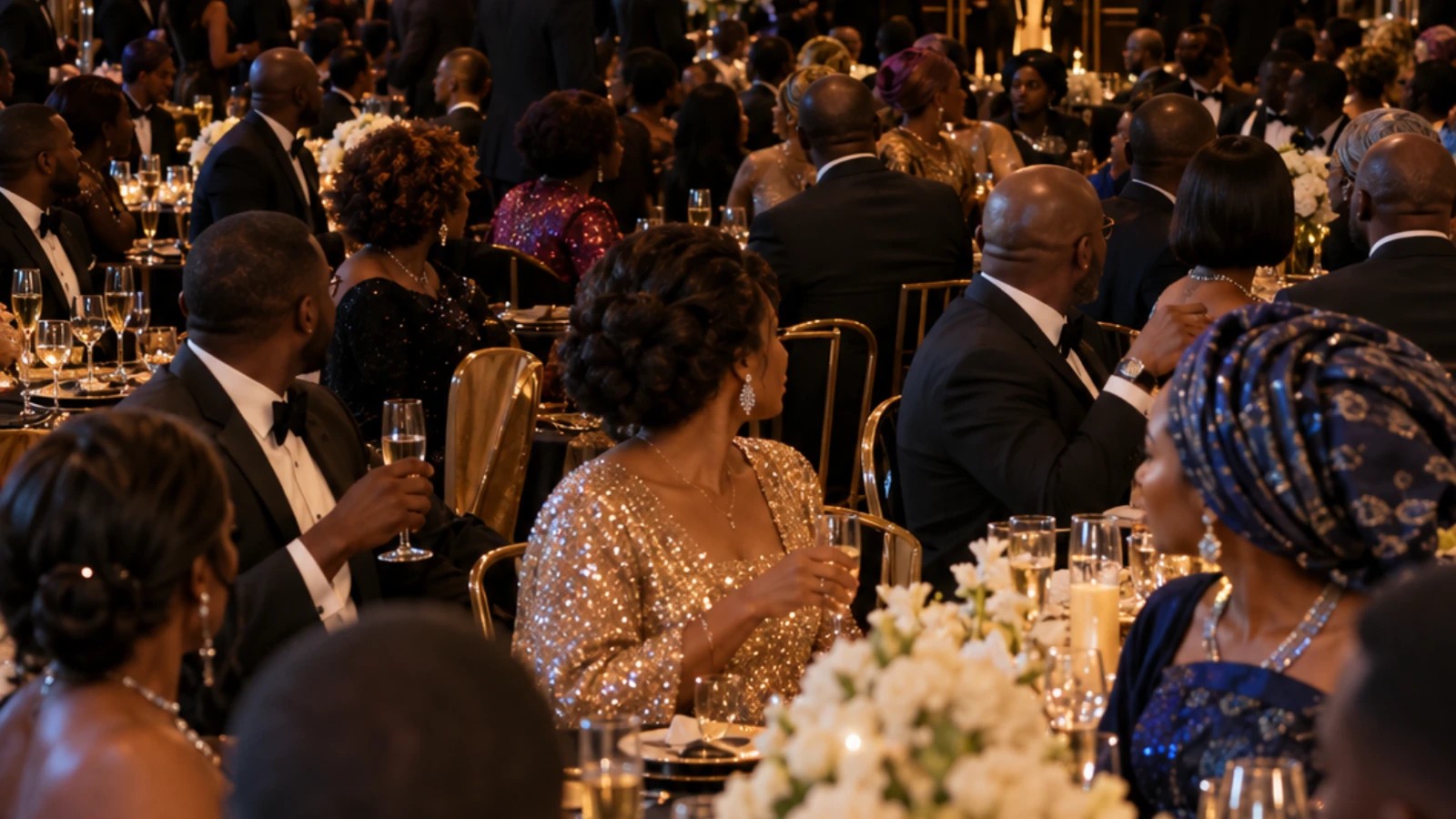
The gala began at seven. Guests arrived in aso oke and black tie, in sequins and in agbada embroidered with gold thread. A band played in the corner. The first hour went so smoothly that I let myself breathe. The generals arrived separately, nodded politely to different corners of the room, and sat in opposite halves. Neither left early.
At eight fifteen, a senior guest of honour arrived with six people nobody had invited. Not one of them was on my list. His aide looked at me with a patient face. “They are family,” he said.
I thought of sixty two changes. I thought of forty tables, each one a small, delicate peace. Then I remembered the ghost table. Mr Balogun, standing by the door, gave me the smallest nod I have ever seen. The six guests sat down at table forty one, the table that did not exist on paper, with full cutlery and a number card. Nobody was embarrassed. Nobody asked a question. The waiters brought the first course.
What the night taught me
At midnight, when the room had emptied into the car park, I found Mr Balogun stacking chairs himself, which he never needed to do. I thanked him. He shrugged and said, “A gala is only memorable when something goes wrong. Your job is to make sure the wrong thing stays invisible.”
I think about that often now. Guests remember the music, the food, the speech that ran too long. They do not remember that they were comfortable. Comfort is the thing you build so carefully that it disappears.
If you are ever handed a seating chart, here is what I would tell you. Ask about the blank notes, because the blank ones hold the real rules. Keep one spare table. Make your changes quickly and calmly, and always ask what would make someone comfortable instead of asking what is wrong. And be kind to the banquet captain, because he knows where everything is buried.
Last month my manager slid another laptop across her desk. A wedding this time, two hundred guests, a groom’s family and a bride’s family who had not spoken in a year.
“It is just a spreadsheet,” she said.
I smiled, and I opened row one.
- Lifestyle
- Governor
- Charity
- Gala
Tip: highlight any line in the story to turn that line into a share card.
Frequently asked
- What is “I Was Handed the Seating Chart for 400 Guests at a Lagos Charity Gala” about?
- Four hundred guests, two retired generals, one governor's wife, and a seating chart that kept changing until the doors opened. My manager slid the laptop across her desk on a Tuesday afternoon, three weeks before the gala, and said, “It is just a spreadsheet.” I was twenty six, eight months into…
- Who covers lifestyle on PINCHED?
- Eniola Unfiltered reports this piece for the PINCHED lifestyle desk.
- Where can I read “I Was Handed the Seating Chart for 400 Guests at a Lagos Charity Gala”?
- Read it in full at https://staypinched.site/read/seating-chart-for-a-lagos-charity-gala.