
It Took Me Six Years to Find a Foundation That Worked on Dark Skin, So I Started Mixing My Own
A bridal makeup artist on shade ranges that never matched, a pot of mixed pigment, and the morning a bride finally said "that is my skin."
Choose your narrator
In short
Match foundation to undertone, not only depth. Dark skin usually needs a warm base with real pigment, a colour consultation in natural light, and a test under camera flash before the wedding day.
- Desk:
- lifestyle
- Format:
- article
- Author:
- Eniola Unfiltered
My first bride was a woman named Ngozi, and I ruined her face.
I was twenty three, working from a rented room in Surulere with a ring light I had bought on credit and a makeup kit I had been collecting for two years. Ngozi had deep, rich brown skin, the shade of dark chocolate with a warm red undertone. She had booked me for her traditional wedding because I had done her sister’s makeup for a birthday and the photographs had looked good.
I opened my foundation palette, the one I was proudest of, and my stomach dropped.
There were twelve shades. Eleven of them were for people lighter than my own mother. The twelfth, labelled “Deep Ebony”, was a flat, greyish brown that sat on the skin like ash.
I tried it on Ngozi’s jaw. The colour hovered above her skin instead of becoming part of it. Her face turned a ghostly grey, and the white of her gele made it worse.
“Is something wrong?” she asked.
“No,” I lied. “Just adjusting the light.”
The scramble
I mixed three foundations together on the back of my hand. I added a drop of bronzer. I added a touch of red lipstick, which my mentor had once told me works in emergencies. I blended it and tried again.
It was better, but it was not right. It was the makeup of a very tired person making guesses.
Ngozi was gracious. When the wedding photographs came back, she thanked me politely and paid in full. But I saw the pictures. In the light of the marquee, her face was a shade lighter than her neck and hands, and her cheeks had a faint dusting that caught the flash. She looked beautiful, because she was beautiful. But she did not look like herself.
I sat in my rented room that night and cried a little. Then I did something that changed my work. I opened a notebook and wrote, “Why is this so hard?”
The research
The answer was not complicated, and it was not kind. Most mainstream foundation ranges, at that time, had been developed with lighter skin as the starting point, and darker shades had been added afterwards by darkening the same base. The result was shades that were darker but not deeper. They lacked the warm red, gold and blue undertones that real dark skin carries.
I spent six years learning this the hard way. I bought every deep shade I could find, from every brand, from every country that would ship to Lagos. I swatched them on the inside of my arm, on the backs of my hands, on friends and family and anyone who sat still long enough. I kept a notebook of what worked and what did not, with columns for undertone, finish and what it did under a flash.
I learned that a good deep shade needs three things. It needs a warm base, because most dark skin is warm even when it looks cool. It needs real pigment, not only darkness. And it needs the right finish, because dark skin shows every dry patch and every oily one with equal cruelty.
The pot of pigment
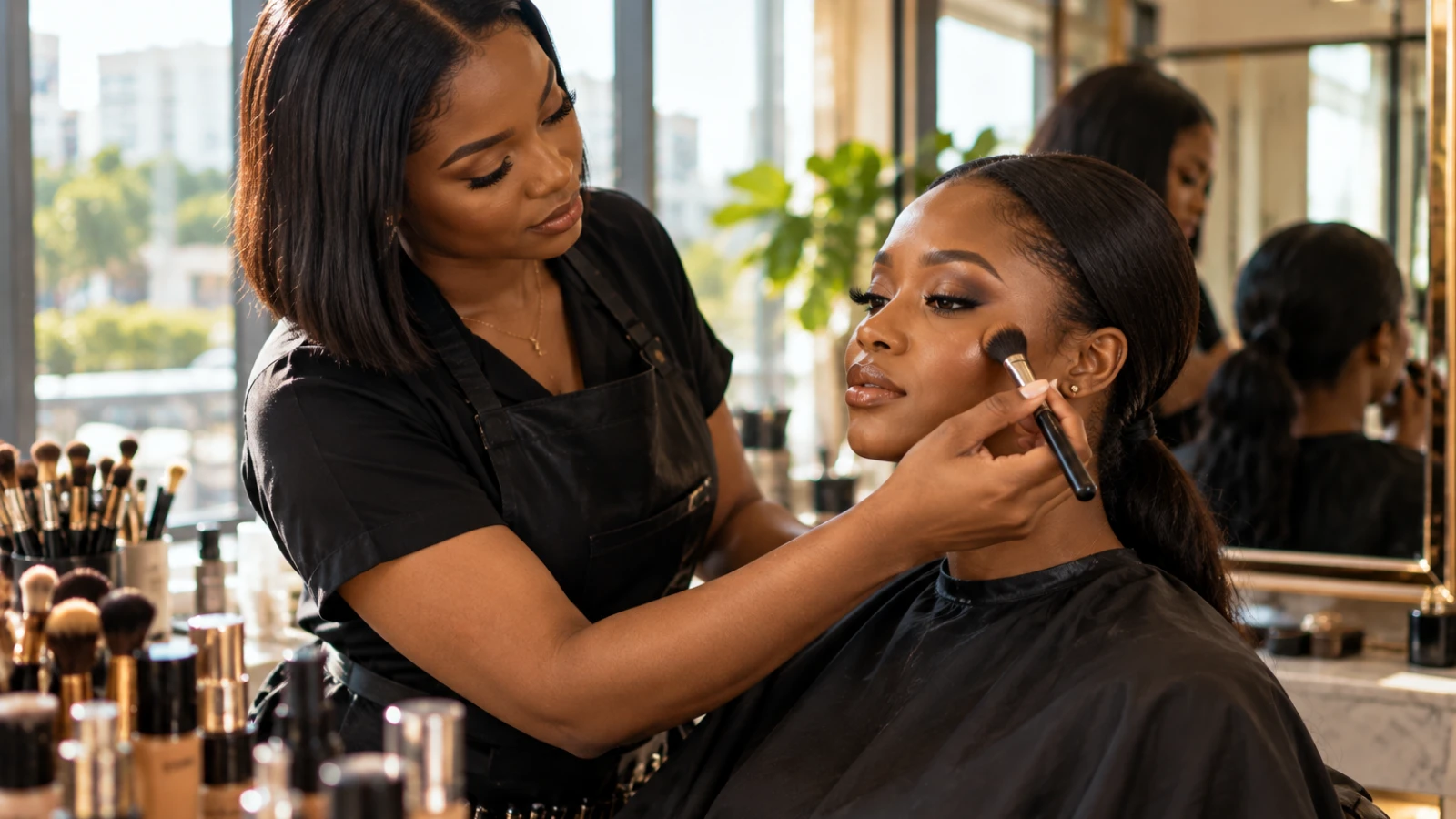
Two years in, I found a supplier of loose pigments, small pots of red, gold, brown and a deep, almost blue black. I started mixing my own foundation by hand. I kept a jar of neutral base, added a little pigment, tested it on the client’s jaw in daylight, and adjusted until the colour disappeared into the skin.
It felt like pharmacy, or like cooking. A little more red for warmth. A touch of gold for light. A pinch of the deep brown for depth.
My clients began to notice. A bride named Adaeze, a few years ago, sat in my chair as I blended the final shade on her cheekbone. She looked in the mirror for a long time and then, quietly, said, “That is my skin.”
I have thought about those four words every day since.
What I do now
Today I run a small studio in Lekki with two assistants. Every client begins with a colour consultation, in natural light, with a swatch of three or four shades on the jaw. We never decide under the ring light, because the ring light lies.
We prep the skin for an hour before the foundation goes on. We mix for the bride’s undertone, not only her depth. We test the finished colour under a flash, because every wedding photographer has a flash, and the flash is the final judge.
I also teach. Twice a month I hold a workshop for young makeup artists, and the first thing I tell them is the thing I wish somebody had told me. If a shade does not work, it is not you. It is the shade. Do not guess, do not blame your hands, and do not tell a client that “something is wrong with the light.” Mix, swatch, test, and keep notes.
What I would tell any bride with deep skin
Ask your makeup artist to show you their foundation range before the trial. If the deepest shade looks grey, or ashy, or flat, ask how they will match you. A good artist will have an answer. A great one will have already mixed it.
Bring a photograph of yourself looking your best, in natural light, with no makeup. Show it. It tells the artist more than any shade chart.
And do not accept “close enough”. Your wedding photographs will outlive the day. You deserve to look back and say, in your own voice, “that is my skin.”
Last year, Ngozi came back to my studio. Her youngest sister was getting married, and she had brought her. I did the sister’s makeup, and Ngozi sat in the corner watching.
When I finished, the bride laughed and wiped her eyes. Ngozi said, quietly, “You finally got it right.”
I did not tell her it took six years. I just hugged her.
- Bridal Makeup
- Bride
- Wedding
- Artist
- Dark Skin
Tip: highlight any line in the story to turn that line into a share card.
Frequently asked
- What is “It Took Me Six Years to Find a Foundation That Worked on Dark Skin, So I Started Mixing My Own” about?
- A bridal makeup artist on shade ranges that never matched, a pot of mixed pigment, and the morning a bride finally said "that is my skin." My first bride was a woman named Ngozi, and I ruined her face. I was twenty three, working from a rented room in Surulere with a ring light I had bought on…
- Who covers lifestyle on PINCHED?
- Eniola Unfiltered reports this piece for the PINCHED lifestyle desk.
- Where can I read “It Took Me Six Years to Find a Foundation That Worked on Dark Skin, So I Started Mixing My Own”?
- Read it in full at https://staypinched.site/read/bridal-makeup-for-dark-skin-foundation-search.