
The Guest of Honour Was Four Hours Late, and 500 People Were Watching the Door
A black tie dinner in Lagos, a missing chief guest, and the long night I spent keeping five hundred people happy without telling them why.
Choose your narrator
In short
Do not announce the delay. Keep a skilled MC talking, serve the cold course first and hold the hot course, and keep a symbolic ribbon cutting or toast ready that can happen without the guest of honour.
- Desk:
- lifestyle
- Format:
- article
- Author:
- Eniola Unfiltered
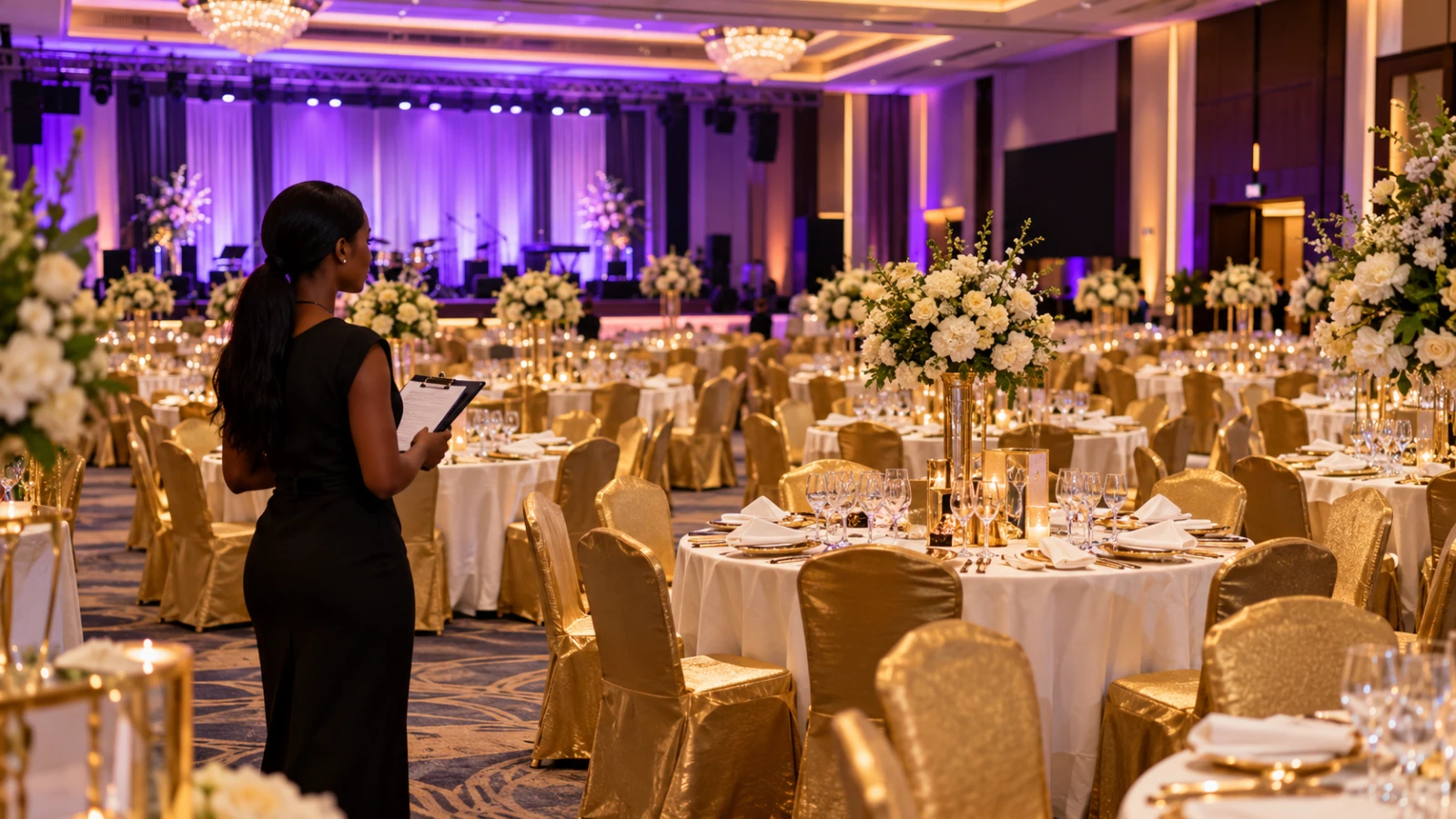
At six o’clock on the evening of the gala, I was standing in a ballroom in Ikoyi with a clipboard, a walkie talkie, and a feeling in my stomach like swallowed ice.
The chief guest was meant to arrive at seven. He was a respected industrialist, and the dinner was held in his honour. He was to cut a ribbon on a new scholarship fund, make a short speech, and sit at the high table with the people who had paid the most to be near him.
At six, his assistant called. “Oga is running a little behind,” she said. “Maybe thirty minutes.”
I wrote “thirty minutes” on my clipboard. By the end of the night I would look at that line and laugh until I cried.
The first hour
I have been producing society events for nine years. I know the rhythm of a room. Guests arrive in a trickle, then a flood, then they settle into a long hum of greetings and photographs and gossip. The trickle is easy. The flood is manageable. The hum is where you lose people.
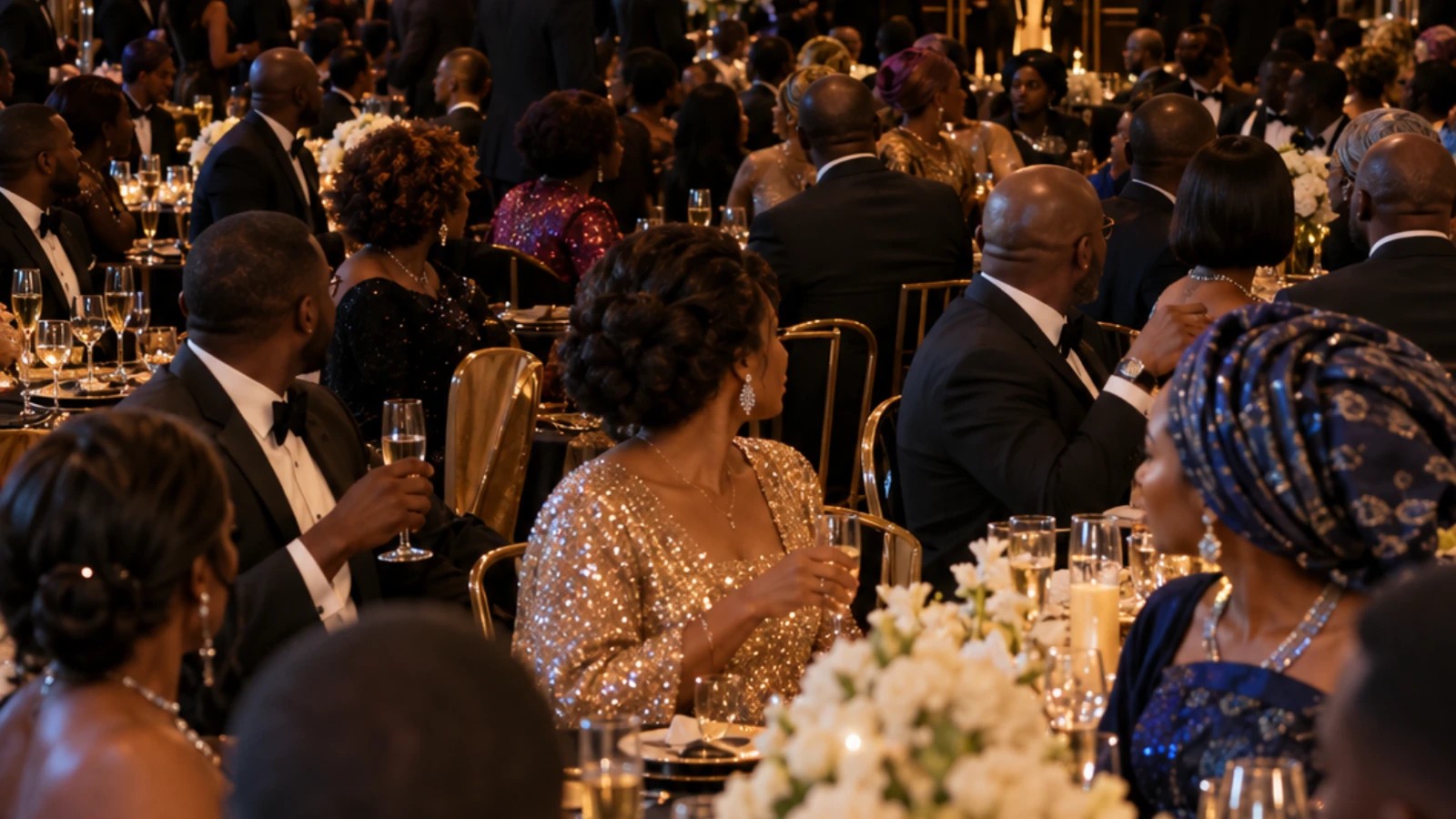
By seven thirty, the ballroom was full. Five hundred guests in sequined gowns and tailored tuxedos, in agbada and in aso oke, holding glasses of chilled zobo and champagne. The chief guest had not come. His assistant now said “forty five minutes.” Somebody else’s assistant, calling about a different matter, said that the roads around Falomo were blocked because of a convoy.
The programme was a clock. The welcome address at seven fifteen. The first course at seven forty five. The tribute video at eight. The ribbon at eight thirty. Every item was waiting for the one person who was not there.
I made a decision I have made many times, and I have never once regretted it. I did not tell the room.
The MC
The master of ceremonies that night was a woman I had worked with for six years, a lawyer by profession and an entertainer by temperament, whom I will call Folasade. I pulled her aside behind the curtain at seven forty.
“He is not here.”
“I know,” she said. “I saw you looking at your phone.”
“I need you to talk for as long as you can without saying anything is wrong.”
She looked at me for a second, then she smiled. It was the smile of a woman who had been given a stage and a task and nothing else. “How long?”
“I do not know.”
“Perfect,” she said, and walked on.
For the next forty minutes, Folasade held a room of five hundred people in the palm of her hand. She introduced the table sponsors one by one and told a small, true story about each. She asked guests to stand if they had come from outside Lagos, then from outside Nigeria, and gave a warm round of applause to the man who had flown from Toronto that morning. She led the room in a call and response song that I am quite sure she invented on the spot.
Meanwhile, behind the curtain, I was rearranging the evening.
Moving the dinner
The kitchen was my problem. A hot dinner has a life of about twenty minutes. If I served too early, the chief guest would arrive to a room of people eating, with his own plate cold. If I served too late, five hundred hungry guests would turn on me.
I walked into the kitchen at eight, where the head chef, a tall man with forearms like tree trunks, was glaring at a rack of plated starters. “Do we hold?” he asked.
“We serve the starters now. Cold plates. Then we hold the main course until I say so.”
“For how long?”
“I do not know.”
He sighed, a long, tired exhale. “Madam, I have never served in a country where the answer to every question is I do not know.”
“It is a skill,” I said. “You will love it by the end.”
He did not laugh. But he sent out the starters, and he kept his best braised beef warm in a low oven for another ninety minutes.
The ribbon without the man
At nine, the chief guest’s assistant called again. “Oga has left the house,” she said. “Forty minutes.”
I looked at the room. People were relaxed, well fed on starters, laughing, a little warm from the champagne. The mood was good. But I could feel it starting to tilt, the way a tray tilts when someone is about to drop it.
I made a second decision. I asked the sponsors’ representatives to take the stage together and cut a smaller ribbon, a symbolic one, to open the scholarship fund. The chief guest could cut the second one when he arrived. Nobody objected. The photographers got their photographs. The room cheered.
At ten thirty, the chief guest walked in, four hours and fifteen minutes late.
He was tired and gracious, apologised briefly, and was escorted to the high table. The kitchen sent out the main course within eleven minutes. Folasade gave a speech of introduction that was warm and perfectly timed. The industrialist cut his ribbon, and the room, which had been waiting for four hours, rose to its feet with a cheer I will remember for the rest of my life.
Nobody knew how close we had come to disaster. That is the point.
What I would tell another producer
A late chief guest is not an emergency. It is a Tuesday. Plan for it the way you plan for rain.
Build a programme with soft edges and a few hard ones. Put your most skilled speaker in the MC chair, because she is the only real tool you have. Brief your kitchen early, so they can delay without panic. And always keep a symbolic moment in your pocket, a ribbon or a toast, that can happen without the person everyone is waiting for.
Most of all, do not announce the problem. Guests can sense an apology before it is spoken. If you stay calm, they stay calm. If you smile, they smile. Your face is the weather of the room.
At two in the morning, I sat on the loading dock behind the ballroom in my good shoes, eating cold jollof from a plastic plate. Folasade came out and sat beside me.
“How long do you think he will be late next year?” she asked.
I laughed so hard I nearly dropped the plate.
- Guest
- Party
- Events
- Outdoor
- Galas
- Lagos
- Dinner
Tip: highlight any line in the story to turn that line into a share card.
Frequently asked
- What is “The Guest of Honour Was Four Hours Late, and 500 People Were Watching the Door” about?
- A black tie dinner in Lagos, a missing chief guest, and the long night I spent keeping five hundred people happy without telling them why. At six o’clock on the evening of the gala, I was standing in a ballroom in Ikoyi with a clipboard, a walkie talkie, and a feeling in my stomach like swallowed…
- Who covers lifestyle on PINCHED?
- Eniola Unfiltered reports this piece for the PINCHED lifestyle desk.
- Where can I read “The Guest of Honour Was Four Hours Late, and 500 People Were Watching the Door”?
- Read it in full at https://staypinched.site/read/late-chief-guest-at-a-lagos-black-tie-gala.