
Nigeria Confirms First Ebola Case in Abuja
One confirmed case, a stable patient and 44 contacts under watch. Here is what is known, what is not, and what to do.
Choose your narrator
In short
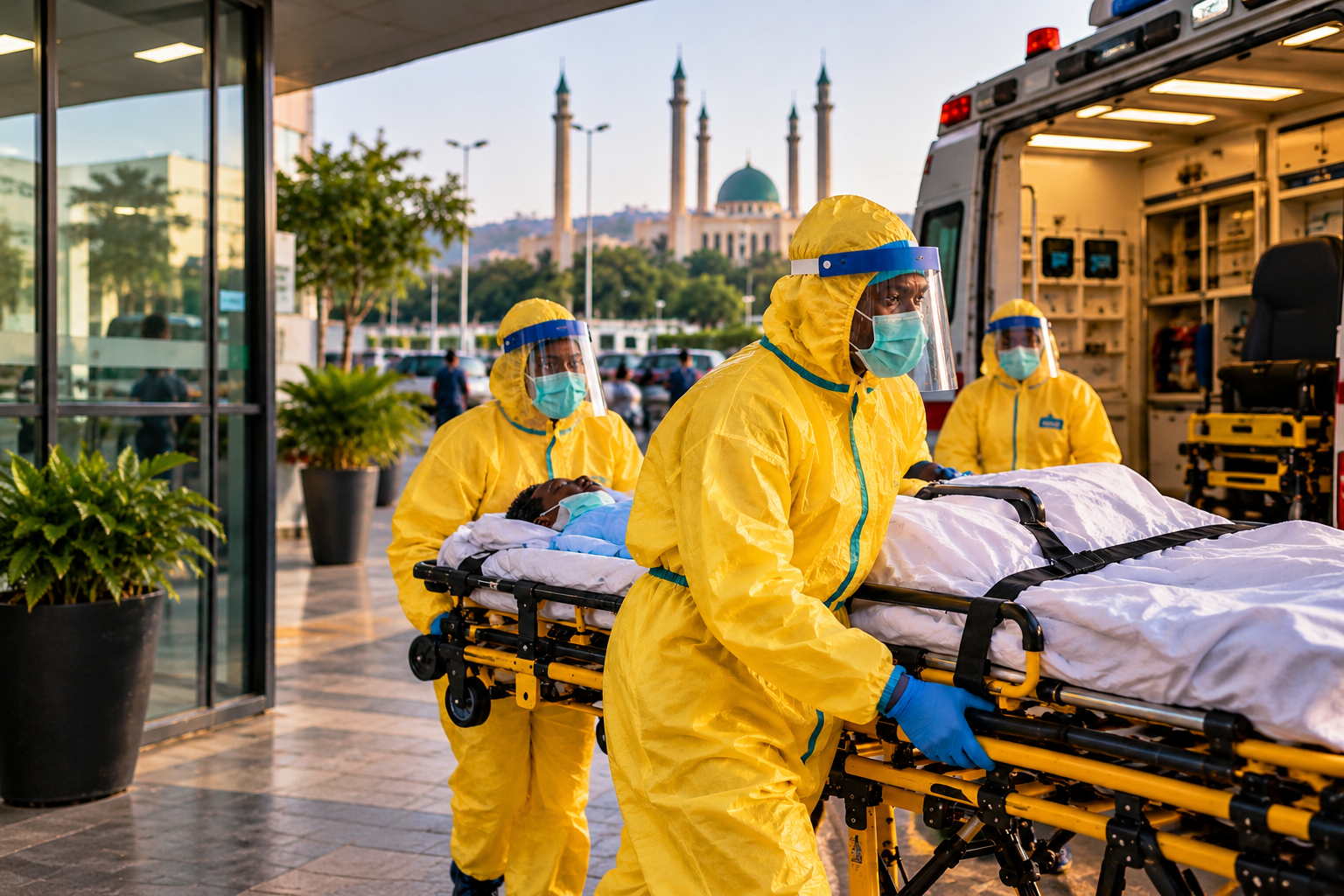
Yes. On October 20, 2026, Health Minister Muhammad Ali Pate confirmed one Ebola case in Abuja, in a woman who recently arrived from Uganda. She is stable and 44 contacts are being monitored.
- Desk:
- culture
- Format:
- article
- Author:
- Praise_writes
On Tuesday, October 20, 2026, Nigeria’s Health Minister announced a confirmed Ebola case in Abuja. However, the facts released so far are more reassuring than the rumours flying around.
So, let’s go through what is confirmed, what officials still do not know, and the simple steps you can take today. Please share only verified information.
What Is Confirmed
Health Minister Prof. Muhammad Ali Pate announced the case after laboratory confirmation. The patient is a woman who recently arrived from Uganda on an international flight and was treated for several days at a private hospital in the Federal Capital Territory before the diagnosis.
1 confirmed case. Nigeria has reported one case so far.
Condition: stable. Pate described her as “stable” and “improving.” She is isolated and receiving care.
44 contacts identified. They include health workers, patients, caregivers and people linked to her travel, and they are being monitored.
Pate said, “We advise everyone to remain calm but vigilant. There is no need for panic.” The incident management system has been activated, and the Presidential Task Force on Ebola, set up in May, is involved.
The Timeline
The timeline matters because it shows how long the illness went unnoticed. Reports differ by a day or two, so here is the version from the Health Minister’s statement and Associated Press.
October 7: Symptoms began (Africa CDC chief Jean Kaseya gave October 6).
October 11: She was admitted to a private hospital in Abuja.
October 19 to 20: Authorities were alerted, and Ebola was confirmed on October 20.
It was reported that the woman first went to a hospital believing she had malaria. That is a useful reminder that early Ebola looks like many common illnesses.
What Is Still Unknown
Here, official accounts clash. Africa CDC and Nigeria’s health minister say she travelled to Kampala, Uganda, and returned via Ethiopia, which republished a BBC report. Uganda’s Health Ministry says she was on a business trip to eastern Congo and only passed through Uganda.
Uganda also says it has no active confirmed cases. So, where she was infected is still under investigation, and Nigeria is working with Uganda, Ethiopia and Africa CDC.
The Bigger Picture
This case comes from a large regional outbreak. Health Policy Watch cites DR Congo figures as of October 17: 9,455 confirmed cases and 4,561 deaths, a fatality rate of about 48%. Kenya has reported nine cases, and Africa CDC calls it an escalating threat.
Nigeria has been here before. Its 2014 outbreak involved 20 cases and was contained through fast detection, isolation and contact tracing. That experience is one reason officials are tracing contacts widely.
How Ebola Spreads (and How It Does Not)
Ebola spreads through direct contact with the blood or other body fluids of a sick person, or with contaminated materials. That includes vomit, stool and urine, items such as bedsheets and clothes, and the body of someone who has died from it.
Importantly, people are not considered contagious before symptoms appear, and symptoms can show up 2 to 21 days after exposure. So, sitting near someone in a market is not how it spreads.
Symptoms to Watch For
Symptoms include fever, severe weakness, headache, vomiting and diarrhoea. However, fever alone does not mean Ebola, because malaria, typhoid and Lassa fever are also common.
What You Should Do Now
Wash your hands often and avoid direct contact with the blood or body fluids of anyone suspected of having Ebola.
Call the NCDC toll-free line, 6232, to report a suspected case or get official information.
If you develop symptoms after possible exposure, avoid close contact with others and get guidance from public health authorities before visiting a health facility.
Cooperate with contact tracing if officials contact you, including airline passengers who may have been exposed.
Do not stigmatise anyone who may have been exposed, and avoid sharing unverified posts.
The same NCDC advisory rejected home remedies such as salt water, bitter kola, herbs and seasoning cubes, because no approved home remedy exists. Our guide to bitter kola’s benefits and risks explains why that is not a treatment for Ebola. For earlier coverage, read our report on Ebola reaching Kenya. For more health reads, visit our health and fitness desk. For more health reads, visit our health and fitness desk.
Quick FAQs
1. Has Nigeria confirmed an Ebola case?
Yes. The Health Minister confirmed one case in Abuja on October 20, 2026.
2. How is the patient doing?
Pate said she is stable and improving.
3. How many contacts are being monitored?
Forty-four, according to the Health Ministry.
4. Should I panic?
No. Officials urge calm and vigilance, and you should follow official guidance.
- Ebola
- NCDC
- Abuja
- Muhammad Ali Pate
- Health News
- Nigeria
Tip: highlight any line in the story to turn that line into a share card.
Frequently asked
- What is “Nigeria Confirms First Ebola Case in Abuja” about?
- On Tuesday, October 20, 2026 , Nigeria’s Health Minister announced a confirmed Ebola case in Abuja. However, the facts released so far are more reassuring than the rumours flying around.
- Who covers culture on PINCHED?
- Praise_writes reports this piece for the PINCHED culture desk.
- Where can I read “Nigeria Confirms First Ebola Case in Abuja”?
- Read it in full at https://staypinched.site/read/nigeria-confirms-ebola-case-in-abuja.