
Yoga for Beginners: How to Start at Home Even If You Cannot Touch Your Toes
You do not need to be flexible to begin. Here are six simple poses, what yoga can really do for you and how to start safely.
Choose your narrator
In short
No, you do not need to be flexible to start yoga. Begin with gentle poses such as Mountain, Cat-Cow and Child’s Pose for 10 to 15 minutes, breathe slowly and use props like a belt or towel.
- Desk:
- on the sport
- Format:
- article
- Author:
- Praise_writes
Do you really need to be flexible to start yoga? It is one of the most common worries for new learners, and the short answer is no. Yoga teachers say the practice is for everyone, regardless of body shape, flexibility and fitness, and you build flexibility by practising, not before.
If you have wanted to try yoga for beginners but did not know where to begin, this guide gives you the benefits, six simple poses and the safety rules to follow.
Why So Many Nigerians Are Searching for Yoga
Interest is growing. “Yoga for beginners” appears among the top fitness searches in Nigeria in a Google Trends analysis of the last 12 months, published in September 2026. The same analysis found people searching for home workouts and stretching routines, and another review of Nigeria’s fitness search habits points the same way.
That makes sense. Yoga needs little more than floor space, and many Nigerians are shifting to affordable home-based fitness.
What Can Yoga Do for You?
Yoga is not a cure-all, so it helps to know what the research actually shows. The US National Center for Complementary and Integrative Health has reviewed the evidence, and these are its main findings:
Stress: a 2020 review of 12 studies found yoga reduced perceived stress in healthy adults in every study.
Low-back pain: evidence suggests a slight benefit, and the improvement may be small.
Sleep: several studies found yoga helped, including in older adults.
Other possible benefits: neck pain, headaches and balance, although the evidence is more limited.
In other words, yoga is a useful addition to a healthy routine, not a replacement for medical care.
Six Beginner Poses to Try
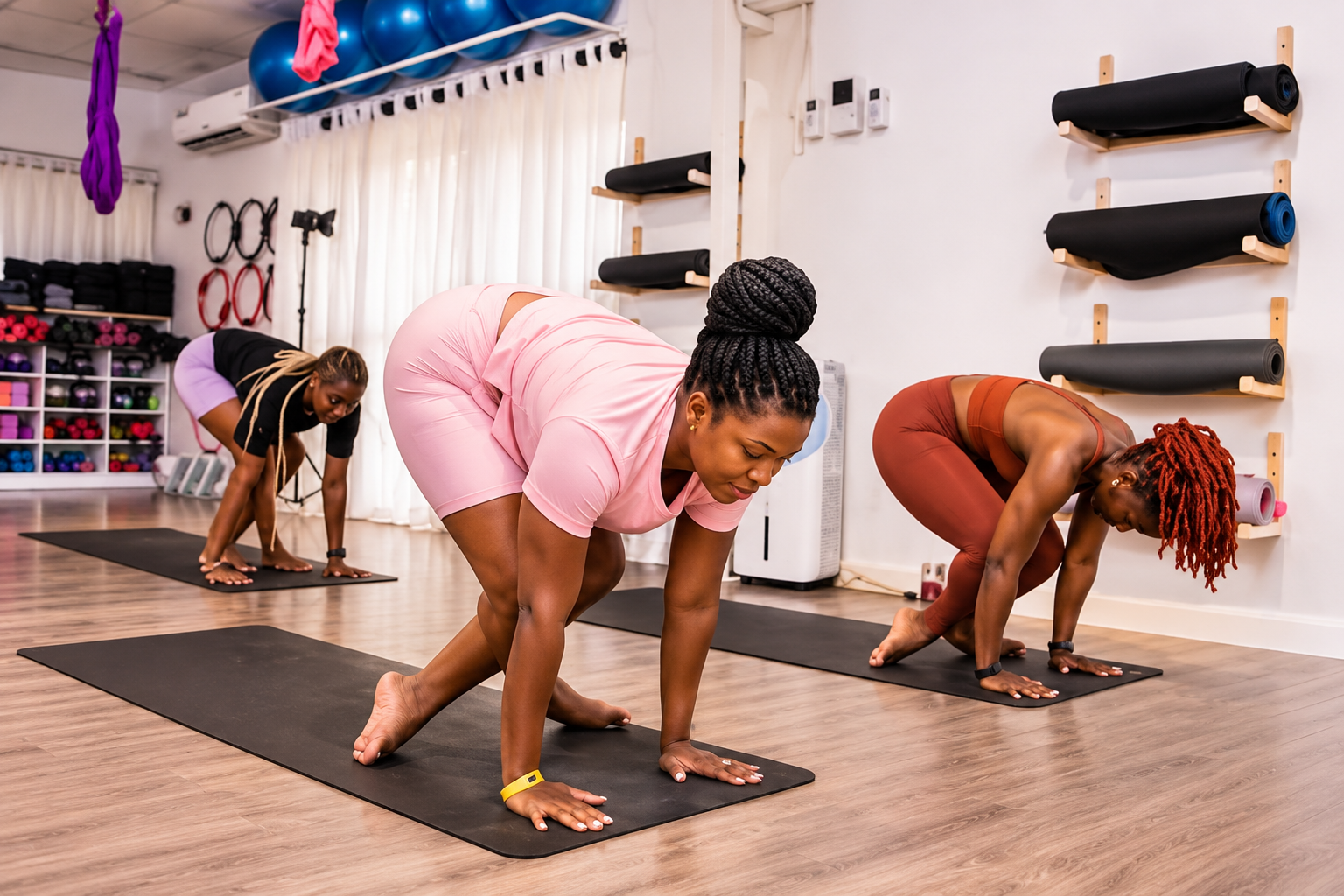
You can practise these on a mat or a carpet. Kaiser Permanente’s guide suggests holding each pose for about five deep breaths, or for however long feels comfortable.
Mountain Pose: stand tall, feet about shoulder-width apart, arms at your sides, shoulders relaxed.
Upward Salute: from Mountain Pose, reach both arms overhead and lengthen your body from toes to fingertips.
Cat Pose: on hands and knees, hands under shoulders, round your spine and let your head hang.
Cow Pose: from a flat back, lift your chest and gently arch. Moving between Cat and Cow warms up your spine.
Child’s Pose: sit your hips back toward your heels, rest your torso on your thighs and stretch your arms forward.
Cow Face Pose (arms): reach one arm overhead and the other behind your back. If your hands do not meet, hold a towel or belt between them.
Notice that none of these poses requires you to touch your toes. If a pose feels too much, make it smaller.
How to Start Without Overdoing It
Choose a quiet, clear space with a mat or soft carpet.
Start small. Ten to fifteen minutes is enough while you learn.
Breathe slowly through your nose and match your movement to your breath.
Use props. A belt, towel or cushion can make poses easier.
Stop if you feel pain. Stretching should feel mild, not sharp.
For beginners who want guidance, many online beginner classes run from 15 to 60 minutes, so you can pick a length that fits your day.
Safety: What Beginners Should Know
Yoga is generally safe for healthy people when done properly, and serious injuries are rare. However, sprains and strains, usually of the knee or lower leg, are the most common problems. Learning alone without supervision has been linked to higher risk, so a qualified instructor is worth it if you can find one.
Skip advanced moves at first: headstands, shoulder stands, the lotus position and forceful breathing.
Check with a doctor first if you are pregnant, are 65 or older, or have knee or hip injuries, balance problems, severe high blood pressure or glaucoma.
Avoid hot yoga while pregnant, because of the risk of overheating.
Do not use yoga to delay medical care for a health problem.
You do not need a studio, special clothes or perfect flexibility to start yoga. Begin with a few gentle poses, listen to your body and keep going. This guide is general information, not medical advice. For more health and lifestyle guides, visit the PINCHED homepage or browse our magazine.
Frequently Asked Questions
1. Do I need to be flexible to start yoga?
No. Flexibility improves with practice, and you can modify any pose.
2. What is the best yoga pose for beginners?
Mountain Pose, Cat-Cow and Child’s Pose are gentle starting points.
3. How long should a beginner practise yoga?
Ten to fifteen minutes is a sensible start, and you can build up as you feel stronger.
4. Is yoga good for stress?
Research suggests it can reduce perceived stress in healthy adults.
- Yoga
- Beginner Yoga
- Fitness
- Wellness
- Home Workouts
- Nigeria
Tip: highlight any line in the story to turn that line into a share card.
Frequently asked
- What is “Yoga for Beginners: How to Start at Home Even If You Cannot Touch Your Toes” about?
- Do you really need to be flexible to start yoga? It is one of the most common worries for new learners, and the short answer is no .
- Who covers on the sport on PINCHED?
- Praise_writes reports this piece for the PINCHED on the sport desk.
- Where can I read “Yoga for Beginners: How to Start at Home Even If You Cannot Touch Your Toes”?
- Read it in full at https://staypinched.site/read/do-you-really-need-to-be-flexible-to-start-yoga-it-is-one-of-the-most-common.