

Running Generators Together Takes More Than Just Connecting Them
Two generators that run fine alone can’t simply be wired together. Here is what has to match first, and why this is a job for an engineer.
Choose your narrator
In short
Generator paralleling means running two or more generators together to supply one system. Before the units connect, their frequency, voltage and phase must match. After they connect, the load has to be shared properly between them.
- Desk:
- tech
- Format:
- article
- Author:
- Eniola Unfiltered
Two generators sitting side by side on a site, both perfectly capable of running on their own, cannot simply be wired together and expected to share a load smoothly. Generator paralleling, running multiple units together to supply one system, is a deliberate engineering process with specific conditions that have to be met before, and continuously while, the units operate together.
WHAT PARALLELING ACTUALLY MEANS
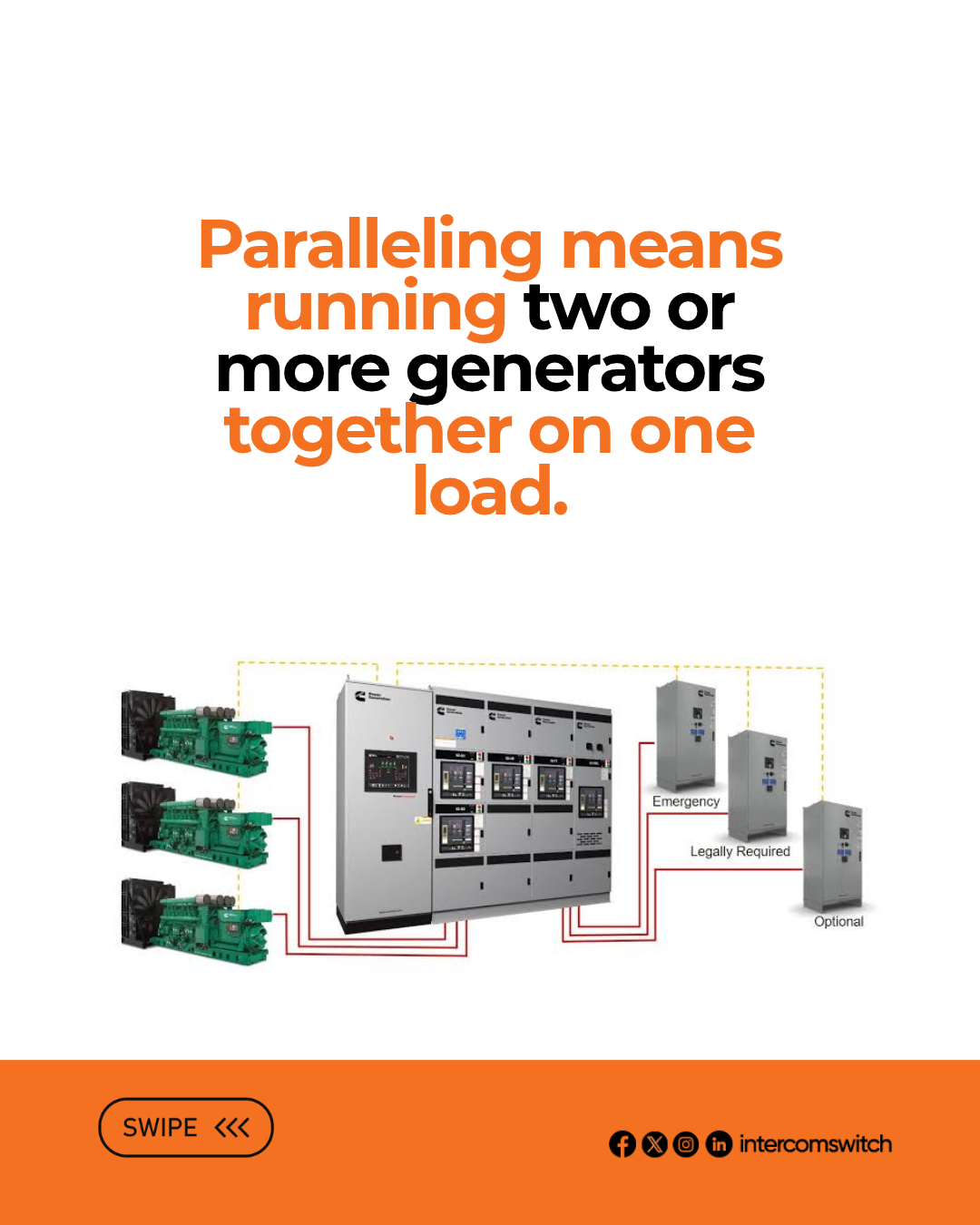
Paralleling means connecting two or more generators so they supply the same load simultaneously, as if they were one larger source. This is done for a few practical reasons, redundancy, so one unit can fail or be taken offline for maintenance without losing power entirely, and scalability, so capacity can be added incrementally by bringing additional units online as demand grows, rather than needing one oversized unit from the start.
WHAT HAS TO BE TRUE BEFORE TWO GENERATORS CAN CONNECT
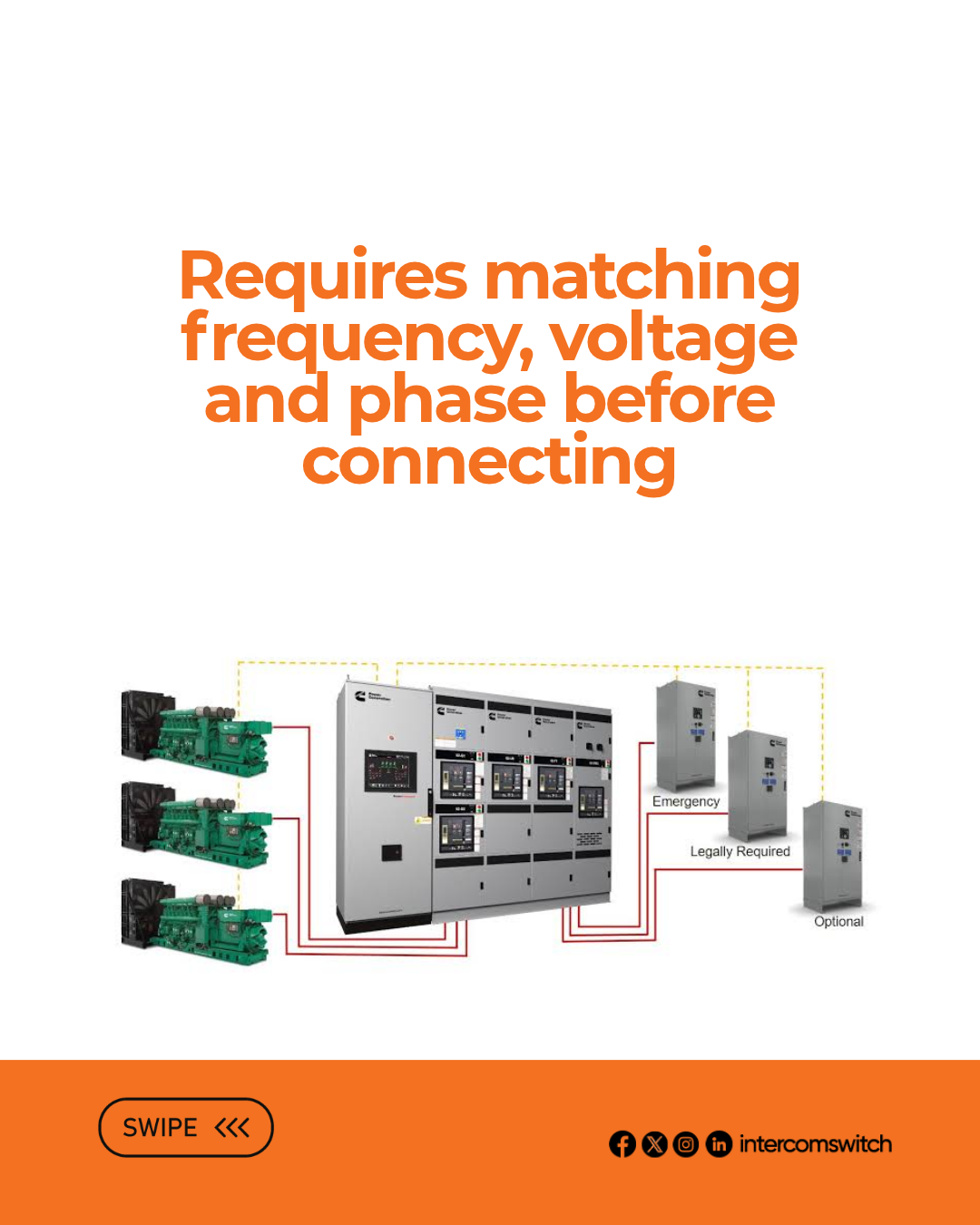
Before any two generators can be connected to the same busbar, three conditions need to be matched, frequency, voltage, and phase. If frequency does not match closely enough, the units will fight each other the moment they are connected, each trying to pull the shared load toward its own speed. If voltage does not match, current will flow unnecessarily between the units themselves rather than to the actual load. If phase is not aligned, closing the connection at the wrong moment can produce a damaging electrical shock to both units, similar in effect to a short circuit.This is exactly what a synchroscope or an automatic synchronization system is checking for, confirming that all three conditions are satisfied before allowing the connection to close.
HOW THIS IS ACTUALLY MANAGED ON LARGER INSTALLATIONS

On a small scale, with just two units, synchronization can be managed manually by a trained operator watching instrumentation and closing the breaker at the right moment. On larger, more complex installations, this is handled automatically by a dedicated synchronization and control system, which continuously monitors all the paralleling conditions, decides when it is safe to connect, and manages how load is shared between the running units once they are connected.Load sharing itself is its own ongoing consideration once units are paralleled. The system needs to divide the total load between the generators in a way that keeps each one operating efficiently, rather than leaving one unit overloaded while another runs well under capacity.
WHY THIS MATTERS BEYOND THE TECHNICAL DETAIL
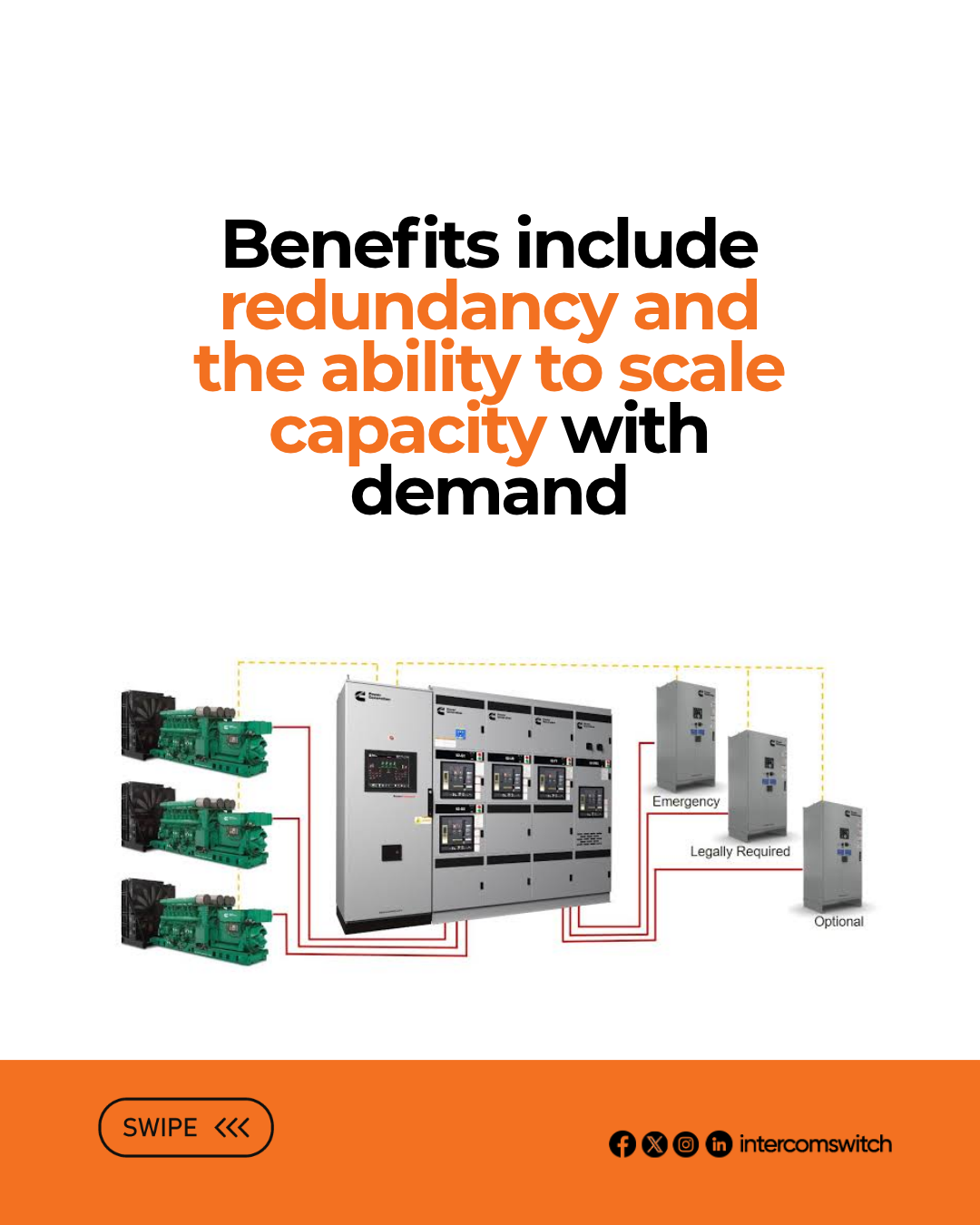
Getting paralleling wrong is not a minor inconvenience, it can mean serious damage to the generators involved, from mechanical stress on the engine to electrical damage to the alternator windings. This is why paralleling projects are engineered deliberately from the start, not treated as a simple wiring exercise once the individual units are already installed and running.
THE PRACTICAL TAKEAWAY
Running generators together reliably depends on matching frequency, voltage and phase before connection, and on managing load sharing correctly afterward. It is a genuine engineering discipline in its own right, not an incremental step up from running a single generator, and it is usually worth involving an engineer who has actually done it before committing to the installation.
- generator paralleling
- ISIL Consultancy
- generator synchronisation
- power systems
- electrical engineering
Tip: highlight any line in the story to turn that line into a share card.
Frequently asked
- What is “Running Generators Together Takes More Than Just Connecting Them” about?
- Two generators that run fine alone can’t simply be wired together. Here is what has to match first, and why this is a job for an engineer.
- Who covers tech on PINCHED?
- Eniola Unfiltered reports this piece for the PINCHED tech desk.
- Where can I read “Running Generators Together Takes More Than Just Connecting Them”?
- Read it in full at https://staypinched.site/read/running-generators-together-takes-more-than-just-connecting-them.