Lagos Life Creator Shalom Rayhamen: "When You Build Something That People Love, You Will Definitely Get the Numbers"
Shalom Rayhamen built Lagos Life in one night, woke up to a viral game, and has now launched AbujaLife and PHLife with airports to connect them. She tells PINCHED how the idea came together, what went wrong with the in-game economy, and where she hopes to be a year from now, with more games, more countries and a few funding rounds behind her.
Choose your narrator

In short
Shalom Rayhamen built Lagos Life in one night, released it at 7:11am, and has since launched AbujaLife and PHLife on the night of 5th October.
- Desk:
- tech
- Format:
- interview
- Author:
- Kenneth Onyebuchi
Shalom Rayhamen did not plan to wake up to a million-player game. She built Lagos Life in a single night, starting at 9pm and fixing the last animation bug around five in the morning. She decided that was too early to post, took a nap and released the game at 7:11am. When she woke up again around ten, her game was already blowing up. Players had passed a million within four days and, as PINCHED reported when the game took off, they were eating amala at Shitta and partying at Quilox without leaving their phones. Shalom spoke to PINCHED on 6th October, a day after launching AbujaLife and PHLife, about how it started, what almost broke it and where it goes next.
A Developer Who Kept Building
Shalom has been a software developer for almost a decade, and she has spent that time inside the tech ecosystem as both a developer and an entrepreneur. She has built a lot of products along the way. The one she built just before Lagos Life was HeyEliy.
The Idea She Had Been Carrying
The Sims 3 was the game she grew up on, and she says she loved it enough to keep installing it as an adult. The part that stayed with her was the avatars you could only interact with in specific ways. She had always wanted a version of that world tied to Nigeria.
She had always had the idea. What pushed her to act was Eureka's Lagos Run. "It was like a push for me to release my own idea," she said.
She is firm that Lagos Life is her own vision. "Every single thing I added to it was what I wanted it to be," she said. She knew it had to be social, and she knew from the start how she wanted to monetise it. What she did not know was how far it would go. "I just did not know that it would go this far."
One Night and One Stubborn Animation
She built the whole game that night, from 9pm until about five in the morning. Getting the avatars to lie down came quickly. Getting them to sit was the problem. At one point the sim characters kept sitting with their legs at their backs, and she kept going until about five in the morning, when she finally fixed it, amongst other things.
She thought about posting straight away, then decided five was too early and slept. She woke up and released the game, with her post going live on X at 7:11am. Asked what the hardest part of building it alone had been, she pointed to the sitting animation. Everything else, she said, she was able to build the way she wanted.
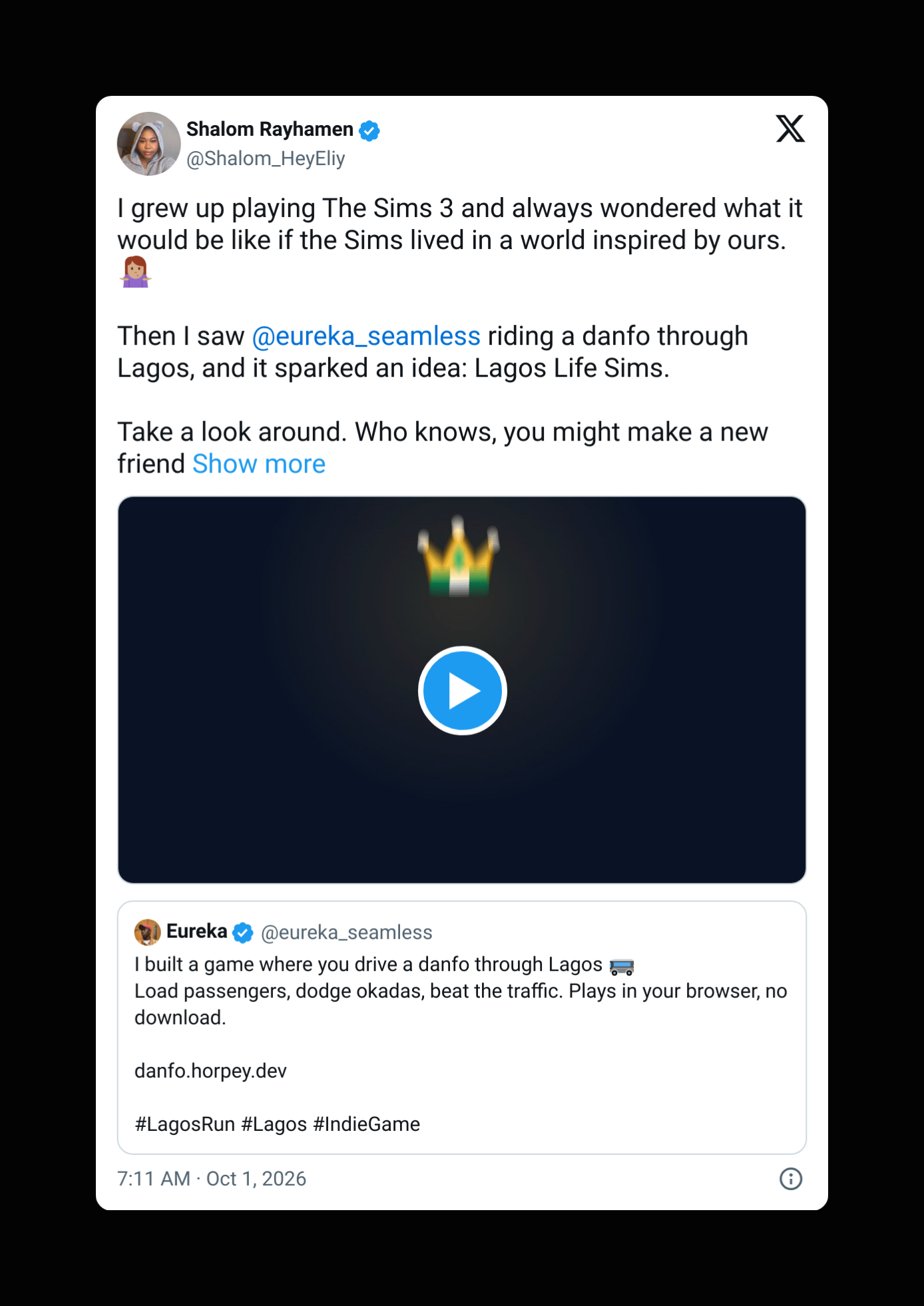
The Lagos Life Launch Post
Waking Up to a Viral Game
After releasing it, Shalom went back to sleep. When she got up at around ten, the game was already taking off. People were commenting that they knew The Sims and loved it. She checked the numbers and they were climbing.
"I knew that I have built something that people love," she said. "And when you build something that people love, you will definitely get the numbers."
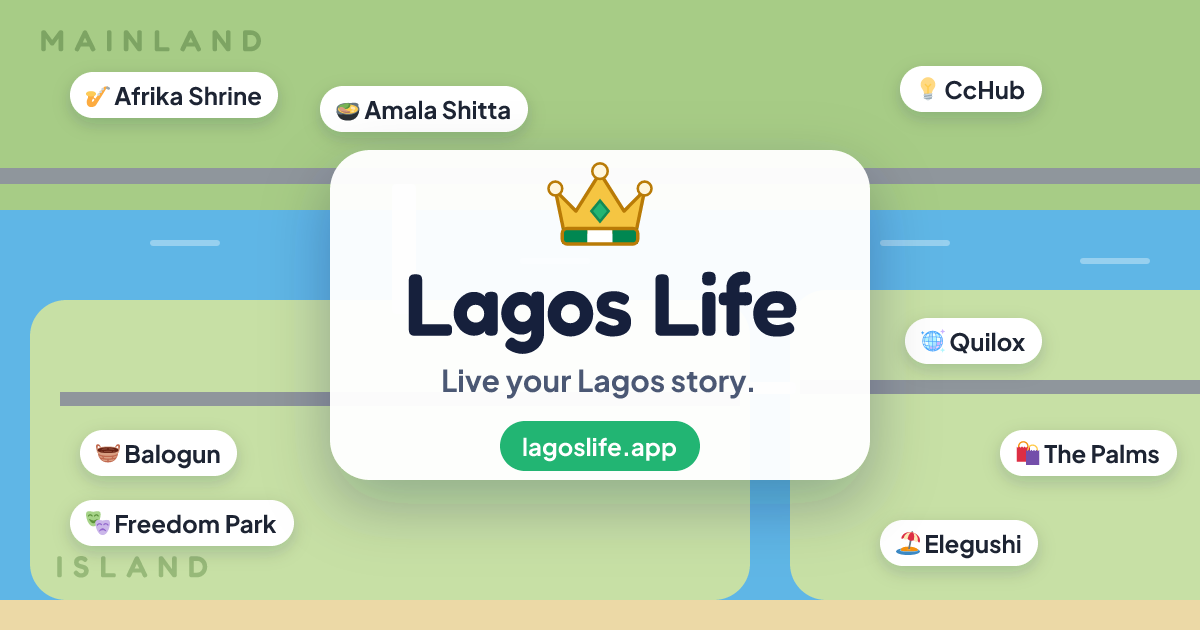
The Lagos Life Social Card
When the Money Went Wrong
Soon after launch, some players found a way to generate huge amounts of in-game money. Shalom and some friends in tech looked at the figures and saw straight away that "something fishy" was going on. They decided to fix it. "With tech, these things happen," she said.
It has not been an easy fix. The balances run into the trillions, and tracking them is hard because players keep sending the money on to other accounts. The team tags the accounts holding amounts that are far too high and is working to take the excess off them. They are not taking anyone down to zero, and players get their assets back. For now, she says, it is a process.
What she is aiming for is balance. Players with trillions should be able to enjoy them, on private jets and the rest, but the game's economy still has to hold together. She compares it to real life, where every country's economy has to stay in balance. Her goal is to let people have fun with what they have without spoiling that balance.
She has also taken the message to players directly. On 6th October, Shalom posted a public reminder on X for anyone who sees someone "sending" trillions in Lagos Life: "Glitch money and fake alerts get restricted. Real wealth here is earned: jobs, businesses, property and the Reserve Bank." She lists those four as the legitimate routes to wealth in the game, and she signed off with a plea to "play fair, grow for real."
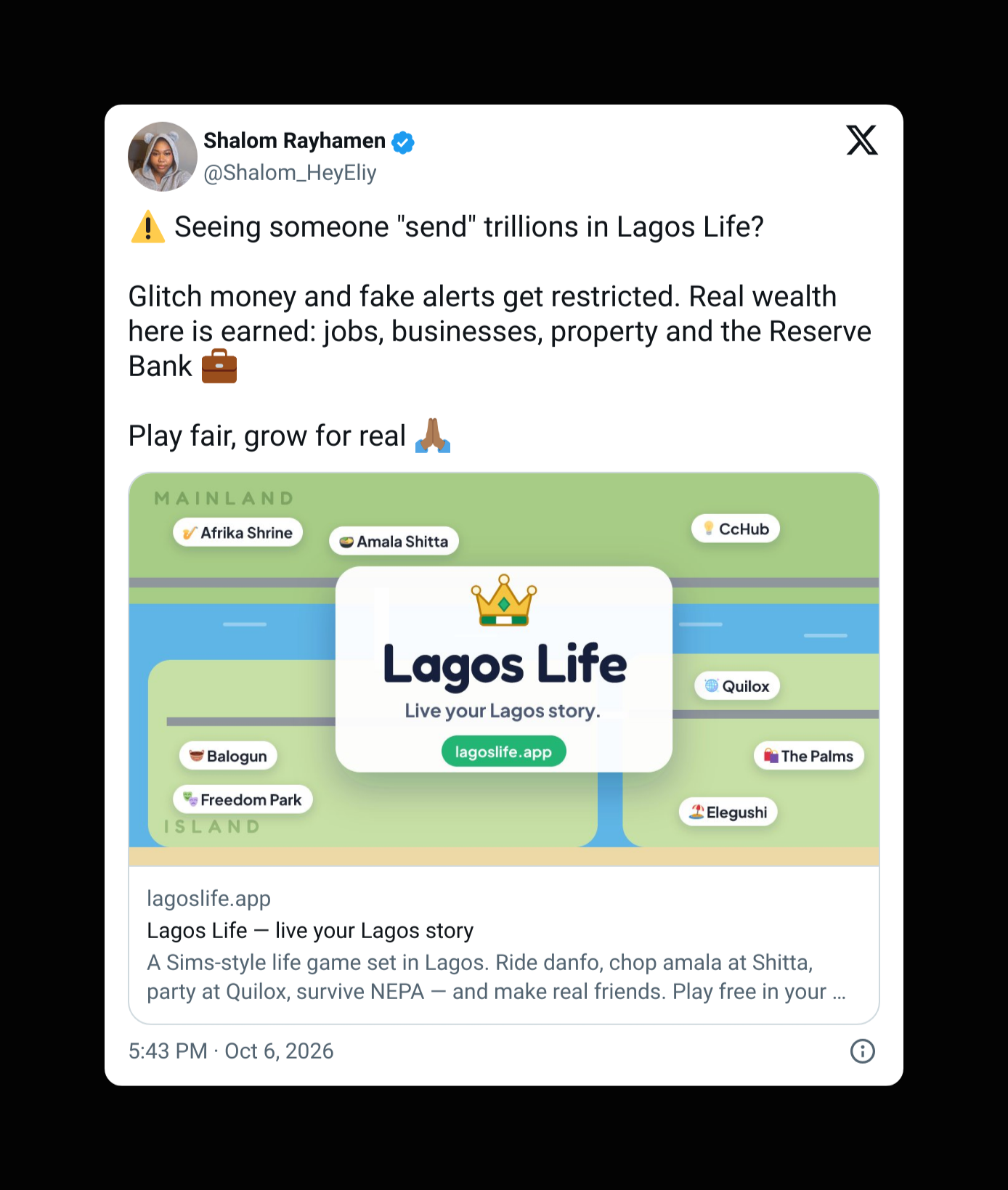
Shalom Rayhamen's post on X reminding players that glitch money and fake alerts get restricted.
Why It Feels Like Lagos
Asked what she was most deliberate about, she gave a one-word answer: Culture. Shalom says the team was intentional about it. You cannot be on a Lagos road and not run into an agbero stopping you, or a woman selling agbo by the roadside, and those are the kinds of things players meet in the game. They are scenes people see every day in the real city, and she believes that is why the game is sticky. People can see themselves in it.
Abuja, Port Harcourt and an Airport
AbujaLife and PHLife went live on the night of 5th October, and people LOVE them, she says. Shalom did not have to guess at demand. She uses an AI agent connected to her X account that tells her what players are asking for, and the requests for Abuja had run into the thousands since Lagos Life launched on Thursday, 1st October. Ibadan came up too, but she had to prioritise the cities in the most demand, which for now are Abuja and Port Harcourt.
The wait was deliberate. She did not want to put something mediocre out there. "We have to take our time," she said, explaining that the new cities had to be added in a way that would make even people in Lagos want to go and see them. That is why the airports matter. Players can fly between cities, and wealthier ones can take a private jet or a chopper. For her, it is the same idea as everything else in the game: localised culture.
Growing by Word of Mouth
Asked how she plans to keep the game going beyond the first few weeks, Shalom points to how it has grown so far. No money has been spent on marketing. A lot of celebrities are playing the game and telling people about it, and that word of mouth, along with the trends around it, has done the work. She sees that as a good sign. If the game can reach this many people without a marketing budget, there is still a lot of room left, because so many Nigerians have not played it yet. In her view the game is still early, and that room to grow is where sustainability will come from.
Lagos Life is also only one part of a bigger plan. It sits under a parent company, and she says more games are on the way.
Why HeyEliy Exists
Before HeyEliy, Shalom had built business-to-business products. What changed her approach was watching ChatGPT launch. It was easy for anyone to use, whether or not they had any knowledge of tech, and that stayed with her. She decided to also build products that people could pick up just as easily, and that is when she started on consumer products. She wanted something anyone could use on their phone to create anything, from a website for a business to a game for customers to play.
That is HeyEliy. A business owner talks to HeyEliy, says what they want for their business, and it builds it and helps bring in customers. HeyEliy is Shalom's first consumer product, and Lagos Life is her second.

The HeyEliy Social Card
A Year From Now
Asked what she wants to be true a year from now, Shalom is open about it. She hopes they will have released more games, expanded to more countries and gone through a few rounds of fundraising. She concluded by saying that how far they get depends on how fast they can raise the money.
Frequently Asked Questions
Who Is Shalom Rayhamen?
A Nigerian software developer and entrepreneur of almost ten years, and the creator of Lagos Life and HeyEliy. She shares updates on Instagram and X.
How Long Did It Take to Build Lagos Life?
She says she built the whole game from 9pm until about five in the morning and released it at 7:11am.
What Inspired Lagos Life?
The Sims 3, which she grew up playing. She had always wanted to build it, and Eureka's Lagos Run gave her the push.
What Are AbujaLife and PHLife?
New city versions of the game that launched on the night of 5th October, connected to Lagos by in-game airports.
What Is HeyEliy?
A platform where a business owner talks to HeyEliy about what they want, and it builds it and brings in customers. HeyEliy is Shalom Rayhamen's first consumer product.
- Shalom Rayhamen
- Lagos Life
- AbujaLife
- PHLife
- HeyEliy
- Nigerian startups
- Nigerian browser game
- Founder interview
Tip: highlight any line in the story to turn that line into a share card.
Frequently asked
- What is “Lagos Life Creator Shalom Rayhamen: "When You Build Something That People Love, You Will Definitely Get the Numbers"” about?
- Shalom Rayhamen built Lagos Life in one night, woke up to a viral game, and has now launched AbujaLife and PHLife with airports to connect them. She tells PINCHED how the idea came together, what went wrong with the… Shalom Rayhamen built Lagos Life in one night, woke up to a viral game, and has…
- Who covers tech on PINCHED?
- Kenneth Onyebuchi reports this piece for the PINCHED tech desk.
- Where can I read “Lagos Life Creator Shalom Rayhamen: "When You Build Something That People Love, You Will Definitely Get the Numbers"”?
- Read it in full at https://staypinched.site/read/shalom-rayhamen-lagos-life-interview.