From Carrying Cameras to Capturing Sound: Habib on Finding His Place in Nollywood
He was young and had entered the streets at a time when his family could no longer afford to keep raising him. His first plan had nothing to do with filmmaking. He wanted to make money, buy a motorcycle and start doing deliveries.
Choose your narrator
In short
He was young and had entered the streets at a time when his family could no longer afford to keep raising him. His first plan had nothing to do with filmmaking.
- Desk:
- film
- Format:
- interview
- Author:
- Mary Anja
Before Habib learned how to listen for clean dialogue on a film set, he was simply trying to find a way to survive.
He was young and had entered the streets at a time when his family could no longer afford to keep raising him. His first plan had nothing to do with filmmaking. He wanted to make money, buy a motorcycle and start doing deliveries.
Acting was around him, but he was not particularly interested in it. He found himself around theater sets, helping with whatever needed to be done. Sometimes it was moving chairs and tables. Other times, it was setting up trampolines, helping with gardening or arranging things around the performance space.
He was useful, even if he did not yet know where all of this was taking him.
Years later, that willingness to help would become the foundation of a career in one of the most important departments on a film set: sound.
From the Streets to the Set
Habib's first real connection to filmmaking was not through sound. It was through his hands.
He spent time around theater productions with the Osumare Theater Group, owned by Mama Rainbow, watching people rehearse and perform. Mama Rainbow's son, Femi Philips, directed their rehearsals then. Sometimes he was encouraged to stay and watch, but acting was unfamiliar to him. He did not understand the craft well enough to imagine himself as an actor.
When the theater group traveled to bigger locations, he often stayed behind because there were only a limited number of people who could go.
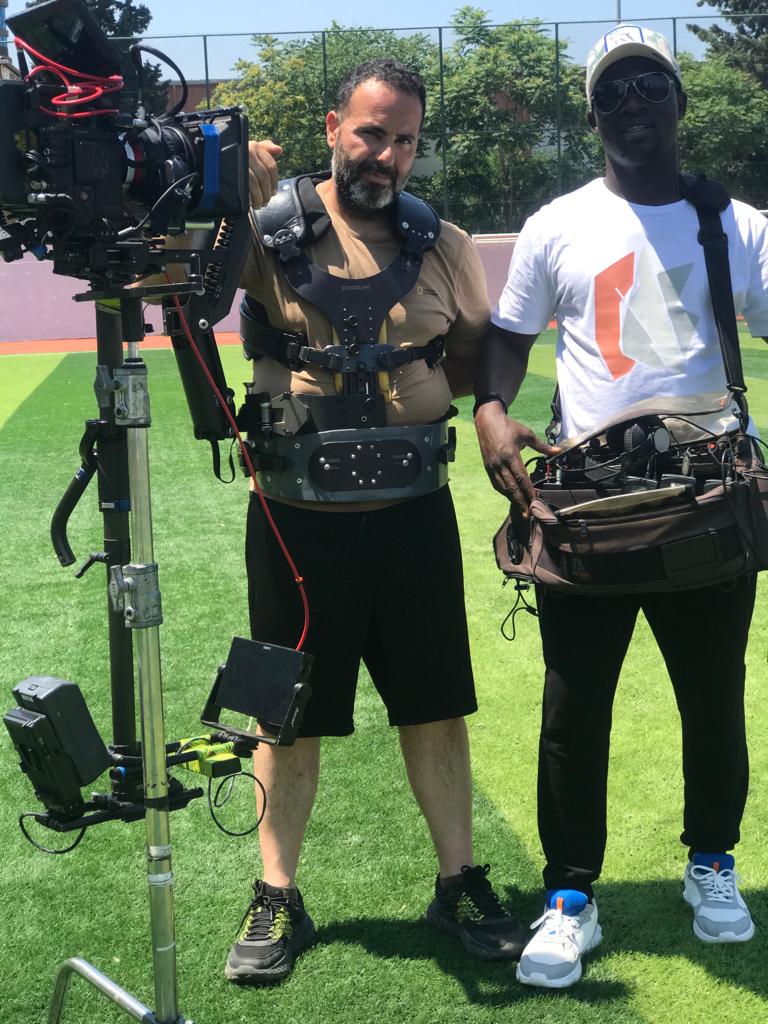
Then the camera crew arrived. Habib began staying close to the Director of Photography, Blessing Adejumo. He helped carry the large DVCAM 450 camera and other equipment, gradually learning about lights, cables and the general rhythm of working on a production. He was not officially there as a crew member in the beginning. He simply made himself useful.
During one seven-day production, which took them through locations around Iju Ishaga and later to a mansion in the Osborne area of Ikoyi, his consistency caught Mr. Blessing Adejumo's attention, he insisted that Habib be added to the team. He had been assisting from the first day, and his contribution was becoming difficult to ignore.
The Meeting That Changed Everything
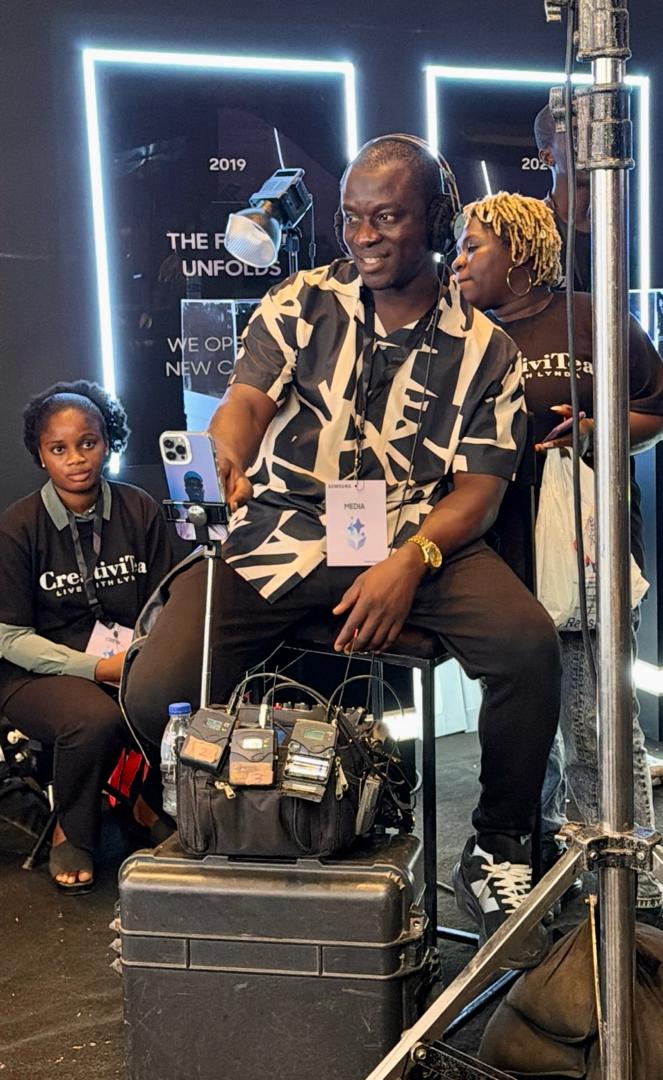
Habib's journey into professional sound came through another important encounter. At the time, Mr Pius Fatoke was already well known in the industry as a major sound professional and Head of Department on large Yoruba productions. As more jobs began coming in, he wanted to build a stronger team, and a meeting was organized. Habib attended.
By then, people had begun calling him orchestra, a name given to him by Lasu Ray, who believed in his setup whenever they worked together, and his growing familiarity with equipment and set work had made him stand out.
Mr Pius heard about him and was interested. Not long afterwards, Habib received a call to travel to Oyo for a production. He was asked to pick up equipment in the Mafoluku/Oshodi area before heading to Berger, where the team would meet before traveling.
The job became another test. The realities of working on Yoruba productions were not always easy. The long hours, the treatment of crew and the conditions on set could be demanding. But Habib did the work, and he did it well.
When Sound Became a Career
Habib eventually worked on a major 21-day series with Ultima Studios, owned by Mr Yeni. Mr Pius was the Sound designer and it was the first time Habib was on set with him, and he did the job perfectly with no complaints.
About two weeks before the production ended, Habib received his first ₦150,000 cheque.
For someone who had started out simply trying to survive, the moment was significant.
By the end of the project, he had made somewhere around ₦360,000 to almost ₦400,000.
It was then that something clicked.
Sound was no longer just another thing he was helping with. It could actually become a career.
At the time, he was thinking about buying a mixer that cost around ₦80,000. On some Yoruba productions, a four- or five-day job could pay around ₦35,000 or ₦45,000, while bigger jobs could come close to ₦100,000.
The problem was equipment.
To work professionally, you needed equipment. To buy equipment, you needed money. And to make the money, you needed the jobs that often required the equipment in the first place.
Still, Habib had made his decision. Meeting Pius Fatoke and seeing the structure of larger productions, the treatment of crew and the possibility of earning properly from his craft made him realise that this was something he wanted to pursue for life.
Learning to Work Under Pressure
Location sound is one of those departments audiences rarely notice when it is done well.
When the dialogue is clear, people simply listen to the story. But when there is noise, distortion, traffic, generators or an actor's voice is difficult to hear, sound suddenly becomes impossible to ignore. Habib learned this through experience.
One of the productions that pushed him technically was Rattlesnake: The Story of Ahanna.
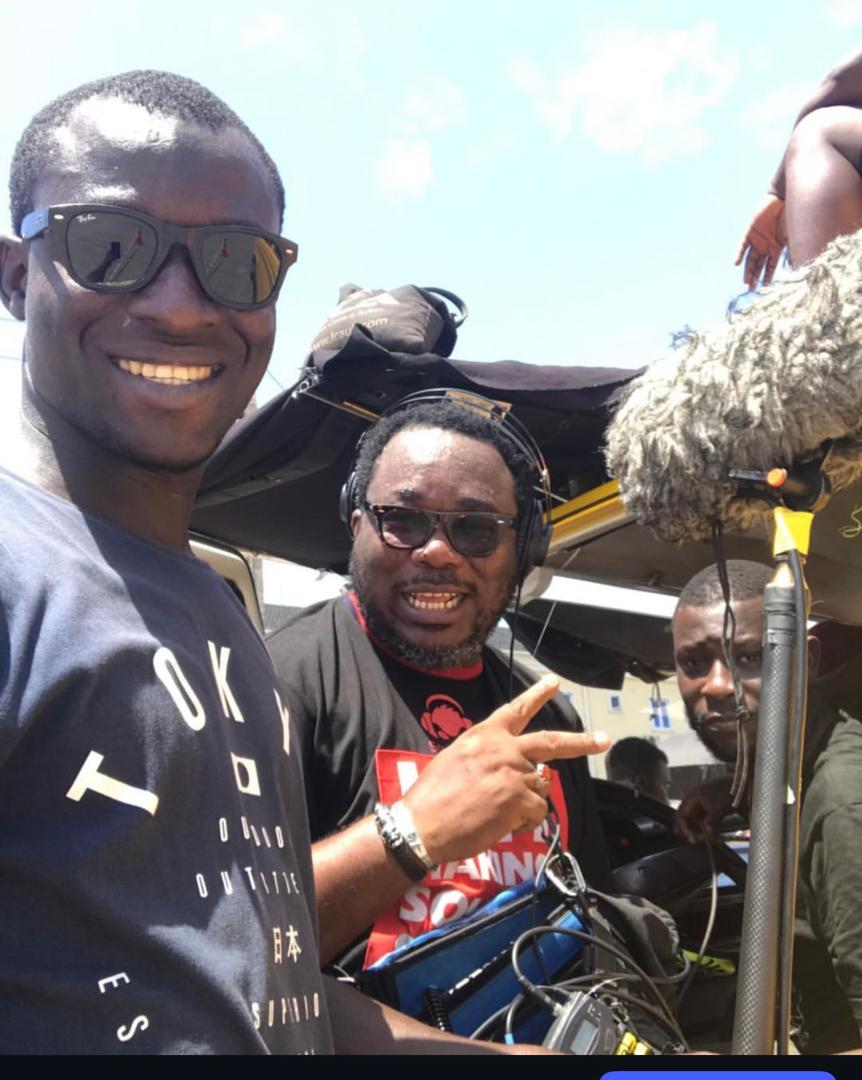
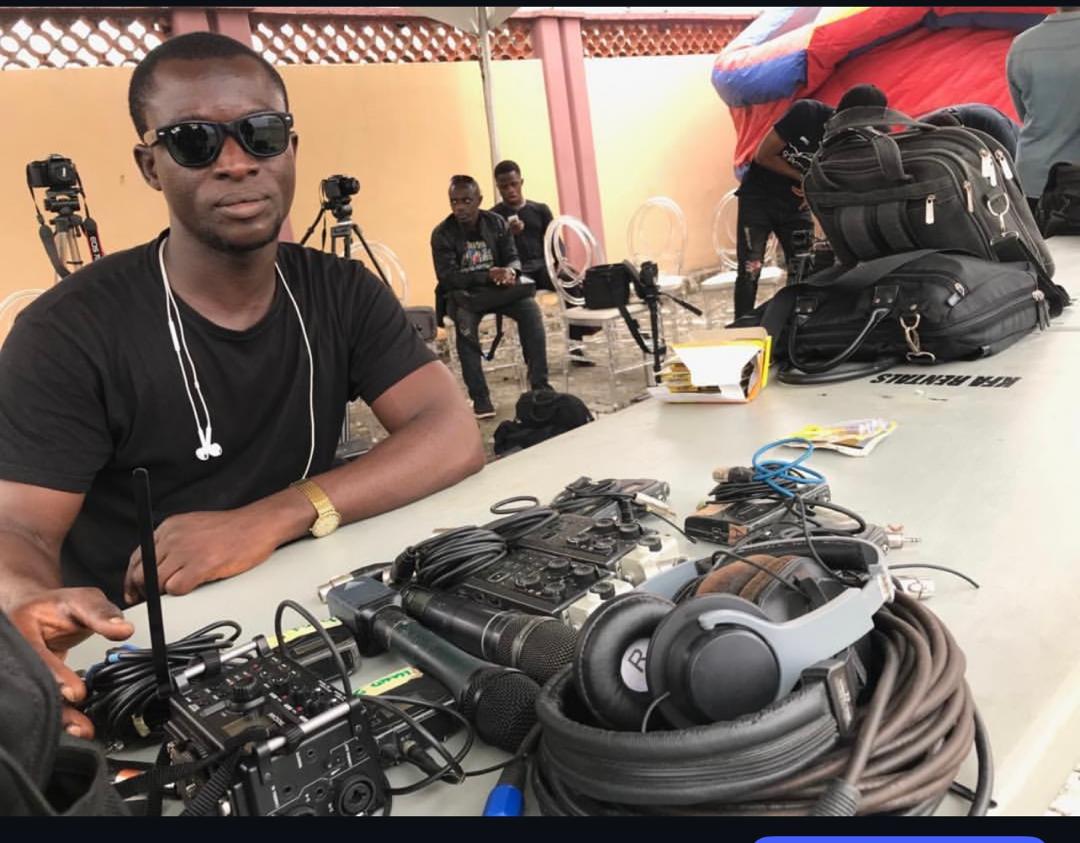
There were scenes with heavy dialogue, sometimes involving as many as six characters. He could have seven or eight tracks running on the recorder at the same time. Before filming, the team had to scan frequencies and find channels that were free. Some locations were close to roads and busy bypasses, meaning traffic could easily become part of the recording.
Sometimes, the solution was not expensive technology.
It was patience. There were moments when Habib had to work with production, wait for the right timing and find ways around environmental noise without disrupting the entire shoot.
The production also taught him an important lesson about never assuming that dialogue is unnecessary simply because a scene has been described as a montage.
He learned to record anyway.
That decision would later prove valuable when he worked outside Nigeria. He was advised, in essence, that whenever a director called something a montage, he should still mark it and record the dialogue. It was a lesson in preparation: capture what you can, because you may not get another chance.
The Sound You Don't See
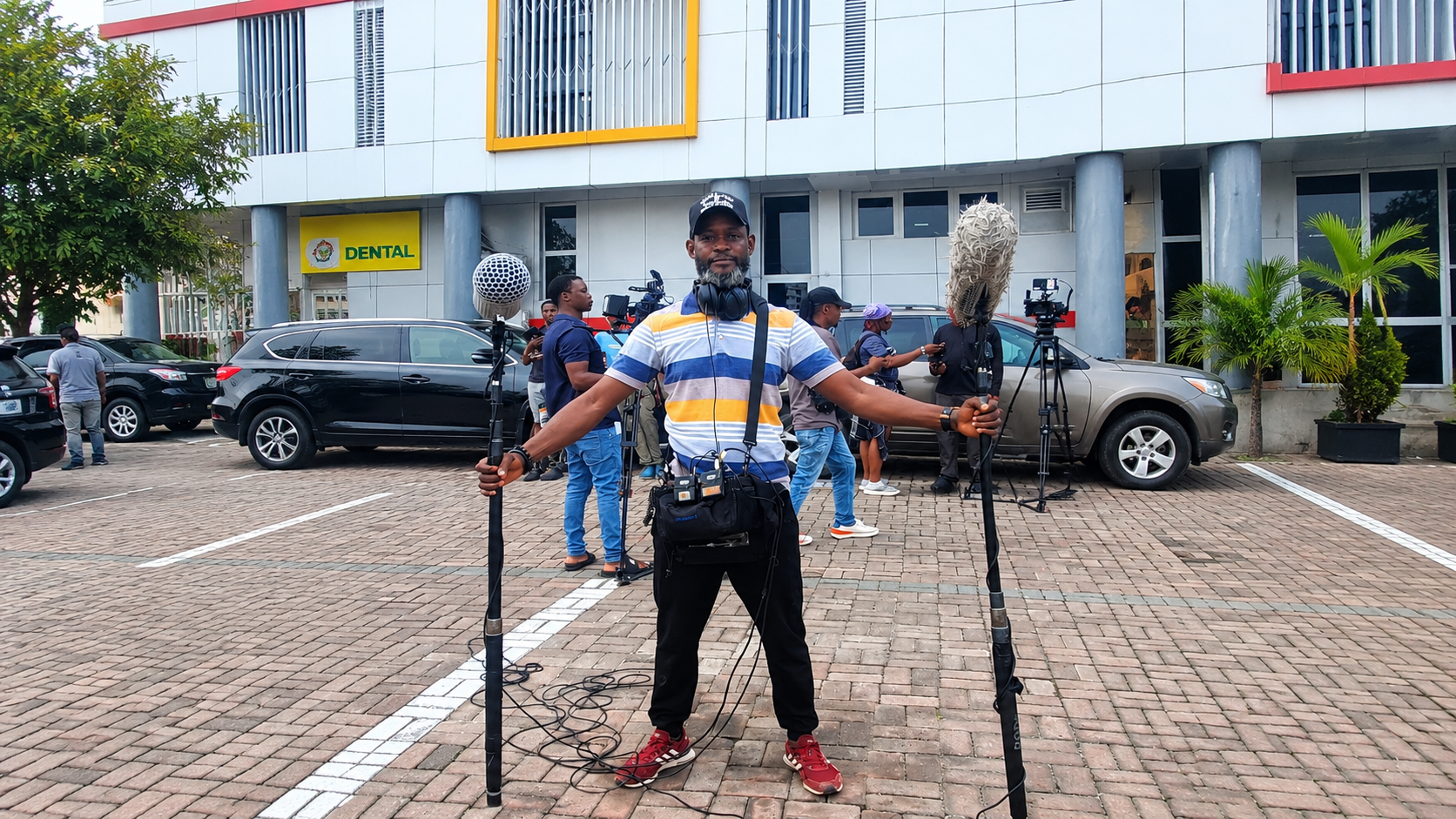
For Habib, location sound is about much more than holding a recorder and placing microphones on actors.
He has to watch the actors.
He has to know when they are entering or leaving a scene. He has to monitor his faders and make sure he is not accidentally leaving something open that could capture unwanted sounds from a phone, music or the surrounding environment. He admits that he made mistakes early on. But the mistakes became lessons. He became more observant, more focused and more deliberate.
And that focus is important because location sound is not something that can simply be fixed endlessly after filming.
Habib's job is to capture the cleanest possible dialogue and usable ambience while the production is happening. The more elaborate sound effects, such as those used to create fear or the sounds associated with the serpent in Rattlesnake, are handled during post-production.
His responsibility is to make sure the foundation is strong enough for the sound team that comes after him.
The Reality of Sound on Nigerian Sets
Working in Nigeria comes with its own challenges.
Generators. Traffic. Unpredictable locations. People talking around the set. The sounds of everyday life that cannot simply be switched off because a camera is rolling.
For Habib, the work begins before the actual shoot.
Recce is important. Script reading is important. Sound checks are important.
But even something as basic as a recce can become complicated when
productions do not always agree on how much crew should be paid for the work.
Habib has learned to draw a line between what he is willing to overlook and what he is not.
Small recce fees may sometimes be allowed to go, especially when there are repeated issues around payment. But his working fee and equipment fee are different.
If equipment has to be rented, he tells the producer.
The renter may require 50 percent upfront, so he cannot simply pretend the equipment is free.
For him, equipment is part of the business.
It is an investment, and it has to be treated that way.
When Netflix Changed Everything
One of the biggest changes in Habib's career came with the arrival of Netflix-backed productions in Nigeria.
According to him, the difference was not simply the size of the productions. It was the way crew members were treated and the standards expected of them.
Producers understood the value of skilled crew. Rates were more reflective of professional work, and sound departments were expected to have equipment that could meet international standards.
For Habib, this opened another level of the industry. He invested in his equipment and began working on major productions, including Rattlesnake: The Story of Ahanna, Shanty Town and MTV Shuga. At a point, production schedules began clashing.
Mr Pius Fatoke trusted Habib enough to lead another team while he handled Living in Bondage. Habib took on other productions and commercials, and every successful job added to the trust people had in him. Netflix's presence eventually reduced, and the steady flow of major productions changed.
Today, Habib says the work is not as consistent as it once was. Instead of moving from one major production to another, he may now go several months between jobs, with commercials and documentaries helping to fill the gaps.
Still, he remembers what that period proved was possible. And he hopes international productions return in greater numbers.
Looking Beyond Nigeria
Habib's ambitions are no longer limited to working within Nigeria.
He has already had international exposure and wants more of it.
One UK/NFI production came to Nigeria for a four-day shoot, but the production paid for two weeks of work, including the location recce and sound check.
Mr Pius Fatoke was unavailable at the time and recommended Habib.
The Equipment He Still Dreams About
Habib already owns professional equipment capable of handling major productions, but he still has a list of equipment he wants to acquire.
At the top of that list is a Sound Devices 888 recorder, along with an antenna system and high-quality microphones that meet the standards of larger international productions.
It is not simply about owning expensive equipment.
He wants to have a setup that gives producers confidence the moment he arrives on set.
He is also interested in microphones that can maintain more consistent pickup when actors turn their heads, because off-axis movement can create problems with lavalier microphones.
Judith Audu gave him an opportunity on Shanty Town at a time when international sound professionals were not available, trusting Habib after seeing his work on Rattlesnake.
For him, that trust matters.
What He Wants Young Sound Professionals to Know
Habib has trained and mentored younger sound assistants, and his advice is surprisingly simple.
Be calm. Be neat. Communicate. Respect people. And know your sound.
He is particularly conscious of boundaries when working with actors. If a microphone needs to be adjusted or removed, especially when dealing with female actors, assistants should ask for permission rather than simply reaching into someone's clothing or personal space.
Professionalism, he believes, begins with respect.
He also encourages young sound professionals to invest in the small things that can save an entire production.
Extra cables. Tape. Clips. Spare headphones. Backups. And equipment that actually works.
If a cable is faulty, replace it. If a bodypack is causing problems, sometimes it is better to swap it than waste valuable production time trying to repair it on set.
Even documentation matters.
A proper sound report should contain the character name, scene number, take number and slate information.
Habib's reports were detailed enough that studios sometimes became curious about who had handled the sound.
That curiosity led to referrals.
For him, the lesson is simple: Your work should speak even when you are not in the room.
Building a Legacy Beyond the Set
Perhaps the most interesting part of Habib's story is that his ambition is no longer just about himself.
He wants to create opportunities for other people.
He hopes to establish a free three-month sound training programme in Nigeria for young people who cannot afford professional training.
He already mentors assistants and has developed his own system for how his sound bag, cables, headphones and emergency equipment should be organised.
He expects discipline from the people he works with. He wants them to be neat, respectful, focused and willing to learn.
But he also wants to be the kind of HOD people remember for the right reasons.
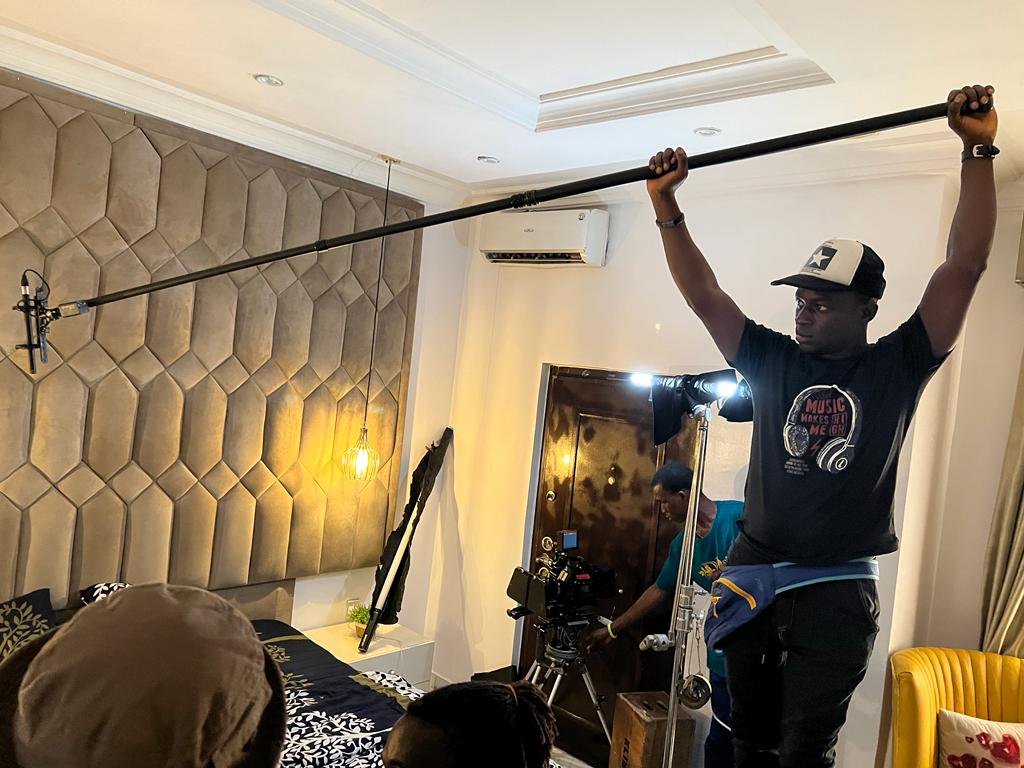
He wants his assistants to be paid promptly. He pays attention to their welfare, including accommodation arrangements, and tries to ensure that his team is not left stranded when basic needs are overlooked on set.
His idea of leadership is not simply about getting the job done. It is about what happens to the people working with you.
In the end, Habib wants his legacy to be bigger than the productions attached to his name.
He wants people to be able to say that working with him was a good experience.
That he did not deliberately make people afraid. That he did not hold back people's money. That he did not exploit the people working under him.
And perhaps most importantly, that he helped people grow.
For someone who entered the industry without initially knowing exactly where he belonged, Habib has come a long way, from moving chairs and carrying cameras to building a career around something most audiences never see but always hear Sound.
And now, he is not only interested in capturing the stories of other people.
He is building one of his own.
.
- Habib
- Sound
- Music
- movie cast
- crew
Tip: highlight any line in the story to turn that line into a share card.
Frequently asked
- What is “From Carrying Cameras to Capturing Sound: Habib on Finding His Place in Nollywood” about?
- He was young and had entered the streets at a time when his family could no longer afford to keep raising him. His first plan had nothing to do with filmmaking.
- Who covers film on PINCHED?
- Mary Anja reports this piece for the PINCHED film desk.
- Where can I read “From Carrying Cameras to Capturing Sound: Habib on Finding His Place in Nollywood”?
- Read it in full at https://staypinched.site/read/from-carrying-cameras-to-capturing-sound-habib-on-finding-his-place-in-nollywood.