THE GREEN SHIELD: HOW LEKKI CONSERVATION CENTRE HELPS PROTECT LAGOS FROM FLOODING
As Lagos continues to grow, the wetlands and green spaces that remain on the Lekki Peninsula are becoming increasingly important. Lekki Conservation Centre offers a rare example of what these natural systems can still do for a city dealing with flooding, rapid development and mounting environmental pressure.
Choose your narrator
In short
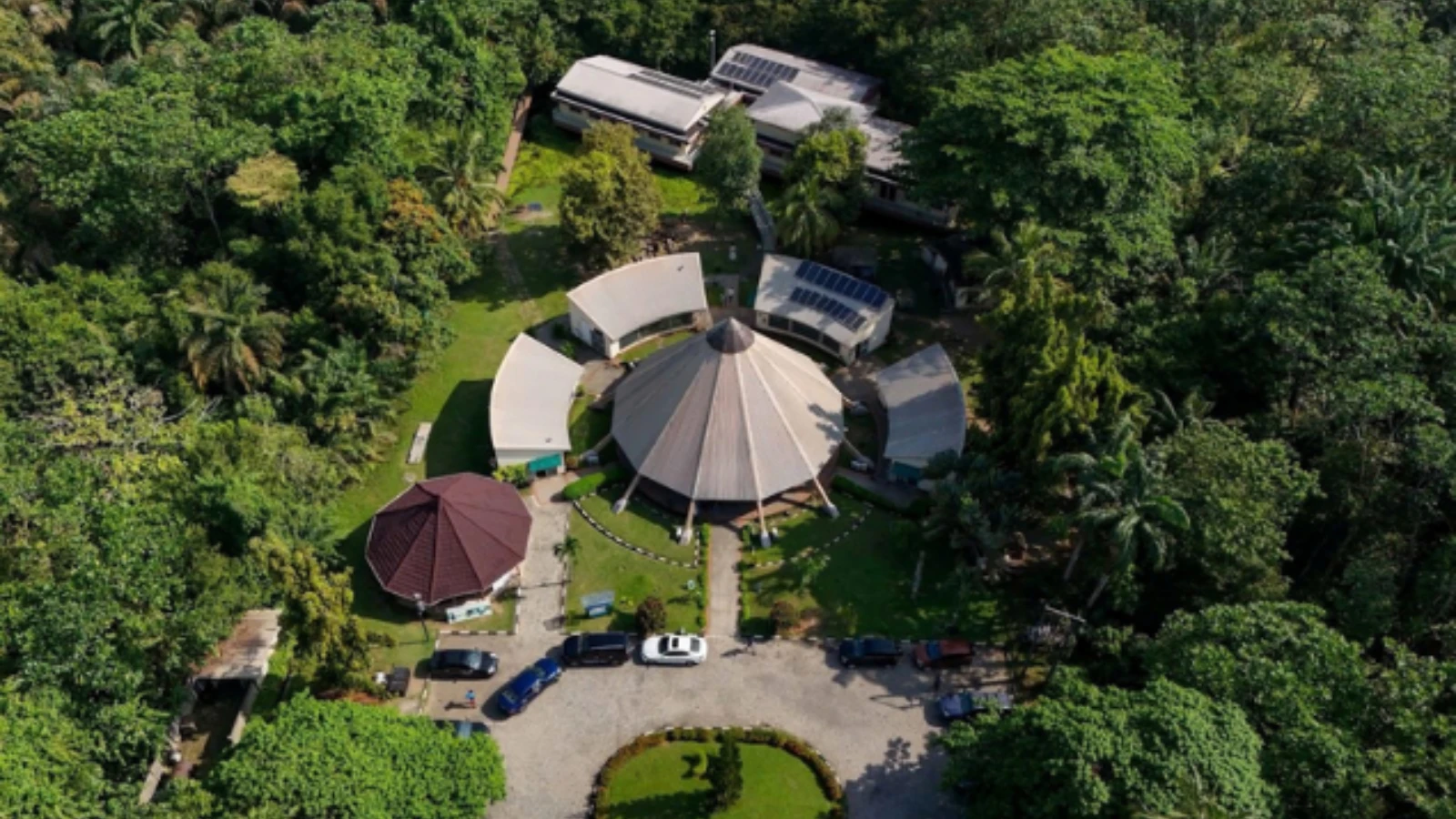
Lekki Conservation Centre protects 78 hectares of wetland and forest on the Lekki Peninsula. These natural areas absorb and slow rainwater, helping reduce flood pressure in a part of Lagos where most surrounding wetlands have already been built over.
- Desk:
- adventure
- Format:
- article
- Author:
- Eniola Unfiltered
Lagos has become accustomed to flooding during the rainy season. In parts of Eti Osa, particularly around the Lekki axis, the problem has become more difficult to ignore as new estates, roads and other developments have spread across land that once served as natural wetland.
Wetlands play an important role in managing rainwater. They absorb and retain water, slow its movement across the land and allow some of it to seep into the ground. When those areas are filled with sand and covered with buildings, roads and other hard surfaces, much of that capacity is lost. Rainwater then moves more quickly towards streets, drainage channels and low lying communities.
A geospatial analysis by HumAngle found that areas around Lekki Conservation Centre lost roughly 65 percent of their vegetation and wetland cover between 2008 and 2021. The study linked the expansion of developments, including Chevy View, to the gradual replacement of marshland with buildings and tarred roads. It also examined flooding in Ikate Elegushi in 2017 and Chevy View in 2016, connecting both incidents to the loss of natural wetlands in the surrounding area.
That finding puts Lekki Conservation Centre in a different light.
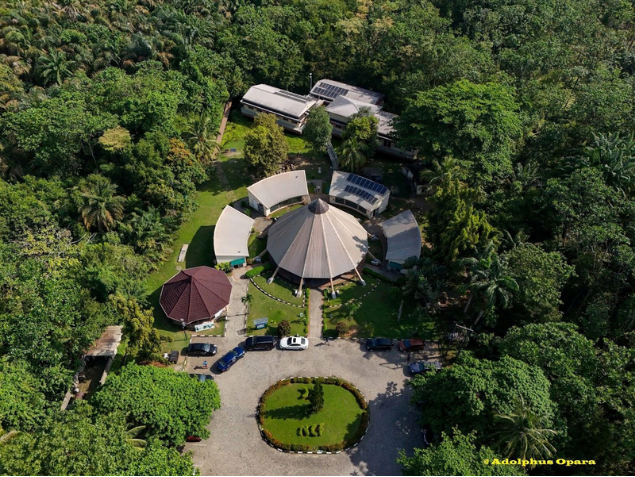
Established in 1990 by the Nigerian Conservation Foundation, with initial funding from Chevron, the 78 hectare reserve sits on the Lekki Peninsula beside Lekki Lagoon. It protects a combination of swamp forest, freshwater wetland and savannah habitat in an area that has experienced extensive development over the years.
Environmentalists have long pointed to the natural characteristics of the Lekki landscape when explaining its vulnerability to flooding. Desmond Majekodunmi has described the wider area as fundamentally mangrove terrain, low lying land close to water level that is capable of holding substantial amounts of water. That description helps explain why the wetlands that remain around Lekki are so important. They are part of the landscape's natural capacity to receive and hold rainwater.
The principle is straightforward. A wetland gives water somewhere to go and takes time to release it. A paved surface does neither. Once rain falls on concrete, asphalt or other impermeable surfaces, it runs off quickly and puts additional pressure on the drainage network.
The Landscape That Lagos Built Over
The flooding problem in Lekki is closely tied to the speed and scale of development across the peninsula.
New residential estates, commercial buildings, roads and other infrastructure have changed the character of an area that once contained much larger stretches of wetlands and vegetation. Development has brought investment, housing and economic activity, but it has also reduced the amount of land available to absorb rainfall naturally.
The consequences become more serious when heavy rainfall coincides with inadequate drainage.
Lagos is particularly exposed because much of the city is low lying and connected to lagoons, creeks and the Atlantic coastline. In such an environment, the condition of wetlands and waterways can influence how quickly water accumulates and how easily it can drain away.
Climate change adds to the pressure. More intense rainfall can overwhelm drainage systems, while rising sea levels and higher coastal and lagoon water levels can make it harder for stormwater to leave built up areas.
The result is that Lagos increasingly has to spend money engineering solutions to problems that natural landscapes once helped manage.
What a Wetland Does for a City
It is easy to look at an undeveloped wetland and see land that could be used for something else. From an environmental perspective, however, a wetland is already doing a job.
During heavy rainfall, wetland soils and vegetation can hold water and slow its movement. Some water infiltrates the ground, while vegetation reduces the speed and volume of surface runoff. This means that not all the rainwater reaches roads and drainage channels at the same time.
That function becomes especially valuable during intense storms, when drainage systems are under their greatest pressure.
Wetlands also provide other benefits. They support wildlife, help filter water, store carbon and provide habitat for plant and animal species. These functions may not be as visible as a new road or building, but they form part of the environmental infrastructure of a city.
Lekki Conservation Centre has preserved these functions in one of the most heavily developed parts of Lagos.
A Natural Buffer for Lekki
It would be wrong to suggest that Lekki Conservation Centre alone can prevent flooding in Lekki. The reserve is one part of a much larger landscape, and flooding is influenced by drainage infrastructure, land use, development patterns, rainfall, waterways and coastal conditions.
Its value is that it has remained largely intact.
Within the reserve, wetlands, forest and vegetation continue to perform the ecological functions that have been lost in many surrounding areas. Rain falls on land that has not been completely covered by concrete and asphalt. Water can therefore be retained and released more gradually than it would be on a fully developed site.
That difference becomes important when heavy rain falls across the peninsula.
The more natural land a city retains, the more opportunities it has to slow water before it reaches the places where flooding can cause damage.
Mangroves, Vegetation and the Water Around Us
The environmental value of the reserve extends beyond its ability to retain rainwater.
Mangroves and other wetland vegetation help hold soil together, reduce erosion and slow the movement of water. Their root systems trap sediment and contribute to the natural filtering of water, while the vegetation provides shelter and feeding grounds for wildlife.
The result is a landscape in which several environmental functions take place at the same time.
This is one of the reasons the loss of wetlands matters. Once the vegetation and natural soils are removed, the benefits they provided do not disappear from the city's balance sheet. They become costs that have to be addressed through drainage, pumping, flood control works and other interventions.
The Wildlife Experience
There is another way to understand what remains protected inside Lekki Conservation Centre, through the wildlife that continues to inhabit the reserve.
Depending on the time and circumstances of a visit, guests may encounter some of the centre's wildlife, including crocodiles, pythons and other animals that can be difficult to spot. A sighting may be brief or unexpected, but that is part of the experience. Beyond the walkways and visitor facilities is a living environment in which wildlife continues to exist largely according to natural conditions. That matters to the conservation story.
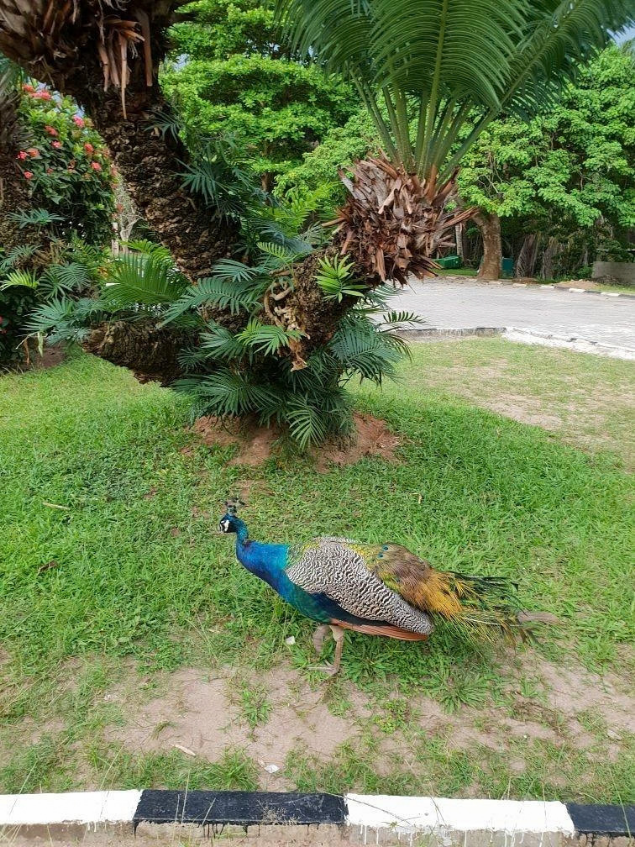
The presence of wildlife is evidence of a functioning habitat. The forest, wetlands and vegetation are supporting life, while at the same time performing environmental functions that benefit the wider landscape.
For visitors, the experience can turn an environmental issue into something more tangible. It is one thing to hear that wetlands support biodiversity. It is another to stand in the middle of one and see evidence of that biodiversity for yourself.
The Forest From Above
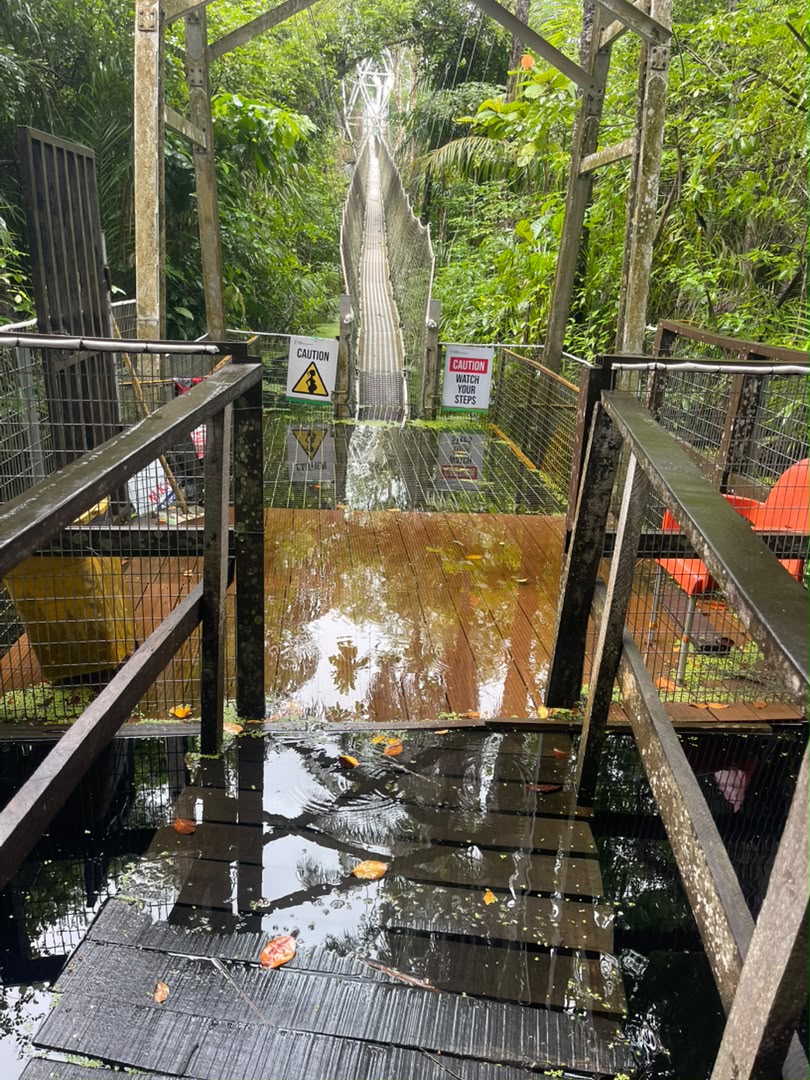
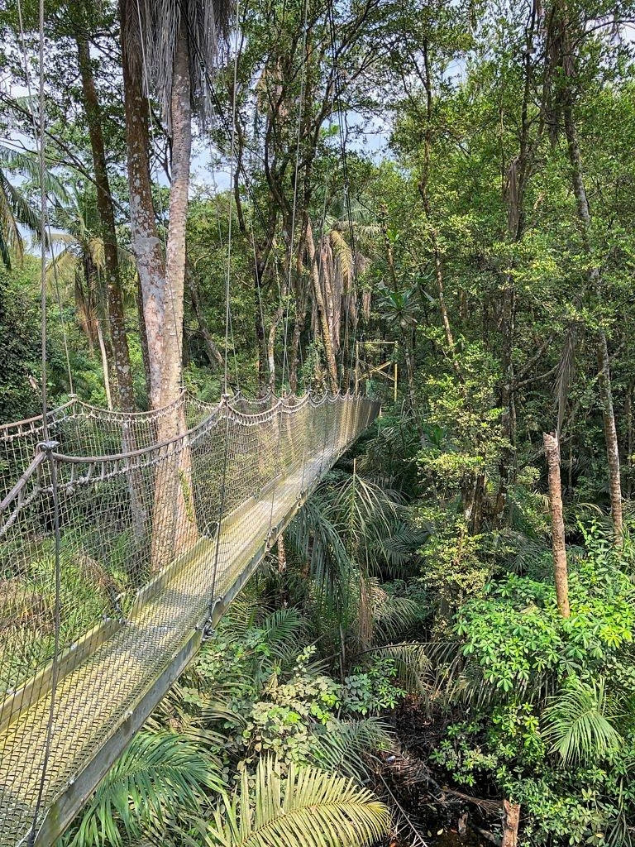
The 401 metre canopy walkway is perhaps the centre's most recognisable feature and is widely described as the longest in Africa. It gives visitors an elevated view of the forest and provides a different perspective on the landscape below.
Its value, however, goes beyond the attraction itself. The walkway gives people an opportunity to see the relationship between trees, wetlands and wildlife from within the reserve rather than simply reading about conservation from a distance.
The centre's nature trails, interpretive features and conservation programmes serve a similar purpose. They bring people into contact with an environment that most Lagos residents would otherwise experience only from the other side of a road or behind the walls of a development.
For children especially, seeing wildlife and walking through a natural environment can make conservation more meaningful. It helps establish an understanding that forests and wetlands are living systems, not simply vacant spaces awaiting development.
Conservation You Can Experience
The Family Park provides another way for visitors to spend time within the reserve. Families can use the space for picnics, floor games and outdoor leisure, while its open areas provide a setting for people to relax away from the pace of the city.
The Tree House is another memorable feature of the centre. Associated with one of the oldest trees in the reserve, it offers a striking view across the surrounding landscape. Although it is currently not open to the public, it remains part of the history and character of the conservation centre.
These facilities have a role beyond recreation. They create opportunities for people to develop a personal connection with the environment. When visitors walk the trails, see wildlife, spend time among the trees or bring their families to enjoy the reserve, conservation becomes something they can experience rather than an idea discussed only in policy documents.
A Green Space in a Rapidly Changing City
The significance of Lekki Conservation Centre becomes clearer when viewed against the landscape around it.
The Lekki axis has experienced rapid population growth and substantial real estate development. Roads have expanded, estates have multiplied and previously undeveloped areas have been converted for residential, commercial and infrastructure projects.
That transformation has brought obvious economic benefits, but it has also reduced the amount of natural land available to absorb rainfall.
LCC remains one of the places where a significant portion of that natural landscape has survived.
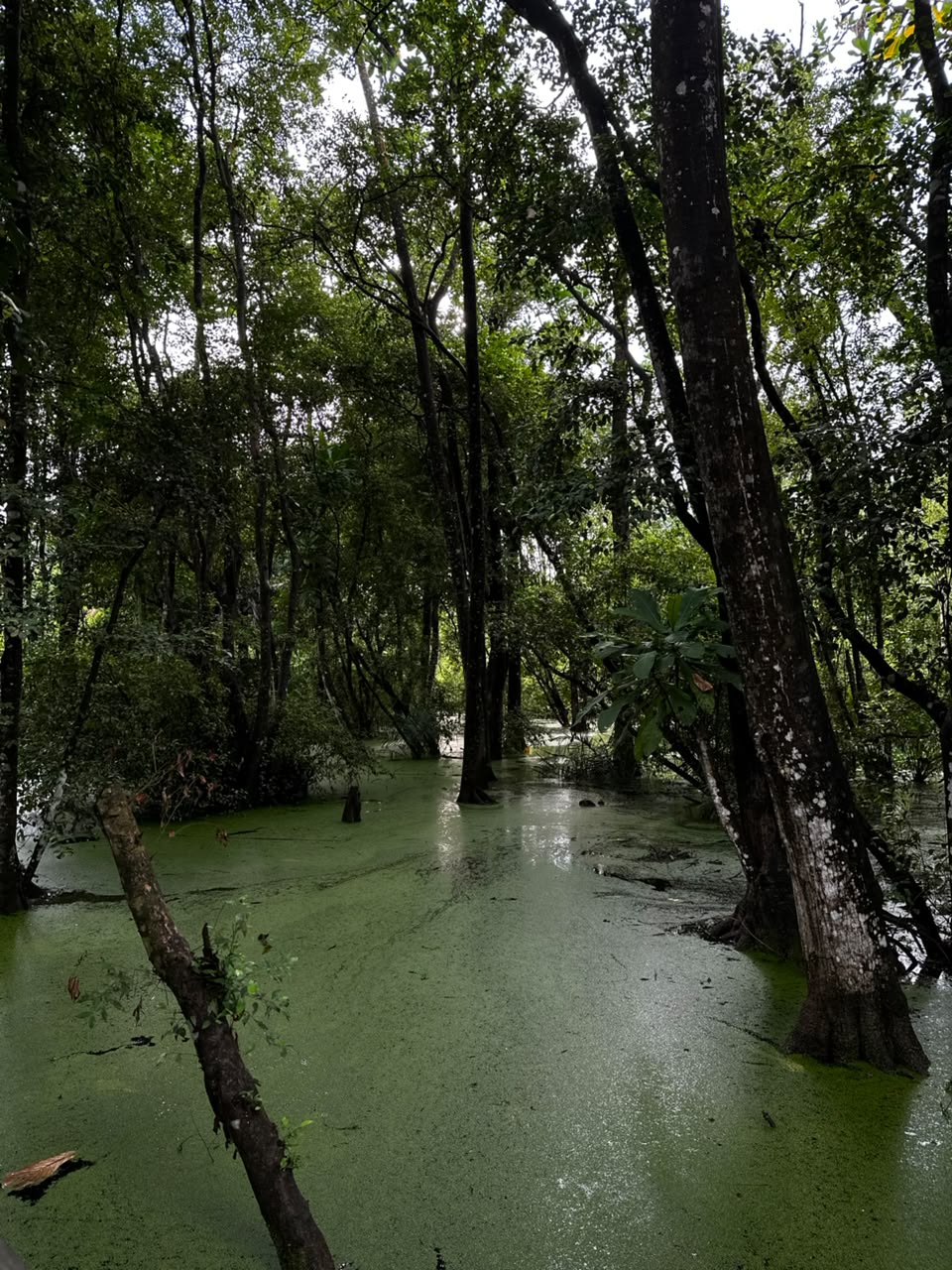
Its 78 hectares are only part of what once existed across the wider Lekki environment, but they remain valuable because the ecological functions they provide have become increasingly scarce.
This raises a larger question. Protecting the conservation centre is important, but what happens to the wetlands and waterways beyond its boundaries may ultimately determine how much protection the centre can provide to the wider environment.
The Pressure Beyond the Fence
The Lagos State Government has increasingly acknowledged the environmental consequences of uncontrolled land reclamation.
Following flooding in Eti Osa, Commissioner for the Environment and Water Resources Tokunbo Wahab suspended land reclamation projects that lacked Environmental Impact Assessment approval. The government warned that uncontrolled reclamation of lagoons, wetlands and floodplains could increase the risks of flooding, coastal erosion and biodiversity loss.
The state has also taken enforcement action against developments associated with illegal wetland encroachment, including facilities in Ogombo, Lekki Phase II, the Itoikin Epe corridor and Majidun in Ikorodu.
Such measures are important because the consequences of land use decisions may not appear immediately. A wetland can be filled today and a flood may occur years later, making the connection easy to overlook. But the relationship between the two can be very real.
The government therefore has to look beyond emergency responses and address the way land is being developed in the first place.
That requires stronger drainage systems, proper land use planning, protection of waterways, restoration of degraded wetlands and greater use of green infrastructure alongside conventional flood control measures.
What Lagos Can Learn From LCC
Lekki Conservation Centre offers a practical lesson in how nature can form part of a city's approach to flood management.
Natural systems cannot replace drainage channels, pumping stations or other engineered infrastructure. Lagos needs all of these. But the city also needs the wetlands, forests and green spaces that can reduce the amount of water reaching those systems in the first place.
That means wetlands should be considered part of the city's environmental infrastructure rather than simply land that has not yet been developed.
It also means that the economic value of a wetland cannot be measured only by what can be built on it. The land provides services even when there is no building standing on it.
For Lagos, the challenge is to accommodate continued growth without steadily removing the natural systems that make the city more resilient.
Protecting What Protects Us
The story of Lekki is, in many ways, a story about what happens when development moves faster than environmental protection.
A wetland can be filled. A forest can be cleared. A waterway can be narrowed or obstructed. Each decision may appear manageable on its own. Taken together, however, they can fundamentally alter how water moves through a landscape.
Once that natural capacity has been lost, restoring it can be difficult and expensive.
Lekki Conservation Centre still retains a part of that capacity. Its wetlands can hold water. Its vegetation can slow runoff. Its forests provide habitat. Its wider landscape supports biodiversity. Its visitor programmes help people understand the value of the environment.
These are not separate benefits. They are connected parts of the same ecosystem.
The Green Shield
Lekki Conservation Centre cannot prevent flooding across Lagos, and it was never designed to do so.
Its significance is that it has preserved a part of the natural landscape in a place where much of the surrounding environment has been transformed by development. What remains inside the reserve offers a practical reminder of the work that wetlands, forests and vegetation can do before water reaches a road, a house or a drainage channel.
The green shield, therefore, extends beyond the boundary of the conservation centre. It includes the wetlands, waterways, mangroves and other green spaces that remain across the Lekki Peninsula and the wider coastal landscape.
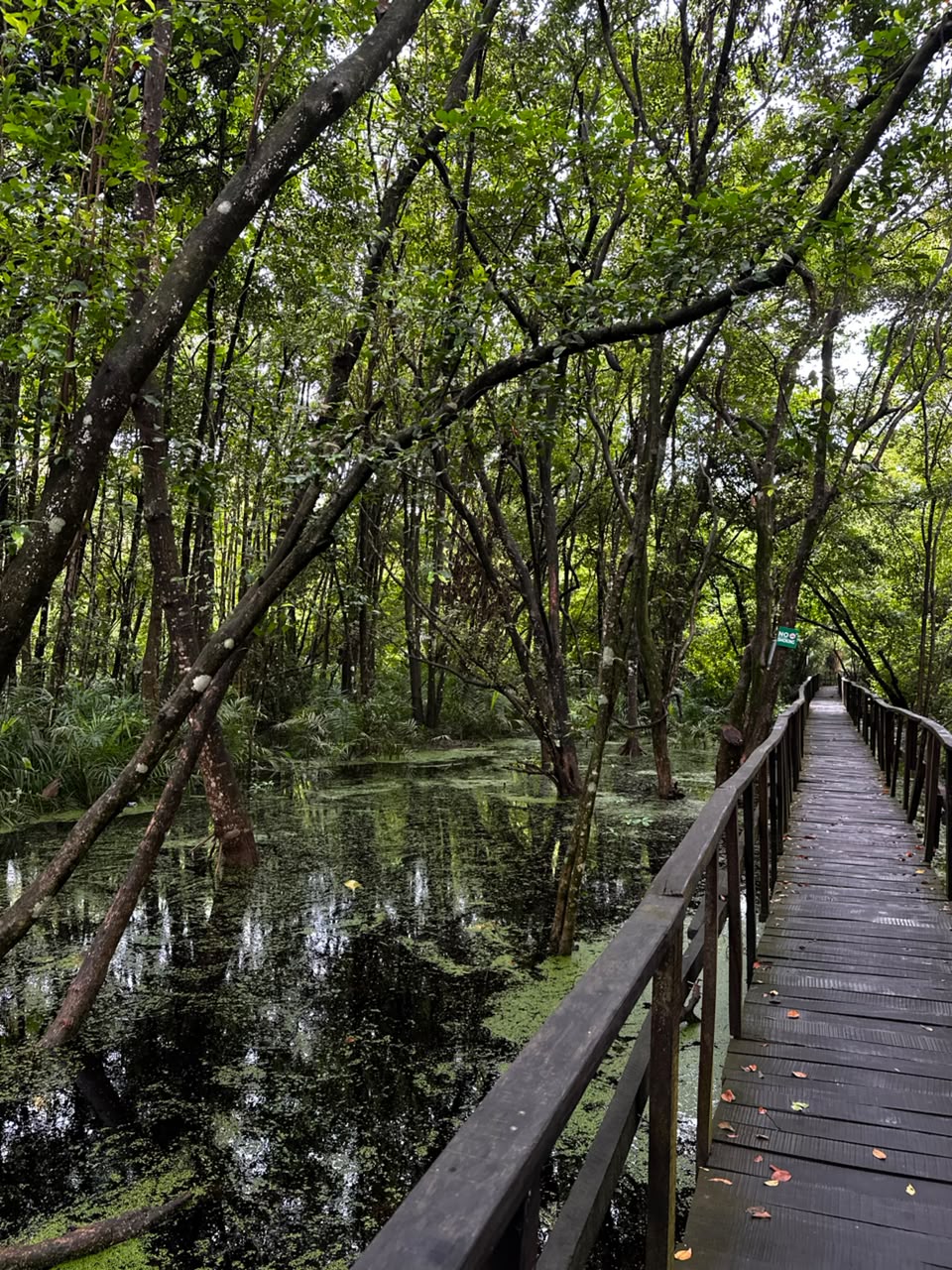
Protecting LCC matters. Protecting the natural systems around it matters just as much.
As Lagos continues to build, expand and accommodate a growing population, the city's approach to its remaining natural spaces will become increasingly important. The choice is not between development and conservation. The real challenge is to build a city in which development does not destroy the natural systems that help keep it habitable.
For a city built on low lying coastal land, that may prove to be one of the most important environmental decisions of all.
Read more: Nigerian Conservation Foundation
- Lekki Conservation Center
- Flooding
- Wildlife conservation
Tip: highlight any line in the story to turn that line into a share card.
Frequently asked
- What is “THE GREEN SHIELD: HOW LEKKI CONSERVATION CENTRE HELPS PROTECT LAGOS FROM FLOODING” about?
- As Lagos continues to grow, the wetlands and green spaces that remain on the Lekki Peninsula are becoming increasingly important. Lekki Conservation Centre offers a rare example of what these natural systems can still do for a city dealing with flooding, rapid development and mounting…
- Who covers adventure on PINCHED?
- Eniola Unfiltered reports this piece for the PINCHED adventure desk.
- Where can I read “THE GREEN SHIELD: HOW LEKKI CONSERVATION CENTRE HELPS PROTECT LAGOS FROM FLOODING”?
- Read it in full at https://staypinched.site/read/the-green-shield-how-lekki-conservation-centre-helps-protect-lagos-from-flooding.