From Owambe to the World: How Nigerian Weddings Became Big Business
From gele tying to aso ebi fundraising, here's how a Yoruba word for "party" became a genuine, global, billion-naira export.
Choose your narrator
In short
The "owambe economy" refers to the billion-naira industry built around Nigerian weddings and celebrations, spanning aso ebi fashion, gele styling, event planning, and diaspora spending, all built on "owambe," a Yoruba word meaning roughly "it is happening" or "party."
- Desk:
- culture
- Format:
- article
- Author:
- Praise_writes
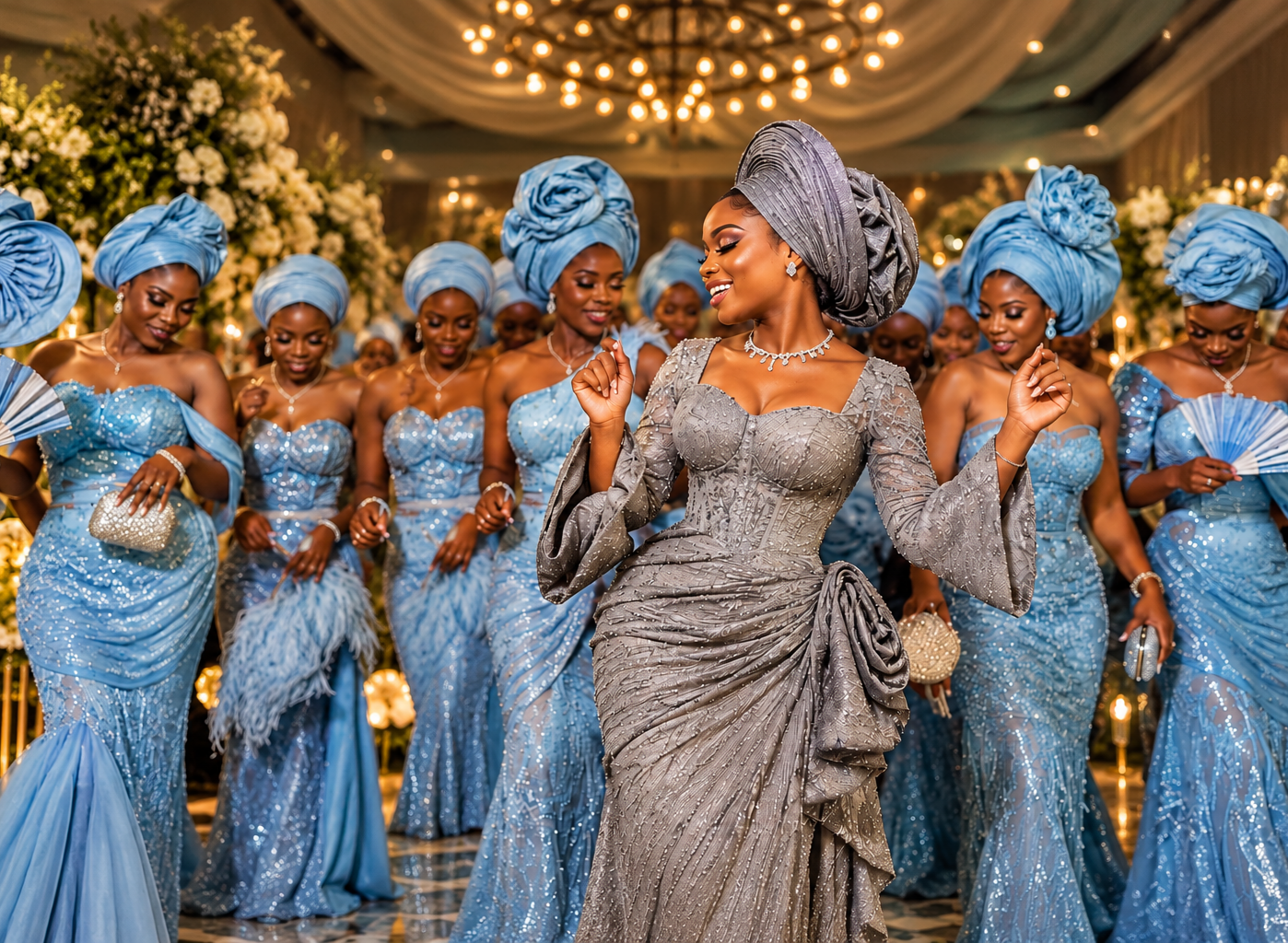
You've probably scrolled past a Nigerian wedding video at some point, the matching outfits, the dramatic gele, someone spraying naira notes like confetti, and thought, "wait, how much did this actually cost?" You're not alone.
That question is exactly why the owambe economy has quietly become one of Nigeria's most fascinating, and least talked about, industries.
This isn't just about weddings being expensive, although they genuinely are. It's about an entire informal economy, real jobs, real income, real global reach, that assembles itself every Saturday and somehow keeps growing.
Let's break down exactly how it works.

Owambe Meaning: Where This All Started
First things first, "owambe" is a Yoruba word that essentially means "it is happening" or, more loosely, party/celebration. It's used across Nigeria now to describe any big, lavish social event, weddings especially.
However, owambe isn't just a party style anymore, it's an entire economic ecosystem that assembles itself every single weekend and generates real money for thousands of people, then quietly packs up until the next one.
How Big Is This Thing, Actually?
Big enough that people genuinely lose track of the real number.
The Nigerian wedding industry has grown from humble beginnings into what's now widely described as a multi-billion naira industry, spanning venues, catering, music, event management, and design.
Here's a number that'll put it in perspective for you, back in 2013 alone, an estimated ₦31 billion was spent on champagne at Nigerian parties, roughly 1.1 million bottles, driven almost entirely by owambe culture.
That's just champagne. Not venues, not catering, not outfits, just the drink getting sprayed and popped.
The Real Wedding Budget Range
You've probably heard wildly different numbers thrown around, and honestly, they're all kind of true. Market research group TNS Global put the average Nigerian wedding cost between $9,460 and $13,515.
However, veteran wedding planner Funke Bucknor has described the full spectrum as running from ₦5 million at one end to ₦100 million at the other, depending on how far a family wants to go.
For context on just how far "far" can go, when Folorunsho Alakija's son got married at Blenheim Palace in the UK, the wedding reportedly cost around $6 million, complete with a million roses and a performance by American singer Robin Thicke.

Aso Ebi: The Fundraising Instrument Disguised as Fashion
If you've ever wondered why everyone at a Nigerian wedding is wearing the exact same fabric, that's aso ebi, and it's not just a style choice. It's genuinely one of the smartest informal fundraising systems you'll ever encounter.
Here's how it works, the family buys fabric in bulk, then resells it to guests at a marked-up price. Guests get to look coordinated and celebratory, and the family recoups a meaningful chunk of the event's cost before the day even arrives.
It's fashion and financing rolled into one transaction, and it's a big part of why Aso ebi cost is one of the most searched wedding terms in Nigeria today.
Gele Artistry: A Whole Profession Built on One Headpiece
You'd be surprised how much money moves through something as small as a headwrap. Professional gele stylists are genuinely earning steady, serious income tying headgear at events across Lagos, Port Harcourt, Ibadan, and Abuja.
A single gele tie typically costs between ₦1,000 and ₦5,000, depending on style and location
A skilled stylist can tie 20 to 40 gele in a single event
That means one busy weekend can earn a stylist ₦30,000 to ₦70,000
As one Lagos-based stylist, Mrs Funmi Adeyemi, put it, "Many women don't want to stress themselves tying it. They want a professional touch that will last throughout the party."

Nigerian Wedding Traditions: Why the Scale Makes Sense
If you're not from Nigeria, the sheer scale of these events probably seems baffling. However, it makes a lot more sense once you understand Nigerian wedding traditions aren't built around just the couple, they're communal events by design.
Yoruba, Igbo, and Hausa weddings each carry their own distinct ceremonies and customs, but they share one thing in common: weddings are treated as an entire community's celebration, not just a private affair between two families.
That's part of why gatecrashing is culturally tolerated rather than scandalous, and why guest counts routinely blow past what any Western wedding planner would consider reasonable.
The Planners: Running an Entire Operation for One Day
Behind every seamless owambe is a planner juggling venues, vendors, timelines, and, often, a very demanding guest list.
Nigerian weddings regularly accommodate up to 1,000 guests, and gatecrashing is so culturally normal that planners genuinely build contingency catering into their numbers, according to CNN's reporting.
That scale is exactly why the wedding industry has created entire subsidiary professions that barely existed a decade ago, luxury mobile toilet hire, social media handlers dedicated purely to wedding hashtags, and specialised drinks services all now operate as standalone businesses feeding off owambe demand.
How Owambe Went Global
Here's the part that should genuinely surprise you, owambe culture isn't just staying in Nigeria anymore, it's being exported, deliberately and otherwise.
During the 2025 US prom season, American teenagers actually started hiring Nigerian dressmakers to create their prom dresses, drawn to the dramatic, tailored aesthetic of owambe fashion. One Nigerian design student described the unspoken rule that defines the whole look, guests are practically encouraged to try to "outshine the bride," since, as she put it, "[the brides] always overdo it."
Add in Nigeria's diaspora, who fly home for weddings, host their own owambe-style events abroad, and drive massive engagement through wedding hashtags on Instagram and Twitter, and you get an entire subculture that's now genuinely international, not just Nigerian anymore.
Nigeria has also started hosting dedicated international gatherings around this culture. The WED Expo, one of Africa's largest wedding-related gatherings, has reportedly drawn crowds of around 10,000 attendees, turning what used to be individual family celebrations into an industry with its own trade shows, exhibitions, and global visibility.
This Is Only Part One
Aso ebi pricing, gele artistry, planner economics, diaspora spend, each of these deserves its own deep dive, and we're building exactly that. Consider this the map. The individual routes are coming next.
So next time you watch one of those videos and wonder how much it all cost, now you actually know where to look. This is just the introduction, the real numbers are coming, one piece at a time.
Frequently Asked Questions
1. What does owambe actually mean?
Owambe is a Yoruba word roughly meaning "it is happening," used broadly across Nigeria to describe a big, lavish party or celebration, most commonly weddings.
2. How much does aso ebi typically cost?
Aso ebi fabric is sold by the hosting family at a markup above what they paid, functioning as both a fashion statement and an informal fundraising tool, with exact prices varying widely by fabric type and event scale.
3. How much do gele stylists charge in Nigeria?
Professional gele tying typically costs between ₦1,000 and ₦5,000 per style, with skilled stylists earning ₦30,000 to ₦70,000 across a single busy weekend event.
4. Why are Nigerian weddings becoming globally popular?
Social media, diaspora participation, and the sheer visual scale of owambe fashion have all contributed, with even international audiences, including American teenagers hiring Nigerian dressmakers, now drawing direct inspiration from the aesthetic.
5. Is aso ebi only used at weddings?
No. While weddings are the biggest driver, aso ebi is also common at birthdays, funerals, and other major owambe-style celebrations, anywhere a family wants coordinated guests and an extra layer of event funding.
- Owambe Economy
- Aso Ebi Cost
- Nigerian Wedding Traditions
- Gele Tying
- Owambe Meaning
Tip: highlight any line in the story to turn that line into a share card.
Frequently asked
- What is “From Owambe to the World: How Nigerian Weddings Became Big Business” about?
- You've probably scrolled past a Nigerian wedding video at some point, the matching outfits, the dramatic gele, someone spraying naira notes like confetti, and thought, "wait, how much did this actually cost?" You're… From gele tying to aso ebi fundraising, here's how a Yoruba word for "party"…
- Who covers culture on PINCHED?
- Praise_writes reports this piece for the PINCHED culture desk.
- Where can I read “From Owambe to the World: How Nigerian Weddings Became Big Business”?
- Read it in full at https://staypinched.site/read/from-owambe-to-the-world-how-nigerian-weddings-became-big-business.