


A woman writing her story by a sunlit window in Lagos

Verified first-person accounts

Real experiences,
told first-hand.

PINCHED publishes stories from people who lived them. Every submission is read by an editor and published with your consent.

PINCHED

I Spent My Annual Leave in a Hospital Corridor, Watching My Father Learn How to Be Looked After

24/11/2026

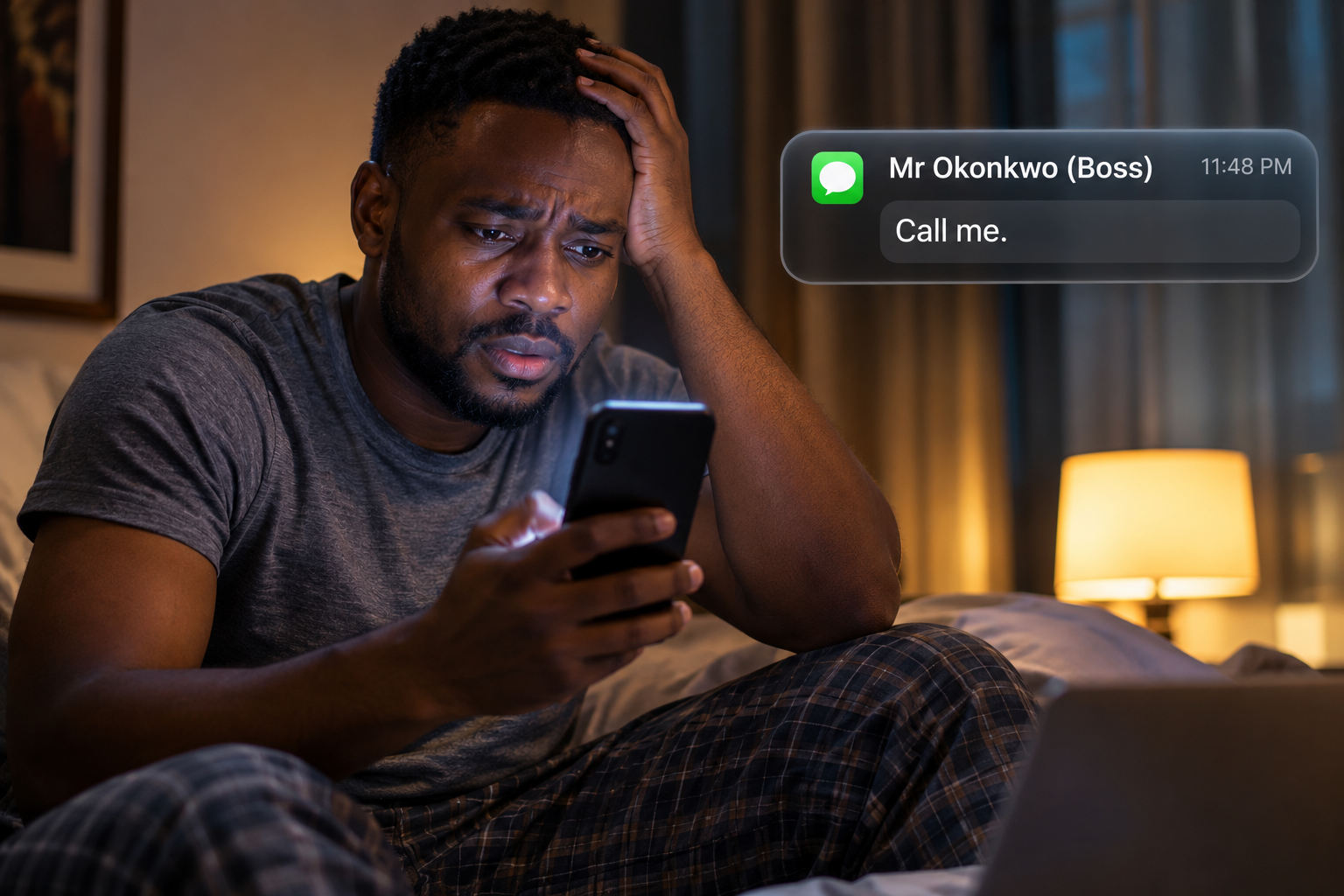
I Sent a Message About My Boss to My Boss, and the Next Ten Minutes Lasted a Year

23/11/2026

I Met My Husband in a Four Hour Traffic Jam, and I Almost Did Not Roll Down My Window

23/11/2026

My Mother Told the Whole Village I Am a Hacker Because I Work on a Laptop

23/11/2026

I Am a Single Dad Who Never Learned to Braid, and My Daughter Has a Photo Day on Monday

20/11/2026

42

Stories published

Editor-read

Every submission

0%

Corporate PR

Published on PINCHED

Reader submissions approved by our editors.

I Spent My Annual Leave in a Hospital Corridor, Watching My Father Learn How to Be Looked After

PINCHED

I Spent My Annual Leave in a Hospital Corridor, Watching My Father Learn How to Be Looked After

I had saved my annual leave all year for a trip to Zanzibar. I was going to sleep late, eat mangoes, and read three books. I had booked the flights in March. I had printed the itinerary and stuck it on my fridge. I even bought a straw hat. The plan was to leave on a Friday morning and return two weeks later feeling like a different person. On Wednesday evening, my brother called. “Dad fell.” My father is seventy three years old. He is a retired civil engineer, the sort of man who irons his own shirts and corrects the grammar on shop signs. He has never been sick. He walks every morning at 5 a.m., rain or shine, with a walking stick he doesn’t need. He is proud, stubborn, and allergic to help. He had slipped in the bathroom and hit his head. By the time I arrived at the hospital, he was awake but disoriented, with a bandage on his forehead and a grey look in his face that frightened me more than any scan. The doctor on duty was a young woman with tired eyes. She told us he had suffered a minor stroke. “He’s stable,” she said. “But we’d like to keep him for observation. At least a week.” My brother, who lives in Port Harcourt, said he would take two days off work. My sister, in Abuja, said she’d come on the weekend. My mother, who died six years ago, could not say anything. So I said what the eldest says. “I’ll stay.” I messaged my travel agent that night. I cancelled the flights. I did not cry. I made a spreadsheet in my head of what I’d lost. The hotel deposit. The tour. The straw hat, which I’d refused to refund because it was non returnable. I told myself it was only money. Then I went to find a chair. The hospital in Ikeja had a long corridor outside the men’s ward, lit by flickering fluorescent tubes. At the far end was a vending machine that dispensed tea in paper cups. There was a plastic chair I would come to know very well. Over the next nine days, I slept in it, ate in it, worked in it, cried in it. I became familiar with the sounds of the night: the squeak of the nurses’ shoes, the muffled coughs, the beep of machines that meant everything was fine or that it was not. My father hated every minute. He was not used to being helped. When the nurse brought him a hospital gown, he said, “I have my own pyjamas.” When she tried to adjust his pillow, he said, “I can do it.” When I offered to feed him, he looked at me with offended dignity and said, “I’m not a child.” On the third night, he tried to walk to the bathroom alone. I found him gripping the bedrail with white knuckled hands, swaying slightly. “Daddy,” I said, “let me help.” “Go to sleep,” he said gruffly. “Daddy. Please.” He looked at me. In the dim light, his face looked older than I’d ever seen it. I saw the pride struggling with something else. Fear, maybe. Or shame. “I don’t like it,” he said quietly. “Being weak in front of you.” I felt something crack inside me. “You are not weak, Daddy. You are tired. There’s a difference.” “My own father never let anyone help him,” he whispered. “Not even at the end.” “And you want to be like him?” He did not answer. I put my arm under his and took his weight. He let me. It was the first time in my life I had carried my father, and I was surprised by how light he was. After that night, something shifted between us. He began to talk. In the quiet hours, with nothing to do but wait, he told me stories I had never heard. About the time he walked six miles to school without shoes. About his first job on a bridge project in Kaduna. About my mother, how he’d seen her at a bus stop in 1978 and followed her for three streets before getting the courage to speak. I asked questions. I held his hand. At some point, I realised I had never listened to him this closely. On the fifth day, a nurse came in to give him a bath. My father, flustered, refused. I took the washcloth from her, thanked her, and said, “I’ll do it.” He was silent as I worked. His back was thin. His skin was soft. I washed the shoulders that had once carried me through a flooded street. When I finished, I handed him a towel. He took it with a strange expression. “You are a good daughter,” he said. I almost dropped the bowl. My father is not a man who says things like that. In thirty four years, he’d said it perhaps twice. I busied myself with the water to hide my face. On the ninth day, the doctor said he could go home. He walked out of the ward with a slight limp and a new respect for stairs. At the door, he stopped, turned, and looked at the corridor. “I never knew a hospital could be so long,” he said. “It’s longer when you sit in it,” I said. He laughed. I took him home to his apartment in Gbagada and set him up with a pill organiser, a bell by his bed, and a list of numbers on the fridge. My brother and sister visited. We argued about who would stay next. In the end, we made a rota. I did not go to Zanzibar. I haven’t yet. But I’ll be honest with you: I would not trade those nine days. Last week, he phoned me and said, “Come for lunch. I’m cooking.” “You? You cook?” “I’ve started. A nurse taught me to make stew.” I arrived to find him in the kitchen, in an apron, stirring a pot with the intense focus of a man defusing a bomb. He pointed at a chair. “Sit. Let someone look after you for once.” I sat. The stew was too salty. I ate every bite. Tell us in the comments. Have you ever had to cancel your own plans to care for someone?Read full story
I had saved my annual leave all year for a trip to Zanzibar. I was going to sleep late, eat mangoes, and read three books. I had booked the flights in March. I had printed the itinerary and stuck it on my fridge. I even bought a straw hat. The plan was to leave on a Friday morning and return two weeks later feeling like a different person. On Wednesday evening, my brother called. “Dad fell.” My father is seventy three years old. He is a retired civil engineer, the sort of man who irons his own shirts and corrects the grammar on shop signs. He has never been sick. He walks every morning at 5 a.m., rain or shine, with a walking stick he doesn’t need. He is proud, stubborn, and allergic to help. He had slipped in the bathroom and hit his head. By the time I arrived at the hospital, he was awake but disoriented, with a bandage on his forehead and a grey look in his face that frightened me more than any scan. The doctor on duty was a young woman with tired eyes. She told us he had suffered a minor stroke. “He’s stable,” she said. “But we’d like to keep him for observation. At least a week.” My brother, who lives in Port Harcourt, said he would take two days off work. My sister, in Abuja, said she’d come on the weekend. My mother, who died six years ago, could not say anything. So I said what the eldest says. “I’ll stay.” I messaged my travel agent that night. I cancelled the flights. I did not cry. I made a spreadsheet in my head of what I’d lost. The hotel deposit. The tour. The straw hat, which I’d refused to refund because it was non returnable. I told myself it was only money. Then I went to find a chair. The hospital in Ikeja had a long corridor outside the men’s ward, lit by flickering fluorescent tubes. At the far end was a vending machine that dispensed tea in paper cups. There was a plastic chair I would come to know very well. Over the next nine days, I slept in it, ate in it, worked in it, cried in it. I became familiar with the sounds of the night: the squeak of the nurses’ shoes, the muffled coughs, the beep of machines that meant everything was fine or that it was not. My father hated every minute. He was not used to being helped. When the nurse brought him a hospital gown, he said, “I have my own pyjamas.” When she tried to adjust his pillow, he said, “I can do it.” When I offered to feed him, he looked at me with offended dignity and said, “I’m not a child.” On the third night, he tried to walk to the bathroom alone. I found him gripping the bedrail with white knuckled hands, swaying slightly. “Daddy,” I said, “let me help.” “Go to sleep,” he said gruffly. “Daddy. Please.” He looked at me. In the dim light, his face looked older than I’d ever seen it. I saw the pride struggling with something else. Fear, maybe. Or shame. “I don’t like it,” he said quietly. “Being weak in front of you.” I felt something crack inside me. “You are not weak, Daddy. You are tired. There’s a difference.” “My own father never let anyone help him,” he whispered. “Not even at the end.” “And you want to be like him?” He did not answer. I put my arm under his and took his weight. He let me. It was the first time in my life I had carried my father, and I was surprised by how light he was. After that night, something shifted between us. He began to talk. In the quiet hours, with nothing to do but wait, he told me stories I had never heard. About the time he walked six miles to school without shoes. About his first job on a bridge project in Kaduna. About my mother, how he’d seen her at a bus stop in 1978 and followed her for three streets before getting the courage to speak. I asked questions. I held his hand. At some point, I realised I had never listened to him this closely. On the fifth day, a nurse came in to give him a bath. My father, flustered, refused. I took the washcloth from her, thanked her, and said, “I’ll do it.” He was silent as I worked. His back was thin. His skin was soft. I washed the shoulders that had once carried me through a flooded street. When I finished, I handed him a towel. He took it with a strange expression. “You are a good daughter,” he said. I almost dropped the bowl. My father is not a man who says things like that. In thirty four years, he’d said it perhaps twice. I busied myself with the water to hide my face. On the ninth day, the doctor said he could go home. He walked out of the ward with a slight limp and a new respect for stairs. At the door, he stopped, turned, and looked at the corridor. “I never knew a hospital could be so long,” he said. “It’s longer when you sit in it,” I said. He laughed. I took him home to his apartment in Gbagada and set him up with a pill organiser, a bell by his bed, and a list of numbers on the fridge. My brother and sister visited. We argued about who would stay next. In the end, we made a rota. I did not go to Zanzibar. I haven’t yet. But I’ll be honest with you: I would not trade those nine days. Last week, he phoned me and said, “Come for lunch. I’m cooking.” “You? You cook?” “I’ve started. A nurse taught me to make stew.” I arrived to find him in the kitchen, in an apron, stirring a pot with the intense focus of a man defusing a bomb. He pointed at a chair. “Sit. Let someone look after you for once.” I sat. The stew was too salty. I ate every bite. Tell us in the comments. Have you ever had to cancel your own plans to care for someone?

11/24/2026

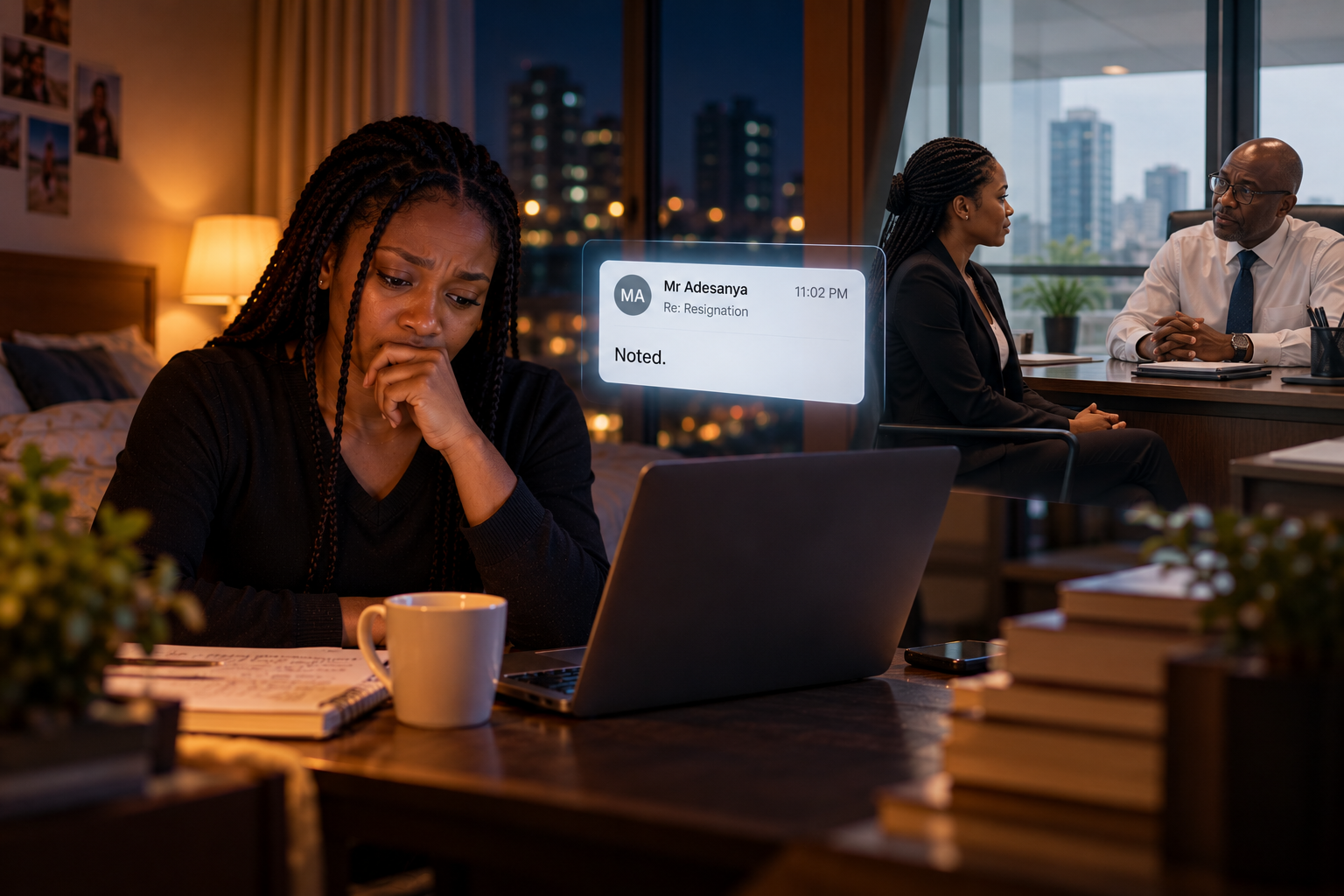
I Sent a Message About My Boss to My Boss, and the Next Ten Minutes Lasted a Year

I Sent a Message About My Boss to My Boss, and the Next Ten Minutes Lasted a Year

My message was sent at 2:43 p.m. By 2:44, I wanted to die. I should explain how it happened. I work at a creative agency in Lekki. We have a group chat for the team, a channel for each project, and a direct message option for private conversations. It’s an efficient system. It’s also a cursed one, because the names of the chats are all very similar, and the interface changes colour when you switch between them. I was in a bad mood that day. My manager, Mr Alabi, had spent the morning in a meeting that should have been an email, and then he had called me into his office to say, with no sense of irony, “I’d like you to be more proactive.” I had been proactive for eleven months. I’d led three campaigns and written two pitches. I had proposed the idea that won the biggest client contract of the year. And he wanted me to be more proactive? I returned to my desk, opened the chat, and wrote a message to my friend Damilola, who sits across the office. I intended it as a private vent. It said: “I swear Alabi is the most useless manager I’ve ever worked for. He does nothing, takes credit for everything, and just told me to be ‘more proactive’ when I’ve been carrying that whole team. I’m so done.” I hit send. I felt a small flush of satisfaction. Then I sat back and exhaled. Then I looked at the top of the screen. The chat was named “Mr Alabi.” I stared at it. I looked at the message again. I looked at the little tick next to it, which had already changed from grey to blue. I felt the blood leave my face. A prickle ran up my arms, and a strange ringing filled my ears. I had sent my message to the wrong chat. And the wrong chat was a direct message to the very man I had just described as useless. I did what any person would do. I tried to delete the message. A small box appeared: “You can only delete messages within two minutes. This message has been read.” Read. He had read it. I looked over the top of my laptop. Through the glass wall of his office, I could see Mr Alabi sitting at his desk, staring at his screen. His face was blank. He wasn’t moving. Then he slowly picked up a coffee cup, took a sip, and put it down again, very carefully, with the stillness of a man handling a bomb. My heart went to my feet. I wrote a reply. “Sorry, wrong chat.” I deleted it. That sounded flippant. I wrote, “Sir, I’m so sorry, that message was not meant for you.” I deleted it. It sounded like an admission. I wrote, “Sir, I think my account was hacked.” I deleted that too, because I’m a bad liar. Damilola leaned across the desk. “Why do you look like that?” I pushed my laptop towards her. She read the screen. Her eyes widened. She covered her mouth with her hand. “Oh no,” she whispered. “Oh my God.” “What do I do?” “Do not do anything stupid.” “I’m at least ten percent stupid at this moment!” We sat in silence for what felt like an hour. In reality, it was about four minutes. Then I saw, through the glass, Mr Alabi stand up. He walked to his door. He opened it. He looked directly at me. “Folake,” he said. “Could you come in, please?” The office went silent. Twenty people looked up. I rose to my feet like a prisoner approaching the gallows. My legs were wobbling. As I walked past Damilola, she squeezed my hand and whispered, “I’ll miss you.” I stepped into his office. He closed the door behind me. He gestured to the chair, and I sat, my hands clasped tightly in my lap. For a long moment he said nothing. He looked at his laptop, then at me. I could see his jaw working. “Folake,” he said at last. “I read your message.” “Sir, I am so sorry…” He raised a hand. “Let me finish.” I closed my mouth. “You called me useless,” he said. “You said I take credit for everything. You said I do nothing.” “Yes, sir. I mean, no, sir. I mean, I shouldn’t have said it.” “But did you mean it?” I froze. The honest answer and the safe answer pulled at me from opposite sides. In that moment, I thought, I’m going to be fired anyway. I took a breath. “Some of it, sir,” I said. “Not all of it. I think you are a good person, but I’ve felt invisible lately. I’ve been doing a lot of work and I don’t think it’s seen.” He looked at me for a long time. Then he did something I did not expect. He leaned back in his chair and exhaled, long and slow. “Thank you,” he said. “Sorry?” “Thank you for being honest.” He rubbed his face. “I’ve been drowning, Folake. I’ve taken on too many projects. I’ve not been delegating properly. And you’re right. I’ve been taking credit for the pitch you wrote because I was too busy to say your name in the meeting. That was wrong.” I stared at him. “I’m going to fix it,” he said. “Starting with a proper conversation about your role and your pay. And I’m going to say your name at the next client meeting. Out loud. With your title.” I was too stunned to respond. “As for the message,” he went on, with the faintest trace of a smile, “I’m not going to pretend I wasn’t hurt. But I’d rather read an honest message by accident than hear nothing at all.” I walked out of that office with my knees trembling. Damilola was waiting at my desk with a face like a ghost. “Are you fired?” “I think I’m being promoted.” “What?” “I don’t know. I’ll tell you later.” The next day, Mr Alabi introduced me to a client as “our creative lead, Folake Adeyemi, who built this entire concept.” I nearly cried into my notebook. Three weeks later, I had a new title and a salary adjustment. I’m not recommending anyone insult their boss by accident. But I have learned something about workplaces. Sometimes the truth only arrives when mistakes force it through the door. Tell us in the comments. Have you ever sent a message to the wrong person?Read full story
My message was sent at 2:43 p.m. By 2:44, I wanted to die. I should explain how it happened. I work at a creative agency in Lekki. We have a group chat for the team, a channel for each project, and a direct message option for private conversations. It’s an efficient system. It’s also a cursed one, because the names of the chats are all very similar, and the interface changes colour when you switch between them. I was in a bad mood that day. My manager, Mr Alabi, had spent the morning in a meeting that should have been an email, and then he had called me into his office to say, with no sense of irony, “I’d like you to be more proactive.” I had been proactive for eleven months. I’d led three campaigns and written two pitches. I had proposed the idea that won the biggest client contract of the year. And he wanted me to be more proactive? I returned to my desk, opened the chat, and wrote a message to my friend Damilola, who sits across the office. I intended it as a private vent. It said: “I swear Alabi is the most useless manager I’ve ever worked for. He does nothing, takes credit for everything, and just told me to be ‘more proactive’ when I’ve been carrying that whole team. I’m so done.” I hit send. I felt a small flush of satisfaction. Then I sat back and exhaled. Then I looked at the top of the screen. The chat was named “Mr Alabi.” I stared at it. I looked at the message again. I looked at the little tick next to it, which had already changed from grey to blue. I felt the blood leave my face. A prickle ran up my arms, and a strange ringing filled my ears. I had sent my message to the wrong chat. And the wrong chat was a direct message to the very man I had just described as useless. I did what any person would do. I tried to delete the message. A small box appeared: “You can only delete messages within two minutes. This message has been read.” Read. He had read it. I looked over the top of my laptop. Through the glass wall of his office, I could see Mr Alabi sitting at his desk, staring at his screen. His face was blank. He wasn’t moving. Then he slowly picked up a coffee cup, took a sip, and put it down again, very carefully, with the stillness of a man handling a bomb. My heart went to my feet. I wrote a reply. “Sorry, wrong chat.” I deleted it. That sounded flippant. I wrote, “Sir, I’m so sorry, that message was not meant for you.” I deleted it. It sounded like an admission. I wrote, “Sir, I think my account was hacked.” I deleted that too, because I’m a bad liar. Damilola leaned across the desk. “Why do you look like that?” I pushed my laptop towards her. She read the screen. Her eyes widened. She covered her mouth with her hand. “Oh no,” she whispered. “Oh my God.” “What do I do?” “Do not do anything stupid.” “I’m at least ten percent stupid at this moment!” We sat in silence for what felt like an hour. In reality, it was about four minutes. Then I saw, through the glass, Mr Alabi stand up. He walked to his door. He opened it. He looked directly at me. “Folake,” he said. “Could you come in, please?” The office went silent. Twenty people looked up. I rose to my feet like a prisoner approaching the gallows. My legs were wobbling. As I walked past Damilola, she squeezed my hand and whispered, “I’ll miss you.” I stepped into his office. He closed the door behind me. He gestured to the chair, and I sat, my hands clasped tightly in my lap. For a long moment he said nothing. He looked at his laptop, then at me. I could see his jaw working. “Folake,” he said at last. “I read your message.” “Sir, I am so sorry…” He raised a hand. “Let me finish.” I closed my mouth. “You called me useless,” he said. “You said I take credit for everything. You said I do nothing.” “Yes, sir. I mean, no, sir. I mean, I shouldn’t have said it.” “But did you mean it?” I froze. The honest answer and the safe answer pulled at me from opposite sides. In that moment, I thought, I’m going to be fired anyway. I took a breath. “Some of it, sir,” I said. “Not all of it. I think you are a good person, but I’ve felt invisible lately. I’ve been doing a lot of work and I don’t think it’s seen.” He looked at me for a long time. Then he did something I did not expect. He leaned back in his chair and exhaled, long and slow. “Thank you,” he said. “Sorry?” “Thank you for being honest.” He rubbed his face. “I’ve been drowning, Folake. I’ve taken on too many projects. I’ve not been delegating properly. And you’re right. I’ve been taking credit for the pitch you wrote because I was too busy to say your name in the meeting. That was wrong.” I stared at him. “I’m going to fix it,” he said. “Starting with a proper conversation about your role and your pay. And I’m going to say your name at the next client meeting. Out loud. With your title.” I was too stunned to respond. “As for the message,” he went on, with the faintest trace of a smile, “I’m not going to pretend I wasn’t hurt. But I’d rather read an honest message by accident than hear nothing at all.” I walked out of that office with my knees trembling. Damilola was waiting at my desk with a face like a ghost. “Are you fired?” “I think I’m being promoted.” “What?” “I don’t know. I’ll tell you later.” The next day, Mr Alabi introduced me to a client as “our creative lead, Folake Adeyemi, who built this entire concept.” I nearly cried into my notebook. Three weeks later, I had a new title and a salary adjustment. I’m not recommending anyone insult their boss by accident. But I have learned something about workplaces. Sometimes the truth only arrives when mistakes force it through the door. Tell us in the comments. Have you ever sent a message to the wrong person?

11/23/2026

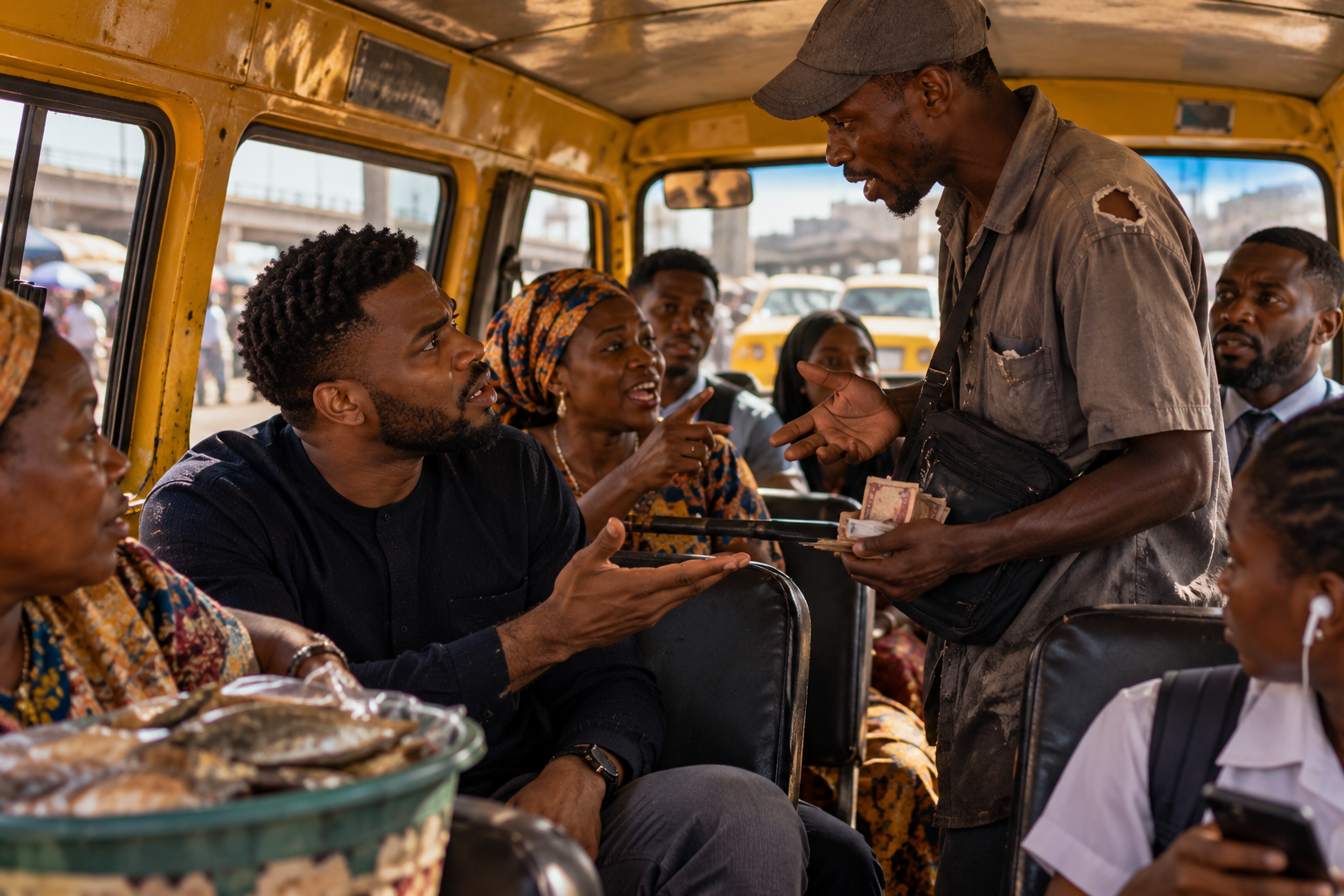
I Met My Husband in a Four Hour Traffic Jam, and I Almost Did Not Roll Down My Window

I Met My Husband in a Four Hour Traffic Jam, and I Almost Did Not Roll Down My Window

It was a Friday in December, and I had been sitting in the same spot on the Third Mainland Bridge for two hours and forty minutes. I was twenty nine, tired, hungry, and in a car with a broken air conditioner. My phone was at nine percent. My boss had just sent a message asking whether I could “quickly review” a report that evening, which I took as a personal insult. A man in a danfo to my left was playing loud Afrobeats, and a woman in a car in front was shouting into her phone at someone named Chidinma. I was angry at the traffic, the city, the government, the sun, and myself for leaving the office at the wrong time. At about 7 p.m., a hawker appeared at my window. A young boy with a tray of cold bottled water balanced on his head. “Madam, water? Two hundred naira!” I shook my head. I’d run out of cash. I was about to wind up the glass when I heard a voice from the next car. “Two bottles. Please. And give her one.” I turned. In the lane beside me, a man was leaning out of the window of an old grey Corolla. He was about thirty, with a short beard and tired eyes, in a crumpled white shirt and no tie. He held out a five hundred naira note. “Sorry?” I said. “You look thirsty,” he said. “Also, I’m sorry about the heat. It is not my fault, but I feel responsible.” I blinked. It was such a ridiculous thing to say. I laughed before I could stop myself. The hawker handed me a bottle of water. I took it, a little stunned. “Thank you,” I said. “But you didn’t have to.” “I know. I was bored.” He grinned. “Four hours now. I’ve reorganised my glove compartment twice.” “Four hours?” “I left Ikoyi at three.” He sighed. “I’ve counted every sign on this bridge. There are twenty three.” I rolled my window down fully. It seemed rude not to. The heat poured in, along with the smell of exhaust and roasted corn. “Why on earth did you leave Ikoyi at three?” “I had a meeting in Ikeja. I’m an architect. I’ve been late to six meetings this month because of this bridge. I’ve given up. I’ve decided traffic is a spiritual practice.” “Does it work?” “Not remotely.” I laughed again. The man behind him honked, and we both ignored it. We talked for the next hour and a half. The traffic barely moved. A few metres here, a few there. Sometimes his car was ahead of mine, and I’d lean over my window to continue the conversation. Sometimes mine moved and I’d wave at him as I crept forward, and he’d shout something back. The people around us began to watch with amusement. A woman in the car behind me said, “Are you two married?” and we both said, “No!” at the same time, and she laughed and said, “Not yet.” His name was Ifeanyi. He designed houses. He told me about a client who insisted on a swimming pool in a flat. I told him about my job in a pharmaceutical company, and about the time I accidentally ordered two thousand sachets of the wrong cough syrup. He told me his mother lived in Enugu and called him every evening to ask whether he had eaten. I told him my father had passed three years earlier and I still dialled his number sometimes by habit. It was strange, the intimacy of two strangers stuck between two lanes. We couldn’t escape. We couldn’t leave. We had nothing but time and each other’s windows. At about 9 p.m., the traffic began to loosen. A truck ahead had broken down and finally been towed. The cars inched forward, then picked up speed. Ifeanyi’s lane moved first. He started to drive away, then stopped, then rolled back a bit. “My phone is about to die,” he said. “Can I write my number on your window?” “What?” “I have no paper.” He opened his glovebox, pulled out a marker, leaned out and carefully wrote ten digits on the side of my rear window, in large black letters. “In case you want to complain about the traffic again.” “That’s… permanent marker,” I said. “I know.” He winked. “That’s the point. You cannot ignore it.” He drove off. I sat in my car, grinning like an idiot, looking at the number reflected in my side mirror. I did not call that night. Or the next. I did not call because I was scared, and because I was convinced that a man who writes his number on a stranger’s car must be either a genius or a lunatic. On Sunday, my friend Tola came to pick me up for church, saw the digits, and shrieked. “Who is this? Why is his number on your car?” “A man,” I said. “A man you met where?” “In a traffic jam.” Tola looked at me for a long moment. “Call him.” “What if he’s a serial killer?” “Serial killers do not usually write their numbers in permanent marker. They are too smart.” I called him that evening. He picked up on the first ring. “Hello?” “It’s the girl from the bridge,” I said. “I’m calling to complain about the traffic.” There was a pause, and then a laugh so warm I felt it in my chest. “Thank God,” he said. “I’ve been checking my phone every five minutes. I almost put an advert in the newspaper.” We met for coffee on Tuesday. We got engaged two years later. On our wedding day, he stood at the altar, took my hands, and whispered, “I’d like to thank the Third Mainland Bridge.” We drove away in his old Corolla, with a banner on the back window. The groomsmen had written a phone number on it in permanent marker. Our daughter is eleven months old. Her name is Bridge. Just kidding. It’s Adaora. But sometimes, when we’re stuck in traffic, Ifeanyi turns to her in the back seat and says, “This is where your parents met.” And she laughs, as though she understands. Tell us in the comments. Would you have rolled down your window?Read full story
It was a Friday in December, and I had been sitting in the same spot on the Third Mainland Bridge for two hours and forty minutes. I was twenty nine, tired, hungry, and in a car with a broken air conditioner. My phone was at nine percent. My boss had just sent a message asking whether I could “quickly review” a report that evening, which I took as a personal insult. A man in a danfo to my left was playing loud Afrobeats, and a woman in a car in front was shouting into her phone at someone named Chidinma. I was angry at the traffic, the city, the government, the sun, and myself for leaving the office at the wrong time. At about 7 p.m., a hawker appeared at my window. A young boy with a tray of cold bottled water balanced on his head. “Madam, water? Two hundred naira!” I shook my head. I’d run out of cash. I was about to wind up the glass when I heard a voice from the next car. “Two bottles. Please. And give her one.” I turned. In the lane beside me, a man was leaning out of the window of an old grey Corolla. He was about thirty, with a short beard and tired eyes, in a crumpled white shirt and no tie. He held out a five hundred naira note. “Sorry?” I said. “You look thirsty,” he said. “Also, I’m sorry about the heat. It is not my fault, but I feel responsible.” I blinked. It was such a ridiculous thing to say. I laughed before I could stop myself. The hawker handed me a bottle of water. I took it, a little stunned. “Thank you,” I said. “But you didn’t have to.” “I know. I was bored.” He grinned. “Four hours now. I’ve reorganised my glove compartment twice.” “Four hours?” “I left Ikoyi at three.” He sighed. “I’ve counted every sign on this bridge. There are twenty three.” I rolled my window down fully. It seemed rude not to. The heat poured in, along with the smell of exhaust and roasted corn. “Why on earth did you leave Ikoyi at three?” “I had a meeting in Ikeja. I’m an architect. I’ve been late to six meetings this month because of this bridge. I’ve given up. I’ve decided traffic is a spiritual practice.” “Does it work?” “Not remotely.” I laughed again. The man behind him honked, and we both ignored it. We talked for the next hour and a half. The traffic barely moved. A few metres here, a few there. Sometimes his car was ahead of mine, and I’d lean over my window to continue the conversation. Sometimes mine moved and I’d wave at him as I crept forward, and he’d shout something back. The people around us began to watch with amusement. A woman in the car behind me said, “Are you two married?” and we both said, “No!” at the same time, and she laughed and said, “Not yet.” His name was Ifeanyi. He designed houses. He told me about a client who insisted on a swimming pool in a flat. I told him about my job in a pharmaceutical company, and about the time I accidentally ordered two thousand sachets of the wrong cough syrup. He told me his mother lived in Enugu and called him every evening to ask whether he had eaten. I told him my father had passed three years earlier and I still dialled his number sometimes by habit. It was strange, the intimacy of two strangers stuck between two lanes. We couldn’t escape. We couldn’t leave. We had nothing but time and each other’s windows. At about 9 p.m., the traffic began to loosen. A truck ahead had broken down and finally been towed. The cars inched forward, then picked up speed. Ifeanyi’s lane moved first. He started to drive away, then stopped, then rolled back a bit. “My phone is about to die,” he said. “Can I write my number on your window?” “What?” “I have no paper.” He opened his glovebox, pulled out a marker, leaned out and carefully wrote ten digits on the side of my rear window, in large black letters. “In case you want to complain about the traffic again.” “That’s… permanent marker,” I said. “I know.” He winked. “That’s the point. You cannot ignore it.” He drove off. I sat in my car, grinning like an idiot, looking at the number reflected in my side mirror. I did not call that night. Or the next. I did not call because I was scared, and because I was convinced that a man who writes his number on a stranger’s car must be either a genius or a lunatic. On Sunday, my friend Tola came to pick me up for church, saw the digits, and shrieked. “Who is this? Why is his number on your car?” “A man,” I said. “A man you met where?” “In a traffic jam.” Tola looked at me for a long moment. “Call him.” “What if he’s a serial killer?” “Serial killers do not usually write their numbers in permanent marker. They are too smart.” I called him that evening. He picked up on the first ring. “Hello?” “It’s the girl from the bridge,” I said. “I’m calling to complain about the traffic.” There was a pause, and then a laugh so warm I felt it in my chest. “Thank God,” he said. “I’ve been checking my phone every five minutes. I almost put an advert in the newspaper.” We met for coffee on Tuesday. We got engaged two years later. On our wedding day, he stood at the altar, took my hands, and whispered, “I’d like to thank the Third Mainland Bridge.” We drove away in his old Corolla, with a banner on the back window. The groomsmen had written a phone number on it in permanent marker. Our daughter is eleven months old. Her name is Bridge. Just kidding. It’s Adaora. But sometimes, when we’re stuck in traffic, Ifeanyi turns to her in the back seat and says, “This is where your parents met.” And she laughs, as though she understands. Tell us in the comments. Would you have rolled down your window?

11/23/2026

My Mother Told the Whole Village I Am a Hacker Because I Work on a Laptop

My Mother Told the Whole Village I Am a Hacker Because I Work on a Laptop

Last December, I went home to Ekiti for the first time in two years, and the first person to greet me at the gate was a man I had never met who whispered, “Please, can you help me hack my wife’s phone?” I thought I had misheard him. I said, “Sir?” “My wife,” he said. “She has been hiding something. I will give you ten thousand.” Before I could answer, my mother appeared behind him in a bright blue wrapper, arms open, a wide smile on her face. “My son! You have come! Greet him, Baba Sunday. This is my son, the computer man.” I was caught between horror and a hug. I finished the hug, then pulled my mother aside. “Mummy. Who is that man? Why did he ask me about hacking?” She looked at me with absolute innocence. “Ah. Is that not what you do?” I work as a software developer at a fintech company in Yaba. I build the part of an app that lets users link their bank accounts. It is a good, stable, boring job. I’ve explained it to my mother perhaps twenty times. But somewhere along the way, in the long gap between my Christmas visits, my profession had been through a rumour mill and come out the other side as a different thing entirely. I discovered the extent of it over the next three days. On Christmas Eve, I took a walk to the village square to buy bread. A group of men sitting under a tree stopped talking as I approached. One of them stood up. “Welcome, Mr Hacker.” He said it with respect, the way you would say “Doctor.” I waved awkwardly and kept walking. At the bakery, the woman behind the counter leaned over and whispered, “Please, my nephew in Port Harcourt is stuck in school because of an exam result. Can you help change it? I will give you a goat.” “A goat?” I said, thoroughly confused. “A big one.” I told her I could not change anyone’s results. She sighed. “That is what they all say.” By Christmas morning, I had received seven requests. A man wanted me to retrieve money he said a scammer had stolen from his account. A schoolteacher wanted me to unlock a phone that had belonged to her late husband. A teenager wanted me to find the password to his girlfriend’s Instagram. A widow, very politely, asked if I could “clean” a record at the land registry. And an elderly pastor wanted me to remove a “bad rumour” about him from the internet. I said no to all of them. I tried to explain. I said, “I’m a programmer, not a hacker.” They smiled kindly, in the way you smile at a child who insists the moon is not made of cheese. I tried to confront my mother again at dinner. We were sitting in the sitting room with a plate of pounded yam and a bowl of okra soup. My father, a retired teacher of few words, chewed quietly and watched us. “Mummy,” I said gently. “Why did you tell people I’m a hacker?” She put down her spoon. “Because you work with computers and money.” “I work on apps.” “You make the numbers go in and out.” “That is… not exactly wrong.” “And you earn well.” “That is true.” “So you must be a hacker. What other job pays that well for sitting down?” I opened my mouth, and nothing came out. I looked at my father, who raised one eyebrow slightly, and I understood that I was alone. “Mummy,” I said, “hackers go to prison.” “No, no.” She waved a hand. “The good ones do not. They are like lawyers. They fight for people.” I put my head in my hands. So, over the next few days, I decided to be strategic. If I could not fight the rumour, I would use it. I gathered the village’s requests and decided to help in ways that were legal. I helped the schoolteacher recover photos from her late husband’s phone through the manufacturer’s official process. I walked the man whose money was stolen through reporting it to the bank and the police. I sat with the pastor and showed him how to check what was said about him online. It was a simple matter of a blog he had no connection with. I gave a small talk in the church hall on Sunday afternoon. About thirty people attended. I stood at the front with my laptop and a borrowed projector and explained how to spot fake messages, how to protect a phone, and how to avoid sending money to strangers. I showed them how to enable two step verification. I told them what a phishing message looked like. I told them never to share their PIN, even if the caller claimed to be from the bank. They listened like it was a sermon. An old man in the front row asked, “So this thing, this phishing, it is how they steal?” “Yes, sir.” “And you can stop them?” “No, sir. But you can stop them. By not clicking.” He nodded slowly, as if I had revealed the secret of the universe. By the end, my mother was beaming from the back row. She stood at the door afterwards and shook everyone’s hands like a politician. “That’s my son,” she kept saying. “The one who fights for us.” On my last evening, the man from the gate, Baba Sunday, came to see me. He looked embarrassed. “Please, forgive my request,” he said. “I was desperate. My wife and I have been fighting. I thought if I knew what she was hiding I could solve it.” “Baba, if you want to know, ask her.” He chuckled sadly. “That is the one thing I have not tried.” I saw him two days later, sitting with his wife on a bench outside their house, the two of them talking quietly. I don’t know what they said. I like to think it was the truth. When I left for Lagos, my mother packed me a bag of dried fish, a bottle of palm oil, and a small prayer. “Go well, my hacker,” she said at the gate. “Mummy, I’m not…” “I know, I know,” she said, patting my cheek. “But it’s better than telling them you sit in an air conditioned room and answer emails.” I laughed. I couldn’t argue with that. Last month she called me and said, “Your cousin wants to learn what you do. I said you will teach him. Don’t worry, I told him to bring a laptop.” I sighed, and then I smiled. Some rumours are too good to correct. Tell us in the comments. What does your family think you do for a living?Read full story
Last December, I went home to Ekiti for the first time in two years, and the first person to greet me at the gate was a man I had never met who whispered, “Please, can you help me hack my wife’s phone?” I thought I had misheard him. I said, “Sir?” “My wife,” he said. “She has been hiding something. I will give you ten thousand.” Before I could answer, my mother appeared behind him in a bright blue wrapper, arms open, a wide smile on her face. “My son! You have come! Greet him, Baba Sunday. This is my son, the computer man.” I was caught between horror and a hug. I finished the hug, then pulled my mother aside. “Mummy. Who is that man? Why did he ask me about hacking?” She looked at me with absolute innocence. “Ah. Is that not what you do?” I work as a software developer at a fintech company in Yaba. I build the part of an app that lets users link their bank accounts. It is a good, stable, boring job. I’ve explained it to my mother perhaps twenty times. But somewhere along the way, in the long gap between my Christmas visits, my profession had been through a rumour mill and come out the other side as a different thing entirely. I discovered the extent of it over the next three days. On Christmas Eve, I took a walk to the village square to buy bread. A group of men sitting under a tree stopped talking as I approached. One of them stood up. “Welcome, Mr Hacker.” He said it with respect, the way you would say “Doctor.” I waved awkwardly and kept walking. At the bakery, the woman behind the counter leaned over and whispered, “Please, my nephew in Port Harcourt is stuck in school because of an exam result. Can you help change it? I will give you a goat.” “A goat?” I said, thoroughly confused. “A big one.” I told her I could not change anyone’s results. She sighed. “That is what they all say.” By Christmas morning, I had received seven requests. A man wanted me to retrieve money he said a scammer had stolen from his account. A schoolteacher wanted me to unlock a phone that had belonged to her late husband. A teenager wanted me to find the password to his girlfriend’s Instagram. A widow, very politely, asked if I could “clean” a record at the land registry. And an elderly pastor wanted me to remove a “bad rumour” about him from the internet. I said no to all of them. I tried to explain. I said, “I’m a programmer, not a hacker.” They smiled kindly, in the way you smile at a child who insists the moon is not made of cheese. I tried to confront my mother again at dinner. We were sitting in the sitting room with a plate of pounded yam and a bowl of okra soup. My father, a retired teacher of few words, chewed quietly and watched us. “Mummy,” I said gently. “Why did you tell people I’m a hacker?” She put down her spoon. “Because you work with computers and money.” “I work on apps.” “You make the numbers go in and out.” “That is… not exactly wrong.” “And you earn well.” “That is true.” “So you must be a hacker. What other job pays that well for sitting down?” I opened my mouth, and nothing came out. I looked at my father, who raised one eyebrow slightly, and I understood that I was alone. “Mummy,” I said, “hackers go to prison.” “No, no.” She waved a hand. “The good ones do not. They are like lawyers. They fight for people.” I put my head in my hands. So, over the next few days, I decided to be strategic. If I could not fight the rumour, I would use it. I gathered the village’s requests and decided to help in ways that were legal. I helped the schoolteacher recover photos from her late husband’s phone through the manufacturer’s official process. I walked the man whose money was stolen through reporting it to the bank and the police. I sat with the pastor and showed him how to check what was said about him online. It was a simple matter of a blog he had no connection with. I gave a small talk in the church hall on Sunday afternoon. About thirty people attended. I stood at the front with my laptop and a borrowed projector and explained how to spot fake messages, how to protect a phone, and how to avoid sending money to strangers. I showed them how to enable two step verification. I told them what a phishing message looked like. I told them never to share their PIN, even if the caller claimed to be from the bank. They listened like it was a sermon. An old man in the front row asked, “So this thing, this phishing, it is how they steal?” “Yes, sir.” “And you can stop them?” “No, sir. But you can stop them. By not clicking.” He nodded slowly, as if I had revealed the secret of the universe. By the end, my mother was beaming from the back row. She stood at the door afterwards and shook everyone’s hands like a politician. “That’s my son,” she kept saying. “The one who fights for us.” On my last evening, the man from the gate, Baba Sunday, came to see me. He looked embarrassed. “Please, forgive my request,” he said. “I was desperate. My wife and I have been fighting. I thought if I knew what she was hiding I could solve it.” “Baba, if you want to know, ask her.” He chuckled sadly. “That is the one thing I have not tried.” I saw him two days later, sitting with his wife on a bench outside their house, the two of them talking quietly. I don’t know what they said. I like to think it was the truth. When I left for Lagos, my mother packed me a bag of dried fish, a bottle of palm oil, and a small prayer. “Go well, my hacker,” she said at the gate. “Mummy, I’m not…” “I know, I know,” she said, patting my cheek. “But it’s better than telling them you sit in an air conditioned room and answer emails.” I laughed. I couldn’t argue with that. Last month she called me and said, “Your cousin wants to learn what you do. I said you will teach him. Don’t worry, I told him to bring a laptop.” I sighed, and then I smiled. Some rumours are too good to correct. Tell us in the comments. What does your family think you do for a living?

11/23/2026

I Am a Single Dad Who Never Learned to Braid, and My Daughter Has a Photo Day on Monday

I Am a Single Dad Who Never Learned to Braid, and My Daughter Has a Photo Day on Monday

My daughter is seven. Her name is Zainab, and she has a head full of the thickest, most stubborn hair in Lagos. Her mother left when she was three. I won’t go into the details, because they belong to two adults who made different choices. What matters is that on a Tuesday morning in January, I woke up as a man with a toddler, a mortgage, and no clue what to do with a comb. For the first few years, my mother helped. She travelled from Ilorin every other weekend, took Zainab to a salon for braids, and left me a list of instructions on the fridge. “Oil her scalp. Don’t wash it every day. Use the wide tooth comb.” I read them like a student cramming for an exam. But Mama’s knees have been troubling her. In September she told me, gently, that she could no longer make the journey. “You will have to learn, my son.” I laughed. “Mummy, I can barely tie my own tie.” “Then learn.” I tried YouTube. I watched forty videos in a row, a hundred and twenty minutes of women with magical fingers turning chaos into art. They made it look effortless. I bought gel, edge control, hair ties, a rat tail comb, a spray bottle, and a small jar of something called “curl cream” that smelled like a cheap candle. My first attempt was a disaster. Zainab sat in front of me on a Saturday morning, trusting and cheerful, humming a song from a children’s programme. I began to part her hair. The comb snagged. She winced. I tried again. A strand fell out of my grip. She said, “Daddy, that hurts.” I said, “I’m so sorry.” I made a parting that looked like a river drawn by a toddler. I braided one section so tightly she squealed. I tried to undo it and made it worse. An hour later, she looked in the mirror, and her bottom lip trembled. She had four crooked braids on one side, a puff on the other, and a patch in the middle that looked like a bird’s nest. I wanted to disappear. “It’s fine, Daddy,” she said bravely. It was not fine. But the way she said it, with her small face set in determination, undid me. I practised every weekend. I sought help. A woman at the market, noticing me staring at the hair accessories like a man lost in a foreign country, took pity and showed me how to section the hair. A neighbour, Mrs Ibe, invited Zainab over one Sunday and taught me the basics of cornrows, her strong, quick fingers moving like a weaver’s. “Use your fingertips,” she kept saying. “Not your whole hand.” I learned. Slowly. I learned that hair needs moisture before anything else, that patience matters more than strength, that you must keep your hands calm even when your heart isn’t. I learned to detangle in sections, starting from the ends. I learned to part with the tail of a comb and to keep a clip nearby. Most of all, I learned that Zainab’s hair was not the problem. My fear was. Last week, her school announced a photo day. The teacher sent a note home: “Pupils should be neatly dressed.” I stared at it on the fridge and felt a familiar knot in my stomach. On Sunday night, I sat Zainab down in the living room, with the lamp on, a mirror propped against the sofa, and a tray of supplies. “What style do you want?” I asked. She thought about it with great seriousness. “Two puffs. With ribbons.” “Okay.” I sprayed her hair with water. I oiled her scalp. I detangled, section by section, so gently that she closed her eyes. I parted down the middle, then made two sections. I twisted each one, wound them into neat buns, and secured them with elastic bands. I tied the ribbons, red and white, into little bows. My hands were shaking, but they were steady enough. When I finished, I held up the mirror. She looked at herself for a long time, turning her head left and right. Then she smiled, the smile that I would walk through fire to see. “Daddy,” she said. “I look like Mummy.” My chest tightened. She had not said that in a long time. I swallowed. “Do you?” “Yes. Mummy used to do this.” She touched the left bun. “Exactly like this.” I did not know that. I hadn’t known that her mother used to do two puffs with ribbons. I’d chosen it at random, because it looked easy. “That’s good,” I managed. “That’s very good.” She hugged me, tight, her small arms around my neck. “Thank you, Daddy.” On Monday, she went to school in her red and white puffs. At pickup, her teacher pulled me aside and said, “I have to say, her hair looks lovely. The photographer even asked who did it.” I said, “Her father.” The teacher smiled in a way I’ll remember for a long time. “Then you did very well.” I sat in my car, in the school car park, with my hands on the steering wheel, and I wept quietly. Zainab’s photograph came back two weeks later. It sits on my desk now, in a frame. In it, she’s grinning, her eyes bright, her ribbons slightly crooked. To anyone else, it would look like an ordinary school photo. To me, it looks like proof. Tell us in the comments. What did you have to learn for someone you love?Read full story
My daughter is seven. Her name is Zainab, and she has a head full of the thickest, most stubborn hair in Lagos. Her mother left when she was three. I won’t go into the details, because they belong to two adults who made different choices. What matters is that on a Tuesday morning in January, I woke up as a man with a toddler, a mortgage, and no clue what to do with a comb. For the first few years, my mother helped. She travelled from Ilorin every other weekend, took Zainab to a salon for braids, and left me a list of instructions on the fridge. “Oil her scalp. Don’t wash it every day. Use the wide tooth comb.” I read them like a student cramming for an exam. But Mama’s knees have been troubling her. In September she told me, gently, that she could no longer make the journey. “You will have to learn, my son.” I laughed. “Mummy, I can barely tie my own tie.” “Then learn.” I tried YouTube. I watched forty videos in a row, a hundred and twenty minutes of women with magical fingers turning chaos into art. They made it look effortless. I bought gel, edge control, hair ties, a rat tail comb, a spray bottle, and a small jar of something called “curl cream” that smelled like a cheap candle. My first attempt was a disaster. Zainab sat in front of me on a Saturday morning, trusting and cheerful, humming a song from a children’s programme. I began to part her hair. The comb snagged. She winced. I tried again. A strand fell out of my grip. She said, “Daddy, that hurts.” I said, “I’m so sorry.” I made a parting that looked like a river drawn by a toddler. I braided one section so tightly she squealed. I tried to undo it and made it worse. An hour later, she looked in the mirror, and her bottom lip trembled. She had four crooked braids on one side, a puff on the other, and a patch in the middle that looked like a bird’s nest. I wanted to disappear. “It’s fine, Daddy,” she said bravely. It was not fine. But the way she said it, with her small face set in determination, undid me. I practised every weekend. I sought help. A woman at the market, noticing me staring at the hair accessories like a man lost in a foreign country, took pity and showed me how to section the hair. A neighbour, Mrs Ibe, invited Zainab over one Sunday and taught me the basics of cornrows, her strong, quick fingers moving like a weaver’s. “Use your fingertips,” she kept saying. “Not your whole hand.” I learned. Slowly. I learned that hair needs moisture before anything else, that patience matters more than strength, that you must keep your hands calm even when your heart isn’t. I learned to detangle in sections, starting from the ends. I learned to part with the tail of a comb and to keep a clip nearby. Most of all, I learned that Zainab’s hair was not the problem. My fear was. Last week, her school announced a photo day. The teacher sent a note home: “Pupils should be neatly dressed.” I stared at it on the fridge and felt a familiar knot in my stomach. On Sunday night, I sat Zainab down in the living room, with the lamp on, a mirror propped against the sofa, and a tray of supplies. “What style do you want?” I asked. She thought about it with great seriousness. “Two puffs. With ribbons.” “Okay.” I sprayed her hair with water. I oiled her scalp. I detangled, section by section, so gently that she closed her eyes. I parted down the middle, then made two sections. I twisted each one, wound them into neat buns, and secured them with elastic bands. I tied the ribbons, red and white, into little bows. My hands were shaking, but they were steady enough. When I finished, I held up the mirror. She looked at herself for a long time, turning her head left and right. Then she smiled, the smile that I would walk through fire to see. “Daddy,” she said. “I look like Mummy.” My chest tightened. She had not said that in a long time. I swallowed. “Do you?” “Yes. Mummy used to do this.” She touched the left bun. “Exactly like this.” I did not know that. I hadn’t known that her mother used to do two puffs with ribbons. I’d chosen it at random, because it looked easy. “That’s good,” I managed. “That’s very good.” She hugged me, tight, her small arms around my neck. “Thank you, Daddy.” On Monday, she went to school in her red and white puffs. At pickup, her teacher pulled me aside and said, “I have to say, her hair looks lovely. The photographer even asked who did it.” I said, “Her father.” The teacher smiled in a way I’ll remember for a long time. “Then you did very well.” I sat in my car, in the school car park, with my hands on the steering wheel, and I wept quietly. Zainab’s photograph came back two weeks later. It sits on my desk now, in a frame. In it, she’s grinning, her eyes bright, her ribbons slightly crooked. To anyone else, it would look like an ordinary school photo. To me, it looks like proof. Tell us in the comments. What did you have to learn for someone you love?

11/20/2026

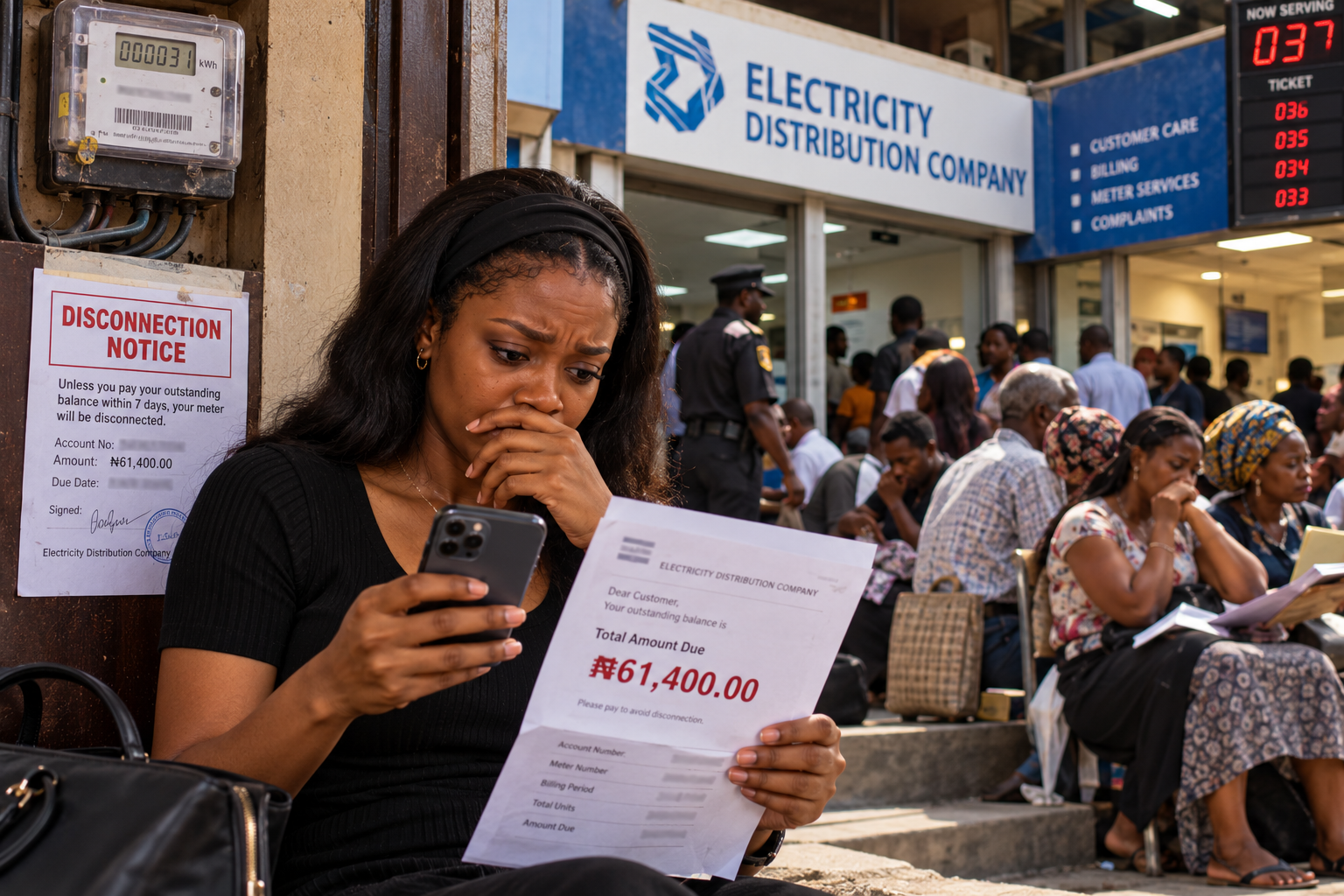
The Money Left My Account but Never Reached Hers, and the Bank Told Me to Be Patient for Nine Days

The Money Left My Account but Never Reached Hers, and the Bank Told Me to Be Patient for Nine Days

On the eighth of November, I sent one hundred and fifty thousand naira to my younger sister for her school fees. I did it from my phone, at 6:42 in the evening, sitting on my sofa with a plate of beans. The app said, “Transfer successful.” My account was debited. I put my phone down and went on with my evening. At 7:15 p.m., my sister called. “Sis, I haven’t received anything.” “It went. It says successful.” “Maybe it is a network issue,” she said. “Give it a bit.” I gave it a bit. At 8 p.m., still nothing. At 9, I opened the app again. The transaction showed “successful.” The money had left my account. It had not reached hers. I did what we all do. I told myself, “It will land in the morning.” It did not. The next day, I called my bank. The customer care agent was a cheerful young man who asked for my account number, my transaction reference, and my date of birth. He typed for two minutes, then said, “Madam, your transaction has been escalated to the relevant department. Please be patient.” “How long will it take?” “Between two and five working days.” “Two to five days? It’s school fees. She has a deadline on Monday.” “I understand, ma. But the process must be followed.” I thanked him. I hung up. I began to feel the first cold prickle of dread. On Friday, I went to the branch. I took a ticket, sat among forty people in a tiled waiting area with a television playing the news at a volume designed to cause headaches, and waited for two hours. When my number finally lit up, a tired woman at a desk looked at my statement and said, “It’s in the system. It’s a pending reversal.” “Reversal to where?” “To your account.” “But I want it to go to her account.” She sighed. “Ma, once it goes into reversal, we have to wait for the reversal to complete before you can retry.” “How long?” “A few days.” “A few?” “Maybe seven. Maybe nine.” I stared at her. “So my money is in the air.” “Yes, ma.” “And there is nothing I can do?” “You can wait.” I walked out of the branch in a rage so complete that I forgot to be polite to the security man. I stood on the pavement with my phone in my hand and called my sister. She picked up on the first ring. I could hear it in her voice: she’d been crying. “The school said that if I don’t pay by Monday, I’ll be removed from the exam list,” she said. I felt my throat tighten. She was in her final year. She had been working toward this for four years. She was the first person in our family to attend university. And the fees I’d sent were suspended somewhere between two banks, in the electronic equivalent of a pothole. “Don’t worry,” I said. “I’ll sort it.” I had no idea how. That night, I sat at my kitchen table and did the arithmetic. I did not have another hundred and fifty thousand. My savings account held forty. I could ask my mother, but she had none. I could ask my friend Ife, but I knew she was also stretched. I could ask my colleague Tunde, who had once offered to help, but I did not want to put him in that position. At 11 p.m., I opened my phone and, for the first time in my life, wrote a long, desperate post on social media. I included my transaction reference, the amount, the dates, and a polite request for help. I tagged the bank. I wrote, “I’m not asking for money. I’m asking for my money.” By morning, it had been shared four hundred times. Strangers wrote to me. A man told me to call a particular number at the bank’s head office. A woman said her cousin worked in the reconciliation department and could look into it. Another said, “The same thing happened to me and it took twelve days. Hang in there.” A lawyer offered to draft a formal complaint for free. On Saturday, at 10:15 a.m., my phone rang from an unknown number. “Good morning, is this Mrs Ojo? I’m calling from the bank’s escalation desk. We’ve seen your complaint.” I nearly dropped the phone. The woman was calm and professional. She apologised. She said the system had flagged my transfer, and a technical fault had caused a delay. She asked if I could confirm my sister’s account details. I did. She said, “I am going to manually process this now. Please give me thirty minutes.” I sat at my table for thirty minutes, not breathing. At 10:52, my sister’s phone rang with an alert. One hundred and fifty thousand naira. She screamed. I heard it through the phone. She was jumping up and down on her bed, in the hostel, in front of three roommates. On Monday, she paid her fees. On Tuesday, she wrote her first paper. She sent me a message that evening: “Sis, I did it.” I cried on the bus. I’m grateful to everyone who helped, and I’m still annoyed that I needed a stranger to share a post to get a problem resolved that should have been fixed in a day. I’ve been told the system is “complicated.” I’m sure it is. But I keep thinking about how many people would have lost their sister’s exam, their rent, their hospital deposit, because they had no platform and no friends in the right places. I now keep a screenshot of every transfer I make. I also keep a small cash reserve for emergencies. And I tell everyone I know the same thing: when your money disappears into the system, make noise. Politely. Persistently. With evidence. Tell us in the comments. Has a bank ever held your money hostage?Read full story
On the eighth of November, I sent one hundred and fifty thousand naira to my younger sister for her school fees. I did it from my phone, at 6:42 in the evening, sitting on my sofa with a plate of beans. The app said, “Transfer successful.” My account was debited. I put my phone down and went on with my evening. At 7:15 p.m., my sister called. “Sis, I haven’t received anything.” “It went. It says successful.” “Maybe it is a network issue,” she said. “Give it a bit.” I gave it a bit. At 8 p.m., still nothing. At 9, I opened the app again. The transaction showed “successful.” The money had left my account. It had not reached hers. I did what we all do. I told myself, “It will land in the morning.” It did not. The next day, I called my bank. The customer care agent was a cheerful young man who asked for my account number, my transaction reference, and my date of birth. He typed for two minutes, then said, “Madam, your transaction has been escalated to the relevant department. Please be patient.” “How long will it take?” “Between two and five working days.” “Two to five days? It’s school fees. She has a deadline on Monday.” “I understand, ma. But the process must be followed.” I thanked him. I hung up. I began to feel the first cold prickle of dread. On Friday, I went to the branch. I took a ticket, sat among forty people in a tiled waiting area with a television playing the news at a volume designed to cause headaches, and waited for two hours. When my number finally lit up, a tired woman at a desk looked at my statement and said, “It’s in the system. It’s a pending reversal.” “Reversal to where?” “To your account.” “But I want it to go to her account.” She sighed. “Ma, once it goes into reversal, we have to wait for the reversal to complete before you can retry.” “How long?” “A few days.” “A few?” “Maybe seven. Maybe nine.” I stared at her. “So my money is in the air.” “Yes, ma.” “And there is nothing I can do?” “You can wait.” I walked out of the branch in a rage so complete that I forgot to be polite to the security man. I stood on the pavement with my phone in my hand and called my sister. She picked up on the first ring. I could hear it in her voice: she’d been crying. “The school said that if I don’t pay by Monday, I’ll be removed from the exam list,” she said. I felt my throat tighten. She was in her final year. She had been working toward this for four years. She was the first person in our family to attend university. And the fees I’d sent were suspended somewhere between two banks, in the electronic equivalent of a pothole. “Don’t worry,” I said. “I’ll sort it.” I had no idea how. That night, I sat at my kitchen table and did the arithmetic. I did not have another hundred and fifty thousand. My savings account held forty. I could ask my mother, but she had none. I could ask my friend Ife, but I knew she was also stretched. I could ask my colleague Tunde, who had once offered to help, but I did not want to put him in that position. At 11 p.m., I opened my phone and, for the first time in my life, wrote a long, desperate post on social media. I included my transaction reference, the amount, the dates, and a polite request for help. I tagged the bank. I wrote, “I’m not asking for money. I’m asking for my money.” By morning, it had been shared four hundred times. Strangers wrote to me. A man told me to call a particular number at the bank’s head office. A woman said her cousin worked in the reconciliation department and could look into it. Another said, “The same thing happened to me and it took twelve days. Hang in there.” A lawyer offered to draft a formal complaint for free. On Saturday, at 10:15 a.m., my phone rang from an unknown number. “Good morning, is this Mrs Ojo? I’m calling from the bank’s escalation desk. We’ve seen your complaint.” I nearly dropped the phone. The woman was calm and professional. She apologised. She said the system had flagged my transfer, and a technical fault had caused a delay. She asked if I could confirm my sister’s account details. I did. She said, “I am going to manually process this now. Please give me thirty minutes.” I sat at my table for thirty minutes, not breathing. At 10:52, my sister’s phone rang with an alert. One hundred and fifty thousand naira. She screamed. I heard it through the phone. She was jumping up and down on her bed, in the hostel, in front of three roommates. On Monday, she paid her fees. On Tuesday, she wrote her first paper. She sent me a message that evening: “Sis, I did it.” I cried on the bus. I’m grateful to everyone who helped, and I’m still annoyed that I needed a stranger to share a post to get a problem resolved that should have been fixed in a day. I’ve been told the system is “complicated.” I’m sure it is. But I keep thinking about how many people would have lost their sister’s exam, their rent, their hospital deposit, because they had no platform and no friends in the right places. I now keep a screenshot of every transfer I make. I also keep a small cash reserve for emergencies. And I tell everyone I know the same thing: when your money disappears into the system, make noise. Politely. Persistently. With evidence. Tell us in the comments. Has a bank ever held your money hostage?

11/19/2026

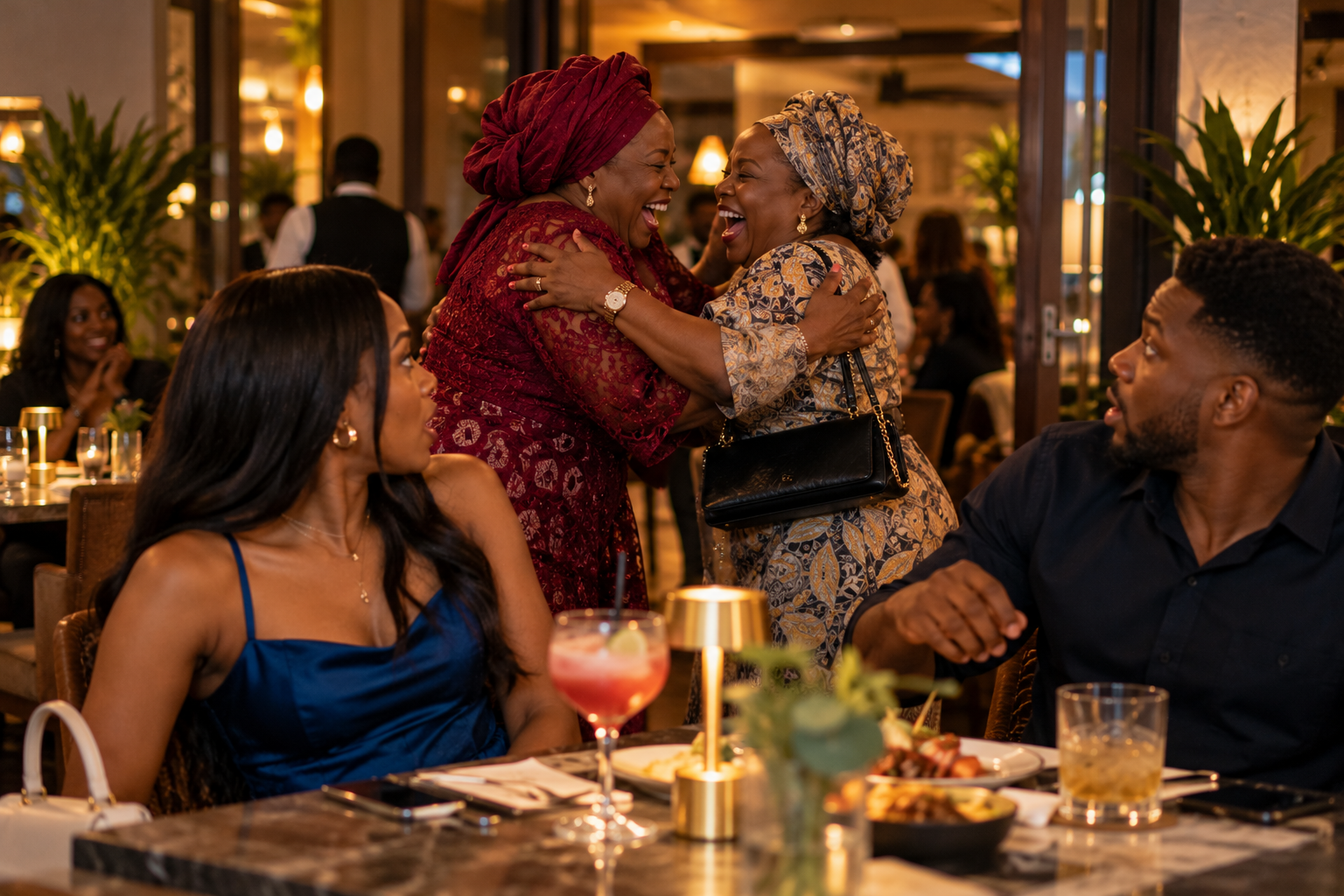
I Called My Girlfriend's Mother the Wrong Name for Six Months, and Nobody Corrected Me

I Called My Girlfriend's Mother the Wrong Name for Six Months, and Nobody Corrected Me

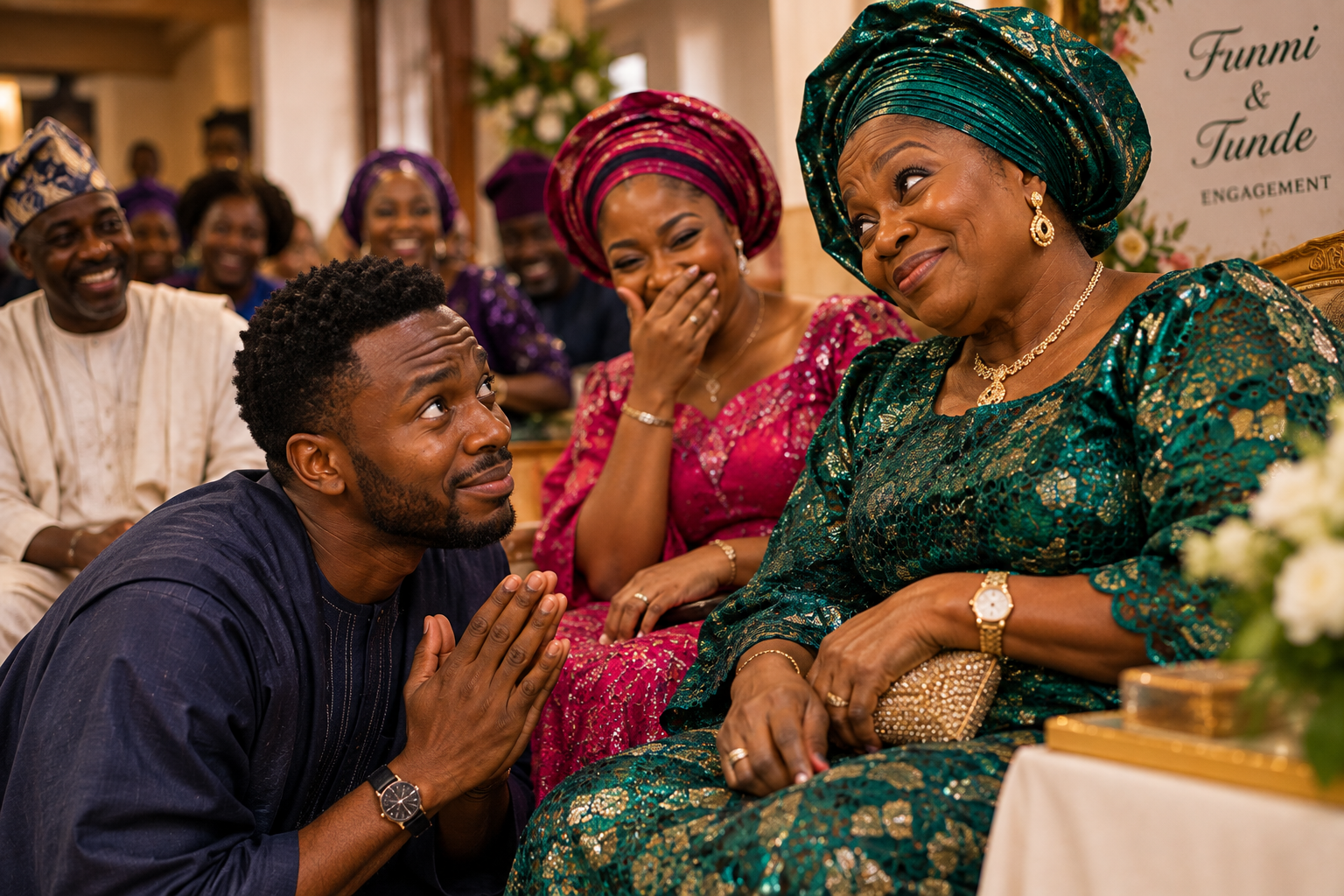
I met my girlfriend’s mother on a Sunday afternoon in March, and from the very first minute I got her name wrong. I want to say it was an accident. A small slip of the tongue. But it was worse than that. It was a confident, committed, repeated mistake that I carried across six months and thirty seven phone calls with the pride of a man who had no idea. My girlfriend, Funmi, had prepared me well. She had briefed me in the car. “My mother is warm, but she’s traditional. Greet her properly. Kneel if you can. Call her Mummy Funmi.” “Mummy Funmi,” I repeated. “Yes. Because she is my mother. Funmi’s mummy.” I nodded and filed it away. That’s what she said. Mummy Funmi. What I did not know, because Funmi had been so nervous that she mumbled the whole conversation, was that her mother’s actual name was Mrs Adeyemi Folasade. Funmi had said “Funmi’s mummy,” which meant “Funmi’s mother,” and my brain, which was already nervous and searching for a name to hold on to, had decided that “Mummy Funmi” was the title. So I arrived at the house, a neat bungalow in Ibadan with a small garden. Her mother opened the door in a beautiful wrapper and a warm smile. I dropped to my knees on the porch, which I had practised in the car, and said, in my best respectful voice, “Good afternoon, Mummy Funmi.” She blinked. There was a short silence. Funmi, standing behind me, made a choking sound. “Good afternoon, my son,” her mother said slowly. Her eyes flicked to her daughter and back. “Come in.” I should have noticed. She said it in the tone people use when a child brings home a drawing of a purple cow and says it’s a horse. But I was too busy sweating. The lunch went beautifully. She had cooked pounded yam and egusi. She asked me about my work, my family, my church. I answered carefully, using “Mummy Funmi” at every opportunity, because I wanted to show respect. “Thank you, Mummy Funmi.” “Yes, Mummy Funmi.” “The soup is wonderful, Mummy Funmi.” Every time, she smiled. Every time, Funmi glanced at me with a strange expression, somewhere between horror and delight. I thought she was just nervous. After lunch, her mother patted my hand and said, “You are a polite young man. I like you.” I was floating. In the following months, I called her often. She phoned me on my birthday. I called on hers. I called to greet her at Christmas. I called to ask how her knee was after a fall. Always, I began with the same words: “Good evening, Mummy Funmi.” She never corrected me. She responded warmly each time. She’d say, “Ah, my son, how are you?” and chat for twenty minutes. Funmi, when she overheard me, would suddenly leave the room. Once I found her in the kitchen, leaning against the fridge, shaking with silent laughter. I asked what was funny. She wiped her eyes and said, “Nothing. I love you.” I should have investigated. In hindsight, there were clues everywhere. Her aunt once called her mother “Folasade” in front of me, and I assumed it was a nickname. A cousin addressed her as “Mrs Adeyemi,” and I thought it was a formal joke. I even saw a card on the mantelpiece addressed to “Mrs F. Adeyemi,” and I told myself it was a family friend. The truth came out at our engagement. It was in September, six months after the first lunch. We had gathered in Ibadan with both our families. My uncles sat on one side of the room. Her uncles sat on the other. A master of ceremonies in a bright gele was announcing each person in turn, to formally introduce the two families. When it came to the bride’s side, the MC said, in a booming voice, “And now, from the bride’s family, we have the mother of the bride, Mrs Adeyemi Folasade.” I looked around, puzzled. Then I realised she was standing up. My girlfriend’s mother. The woman I had called Mummy Funmi for six months. A hundred people applauded. I applauded too, slowly, my brain starting to catch up with the facts. Folasade? Her name was Folasade? Not Funmi? I turned to Funmi, who was sitting beside me in a bright pink dress, shaking from head to foot. “Funmi,” I whispered. “Your mother’s name is Folasade.” “Yes.” “Not Funmi.” “No.” “Why did you not tell me?” She gasped for breath. “I tried! The first day! In the car! I said Funmi’s mummy! Then you said Mummy Funmi and I thought it was cute and then I couldn’t stop you!” “You let me call her the wrong name for six months!” “She loved it!” I looked across the room at her mother. She was watching us with a look of pure mischief, her hand over her mouth. Then she caught my eye and mouthed, “Mummy Funmi.” The entire room exploded with laughter, though I’m not sure half of them knew why. At the reception, I knelt in front of her for the second time in my life. “Ma,” I said, with great dignity. “I would like to apologise for the error.” She waved a hand. “My son, I have been called many things. Mummy of Funmi. Auntie. The woman in the green wrapper. But no one has ever given me a name with so much confidence.” She chuckled. “It was a gift. I kept it.” To this day, she signs birthday cards from “Mummy Funmi.” My wife thinks it is the funniest thing that has ever happened. I have given up all hope of redemption. Tell us in the comments. What is the most embarrassing thing you have said to a future in law?Read full story
I met my girlfriend’s mother on a Sunday afternoon in March, and from the very first minute I got her name wrong. I want to say it was an accident. A small slip of the tongue. But it was worse than that. It was a confident, committed, repeated mistake that I carried across six months and thirty seven phone calls with the pride of a man who had no idea. My girlfriend, Funmi, had prepared me well. She had briefed me in the car. “My mother is warm, but she’s traditional. Greet her properly. Kneel if you can. Call her Mummy Funmi.” “Mummy Funmi,” I repeated. “Yes. Because she is my mother. Funmi’s mummy.” I nodded and filed it away. That’s what she said. Mummy Funmi. What I did not know, because Funmi had been so nervous that she mumbled the whole conversation, was that her mother’s actual name was Mrs Adeyemi Folasade. Funmi had said “Funmi’s mummy,” which meant “Funmi’s mother,” and my brain, which was already nervous and searching for a name to hold on to, had decided that “Mummy Funmi” was the title. So I arrived at the house, a neat bungalow in Ibadan with a small garden. Her mother opened the door in a beautiful wrapper and a warm smile. I dropped to my knees on the porch, which I had practised in the car, and said, in my best respectful voice, “Good afternoon, Mummy Funmi.” She blinked. There was a short silence. Funmi, standing behind me, made a choking sound. “Good afternoon, my son,” her mother said slowly. Her eyes flicked to her daughter and back. “Come in.” I should have noticed. She said it in the tone people use when a child brings home a drawing of a purple cow and says it’s a horse. But I was too busy sweating. The lunch went beautifully. She had cooked pounded yam and egusi. She asked me about my work, my family, my church. I answered carefully, using “Mummy Funmi” at every opportunity, because I wanted to show respect. “Thank you, Mummy Funmi.” “Yes, Mummy Funmi.” “The soup is wonderful, Mummy Funmi.” Every time, she smiled. Every time, Funmi glanced at me with a strange expression, somewhere between horror and delight. I thought she was just nervous. After lunch, her mother patted my hand and said, “You are a polite young man. I like you.” I was floating. In the following months, I called her often. She phoned me on my birthday. I called on hers. I called to greet her at Christmas. I called to ask how her knee was after a fall. Always, I began with the same words: “Good evening, Mummy Funmi.” She never corrected me. She responded warmly each time. She’d say, “Ah, my son, how are you?” and chat for twenty minutes. Funmi, when she overheard me, would suddenly leave the room. Once I found her in the kitchen, leaning against the fridge, shaking with silent laughter. I asked what was funny. She wiped her eyes and said, “Nothing. I love you.” I should have investigated. In hindsight, there were clues everywhere. Her aunt once called her mother “Folasade” in front of me, and I assumed it was a nickname. A cousin addressed her as “Mrs Adeyemi,” and I thought it was a formal joke. I even saw a card on the mantelpiece addressed to “Mrs F. Adeyemi,” and I told myself it was a family friend. The truth came out at our engagement. It was in September, six months after the first lunch. We had gathered in Ibadan with both our families. My uncles sat on one side of the room. Her uncles sat on the other. A master of ceremonies in a bright gele was announcing each person in turn, to formally introduce the two families. When it came to the bride’s side, the MC said, in a booming voice, “And now, from the bride’s family, we have the mother of the bride, Mrs Adeyemi Folasade.” I looked around, puzzled. Then I realised she was standing up. My girlfriend’s mother. The woman I had called Mummy Funmi for six months. A hundred people applauded. I applauded too, slowly, my brain starting to catch up with the facts. Folasade? Her name was Folasade? Not Funmi? I turned to Funmi, who was sitting beside me in a bright pink dress, shaking from head to foot. “Funmi,” I whispered. “Your mother’s name is Folasade.” “Yes.” “Not Funmi.” “No.” “Why did you not tell me?” She gasped for breath. “I tried! The first day! In the car! I said Funmi’s mummy! Then you said Mummy Funmi and I thought it was cute and then I couldn’t stop you!” “You let me call her the wrong name for six months!” “She loved it!” I looked across the room at her mother. She was watching us with a look of pure mischief, her hand over her mouth. Then she caught my eye and mouthed, “Mummy Funmi.” The entire room exploded with laughter, though I’m not sure half of them knew why. At the reception, I knelt in front of her for the second time in my life. “Ma,” I said, with great dignity. “I would like to apologise for the error.” She waved a hand. “My son, I have been called many things. Mummy of Funmi. Auntie. The woman in the green wrapper. But no one has ever given me a name with so much confidence.” She chuckled. “It was a gift. I kept it.” To this day, she signs birthday cards from “Mummy Funmi.” My wife thinks it is the funniest thing that has ever happened. I have given up all hope of redemption. Tell us in the comments. What is the most embarrassing thing you have said to a future in law?

11/18/2026

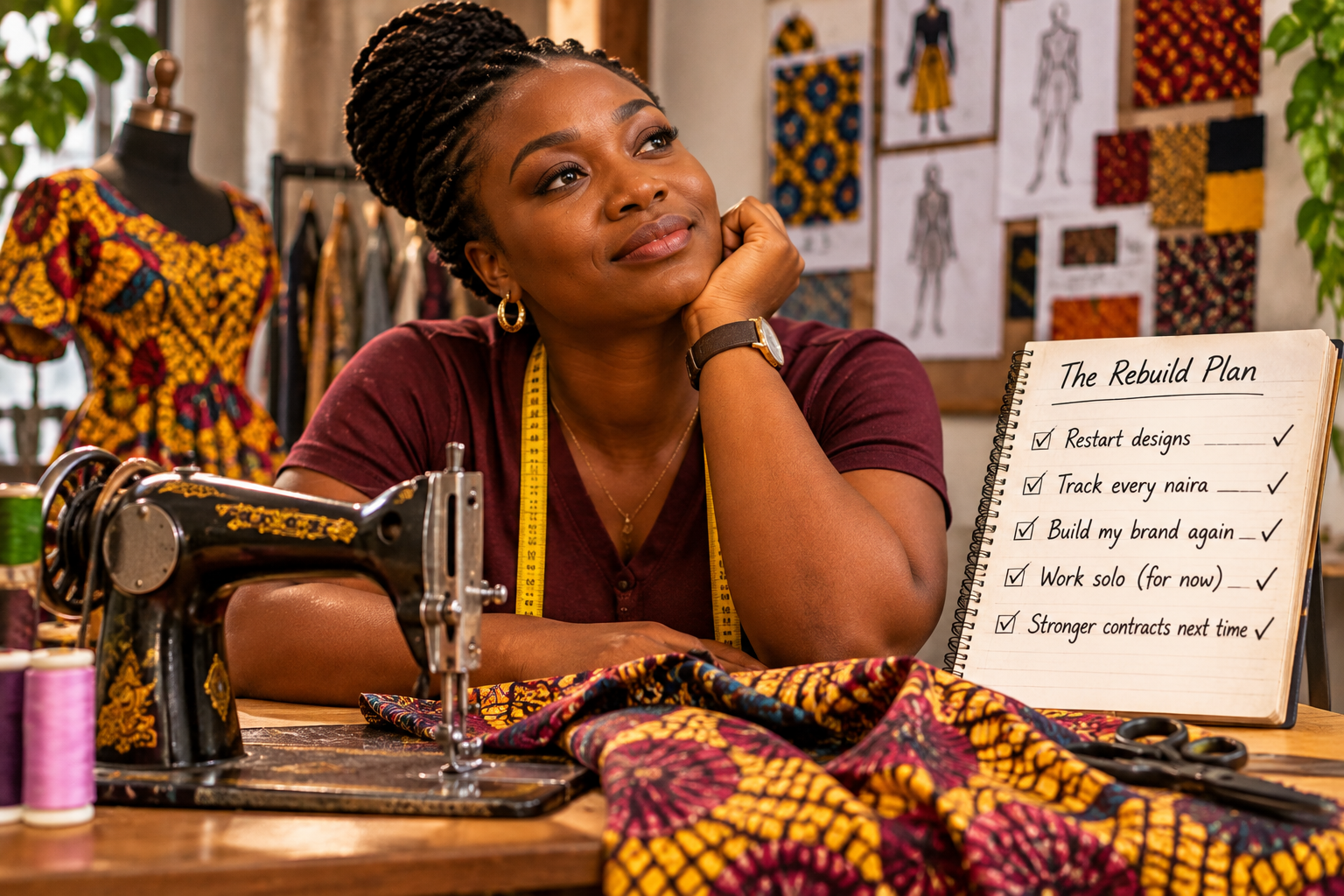
My Business Partner Took the Money and Left, and I Spent Six Months Thinking It Was My Fault

PINCHED

My Business Partner Took the Money and Left, and I Spent Six Months Thinking It Was My Fault

We opened the shop on a Saturday in February. I remember because it rained, and we both took it as a blessing. It was a small fashion boutique on a busy street in Lekki, selling ready to wear Ankara dresses and handmade bags. The idea was mine. I had been making clothes since I was fifteen, sewing for neighbours and cousins on a borrowed machine. I had a loyal following online, a few thousand people who liked my designs. I had a dream of a physical shop, a place where people could touch the fabric and try on the dresses. I did not have the money. That’s where Tobenna came in. Tobenna was a friend from university, a bright, ambitious man with a quick laugh and a gift for talking to people. He had worked in finance for six years and had saved a decent amount. He believed in my designs. He believed in me. One evening over suya, he said, “Let us do it together. I will put in the capital. You do the creative side. We split profits fifty fifty.” I cried. Actually cried, at the suya stand, with oil on my fingers. I had waited ten years for someone to say that to me. We signed no paper. I’m ashamed to say it. We had known each other for fifteen years. He was like a brother. We shook hands, and we ordered more suya. For the first year, it worked. Better than I had imagined. I designed, he managed the money. We hired two tailors, a shop assistant, and a girl who handled social media. Customers came. Orders grew. We were featured in a local magazine. A famous actress wore one of my dresses at an event, and for a week our phones did not stop ringing. I was exhausted but happy. I worked fourteen hour days. I slept at the shop twice a week. I stopped seeing my family on Sundays. When Tobenna said, “Leave the accounts to me, you focus on the designs,” I did. I trusted him. Why wouldn’t I? In the second year, things began to change. At first, small things. Deliveries of fabric arrived late. Suppliers called me, politely asking about unpaid invoices. I asked Tobenna, and he said, “A cash flow issue, don’t worry.” He seemed distracted. He took long calls in the corridor. He bought a new car. In April, one of my tailors, Mama Ife, came to me quietly. “Madam, my salary is two months late.” I went to Tobenna that evening. He rubbed his face and said, “Just give me a week.” A week became a month. In June, the landlord sent a notice about unpaid rent. In July, a supplier showed up at the shop with two men and a truck and collected a full order of fabric. I stood in front of my own boutique, humiliated, as my customers watched. I asked to see the books. He said, “It is complicated.” I said, “Show me anyway.” He said, “Tomorrow.” The next day, he did not come to work. He did not come the day after. On the fourth day, I called his mother. She told me, in a careful voice, that he had gone to “take a short trip.” On the sixth day, I discovered, through a bank statement I finally managed to see, that over eighteen months he had been moving money out of our business account into a personal one. Slowly. Methodically. A little here, a little there. The total was just over eleven million naira. I sat on the floor of the shop and did not move for a long time. The worst part was not the money. It was the silence that followed. Not a call. Not a message. Not a word of explanation. A man I had known since I was nineteen simply evaporated. For six months, I blamed myself. I should have asked for a contract. I should have checked the accounts. I should have been a better businesswoman. I should have noticed the new car. I should have noticed that he never looked me in the eye when he talked about money. Every night, in my bed, I played back conversations, searching for the moment I had been foolish. I closed the shop in September. Mama Ife cried when I told her. I paid what I could from my savings and sold the sewing machines I had bought myself to pay the last salaries. I moved back in with my parents in Ogba. I stopped posting online. I stopped designing. I told people I was “taking a break,” and my mother, who knew better, quietly put a plate of food in front of me every evening without asking questions. It was my younger brother Kunle who finally said what I needed to hear. He sat on the edge of my bed one night and said, “Ada, you keep saying it was your fault. Do you know what he did? He lied for eighteen months. Every single day, he looked at you and lied. That is a lot of work. You didn’t fail because you trusted him. He failed because he didn’t deserve it.” I stared at him. Then I broke. Properly, loudly, in a way I had not allowed myself in half a year. After that, things moved slowly. I sought legal advice. A lawyer told me the case would be difficult without a signed agreement, but not impossible. I began collecting what I could: messages, receipts, bank transfers. It is still ongoing. But I did something else. In January, I borrowed a small sewing machine from my aunt and set it up in my parents’ sitting room. I made one dress. Then another. I posted them online, hesitantly. A customer ordered. Then another. I’m rebuilding, slowly. This time from my parents’ house, with a secondhand machine, and a notebook where I record every naira that comes in and goes out. A friend, a lawyer, helped me draft a proper contract for any future partner. I’ve decided I will not take on one for at least two years. I sometimes still think about Tobenna. Not with hatred any more. Just with a kind of puzzled sadness. I wonder what he is doing, whether he sleeps at night, whether he remembers the rain on the day we opened. But I know this. The dress I am sewing tonight is mine. Every stitch. Tell us in the comments. Have you ever been betrayed by someone you trusted completely?Read full story
We opened the shop on a Saturday in February. I remember because it rained, and we both took it as a blessing. It was a small fashion boutique on a busy street in Lekki, selling ready to wear Ankara dresses and handmade bags. The idea was mine. I had been making clothes since I was fifteen, sewing for neighbours and cousins on a borrowed machine. I had a loyal following online, a few thousand people who liked my designs. I had a dream of a physical shop, a place where people could touch the fabric and try on the dresses. I did not have the money. That’s where Tobenna came in. Tobenna was a friend from university, a bright, ambitious man with a quick laugh and a gift for talking to people. He had worked in finance for six years and had saved a decent amount. He believed in my designs. He believed in me. One evening over suya, he said, “Let us do it together. I will put in the capital. You do the creative side. We split profits fifty fifty.” I cried. Actually cried, at the suya stand, with oil on my fingers. I had waited ten years for someone to say that to me. We signed no paper. I’m ashamed to say it. We had known each other for fifteen years. He was like a brother. We shook hands, and we ordered more suya. For the first year, it worked. Better than I had imagined. I designed, he managed the money. We hired two tailors, a shop assistant, and a girl who handled social media. Customers came. Orders grew. We were featured in a local magazine. A famous actress wore one of my dresses at an event, and for a week our phones did not stop ringing. I was exhausted but happy. I worked fourteen hour days. I slept at the shop twice a week. I stopped seeing my family on Sundays. When Tobenna said, “Leave the accounts to me, you focus on the designs,” I did. I trusted him. Why wouldn’t I? In the second year, things began to change. At first, small things. Deliveries of fabric arrived late. Suppliers called me, politely asking about unpaid invoices. I asked Tobenna, and he said, “A cash flow issue, don’t worry.” He seemed distracted. He took long calls in the corridor. He bought a new car. In April, one of my tailors, Mama Ife, came to me quietly. “Madam, my salary is two months late.” I went to Tobenna that evening. He rubbed his face and said, “Just give me a week.” A week became a month. In June, the landlord sent a notice about unpaid rent. In July, a supplier showed up at the shop with two men and a truck and collected a full order of fabric. I stood in front of my own boutique, humiliated, as my customers watched. I asked to see the books. He said, “It is complicated.” I said, “Show me anyway.” He said, “Tomorrow.” The next day, he did not come to work. He did not come the day after. On the fourth day, I called his mother. She told me, in a careful voice, that he had gone to “take a short trip.” On the sixth day, I discovered, through a bank statement I finally managed to see, that over eighteen months he had been moving money out of our business account into a personal one. Slowly. Methodically. A little here, a little there. The total was just over eleven million naira. I sat on the floor of the shop and did not move for a long time. The worst part was not the money. It was the silence that followed. Not a call. Not a message. Not a word of explanation. A man I had known since I was nineteen simply evaporated. For six months, I blamed myself. I should have asked for a contract. I should have checked the accounts. I should have been a better businesswoman. I should have noticed the new car. I should have noticed that he never looked me in the eye when he talked about money. Every night, in my bed, I played back conversations, searching for the moment I had been foolish. I closed the shop in September. Mama Ife cried when I told her. I paid what I could from my savings and sold the sewing machines I had bought myself to pay the last salaries. I moved back in with my parents in Ogba. I stopped posting online. I stopped designing. I told people I was “taking a break,” and my mother, who knew better, quietly put a plate of food in front of me every evening without asking questions. It was my younger brother Kunle who finally said what I needed to hear. He sat on the edge of my bed one night and said, “Ada, you keep saying it was your fault. Do you know what he did? He lied for eighteen months. Every single day, he looked at you and lied. That is a lot of work. You didn’t fail because you trusted him. He failed because he didn’t deserve it.” I stared at him. Then I broke. Properly, loudly, in a way I had not allowed myself in half a year. After that, things moved slowly. I sought legal advice. A lawyer told me the case would be difficult without a signed agreement, but not impossible. I began collecting what I could: messages, receipts, bank transfers. It is still ongoing. But I did something else. In January, I borrowed a small sewing machine from my aunt and set it up in my parents’ sitting room. I made one dress. Then another. I posted them online, hesitantly. A customer ordered. Then another. I’m rebuilding, slowly. This time from my parents’ house, with a secondhand machine, and a notebook where I record every naira that comes in and goes out. A friend, a lawyer, helped me draft a proper contract for any future partner. I’ve decided I will not take on one for at least two years. I sometimes still think about Tobenna. Not with hatred any more. Just with a kind of puzzled sadness. I wonder what he is doing, whether he sleeps at night, whether he remembers the rain on the day we opened. But I know this. The dress I am sewing tonight is mine. Every stitch. Tell us in the comments. Have you ever been betrayed by someone you trusted completely?

11/17/2026

I Was Laid Off at 9:03 a.m. by Having My Work Email Switched Off Mid Sentence

I Was Laid Off at 9:03 a.m. by Having My Work Email Switched Off Mid Sentence

On Monday morning, I was in the middle of writing an email to a client when my screen froze, then flickered, then politely informed me that my account had been deactivated. I stared at it. I tried to refresh. I typed my password again, carefully, in case I had mistyped. The message did not change. “Your account has been deactivated. Please contact your administrator.” I looked around the open plan office. Twenty five colleagues sat at their desks, heads down, fingers moving. Nobody was looking at me. Nobody knew. It was 9:03 a.m. I walked to the IT guy’s desk. His name was Wale, and he had an unusual talent for looking at his screen as though it was a window to another world. “Wale,” I said, quietly. “I have a problem with my login.” He did not look up. “Ah. Yes. Your account.” He swallowed. “Have you checked your personal email?” “Why would I check my personal email?” He finally looked at me, and I saw it in his face. A flinch of pity he was trying not to show. “Check your personal email, bro,” he said softly. I went to the stairwell and opened my phone. There it was, sent at 9:00 a.m.: “Subject: Important Update Regarding Your Employment.” I read it in a crouch, my back against a cold concrete wall. “Dear Femi, following a recent restructuring, your role has been identified as redundant. Your last working day is today. Please return all company property by close of business. Your final salary and severance will be processed within thirty days. We thank you for your service.” I read it again. I couldn’t make the words arrange themselves into sense. Four years. Four years of Sundays, of late nights, of a dozen product launches. Four years at a startup I had joined when it had eight people and a rented flat in Yaba, and had watched grow to eighty. I had trained half of those colleagues. I had written the first version of the customer guide that new hires still used. I had spent my twenty ninth birthday on a conference call about a bug. I was a product manager. I was proud of my work. I thought I was building something. At 9:15 a.m., I walked back into the office. My manager’s door was closed, and through the glass I could see him sitting stiffly while an HR woman I had never met spoke in a low voice. He didn’t look at me. I think he was told not to. My colleagues were beginning to realise something was happening. Chinedu, a developer who sat across from me, caught my eye and raised an eyebrow. I shook my head and mouthed, “Later.” He nodded slowly. His face fell. I packed my desk. It took four minutes. A mug. A framed photo of my younger sister at her graduation. A plant that I had been keeping alive since 2021. A notebook full of half written ideas. A small ceramic elephant my girlfriend had given me for luck. A security guard I didn’t know stood nearby, watching, with an embarrassed expression. “Sorry, sir,” he said, when I looked at him. “It’s the protocol.” “I understand.” As I walked towards the door, Chinedu stood up. Then someone else. A designer called Bisola. Then a woman from customer support. One by one, they rose from their chairs, a quiet row of people standing as I left. Nobody said anything. Nobody clapped. They just stood. It was the most dignified farewell I could have imagined. I walked out into the sunshine on a Monday morning, holding a box, in the middle of a city that had not noticed. I sat on a low wall outside the building for a long time. I called my girlfriend, who said, “I’m coming.” She arrived forty minutes later in a keke, carrying a bag of puff puff and a bottle of cold water. We sat side by side and watched people walk past. She did not say it would be fine. She said, “That was cruel.” I said, “It was efficient.” She said, “That is the same thing.” The next two weeks were hard. I woke up at 6 a.m. out of habit and lay in bed, unsure what to do with the hours. I scrolled through job listings with a numb thumb. I updated my CV and found it hard to describe four years of work in bullet points. I called friends. A few were kind. A few said, “Ah, the market is tough right now,” in the tone people use when they want to make themselves feel safe. I got angry, and then sad, and then oddly empty. I looked at the elephant on my shelf and thought, so much for luck. But three weeks in, something shifted. A former colleague, Chinedu, sent me a message. “Bro, the company is a mess. Half of us are looking for jobs. Do you want to start something?” I laughed. Then I thought about it. Then, over the next few days, we talked about it seriously. Six of us, from different departments, all laid off or about to be. A product manager, two developers, a designer, a marketer, a support lead. We started small. A consulting service for early stage startups. We called ourselves Grain. Our first client was a delivery company in Ikeja that needed help redesigning its app. We worked from my living room, sharing three laptops and an extension cable. Our first invoice was for sixty thousand naira. We celebrated with a pot of jollof. It is not glamorous. Some months are lean. Some weeks, I wake up in a cold sweat and calculate how long our runway is. But for the first time in a long time, I feel like I’m building something that belongs to us. I think a lot about that stairwell. About the cold concrete, the email, the quiet, impossible shock. I think about the colleagues who stood. And I think about how thin the line is between being safe and being redundant. A company can switch off your login in a second. It cannot switch off what you know. Tell us in the comments. Have you ever been let go without warning?Read full story
On Monday morning, I was in the middle of writing an email to a client when my screen froze, then flickered, then politely informed me that my account had been deactivated. I stared at it. I tried to refresh. I typed my password again, carefully, in case I had mistyped. The message did not change. “Your account has been deactivated. Please contact your administrator.” I looked around the open plan office. Twenty five colleagues sat at their desks, heads down, fingers moving. Nobody was looking at me. Nobody knew. It was 9:03 a.m. I walked to the IT guy’s desk. His name was Wale, and he had an unusual talent for looking at his screen as though it was a window to another world. “Wale,” I said, quietly. “I have a problem with my login.” He did not look up. “Ah. Yes. Your account.” He swallowed. “Have you checked your personal email?” “Why would I check my personal email?” He finally looked at me, and I saw it in his face. A flinch of pity he was trying not to show. “Check your personal email, bro,” he said softly. I went to the stairwell and opened my phone. There it was, sent at 9:00 a.m.: “Subject: Important Update Regarding Your Employment.” I read it in a crouch, my back against a cold concrete wall. “Dear Femi, following a recent restructuring, your role has been identified as redundant. Your last working day is today. Please return all company property by close of business. Your final salary and severance will be processed within thirty days. We thank you for your service.” I read it again. I couldn’t make the words arrange themselves into sense. Four years. Four years of Sundays, of late nights, of a dozen product launches. Four years at a startup I had joined when it had eight people and a rented flat in Yaba, and had watched grow to eighty. I had trained half of those colleagues. I had written the first version of the customer guide that new hires still used. I had spent my twenty ninth birthday on a conference call about a bug. I was a product manager. I was proud of my work. I thought I was building something. At 9:15 a.m., I walked back into the office. My manager’s door was closed, and through the glass I could see him sitting stiffly while an HR woman I had never met spoke in a low voice. He didn’t look at me. I think he was told not to. My colleagues were beginning to realise something was happening. Chinedu, a developer who sat across from me, caught my eye and raised an eyebrow. I shook my head and mouthed, “Later.” He nodded slowly. His face fell. I packed my desk. It took four minutes. A mug. A framed photo of my younger sister at her graduation. A plant that I had been keeping alive since 2021. A notebook full of half written ideas. A small ceramic elephant my girlfriend had given me for luck. A security guard I didn’t know stood nearby, watching, with an embarrassed expression. “Sorry, sir,” he said, when I looked at him. “It’s the protocol.” “I understand.” As I walked towards the door, Chinedu stood up. Then someone else. A designer called Bisola. Then a woman from customer support. One by one, they rose from their chairs, a quiet row of people standing as I left. Nobody said anything. Nobody clapped. They just stood. It was the most dignified farewell I could have imagined. I walked out into the sunshine on a Monday morning, holding a box, in the middle of a city that had not noticed. I sat on a low wall outside the building for a long time. I called my girlfriend, who said, “I’m coming.” She arrived forty minutes later in a keke, carrying a bag of puff puff and a bottle of cold water. We sat side by side and watched people walk past. She did not say it would be fine. She said, “That was cruel.” I said, “It was efficient.” She said, “That is the same thing.” The next two weeks were hard. I woke up at 6 a.m. out of habit and lay in bed, unsure what to do with the hours. I scrolled through job listings with a numb thumb. I updated my CV and found it hard to describe four years of work in bullet points. I called friends. A few were kind. A few said, “Ah, the market is tough right now,” in the tone people use when they want to make themselves feel safe. I got angry, and then sad, and then oddly empty. I looked at the elephant on my shelf and thought, so much for luck. But three weeks in, something shifted. A former colleague, Chinedu, sent me a message. “Bro, the company is a mess. Half of us are looking for jobs. Do you want to start something?” I laughed. Then I thought about it. Then, over the next few days, we talked about it seriously. Six of us, from different departments, all laid off or about to be. A product manager, two developers, a designer, a marketer, a support lead. We started small. A consulting service for early stage startups. We called ourselves Grain. Our first client was a delivery company in Ikeja that needed help redesigning its app. We worked from my living room, sharing three laptops and an extension cable. Our first invoice was for sixty thousand naira. We celebrated with a pot of jollof. It is not glamorous. Some months are lean. Some weeks, I wake up in a cold sweat and calculate how long our runway is. But for the first time in a long time, I feel like I’m building something that belongs to us. I think a lot about that stairwell. About the cold concrete, the email, the quiet, impossible shock. I think about the colleagues who stood. And I think about how thin the line is between being safe and being redundant. A company can switch off your login in a second. It cannot switch off what you know. Tell us in the comments. Have you ever been let go without warning?

11/16/2026

My Father Called After Twelve Years of Silence, and I Let It Ring Four Times

My Father Called After Twelve Years of Silence, and I Let It Ring Four Times

My phone rang at 6:12 on a Sunday evening, and the name on the screen was one I had deleted from my contacts a long time ago. I knew the number by heart anyway. You do not forget the number of someone who taught you to count. It was my father. I let it ring once. I watched it light up the room. My hand hovered over the phone like it was a hot iron. It rang twice, three times. My chest felt strange, as if someone had placed a stone on it. On the fourth ring, I turned the phone face down on the bed and sat very still, listening to it buzz itself into silence. Then I picked it up again and stared at the missed call, as though it might explain itself. Let me tell you about my father. He was a charming man. That is the first thing everybody says. He could walk into a room and by the end of the evening everyone would be laughing at his stories. He told them in a rich, rolling voice, with gestures. He was generous with strangers. He gave money to the beggar at the junction and remembered the names of every security man in every building he visited. At home, he was different. Not violent. Not cruel in the way people imagine. Just absent. He was the kind of father who promised to attend my school events and then did not appear. He forgot birthdays and made up for them with expensive gifts a week later, which my mother learned to accept with a smile. He lied, small lies at first. Late meetings. Traffic. A friend who needed help. Then bigger lies, the kind that appeared in whispered arguments behind a closed door. When I was eighteen, I found out that my father had another family. A woman in Abuja. Two children, younger than me. He had been splitting his life in half for nine years, driving between two houses, wearing two faces. My mother had known for a long time. She had carried it quietly and told me nothing, because she wanted me to have a father. I confronted him in the sitting room one December night. He did not deny it. He said, “You are too young to understand.” I said, “Then explain.” He said, “I do not owe you an explanation.” And I said something I have regretted for twelve years: “Then you do not owe me a father.” He left the next morning. We did not speak again. I finished university. I got a job. My mother died four years ago after a long illness, and he did not come to the funeral. Someone told me later that he had been in Dubai. I told myself that I did not care. I built a life without him. I made friends who became family. I learned to love people who showed up. And now, here he was, calling at 6:12 on a Sunday evening in November, twelve years later. I put the phone down. I made tea. I drank half of it, and the other half went cold. At 7 p.m., a message appeared. Not a call. A text. “Oma. It is your father. I am sorry to disturb you. I would like to speak to you if you are willing. I understand if not.” I read it eleven times. There was no excuse in it. No demand. No “after everything I have done for you.” Just a short, careful sentence with a small, unsteady humility I had never heard from him before. I called my friend Adaobi. She picked up on the second ring. “He called,” I said. “Who?” “My father.” There was a silence. “Are you okay?” “I do not know.” She listened for twenty minutes. She did not tell me what to do. She said, “Whatever you decide, I am here.” It was the kindest thing anyone could have said. I did not reply that night. Or the next. I went to work. I smiled at colleagues. I answered emails. In the evenings, I sat in my flat in Gbagada and went back and forth. One minute I was furious, rehearsing speeches that began with “How dare you.” The next minute I was a nine year old girl sitting on his shoulders at a church picnic, laughing, my hands in his hair. On Thursday, I made a decision. Not to forgive him. Not yet. Just to listen. I texted back. “I will meet you. Saturday, 3 p.m. A public place.” He replied within a minute. “Thank you. Anywhere you choose.” I picked a small restaurant in Surulere with plastic tablecloths and a view of a busy road. I arrived early and sat near the window. At 2:58, a man walked in. He was smaller than I remembered. His hair, once thick and black, was thin and grey. He walked with a slight stoop, and he carried a worn brown envelope. He stopped at the entrance, scanning the room. When he saw me, he went completely still. I raised my hand. He came over slowly. He did not hug me. He did not try. He sat down opposite me with the care of a man approaching a skittish animal. “Oma,” he said. “Papa.” For a long time we said nothing. A waiter brought water. A baby cried at the next table. “I am sick,” he said at last. I felt my stomach drop. “It is my kidneys. The doctors say I have a year, maybe two. I will not ask you for anything. I did not call to ask you for anything.” He took a breath. “I called because I realised I never said sorry. Not once. I told myself for twelve years that you were being stubborn, that you would come around. But the truth is that I was a coward. I was afraid to face what I did.” I looked at his hands. They were shaking. “I hurt your mother,” he continued. “I hurt you. I broke something that I cannot repair. I know that. I do not expect you to forgive me. I only wanted to say it to your face before I run out of time.” I had imagined this moment in so many ways. In some versions I screamed. In others I walked out. I had never imagined that I would just sit there, with tears running down my face, feeling both everything and nothing. “Why did you do it?” I asked. He closed his eyes. “Because it was easier than being honest.” That was all. No excuse. No elaborate story. He pushed the envelope across the table. “These are letters. I wrote them over the years. I never sent them. You can read them, or burn them, whichever you want.” I took the envelope. It was heavy. We talked for another hour. About small things. My job. The weather. The name of my cat. He asked if my mother had been at peace at the end. I said she had. He nodded and looked out of the window, his jaw tight. When we left the restaurant, he stood awkwardly on the pavement. “Thank you for coming,” he said. I did not say “It’s okay,” because it was not. I did not say “I forgive you,” because I did not. But I surprised myself. I stepped forward and put my arms around him. He was frail. His coat smelled of camphor. He began to cry quietly against my shoulder. I do not know what this means. I am not sure if there is a version of this story that ends in a family. I have not read the letters yet. They sit on my bedside table, unopened. But I think there is a kind of peace in letting a phone ring, and then picking it up. Tell us in the comments. Would you have answered?Read full story
My phone rang at 6:12 on a Sunday evening, and the name on the screen was one I had deleted from my contacts a long time ago. I knew the number by heart anyway. You do not forget the number of someone who taught you to count. It was my father. I let it ring once. I watched it light up the room. My hand hovered over the phone like it was a hot iron. It rang twice, three times. My chest felt strange, as if someone had placed a stone on it. On the fourth ring, I turned the phone face down on the bed and sat very still, listening to it buzz itself into silence. Then I picked it up again and stared at the missed call, as though it might explain itself. Let me tell you about my father. He was a charming man. That is the first thing everybody says. He could walk into a room and by the end of the evening everyone would be laughing at his stories. He told them in a rich, rolling voice, with gestures. He was generous with strangers. He gave money to the beggar at the junction and remembered the names of every security man in every building he visited. At home, he was different. Not violent. Not cruel in the way people imagine. Just absent. He was the kind of father who promised to attend my school events and then did not appear. He forgot birthdays and made up for them with expensive gifts a week later, which my mother learned to accept with a smile. He lied, small lies at first. Late meetings. Traffic. A friend who needed help. Then bigger lies, the kind that appeared in whispered arguments behind a closed door. When I was eighteen, I found out that my father had another family. A woman in Abuja. Two children, younger than me. He had been splitting his life in half for nine years, driving between two houses, wearing two faces. My mother had known for a long time. She had carried it quietly and told me nothing, because she wanted me to have a father. I confronted him in the sitting room one December night. He did not deny it. He said, “You are too young to understand.” I said, “Then explain.” He said, “I do not owe you an explanation.” And I said something I have regretted for twelve years: “Then you do not owe me a father.” He left the next morning. We did not speak again. I finished university. I got a job. My mother died four years ago after a long illness, and he did not come to the funeral. Someone told me later that he had been in Dubai. I told myself that I did not care. I built a life without him. I made friends who became family. I learned to love people who showed up. And now, here he was, calling at 6:12 on a Sunday evening in November, twelve years later. I put the phone down. I made tea. I drank half of it, and the other half went cold. At 7 p.m., a message appeared. Not a call. A text. “Oma. It is your father. I am sorry to disturb you. I would like to speak to you if you are willing. I understand if not.” I read it eleven times. There was no excuse in it. No demand. No “after everything I have done for you.” Just a short, careful sentence with a small, unsteady humility I had never heard from him before. I called my friend Adaobi. She picked up on the second ring. “He called,” I said. “Who?” “My father.” There was a silence. “Are you okay?” “I do not know.” She listened for twenty minutes. She did not tell me what to do. She said, “Whatever you decide, I am here.” It was the kindest thing anyone could have said. I did not reply that night. Or the next. I went to work. I smiled at colleagues. I answered emails. In the evenings, I sat in my flat in Gbagada and went back and forth. One minute I was furious, rehearsing speeches that began with “How dare you.” The next minute I was a nine year old girl sitting on his shoulders at a church picnic, laughing, my hands in his hair. On Thursday, I made a decision. Not to forgive him. Not yet. Just to listen. I texted back. “I will meet you. Saturday, 3 p.m. A public place.” He replied within a minute. “Thank you. Anywhere you choose.” I picked a small restaurant in Surulere with plastic tablecloths and a view of a busy road. I arrived early and sat near the window. At 2:58, a man walked in. He was smaller than I remembered. His hair, once thick and black, was thin and grey. He walked with a slight stoop, and he carried a worn brown envelope. He stopped at the entrance, scanning the room. When he saw me, he went completely still. I raised my hand. He came over slowly. He did not hug me. He did not try. He sat down opposite me with the care of a man approaching a skittish animal. “Oma,” he said. “Papa.” For a long time we said nothing. A waiter brought water. A baby cried at the next table. “I am sick,” he said at last. I felt my stomach drop. “It is my kidneys. The doctors say I have a year, maybe two. I will not ask you for anything. I did not call to ask you for anything.” He took a breath. “I called because I realised I never said sorry. Not once. I told myself for twelve years that you were being stubborn, that you would come around. But the truth is that I was a coward. I was afraid to face what I did.” I looked at his hands. They were shaking. “I hurt your mother,” he continued. “I hurt you. I broke something that I cannot repair. I know that. I do not expect you to forgive me. I only wanted to say it to your face before I run out of time.” I had imagined this moment in so many ways. In some versions I screamed. In others I walked out. I had never imagined that I would just sit there, with tears running down my face, feeling both everything and nothing. “Why did you do it?” I asked. He closed his eyes. “Because it was easier than being honest.” That was all. No excuse. No elaborate story. He pushed the envelope across the table. “These are letters. I wrote them over the years. I never sent them. You can read them, or burn them, whichever you want.” I took the envelope. It was heavy. We talked for another hour. About small things. My job. The weather. The name of my cat. He asked if my mother had been at peace at the end. I said she had. He nodded and looked out of the window, his jaw tight. When we left the restaurant, he stood awkwardly on the pavement. “Thank you for coming,” he said. I did not say “It’s okay,” because it was not. I did not say “I forgive you,” because I did not. But I surprised myself. I stepped forward and put my arms around him. He was frail. His coat smelled of camphor. He began to cry quietly against my shoulder. I do not know what this means. I am not sure if there is a version of this story that ends in a family. I have not read the letters yet. They sit on my bedside table, unopened. But I think there is a kind of peace in letting a phone ring, and then picking it up. Tell us in the comments. Would you have answered?

11/16/2026

I Spent One Hundred and Forty Thousand Naira on Aso Ebi in One Month, and I Still Do Not Know Whose Happiness It Bought

I Spent One Hundred and Forty Thousand Naira on Aso Ebi in One Month, and I Still Do Not Know Whose Happiness It Bought

In October, I attended four weddings and a naming ceremony. In my wardrobe now, there are five different outfits, each in a different colour, each worn exactly once, and each bought with money I did not have. Let me explain how it happened. It started in August with my friend Titilayo’s engagement. She asked me to be one of her bridesmaids. I said yes, because that is what you say. The bridesmaid dresses were custom made, a deep emerald green with sequins at the waist, from a tailor in Ikeja that the bride insisted was “the best in Lagos.” The cost: thirty two thousand naira, including the gele and a matching clutch. Then my cousin’s traditional wedding. Peach and gold lace for the family. Twenty one thousand naira for the fabric, nine thousand for the tailor, and four thousand for the accessories the aunties assured me were “necessary.” Then a colleague’s church wedding. I did not know her well, but the entire office had been told to wear royal blue as a sign of solidarity. Eighteen thousand. Then the wedding of a school friend in Ibadan. Transport: twelve thousand. Hotel: thirty thousand, split with another girl, so fifteen thousand each. Aso ebi: twenty five thousand. A gift: ten thousand, which I thought was low, until I saw other people giving fifty. Then, because the universe has a sense of humour, a naming ceremony for my best friend’s baby. White and silver, which meant buying yet another outfit because white shows everything, and my old one had a stain from a wedding in July. Fifteen thousand. I added it all up on a Sunday night on the back of an envelope. One hundred and forty thousand, three hundred naira. My salary that month was ninety five thousand. I stared at the figure for a long time. Then I did what any rational person would do. I laughed until I coughed. I do not want to sound ungrateful. I love weddings. I love the music, the food, the dancing, the beautiful chaos of two families colliding in a hall. I love seeing the people I care about at their happiest. When Titilayo walked down the aisle in her white gown, I cried so much that my mascara ran into my ears. But somewhere around the third wedding, I began to feel something I could not name. An exhaustion that wasn’t physical. A gnawing sense that I was paying a toll to belong. It is a strange thing, aso ebi. In theory, it is a gesture of unity. Everyone wears the same fabric. It is beautiful on the dance floor. It tells the world that these people are connected. But in practice, it has become a kind of social currency. If you do not buy the fabric, you are not family. If you do not wear it, you are not a friend. If you wear last year’s colour, people notice. The pressure comes from everywhere. The bride’s mother. The group chat. The relative who says, “Ah, you are not buying? Is it a problem?” I once paid for a fabric I never intended to wear because the seller said the bride would be “disappointed” if I did not support her business. And the money! Where does it come from? In my case, from the savings I was building for a course. From the small emergency fund I had been proud of. From the money I would otherwise have used to repair my phone, which has a crack running down its screen like a river on a map. I called my mother that Sunday and told her about the envelope. She was silent for a while. Then she said, “My daughter, you cannot buy your way into love.” “I know, Mummy.” “Do you? When I was young, I attended weddings in whatever clothes I had. Nobody cared. The bride only wanted to see my face.” “The world has changed.” “The world has not changed. People have just become afraid.” I thought about that for days. The next wedding invitation arrived in November. A distant cousin in Port Harcourt. The message from the family group chat said, “Please confirm aso ebi by Friday.” My phone buzzed with eleven reminders. Then I did something I had never done. I typed a message to the bride directly: “Dear Ngozi, congratulations! I am so happy for you. I’m sorry, I cannot buy the aso ebi this time because of my budget, but I will attend in a simple outfit and I will bring a gift. I hope you will understand.” I stared at it for ten minutes, my thumb hovering over the send button. Then I pressed it and put my phone face down on the bed. An hour later, she replied. A voice note. I played it nervously. “Ah, my dear, of course!” Ngozi’s voice bubbled. “Please do not stress. I’m only glad you’re coming. Wear anything you like. Honestly, I’m so tired of the fabric politics. Come and eat rice.” I sat there with tears of relief running down my face. I wore a black dress I already owned to that wedding. I felt like a crow among peacocks. But Ngozi hugged me at the entrance and said, “Look at you, you look elegant,” and I realised nobody was counting. I am not saying I will never buy aso ebi again. For my best friend, for my sister, I will. For some occasions, the fabric matters. But I have decided to ask myself a simple question before I pay: am I doing this out of love, or out of fear? If it is love, I will gladly pay. If it is fear, I will send a polite message and wear what I own. Tell us in the comments. How much would you spend on aso ebi?Read full story
In October, I attended four weddings and a naming ceremony. In my wardrobe now, there are five different outfits, each in a different colour, each worn exactly once, and each bought with money I did not have. Let me explain how it happened. It started in August with my friend Titilayo’s engagement. She asked me to be one of her bridesmaids. I said yes, because that is what you say. The bridesmaid dresses were custom made, a deep emerald green with sequins at the waist, from a tailor in Ikeja that the bride insisted was “the best in Lagos.” The cost: thirty two thousand naira, including the gele and a matching clutch. Then my cousin’s traditional wedding. Peach and gold lace for the family. Twenty one thousand naira for the fabric, nine thousand for the tailor, and four thousand for the accessories the aunties assured me were “necessary.” Then a colleague’s church wedding. I did not know her well, but the entire office had been told to wear royal blue as a sign of solidarity. Eighteen thousand. Then the wedding of a school friend in Ibadan. Transport: twelve thousand. Hotel: thirty thousand, split with another girl, so fifteen thousand each. Aso ebi: twenty five thousand. A gift: ten thousand, which I thought was low, until I saw other people giving fifty. Then, because the universe has a sense of humour, a naming ceremony for my best friend’s baby. White and silver, which meant buying yet another outfit because white shows everything, and my old one had a stain from a wedding in July. Fifteen thousand. I added it all up on a Sunday night on the back of an envelope. One hundred and forty thousand, three hundred naira. My salary that month was ninety five thousand. I stared at the figure for a long time. Then I did what any rational person would do. I laughed until I coughed. I do not want to sound ungrateful. I love weddings. I love the music, the food, the dancing, the beautiful chaos of two families colliding in a hall. I love seeing the people I care about at their happiest. When Titilayo walked down the aisle in her white gown, I cried so much that my mascara ran into my ears. But somewhere around the third wedding, I began to feel something I could not name. An exhaustion that wasn’t physical. A gnawing sense that I was paying a toll to belong. It is a strange thing, aso ebi. In theory, it is a gesture of unity. Everyone wears the same fabric. It is beautiful on the dance floor. It tells the world that these people are connected. But in practice, it has become a kind of social currency. If you do not buy the fabric, you are not family. If you do not wear it, you are not a friend. If you wear last year’s colour, people notice. The pressure comes from everywhere. The bride’s mother. The group chat. The relative who says, “Ah, you are not buying? Is it a problem?” I once paid for a fabric I never intended to wear because the seller said the bride would be “disappointed” if I did not support her business. And the money! Where does it come from? In my case, from the savings I was building for a course. From the small emergency fund I had been proud of. From the money I would otherwise have used to repair my phone, which has a crack running down its screen like a river on a map. I called my mother that Sunday and told her about the envelope. She was silent for a while. Then she said, “My daughter, you cannot buy your way into love.” “I know, Mummy.” “Do you? When I was young, I attended weddings in whatever clothes I had. Nobody cared. The bride only wanted to see my face.” “The world has changed.” “The world has not changed. People have just become afraid.” I thought about that for days. The next wedding invitation arrived in November. A distant cousin in Port Harcourt. The message from the family group chat said, “Please confirm aso ebi by Friday.” My phone buzzed with eleven reminders. Then I did something I had never done. I typed a message to the bride directly: “Dear Ngozi, congratulations! I am so happy for you. I’m sorry, I cannot buy the aso ebi this time because of my budget, but I will attend in a simple outfit and I will bring a gift. I hope you will understand.” I stared at it for ten minutes, my thumb hovering over the send button. Then I pressed it and put my phone face down on the bed. An hour later, she replied. A voice note. I played it nervously. “Ah, my dear, of course!” Ngozi’s voice bubbled. “Please do not stress. I’m only glad you’re coming. Wear anything you like. Honestly, I’m so tired of the fabric politics. Come and eat rice.” I sat there with tears of relief running down my face. I wore a black dress I already owned to that wedding. I felt like a crow among peacocks. But Ngozi hugged me at the entrance and said, “Look at you, you look elegant,” and I realised nobody was counting. I am not saying I will never buy aso ebi again. For my best friend, for my sister, I will. For some occasions, the fabric matters. But I have decided to ask myself a simple question before I pay: am I doing this out of love, or out of fear? If it is love, I will gladly pay. If it is fear, I will send a polite message and wear what I own. Tell us in the comments. How much would you spend on aso ebi?

11/16/2026

I Joined an Online Interview From a Bathroom Because My Neighbour's Generator Was Louder Than the Interviewer

I Joined an Online Interview From a Bathroom Because My Neighbour's Generator Was Louder Than the Interviewer

At 9:47 a.m., thirteen minutes before the most important interview of my life, my neighbour started his generator. I want to be clear about the timing. I had planned everything. For three days I had cleaned my room. I had ironed my best shirt and tie. I had tested the video link twice. I had put a charged power bank beside my laptop, because we had not had electricity since the previous Wednesday. I had even informed my family that I would be in an interview from ten o’clock until eleven and requested, in writing, that nobody make any noise. My mother had pinned the note to the door. My younger brother had promised to stay quiet. The neighbour’s cat, I assumed, would behave. I did not account for Mr Ugochukwu and his generator. It started with a cough. Then a splutter. Then a full, roaring, industrial howl that shook the louvres in my window. Mr Ugochukwu, who lives in the flat directly below mine, had the habit of running his machine at full throttle for exactly two hours every morning to charge his freezer. It was loud even from the street. Through my window, in my small room in Surulere, it sounded like a tractor was reversing into my skull. I sat in front of my laptop, tie on, hair brushed, in a state of mild panic. Nine fifty. I opened the call link. A waiting room appeared. My name, Segun Olabode, sat on the screen with a spinning circle beside it. In ten minutes, a panel of three managers from a fintech company in Yaba would see my face. I had one chance. They had received more than six hundred applications for the role. I had made it to the final round. If I got the job, I could leave the call centre where I had spent four years answering complaints about missing delivery packages. If I did not, I would remain in my chair, forever, and my mother would continue to introduce me to church members as “Segun who works in customer service” in the tone of a person describing a long illness. I tested my microphone. The generator’s roar flooded the speakers, drowning my voice completely. The software showed a little red bar leaping like a heart monitor. I moved the laptop to the corner of the room. Worse. I moved it to the kitchen. My mother was frying fish, and the smell and the sizzle were worse. I stood in the corridor, desperately looking for a quiet place. The sitting room had my brother’s friends. My parents’ room had my father’s snoring. And then I remembered the bathroom. It was small, tiled, windowless except for a narrow slit near the ceiling. The walls were thick. If I closed the door and the little window, the generator would become a distant grumble. I grabbed my laptop, a plastic stool from the kitchen, and a bucket, which I turned upside down to sit on. I balanced the laptop on the stool, plugged in my power bank, and adjusted the screen. At 9:58, I was sitting in my bathroom in a shirt and tie, on a bucket, with a shower curtain behind me. I used a bedsheet to cover the shower curtain, tucked it into the rail, and pulled it taut. It looked reasonably like a neutral background, if you did not inspect it too closely. I switched on the ring light that my brother had borrowed from a friend. I looked at myself on the screen. A man in a tie, in a calm blue room, with a very faint smell of soap. I took a deep breath. I pressed join. The three managers appeared on screen. A woman in glasses, a man with a beard, a younger man with a bright shirt. They smiled. I smiled back. The woman said, “Good morning, Segun. Thank you for joining. Can you hear us clearly?” “Yes, ma. Good morning,” I said. “I apologise in advance if you hear any noise.” “Not at all,” she said. “Where are you joining from?” I paused. There is a version of the truth that feels like a lie, and a version of a lie that feels like the truth. I decided to tell the real one. “A bathroom, ma,” I said. “The generator in my compound is very loud, and I could not find any other quiet place. I am sorry.” There was a brief silence on the call. Then the bearded man began to laugh. Not mockingly. Warmly. “Thank you for being honest,” he said. “We have had candidates join from cars, from rooftops, from hotel lobbies. You are the first to tell us it was a bathroom.” “It is a very clean bathroom, sir.” “I’m sure it is.” The interview began. Questions on customer data. Questions on handling escalations. A scenario about a customer whose money had been debited but not delivered. I answered carefully, calmly, with a bucket creaking slightly under me whenever I shifted. About twenty minutes in, there was a knock on the door. Three loud knocks. “Segun!” my brother whispered through the gap. “Mummy wants to know if you want zobo!” I froze. The woman on screen raised her eyebrows. The bearded man lifted a hand to his mouth. I closed my eyes and said, in a polite voice, “Please tell Mummy I am in an interview.” “She said you can have zobo after!” “Thank you!” The footsteps retreated. I turned back to the screen. The younger manager’s face had turned bright red. He was shaking with silent laughter. “I am sorry,” I said. “Please,” said the woman. “Do not apologise. This is the most human interview we have had all week.” At the end of the call, they asked if I had questions. I asked two. Then, almost as an afterthought, I added, “Please, if I get the job, can I work from a place with a bigger bathroom?” They laughed until they cried. Two days later, I received an email: “Dear Segun, we are pleased to offer you the position.” In the notes at the bottom, the woman had written: “Your resourcefulness stood out. Welcome to the team.” I start next month. My mother has told the entire church. She now says, “Segun who works in a fintech company in Yaba,” and she says it with a face like sunrise. As for Mr Ugochukwu, I have bought him a box of biscuits. He has no idea why. Tell us in the comments. What is the most chaotic place you have ever taken an important call from?Read full story
At 9:47 a.m., thirteen minutes before the most important interview of my life, my neighbour started his generator. I want to be clear about the timing. I had planned everything. For three days I had cleaned my room. I had ironed my best shirt and tie. I had tested the video link twice. I had put a charged power bank beside my laptop, because we had not had electricity since the previous Wednesday. I had even informed my family that I would be in an interview from ten o’clock until eleven and requested, in writing, that nobody make any noise. My mother had pinned the note to the door. My younger brother had promised to stay quiet. The neighbour’s cat, I assumed, would behave. I did not account for Mr Ugochukwu and his generator. It started with a cough. Then a splutter. Then a full, roaring, industrial howl that shook the louvres in my window. Mr Ugochukwu, who lives in the flat directly below mine, had the habit of running his machine at full throttle for exactly two hours every morning to charge his freezer. It was loud even from the street. Through my window, in my small room in Surulere, it sounded like a tractor was reversing into my skull. I sat in front of my laptop, tie on, hair brushed, in a state of mild panic. Nine fifty. I opened the call link. A waiting room appeared. My name, Segun Olabode, sat on the screen with a spinning circle beside it. In ten minutes, a panel of three managers from a fintech company in Yaba would see my face. I had one chance. They had received more than six hundred applications for the role. I had made it to the final round. If I got the job, I could leave the call centre where I had spent four years answering complaints about missing delivery packages. If I did not, I would remain in my chair, forever, and my mother would continue to introduce me to church members as “Segun who works in customer service” in the tone of a person describing a long illness. I tested my microphone. The generator’s roar flooded the speakers, drowning my voice completely. The software showed a little red bar leaping like a heart monitor. I moved the laptop to the corner of the room. Worse. I moved it to the kitchen. My mother was frying fish, and the smell and the sizzle were worse. I stood in the corridor, desperately looking for a quiet place. The sitting room had my brother’s friends. My parents’ room had my father’s snoring. And then I remembered the bathroom. It was small, tiled, windowless except for a narrow slit near the ceiling. The walls were thick. If I closed the door and the little window, the generator would become a distant grumble. I grabbed my laptop, a plastic stool from the kitchen, and a bucket, which I turned upside down to sit on. I balanced the laptop on the stool, plugged in my power bank, and adjusted the screen. At 9:58, I was sitting in my bathroom in a shirt and tie, on a bucket, with a shower curtain behind me. I used a bedsheet to cover the shower curtain, tucked it into the rail, and pulled it taut. It looked reasonably like a neutral background, if you did not inspect it too closely. I switched on the ring light that my brother had borrowed from a friend. I looked at myself on the screen. A man in a tie, in a calm blue room, with a very faint smell of soap. I took a deep breath. I pressed join. The three managers appeared on screen. A woman in glasses, a man with a beard, a younger man with a bright shirt. They smiled. I smiled back. The woman said, “Good morning, Segun. Thank you for joining. Can you hear us clearly?” “Yes, ma. Good morning,” I said. “I apologise in advance if you hear any noise.” “Not at all,” she said. “Where are you joining from?” I paused. There is a version of the truth that feels like a lie, and a version of a lie that feels like the truth. I decided to tell the real one. “A bathroom, ma,” I said. “The generator in my compound is very loud, and I could not find any other quiet place. I am sorry.” There was a brief silence on the call. Then the bearded man began to laugh. Not mockingly. Warmly. “Thank you for being honest,” he said. “We have had candidates join from cars, from rooftops, from hotel lobbies. You are the first to tell us it was a bathroom.” “It is a very clean bathroom, sir.” “I’m sure it is.” The interview began. Questions on customer data. Questions on handling escalations. A scenario about a customer whose money had been debited but not delivered. I answered carefully, calmly, with a bucket creaking slightly under me whenever I shifted. About twenty minutes in, there was a knock on the door. Three loud knocks. “Segun!” my brother whispered through the gap. “Mummy wants to know if you want zobo!” I froze. The woman on screen raised her eyebrows. The bearded man lifted a hand to his mouth. I closed my eyes and said, in a polite voice, “Please tell Mummy I am in an interview.” “She said you can have zobo after!” “Thank you!” The footsteps retreated. I turned back to the screen. The younger manager’s face had turned bright red. He was shaking with silent laughter. “I am sorry,” I said. “Please,” said the woman. “Do not apologise. This is the most human interview we have had all week.” At the end of the call, they asked if I had questions. I asked two. Then, almost as an afterthought, I added, “Please, if I get the job, can I work from a place with a bigger bathroom?” They laughed until they cried. Two days later, I received an email: “Dear Segun, we are pleased to offer you the position.” In the notes at the bottom, the woman had written: “Your resourcefulness stood out. Welcome to the team.” I start next month. My mother has told the entire church. She now says, “Segun who works in a fintech company in Yaba,” and she says it with a face like sunrise. As for Mr Ugochukwu, I have bought him a box of biscuits. He has no idea why. Tell us in the comments. What is the most chaotic place you have ever taken an important call from?

11/13/2026

My Husband Refuses to Cook, So We Made a Chore Chart, and It Almost Ended Our Marriage

My Husband Refuses to Cook, So We Made a Chore Chart, and It Almost Ended Our Marriage

My husband, Dele, is a wonderful man. He is kind. He is generous. He remembers my mother’s birthday and he knows how to fix a leaking tap. He once drove four hours in the rain to bring me a charger I had left at his sister’s house. He also cannot cook. At all. Not even a little. I knew this when I married him. I was not under any illusion. In our first year, I did most of the cooking, because I enjoy it, and because he made up for it by washing the dishes with a devotion bordering on religious. We were happy. It was a fair exchange. Then I got a promotion. It was a good promotion, the kind that comes with a real title and a real salary. But it also came with longer hours and a new responsibility for a team of twelve. By the second month, I was leaving the house at 6:45 a.m. and returning at 8:30 p.m., too tired to speak. I would come in and see Dele on the sofa, scrolling through his phone, and I would feel something rising in me like a pot about to boil over. “Have you eaten?” I asked on the first Friday. “I ordered rice.” “Is there any left?” “No.” “Did you order for me?” There was a long, guilty pause. “I thought you said you were eating at work.” I did not shout. I want that on the record. I went to the kitchen, found half a packet of noodles, boiled them, and ate them standing up while looking at the fridge, and I thought: we need a system. I do not know why I thought a chart would help. I think it was my office brain. I opened a spreadsheet that night, created a table with seven columns and four rows, and typed our names across the top. COOKING. DISHES. LAUNDRY. TRASH. Each day was assigned. Each task was colour coded. I printed it, pinned it to the fridge with a magnet shaped like a pineapple, and stood back with a sense of accomplishment. Dele came into the kitchen the next morning, put on his glasses, and read the chart for a full minute. “Why am I cooking on Tuesdays and Thursdays?” he asked. “Because that is fair.” “Amaka. I cannot cook.” “You will learn.” “I will poison us.” “Then we will learn together.” For the first week, he tried. I will give him that. On Tuesday, he attempted a pot of rice and stew. The rice came out as a kind of glue, and the stew was so spicy that I coughed for a minute. He stood next to the pot with a ladle and said, “It is rustic.” “It is rice porridge with a grudge,” I said. On Thursday, he tried fried plantain. He set off the smoke alarm. The neighbour knocked on the door to ask if we were all right. By the second week, we were no longer laughing. I had started to notice that when it was his turn, he would find reasons to delay. A phone call. A meeting. A sudden urgent headache. He would stay late at the office, and I would come home to a cold stove, and I would cook anyway, and resent him as I stirred. He, in turn, noticed that I kept score. “You have started checking the chart,” he said once, with an edge in his voice. “Like a prison guard.” “It is a chart, Dele. It is just a chart.” “It is not just a chart. It is a verdict.” That Sunday, we had our first real fight in two years. It began over a dirty pot and ended with both of us saying things we did not mean. He said I was controlling. I said he was lazy. He said I had changed. I said he had not changed at all, and that was the problem. I went to bed furious. He slept on the sofa. At 2 a.m., I woke up and padded to the kitchen for a glass of water. The light was on. Dele was standing at the stove in his boxers and a T shirt, bent over a pot, with a cookery video playing on his phone, propped against a bottle of oil. He was stirring something slowly. His forehead was creased in concentration. “What are you doing?” I whispered. He jumped. “Ah! You scared me.” “Is that… jollof?” “I am trying. This man on YouTube says you must fry the tomato paste first. Until it darkens. I did not know.” He looked at me, a little sheepish. “I wanted to make you breakfast. For tomorrow. So you would not be hungry on your way to work.” I stood in the doorway and felt the anger drain out of me. “Dele,” I said. “It is two in the morning.” “I know. I do not want to fail again.” “You will not fail.” “I did on Thursday.” “That was plantain. That was a different failure.” He laughed, a short, tired laugh. I walked over and wrapped my arms around him from behind. He smelled of tomato paste and sleep. We stood there for a few minutes, watching the pot. The jollof was not perfect. It was slightly burnt at the bottom and under seasoned. But it was edible. We ate it at 3 a.m. at the kitchen counter, with two spoons from the same plate, and it was the best meal I had had in a month. We tore up the chart the next day. Not in anger, but in agreement. We rewrote it together, as equals. We agreed that Dele would learn to cook one dish per week, and I would sit with him and teach. On Saturdays, we cook together. On weekdays, whoever gets home first starts dinner. On bad days, we order food and do not apologise. Dele can now make egg stew, yam porridge, and a decent pot of beans. His jollof is getting better. Last week he made pepper soup for my cold. I cried a little, which he pretended not to notice. The chart is still on the fridge, but it has a new title now. It says, in his handwriting: “OUR KITCHEN.” Tell us in the comments. Who does the cooking in your home?Read full story
My husband, Dele, is a wonderful man. He is kind. He is generous. He remembers my mother’s birthday and he knows how to fix a leaking tap. He once drove four hours in the rain to bring me a charger I had left at his sister’s house. He also cannot cook. At all. Not even a little. I knew this when I married him. I was not under any illusion. In our first year, I did most of the cooking, because I enjoy it, and because he made up for it by washing the dishes with a devotion bordering on religious. We were happy. It was a fair exchange. Then I got a promotion. It was a good promotion, the kind that comes with a real title and a real salary. But it also came with longer hours and a new responsibility for a team of twelve. By the second month, I was leaving the house at 6:45 a.m. and returning at 8:30 p.m., too tired to speak. I would come in and see Dele on the sofa, scrolling through his phone, and I would feel something rising in me like a pot about to boil over. “Have you eaten?” I asked on the first Friday. “I ordered rice.” “Is there any left?” “No.” “Did you order for me?” There was a long, guilty pause. “I thought you said you were eating at work.” I did not shout. I want that on the record. I went to the kitchen, found half a packet of noodles, boiled them, and ate them standing up while looking at the fridge, and I thought: we need a system. I do not know why I thought a chart would help. I think it was my office brain. I opened a spreadsheet that night, created a table with seven columns and four rows, and typed our names across the top. COOKING. DISHES. LAUNDRY. TRASH. Each day was assigned. Each task was colour coded. I printed it, pinned it to the fridge with a magnet shaped like a pineapple, and stood back with a sense of accomplishment. Dele came into the kitchen the next morning, put on his glasses, and read the chart for a full minute. “Why am I cooking on Tuesdays and Thursdays?” he asked. “Because that is fair.” “Amaka. I cannot cook.” “You will learn.” “I will poison us.” “Then we will learn together.” For the first week, he tried. I will give him that. On Tuesday, he attempted a pot of rice and stew. The rice came out as a kind of glue, and the stew was so spicy that I coughed for a minute. He stood next to the pot with a ladle and said, “It is rustic.” “It is rice porridge with a grudge,” I said. On Thursday, he tried fried plantain. He set off the smoke alarm. The neighbour knocked on the door to ask if we were all right. By the second week, we were no longer laughing. I had started to notice that when it was his turn, he would find reasons to delay. A phone call. A meeting. A sudden urgent headache. He would stay late at the office, and I would come home to a cold stove, and I would cook anyway, and resent him as I stirred. He, in turn, noticed that I kept score. “You have started checking the chart,” he said once, with an edge in his voice. “Like a prison guard.” “It is a chart, Dele. It is just a chart.” “It is not just a chart. It is a verdict.” That Sunday, we had our first real fight in two years. It began over a dirty pot and ended with both of us saying things we did not mean. He said I was controlling. I said he was lazy. He said I had changed. I said he had not changed at all, and that was the problem. I went to bed furious. He slept on the sofa. At 2 a.m., I woke up and padded to the kitchen for a glass of water. The light was on. Dele was standing at the stove in his boxers and a T shirt, bent over a pot, with a cookery video playing on his phone, propped against a bottle of oil. He was stirring something slowly. His forehead was creased in concentration. “What are you doing?” I whispered. He jumped. “Ah! You scared me.” “Is that… jollof?” “I am trying. This man on YouTube says you must fry the tomato paste first. Until it darkens. I did not know.” He looked at me, a little sheepish. “I wanted to make you breakfast. For tomorrow. So you would not be hungry on your way to work.” I stood in the doorway and felt the anger drain out of me. “Dele,” I said. “It is two in the morning.” “I know. I do not want to fail again.” “You will not fail.” “I did on Thursday.” “That was plantain. That was a different failure.” He laughed, a short, tired laugh. I walked over and wrapped my arms around him from behind. He smelled of tomato paste and sleep. We stood there for a few minutes, watching the pot. The jollof was not perfect. It was slightly burnt at the bottom and under seasoned. But it was edible. We ate it at 3 a.m. at the kitchen counter, with two spoons from the same plate, and it was the best meal I had had in a month. We tore up the chart the next day. Not in anger, but in agreement. We rewrote it together, as equals. We agreed that Dele would learn to cook one dish per week, and I would sit with him and teach. On Saturdays, we cook together. On weekdays, whoever gets home first starts dinner. On bad days, we order food and do not apologise. Dele can now make egg stew, yam porridge, and a decent pot of beans. His jollof is getting better. Last week he made pepper soup for my cold. I cried a little, which he pretended not to notice. The chart is still on the fridge, but it has a new title now. It says, in his handwriting: “OUR KITCHEN.” Tell us in the comments. Who does the cooking in your home?

11/12/2026

A Teacher Who Believed in Me Found Me Fifteen Years Later, and I Almost Did Not Recognise Her

A Teacher Who Believed in Me Found Me Fifteen Years Later, and I Almost Did Not Recognise Her

In Primary Four, I could not read. I do not mean I read slowly. I mean I could not read at all. I looked at words and saw shapes, a bit like looking at a stranger’s handwriting in the dark. I memorised the stories the teacher read aloud and recited them back so convincingly that for two years no one noticed. I was clever in the way clever children learn to hide. The truth caught up with me on a Tuesday morning. My teacher, Mrs Okoro, handed me a worksheet and told me to read the first paragraph aloud. I stood up. I opened my mouth. Nothing came out. The class began to laugh. Not cruelly, just the nervous laughter of children who sense blood. Someone whispered, “She doesn’t know!” My face burned. I sat down so fast I knocked over my chair. I thought it was the end of my life. After class, Mrs Okoro asked me to stay. I stood by her desk with my head down, waiting to be punished. She was a tall woman with thick glasses and a voice like a warm blanket. She sat down at my level, pulled a stool next to her, and said, very quietly, “Kemi, how long have you been pretending?” I started to cry. She did not scold me. She did not sigh. She simply handed me a handkerchief and said, “Well, we can fix this.” From that day, I stayed behind every afternoon for an hour. She taught me with children’s flashcards and a ruler she used as a pointer. She taught me to sound out each letter, then each syllable, then each word. When I got frustrated, she gave me a groundnut. When I read a full sentence, she gave me two. By the end of the term, I could read. By the end of the year, I was reading aloud. By Primary Six, I was winning the school’s reading prize, and Mrs Okoro was in the front row, wiping her eyes behind her thick glasses. At the end of Primary Six, she gave me a small exercise book. On the first page she had written: “For Kemi. Never again be afraid of a word.” I carried that book through secondary school and university. I kept it in a drawer in every flat I ever lived in. But I lost touch with her. After primary school, I moved to another city. Mrs Okoro retired. I tried to find her once, in my twenties, but the school had changed hands and nobody remembered her. For years, I thought of her often and said nothing. Last month, I opened a small bookshop in Ikeja. It is a modest place, a rented shop front with white shelves and a reading corner for children. I named it “The Flashcard.” I had been dreaming of it for ten years, and when the doors finally opened, I stood in the middle of the room and wept. On the third day, an elderly woman walked in. She was small, bent a little at the shoulders, with white hair tied under a headscarf and thick spectacles. She moved slowly, holding a walking stick, looking at the shelves with quiet interest. I was helping a customer, so I nodded and left her to browse. She spent a long time in the children’s section. Then she came to the counter, holding a picture book. “How much?” she asked. “Eight hundred naira, ma,” I said. She counted out the notes, slowly, with trembling fingers. As I wrapped the book, she looked up at the sign behind me. “The Flashcard,” she read. Her voice was soft. “That is an unusual name for a bookshop.” “It is,” I said, smiling. “It is named after someone.” “Who?” “A teacher. She taught me to read when I was nine.” The woman went still. She looked at me properly for the first time, through her thick glasses, and something moved across her face. She leaned closer. “What is your name, my dear?” “Kemi, ma. Kemi Adebayo.” “Adebayo,” she repeated. “Adebayo… from Okeho Primary?” My breath caught. “Yes. Yes, ma.” She put down the book. Her hands were shaking. “Kemi,” she whispered. “The girl who could not read.” I did not need to answer. I was already coming around the counter, and she was already reaching out for me, and we collided in a hug that nearly knocked over a display of children’s atlases. She smelled of Vaseline and old paper. She was much smaller than I remembered. I had been a child, and she had been tall. Now, I held her, and she was as light as a bird. “Mrs Okoro,” I said. “Mrs Okoro.” “My Kemi,” she said, over and over. “My Kemi.” We were both crying. A customer in the corner quietly looked away. A small boy in the reading corner stared at us with curious eyes. I made her sit down. I brought her a cup of tea. We talked for two hours. She had retired eleven years earlier and moved to Ikeja to live with her daughter. She had heard about the bookshop from a neighbour, a woman who had seen a newspaper article. “I came to see it,” she said. “I did not know it was you.” I showed her the first page of the exercise book. I had brought it from home, wrapped in plastic, and displayed it in a small frame near the counter. She read the words slowly, her lips moving. “I wrote that?” “You did, ma.” “I do not remember.” She smiled. “But I believe it.” Then she did something I will never forget. She asked, “Do you have a child who cannot read?” I blinked. “No, ma.” “But someone will come,” she said. “Someone always does. A child who is pretending. When they come, you must be the one who sits down at their level.” I told her I would. I told her that was the whole point of the shop. I told her there was a free reading hour on Saturdays, with flashcards and groundnuts. She laughed until she coughed. She comes every Saturday now. She sits in the reading corner with a small group of children, her glasses on the end of her nose, her walking stick propped against a shelf. She does not teach, not officially. She just listens. And sometimes, when a child stumbles over a word, she says gently, “Take your time. We have all day.” I think about the child I was, standing in front of a classroom with nothing to say. I think about how close I came to being invisible. And I think about the woman who saw me, and the small, quiet, enormous act of staying behind. Tell us in the comments. Who was the teacher who changed your life?Read full story
In Primary Four, I could not read. I do not mean I read slowly. I mean I could not read at all. I looked at words and saw shapes, a bit like looking at a stranger’s handwriting in the dark. I memorised the stories the teacher read aloud and recited them back so convincingly that for two years no one noticed. I was clever in the way clever children learn to hide. The truth caught up with me on a Tuesday morning. My teacher, Mrs Okoro, handed me a worksheet and told me to read the first paragraph aloud. I stood up. I opened my mouth. Nothing came out. The class began to laugh. Not cruelly, just the nervous laughter of children who sense blood. Someone whispered, “She doesn’t know!” My face burned. I sat down so fast I knocked over my chair. I thought it was the end of my life. After class, Mrs Okoro asked me to stay. I stood by her desk with my head down, waiting to be punished. She was a tall woman with thick glasses and a voice like a warm blanket. She sat down at my level, pulled a stool next to her, and said, very quietly, “Kemi, how long have you been pretending?” I started to cry. She did not scold me. She did not sigh. She simply handed me a handkerchief and said, “Well, we can fix this.” From that day, I stayed behind every afternoon for an hour. She taught me with children’s flashcards and a ruler she used as a pointer. She taught me to sound out each letter, then each syllable, then each word. When I got frustrated, she gave me a groundnut. When I read a full sentence, she gave me two. By the end of the term, I could read. By the end of the year, I was reading aloud. By Primary Six, I was winning the school’s reading prize, and Mrs Okoro was in the front row, wiping her eyes behind her thick glasses. At the end of Primary Six, she gave me a small exercise book. On the first page she had written: “For Kemi. Never again be afraid of a word.” I carried that book through secondary school and university. I kept it in a drawer in every flat I ever lived in. But I lost touch with her. After primary school, I moved to another city. Mrs Okoro retired. I tried to find her once, in my twenties, but the school had changed hands and nobody remembered her. For years, I thought of her often and said nothing. Last month, I opened a small bookshop in Ikeja. It is a modest place, a rented shop front with white shelves and a reading corner for children. I named it “The Flashcard.” I had been dreaming of it for ten years, and when the doors finally opened, I stood in the middle of the room and wept. On the third day, an elderly woman walked in. She was small, bent a little at the shoulders, with white hair tied under a headscarf and thick spectacles. She moved slowly, holding a walking stick, looking at the shelves with quiet interest. I was helping a customer, so I nodded and left her to browse. She spent a long time in the children’s section. Then she came to the counter, holding a picture book. “How much?” she asked. “Eight hundred naira, ma,” I said. She counted out the notes, slowly, with trembling fingers. As I wrapped the book, she looked up at the sign behind me. “The Flashcard,” she read. Her voice was soft. “That is an unusual name for a bookshop.” “It is,” I said, smiling. “It is named after someone.” “Who?” “A teacher. She taught me to read when I was nine.” The woman went still. She looked at me properly for the first time, through her thick glasses, and something moved across her face. She leaned closer. “What is your name, my dear?” “Kemi, ma. Kemi Adebayo.” “Adebayo,” she repeated. “Adebayo… from Okeho Primary?” My breath caught. “Yes. Yes, ma.” She put down the book. Her hands were shaking. “Kemi,” she whispered. “The girl who could not read.” I did not need to answer. I was already coming around the counter, and she was already reaching out for me, and we collided in a hug that nearly knocked over a display of children’s atlases. She smelled of Vaseline and old paper. She was much smaller than I remembered. I had been a child, and she had been tall. Now, I held her, and she was as light as a bird. “Mrs Okoro,” I said. “Mrs Okoro.” “My Kemi,” she said, over and over. “My Kemi.” We were both crying. A customer in the corner quietly looked away. A small boy in the reading corner stared at us with curious eyes. I made her sit down. I brought her a cup of tea. We talked for two hours. She had retired eleven years earlier and moved to Ikeja to live with her daughter. She had heard about the bookshop from a neighbour, a woman who had seen a newspaper article. “I came to see it,” she said. “I did not know it was you.” I showed her the first page of the exercise book. I had brought it from home, wrapped in plastic, and displayed it in a small frame near the counter. She read the words slowly, her lips moving. “I wrote that?” “You did, ma.” “I do not remember.” She smiled. “But I believe it.” Then she did something I will never forget. She asked, “Do you have a child who cannot read?” I blinked. “No, ma.” “But someone will come,” she said. “Someone always does. A child who is pretending. When they come, you must be the one who sits down at their level.” I told her I would. I told her that was the whole point of the shop. I told her there was a free reading hour on Saturdays, with flashcards and groundnuts. She laughed until she coughed. She comes every Saturday now. She sits in the reading corner with a small group of children, her glasses on the end of her nose, her walking stick propped against a shelf. She does not teach, not officially. She just listens. And sometimes, when a child stumbles over a word, she says gently, “Take your time. We have all day.” I think about the child I was, standing in front of a classroom with nothing to say. I think about how close I came to being invisible. And I think about the woman who saw me, and the small, quiet, enormous act of staying behind. Tell us in the comments. Who was the teacher who changed your life?

11/11/2026

Transport Fare Doubled, So I Started Walking Nine Kilometres to Work, and the Road Taught Me Things

Transport Fare Doubled, So I Started Walking Nine Kilometres to Work, and the Road Taught Me Things

On the Monday that bus fares doubled, my transport budget for the month vanished in four days. I had done the sums on a Sunday night. I live in Ikorodu and work at a clinic in Ketu, and for two years I had paid four hundred naira each way on two buses. Eight hundred a day. Sixteen thousand a month, out of a salary of eighty thousand. Painful, but manageable. Then, without warning, the fare became seven hundred and fifty naira. One way. I stood at the bus stop at 6:20 a.m. and asked the conductor to repeat himself. He did. He shrugged. “Madam, fuel.” I did the arithmetic again on the spot. Three thousand naira a day. Thirty thousand a month, or more. I would be spending a third of my salary on the privilege of going to work. I did not take the bus that day. I stood on the pavement for ten minutes, my bag over my shoulder, and I told myself a story. I could ask my supervisor for a raise. I could look for a job closer to home. I could move. Then I started to walk. It is nine kilometres from my house to the clinic. I know because I checked the map afterwards. On that first day, I did not know anything. I just followed the main road, past the market, past the filling station, past a church that was already holding a morning service with drums and loudspeakers. I walked for two hours and ten minutes, which meant I arrived at the clinic at 8:30, forty minutes late, sweating through my uniform. My supervisor, Mrs Adeyemi, looked at me with horror. “Biodun, what happened?” I told her. She went quiet. She handed me a sachet of water, and she said, “Go and wash your face. We will talk later.” We did talk. She said she understood but could not raise my salary, because the clinic was struggling too. She suggested I start at 8:30 instead of 7:30 on the days I walked, and I could stay an hour late to make up the time. It was a small kindness, but it felt enormous. So that became my routine. I woke at 4:45 a.m., drank a cup of tea, and set off at 5:30 with my shoes in my bag and my sneakers on my feet. I walked in the cool grey hours before the sun, when the city was only half awake. And in that half awake light, I began to see things I had missed for two years on the bus. I saw the woman who sets up her roasted corn stand at 5:45 every morning, fanning her coals with a piece of cardboard, her small daughter asleep on a mat beside her. I saw a man jogging in full formal clothes and a tie, carrying his work shoes in a polythene bag. I saw the old gateman at a block of flats who always raised his hand and said, “Madam, safe journey.” By the third week, I was raising my hand back. By the fifth, I was saying, “Good morning, Baba.” There was a boy, no older than twelve, who sold pure water at the junction and always seemed to be reading a book between customers. One morning I stopped and asked him what it was. He held it up, a worn copy of a chemistry textbook. “I am preparing for WAEC,” he said. “In the morning, I sell. In the evening, I read.” I bought three sachets from him that day. I did not need them. The next morning I bought two more. Within a month, he was waiting for me with a small smile, and I was bringing him old textbooks that I got from a friend whose son had finished secondary school. I learned things about myself too. My legs, which had never been strong, became strong. My lungs. I lost four kilograms I had not meant to lose. I learned that I could think while walking. Problems I had agonised over at my desk, a difficult patient, a messy schedule, a conversation with my mother, simply unspooled in my head as I moved. I also learned how tired the city is. How many people walk the same route in silence. How many tired shoulders, how many held breaths. I saw a woman carrying a bag of yams on her head and a baby on her back, and I thought of my mother. I saw a young man in a ruined shirt sleeping at a bus stop, and I thought of my brother. We do not talk about how much we carry, but if you walk long enough, you start to see it. Of course, there were bad days. Rainy ones. One morning I was splashed by a passing truck from head to foot, and I stood on the roadside, soaked, close to tears. A stranger, a woman selling akara, wordlessly handed me a piece of cloth and a hot wrapped bean cake. I could not pay her. She would not take the money. On the first of December, my transport allowance came through. The clinic, after months of pressure from its staff, had decided to give everyone a small monthly stipend for fares. It was not enough to cover everything, but it was something. Mrs Adeyemi announced it with a sheepish smile in the morning meeting. “I know it is late,” she said. “Thank you for your patience.” I should have been relieved. Instead, I found myself looking forward to the next morning’s walk. I take the bus about half the time now. On the other days, I still walk. The boy at the junction is preparing for his exam in two months. I buy his water, and I bring him a snack, and I ask him about chemistry. His name is Kunle. He wants to study pharmacy. I think about all the people who walk because they have no choice. I think about the conversations that never happen on buses, the flowers on the roadside, the sunrise nobody sees. And I think: if a city could be made kinder, it would start with the people on its pavements. Tell us in the comments. How do you get to work, and what do you see on the way?Read full story
On the Monday that bus fares doubled, my transport budget for the month vanished in four days. I had done the sums on a Sunday night. I live in Ikorodu and work at a clinic in Ketu, and for two years I had paid four hundred naira each way on two buses. Eight hundred a day. Sixteen thousand a month, out of a salary of eighty thousand. Painful, but manageable. Then, without warning, the fare became seven hundred and fifty naira. One way. I stood at the bus stop at 6:20 a.m. and asked the conductor to repeat himself. He did. He shrugged. “Madam, fuel.” I did the arithmetic again on the spot. Three thousand naira a day. Thirty thousand a month, or more. I would be spending a third of my salary on the privilege of going to work. I did not take the bus that day. I stood on the pavement for ten minutes, my bag over my shoulder, and I told myself a story. I could ask my supervisor for a raise. I could look for a job closer to home. I could move. Then I started to walk. It is nine kilometres from my house to the clinic. I know because I checked the map afterwards. On that first day, I did not know anything. I just followed the main road, past the market, past the filling station, past a church that was already holding a morning service with drums and loudspeakers. I walked for two hours and ten minutes, which meant I arrived at the clinic at 8:30, forty minutes late, sweating through my uniform. My supervisor, Mrs Adeyemi, looked at me with horror. “Biodun, what happened?” I told her. She went quiet. She handed me a sachet of water, and she said, “Go and wash your face. We will talk later.” We did talk. She said she understood but could not raise my salary, because the clinic was struggling too. She suggested I start at 8:30 instead of 7:30 on the days I walked, and I could stay an hour late to make up the time. It was a small kindness, but it felt enormous. So that became my routine. I woke at 4:45 a.m., drank a cup of tea, and set off at 5:30 with my shoes in my bag and my sneakers on my feet. I walked in the cool grey hours before the sun, when the city was only half awake. And in that half awake light, I began to see things I had missed for two years on the bus. I saw the woman who sets up her roasted corn stand at 5:45 every morning, fanning her coals with a piece of cardboard, her small daughter asleep on a mat beside her. I saw a man jogging in full formal clothes and a tie, carrying his work shoes in a polythene bag. I saw the old gateman at a block of flats who always raised his hand and said, “Madam, safe journey.” By the third week, I was raising my hand back. By the fifth, I was saying, “Good morning, Baba.” There was a boy, no older than twelve, who sold pure water at the junction and always seemed to be reading a book between customers. One morning I stopped and asked him what it was. He held it up, a worn copy of a chemistry textbook. “I am preparing for WAEC,” he said. “In the morning, I sell. In the evening, I read.” I bought three sachets from him that day. I did not need them. The next morning I bought two more. Within a month, he was waiting for me with a small smile, and I was bringing him old textbooks that I got from a friend whose son had finished secondary school. I learned things about myself too. My legs, which had never been strong, became strong. My lungs. I lost four kilograms I had not meant to lose. I learned that I could think while walking. Problems I had agonised over at my desk, a difficult patient, a messy schedule, a conversation with my mother, simply unspooled in my head as I moved. I also learned how tired the city is. How many people walk the same route in silence. How many tired shoulders, how many held breaths. I saw a woman carrying a bag of yams on her head and a baby on her back, and I thought of my mother. I saw a young man in a ruined shirt sleeping at a bus stop, and I thought of my brother. We do not talk about how much we carry, but if you walk long enough, you start to see it. Of course, there were bad days. Rainy ones. One morning I was splashed by a passing truck from head to foot, and I stood on the roadside, soaked, close to tears. A stranger, a woman selling akara, wordlessly handed me a piece of cloth and a hot wrapped bean cake. I could not pay her. She would not take the money. On the first of December, my transport allowance came through. The clinic, after months of pressure from its staff, had decided to give everyone a small monthly stipend for fares. It was not enough to cover everything, but it was something. Mrs Adeyemi announced it with a sheepish smile in the morning meeting. “I know it is late,” she said. “Thank you for your patience.” I should have been relieved. Instead, I found myself looking forward to the next morning’s walk. I take the bus about half the time now. On the other days, I still walk. The boy at the junction is preparing for his exam in two months. I buy his water, and I bring him a snack, and I ask him about chemistry. His name is Kunle. He wants to study pharmacy. I think about all the people who walk because they have no choice. I think about the conversations that never happen on buses, the flowers on the roadside, the sunrise nobody sees. And I think: if a city could be made kinder, it would start with the people on its pavements. Tell us in the comments. How do you get to work, and what do you see on the way?

11/10/2026

We Sold the House I Grew Up In, and I Slept One Last Night on the Living Room Floor

We Sold the House I Grew Up In, and I Slept One Last Night on the Living Room Floor

My father built that house with his own hands. Not literally, of course. He hired masons and carpenters. But he supervised every brick. He stood on the foundation in 1988 with a cigarette he never lit, and he said, “This one will outlive us all.” It did not. At least, it did not outlive our ability to keep it. When my father died in 2019, we found out what he had not told us. The loans. The delayed repairs. The roof that needed replacing, the plumbing that had been failing for years, the title documents tangled in a dispute with a neighbour over a boundary. My mother, who was already ill, could not carry it. My brother in Canada offered to help, but the cost was beyond what anyone could afford. My sister and I did the sums at the dining table over several evenings and came to a conclusion we both dreaded. We would have to sell. It took two years to find a buyer. A young couple, newly married, who liked the garden. They paid a fair price. They were kind about it. The wife came by one afternoon with a notebook and measured the kitchen. “I hope you do not mind,” she said. “I just want to imagine it.” I said I did not mind. I stood on the verandah while she worked, watching the neighbours’ children play football in the road, and I wondered how a place could be so ordinary and so impossible to leave. We agreed to hand over the keys on a Friday. The furniture had been moved the previous week. My sister had taken the china. My brother had flown in for three days and taken my father’s books. My mother had moved to my sister’s flat in Ikeja, and she had not once asked about the house since. On the Thursday night before the handover, I said I would stay behind to lock up. My sister understood. She hugged me at the gate and said, “Call me if you need me.” I did not need her. I needed something else. The house was strange in its emptiness. The walls bore pale rectangles where pictures had hung. The tiles in the hallway still held the faint scratches from my brother’s skateboard. The bedroom doors, stripped of their names, looked blank. I walked from room to room with a torch because the electricity had been cut off, my footsteps echoing like questions. In the living room, I put down a mattress and sat on the floor. I do not know how long I sat there. The window faced west, and the last of the evening light stretched across the room in a long, thin ribbon of gold. A moth circled the ceiling. Somewhere down the street, a woman was calling her child home. I started to remember. I remembered my father in his armchair, reading the newspaper aloud in a voice that made even bad news sound dignified. I remembered my mother singing as she cooked, always slightly off key, always with a wooden spoon in her hand. I remembered Christmas mornings with the whole family packed into this room, wrapping paper everywhere, the television too loud, my uncles arguing about football. I remembered the day my sister got into university and my father picked her up and spun her around in this very spot, laughing, his glasses falling off. I remembered the night I came home at twenty three, drunk and ashamed of a failed business, and my father sat me down and said, “A house is not a place you hide from your failures. It is where you bring them.” He made me a cup of tea. We said nothing else. The torch flickered. I turned it off. In the darkness, I let myself cry. Not loudly. Just a steady, quiet leak, the kind of crying that comes from a place without words. I cried for my father, for his unfinished sentences. I cried for my mother, who had lost a husband and a home within two years. I cried for the boy I had been, running down that hallway with a kite in his hands. At some point, I fell asleep. I woke at dawn to a soft grey light and the sound of a rooster, somewhere beyond the compound wall. For a moment I forgot where I was. Then I saw the empty room, the bare walls, the mattress, and the day came back to me. I walked through the house one last time. I touched the doorframes. I stood in the kitchen where my mother had stood. I opened the back door and looked at the mango tree that my father had planted the year I was born. It was heavy with fruit. I picked one and put it in my pocket. At nine o’clock, the young couple arrived. The wife was carrying a small potted plant. She gave it to me with a shy smile. “A housewarming gift,” she said, and then blushed. “I mean, a house sending gift. I’m sorry. I do not know what the right word is.” “It’s all right,” I said. “Thank you.” I handed over the keys. They were warm in my palm for a second, and then they were in her hand, and the house was no longer mine. I walked to the gate. I turned and looked at the building one more time. It was smaller than I remembered. Plainer. A modest bungalow with peeling paint, a rusted gate, and a verandah that needed fixing. And yet it had held everything. My mother asked me that evening how it went. I sat beside her on my sister’s couch and told her about the couple, the plant, the mango tree. She listened with her eyes closed. When I finished, she said, “Good. I’m glad it’s going to people who will love it.” Then she opened her hand, and I saw she was holding a single key. A spare. She had kept it all along. She looked at it for a long moment, then placed it in my palm. “Keep that,” she said. “For remembering.” I keep it on my keyring now. It opens nothing. But every time I reach for my car keys, I feel its small, familiar weight, and I remember that a home is not a building. It is the people who made it. Tell us in the comments. What place from your childhood do you still carry?Read full story
My father built that house with his own hands. Not literally, of course. He hired masons and carpenters. But he supervised every brick. He stood on the foundation in 1988 with a cigarette he never lit, and he said, “This one will outlive us all.” It did not. At least, it did not outlive our ability to keep it. When my father died in 2019, we found out what he had not told us. The loans. The delayed repairs. The roof that needed replacing, the plumbing that had been failing for years, the title documents tangled in a dispute with a neighbour over a boundary. My mother, who was already ill, could not carry it. My brother in Canada offered to help, but the cost was beyond what anyone could afford. My sister and I did the sums at the dining table over several evenings and came to a conclusion we both dreaded. We would have to sell. It took two years to find a buyer. A young couple, newly married, who liked the garden. They paid a fair price. They were kind about it. The wife came by one afternoon with a notebook and measured the kitchen. “I hope you do not mind,” she said. “I just want to imagine it.” I said I did not mind. I stood on the verandah while she worked, watching the neighbours’ children play football in the road, and I wondered how a place could be so ordinary and so impossible to leave. We agreed to hand over the keys on a Friday. The furniture had been moved the previous week. My sister had taken the china. My brother had flown in for three days and taken my father’s books. My mother had moved to my sister’s flat in Ikeja, and she had not once asked about the house since. On the Thursday night before the handover, I said I would stay behind to lock up. My sister understood. She hugged me at the gate and said, “Call me if you need me.” I did not need her. I needed something else. The house was strange in its emptiness. The walls bore pale rectangles where pictures had hung. The tiles in the hallway still held the faint scratches from my brother’s skateboard. The bedroom doors, stripped of their names, looked blank. I walked from room to room with a torch because the electricity had been cut off, my footsteps echoing like questions. In the living room, I put down a mattress and sat on the floor. I do not know how long I sat there. The window faced west, and the last of the evening light stretched across the room in a long, thin ribbon of gold. A moth circled the ceiling. Somewhere down the street, a woman was calling her child home. I started to remember. I remembered my father in his armchair, reading the newspaper aloud in a voice that made even bad news sound dignified. I remembered my mother singing as she cooked, always slightly off key, always with a wooden spoon in her hand. I remembered Christmas mornings with the whole family packed into this room, wrapping paper everywhere, the television too loud, my uncles arguing about football. I remembered the day my sister got into university and my father picked her up and spun her around in this very spot, laughing, his glasses falling off. I remembered the night I came home at twenty three, drunk and ashamed of a failed business, and my father sat me down and said, “A house is not a place you hide from your failures. It is where you bring them.” He made me a cup of tea. We said nothing else. The torch flickered. I turned it off. In the darkness, I let myself cry. Not loudly. Just a steady, quiet leak, the kind of crying that comes from a place without words. I cried for my father, for his unfinished sentences. I cried for my mother, who had lost a husband and a home within two years. I cried for the boy I had been, running down that hallway with a kite in his hands. At some point, I fell asleep. I woke at dawn to a soft grey light and the sound of a rooster, somewhere beyond the compound wall. For a moment I forgot where I was. Then I saw the empty room, the bare walls, the mattress, and the day came back to me. I walked through the house one last time. I touched the doorframes. I stood in the kitchen where my mother had stood. I opened the back door and looked at the mango tree that my father had planted the year I was born. It was heavy with fruit. I picked one and put it in my pocket. At nine o’clock, the young couple arrived. The wife was carrying a small potted plant. She gave it to me with a shy smile. “A housewarming gift,” she said, and then blushed. “I mean, a house sending gift. I’m sorry. I do not know what the right word is.” “It’s all right,” I said. “Thank you.” I handed over the keys. They were warm in my palm for a second, and then they were in her hand, and the house was no longer mine. I walked to the gate. I turned and looked at the building one more time. It was smaller than I remembered. Plainer. A modest bungalow with peeling paint, a rusted gate, and a verandah that needed fixing. And yet it had held everything. My mother asked me that evening how it went. I sat beside her on my sister’s couch and told her about the couple, the plant, the mango tree. She listened with her eyes closed. When I finished, she said, “Good. I’m glad it’s going to people who will love it.” Then she opened her hand, and I saw she was holding a single key. A spare. She had kept it all along. She looked at it for a long moment, then placed it in my palm. “Keep that,” she said. “For remembering.” I keep it on my keyring now. It opens nothing. But every time I reach for my car keys, I feel its small, familiar weight, and I remember that a home is not a building. It is the people who made it. Tell us in the comments. What place from your childhood do you still carry?

11/9/2026

I Sent My Cousin's CV to a Job Interview by Mistake, and They Called Me Back Anyway

I Sent My Cousin's CV to a Job Interview by Mistake, and They Called Me Back Anyway

There is a special kind of fear that comes when an interviewer looks at your CV, looks at you, and says, “So tell me about your five years in offshore drilling.” I have never been on an oil rig. I have never been offshore. I once got seasick on a ferry to Badagry. The interview was for a project coordinator role at a logistics company in Victoria Island. I had applied three weeks earlier, along with fourteen other companies, in a burst of job hunting energy that I now recognise as reckless. I was sending applications in the evenings, after work, with a plate of rice balanced on my knee. I had a folder on my laptop called “CVs” and inside it were several versions of my résumé, each tailored slightly for a different type of job. There was also a folder inside that folder called “Cousin,” where I kept the CV I had written for my cousin Obinna, who works in oil and gas, because he is hopeless at writing about himself. You can already guess what happened. The email came on a Wednesday. “Thank you for applying. We would like to invite you for an interview on Monday at 10 a.m.” I was thrilled. I printed two copies of what I thought was my own CV from the attachment I had sent. I ironed my best shirt. I practised my answers in the bathroom mirror. On Monday morning, I arrived early. The receptionist smiled and directed me to a glass walled meeting room on the fourth floor. Two interviewers were waiting. A woman in her forties, sharp and polite, with a Montblanc pen. A man in his fifties, grey at the temples, who looked like he had interviewed ten thousand candidates and enjoyed none of them. “Please sit,” the woman said. “Thank you for coming, Mr Obinna Eze.” I paused, mid sit. “I am sorry?” “Mr Eze? Obinna Eze?” She glanced at her paper. “Is that not you?” For a split second I considered saying no. I considered getting up, apologising, and walking out of the building into the safe anonymity of Lagos traffic. But my legs were already bending, and a very stupid part of my brain whispered: you are here, you are dressed, you can just say yes. I did not say yes. Instead, I coughed and said, “My name is Chidi, ma. Chidi Eze. Obinna is my cousin.” The woman looked at the CV. She looked at me. The man looked at the CV. The room went very quiet. “This CV,” the man said slowly, “says that you spent five years as a field logistics coordinator for an offshore drilling contractor in Port Harcourt.” “That is correct,” I said. “For him.” “For him.” “Yes, sir. I think I attached the wrong file.” I have replayed the next four seconds in my head perhaps two hundred times. The woman’s eyebrows rose, then rose a little further. The man covered his mouth with his hand. For a moment I thought he was angry. Then I realised his shoulders were shaking. He was laughing. “I am so sorry,” I said, rising from my chair. “I am so sorry. I will leave now. I wasted your time.” “Sit down, Mr Eze,” the woman said, and there was a note in her voice that I couldn’t decode. “Sit down. We will find out what has happened.” I sat. My ears were burning. She asked me to describe my actual experience. I told her I had worked for six years as an operations assistant at a manufacturing firm in Ikeja, managing deliveries, vendor schedules, and warehouse reports. I told her I did not know a single thing about offshore drilling. I told her I had written the CV for my cousin as a favour and had sent it by accident, and I told her this was the most embarrassing moment of my professional life. “Well,” the man said, wiping his eyes. “At least you are honest.” “I am trying to be, sir.” “Tell me something. If you had not been caught, would you have bluffed?” I thought about it. “No, sir. I would have talked for two minutes and then confessed. I am a terrible liar. My mother says my face does a dance.” The woman smiled, a real smile this time. “Your face is dancing now.” We went through a regular interview after that. They asked about my systems, my team, and a difficult supplier I had once handled. I answered as carefully as I could, with the shame still warm in my cheeks. They asked how I would deal with delays, and I told them about the day a container was stuck at the port for nine days and I spent forty eight hours calling every contact I knew. They asked about my weaknesses, and I said, “Apparently, attachments.” The man laughed again. I think that was the moment something changed. I left feeling like I had survived a car crash. I walked out into the Victoria Island sunlight, called my cousin, and told him everything. He screamed. “You sent my CV? Chidi! My CV?” “I know, I know.” “They think I am a drilling person?” “No, they know exactly who you are. I explained.” “What if they call my company?” “They will not call your company, Obinna.” There was a long pause. “Did they at least say my CV was good?” I paused. “I did not ask.” Four days later, an email arrived. Subject: “Offer of Employment.” The company wanted me for the role. The letter said that although the circumstances of my interview had been “unusual,” they valued my honesty and my clear understanding of the operational work. There was a personal line from the woman: “Please check your attachments from now on.” I accepted, of course. I started in September. On my first day, the man from the interview, whose name is Mr Adeleke, passed my desk and said, “Ah, our offshore expert.” The whole office laughed. I was mortified. It has stuck. Everyone calls me that now. My colleague made me a mug with a drawing of an oil rig and the words “CHIDI, FIELD LOGISTICS.” I use it every day. Not out of embarrassment, but as a reminder that honesty has a strange way of saving you even when you are wrong. Obinna, for the record, got an offer from a different company three months later. He says it was the best CV I ever wrote. Tell us in the comments. What is the worst mistake you have ever made in a job application?Read full story
There is a special kind of fear that comes when an interviewer looks at your CV, looks at you, and says, “So tell me about your five years in offshore drilling.” I have never been on an oil rig. I have never been offshore. I once got seasick on a ferry to Badagry. The interview was for a project coordinator role at a logistics company in Victoria Island. I had applied three weeks earlier, along with fourteen other companies, in a burst of job hunting energy that I now recognise as reckless. I was sending applications in the evenings, after work, with a plate of rice balanced on my knee. I had a folder on my laptop called “CVs” and inside it were several versions of my résumé, each tailored slightly for a different type of job. There was also a folder inside that folder called “Cousin,” where I kept the CV I had written for my cousin Obinna, who works in oil and gas, because he is hopeless at writing about himself. You can already guess what happened. The email came on a Wednesday. “Thank you for applying. We would like to invite you for an interview on Monday at 10 a.m.” I was thrilled. I printed two copies of what I thought was my own CV from the attachment I had sent. I ironed my best shirt. I practised my answers in the bathroom mirror. On Monday morning, I arrived early. The receptionist smiled and directed me to a glass walled meeting room on the fourth floor. Two interviewers were waiting. A woman in her forties, sharp and polite, with a Montblanc pen. A man in his fifties, grey at the temples, who looked like he had interviewed ten thousand candidates and enjoyed none of them. “Please sit,” the woman said. “Thank you for coming, Mr Obinna Eze.” I paused, mid sit. “I am sorry?” “Mr Eze? Obinna Eze?” She glanced at her paper. “Is that not you?” For a split second I considered saying no. I considered getting up, apologising, and walking out of the building into the safe anonymity of Lagos traffic. But my legs were already bending, and a very stupid part of my brain whispered: you are here, you are dressed, you can just say yes. I did not say yes. Instead, I coughed and said, “My name is Chidi, ma. Chidi Eze. Obinna is my cousin.” The woman looked at the CV. She looked at me. The man looked at the CV. The room went very quiet. “This CV,” the man said slowly, “says that you spent five years as a field logistics coordinator for an offshore drilling contractor in Port Harcourt.” “That is correct,” I said. “For him.” “For him.” “Yes, sir. I think I attached the wrong file.” I have replayed the next four seconds in my head perhaps two hundred times. The woman’s eyebrows rose, then rose a little further. The man covered his mouth with his hand. For a moment I thought he was angry. Then I realised his shoulders were shaking. He was laughing. “I am so sorry,” I said, rising from my chair. “I am so sorry. I will leave now. I wasted your time.” “Sit down, Mr Eze,” the woman said, and there was a note in her voice that I couldn’t decode. “Sit down. We will find out what has happened.” I sat. My ears were burning. She asked me to describe my actual experience. I told her I had worked for six years as an operations assistant at a manufacturing firm in Ikeja, managing deliveries, vendor schedules, and warehouse reports. I told her I did not know a single thing about offshore drilling. I told her I had written the CV for my cousin as a favour and had sent it by accident, and I told her this was the most embarrassing moment of my professional life. “Well,” the man said, wiping his eyes. “At least you are honest.” “I am trying to be, sir.” “Tell me something. If you had not been caught, would you have bluffed?” I thought about it. “No, sir. I would have talked for two minutes and then confessed. I am a terrible liar. My mother says my face does a dance.” The woman smiled, a real smile this time. “Your face is dancing now.” We went through a regular interview after that. They asked about my systems, my team, and a difficult supplier I had once handled. I answered as carefully as I could, with the shame still warm in my cheeks. They asked how I would deal with delays, and I told them about the day a container was stuck at the port for nine days and I spent forty eight hours calling every contact I knew. They asked about my weaknesses, and I said, “Apparently, attachments.” The man laughed again. I think that was the moment something changed. I left feeling like I had survived a car crash. I walked out into the Victoria Island sunlight, called my cousin, and told him everything. He screamed. “You sent my CV? Chidi! My CV?” “I know, I know.” “They think I am a drilling person?” “No, they know exactly who you are. I explained.” “What if they call my company?” “They will not call your company, Obinna.” There was a long pause. “Did they at least say my CV was good?” I paused. “I did not ask.” Four days later, an email arrived. Subject: “Offer of Employment.” The company wanted me for the role. The letter said that although the circumstances of my interview had been “unusual,” they valued my honesty and my clear understanding of the operational work. There was a personal line from the woman: “Please check your attachments from now on.” I accepted, of course. I started in September. On my first day, the man from the interview, whose name is Mr Adeleke, passed my desk and said, “Ah, our offshore expert.” The whole office laughed. I was mortified. It has stuck. Everyone calls me that now. My colleague made me a mug with a drawing of an oil rig and the words “CHIDI, FIELD LOGISTICS.” I use it every day. Not out of embarrassment, but as a reminder that honesty has a strange way of saving you even when you are wrong. Obinna, for the record, got an offer from a different company three months later. He says it was the best CV I ever wrote. Tell us in the comments. What is the worst mistake you have ever made in a job application?

11/9/2026

My Mother Saw Her Grandchild on a Video Call for the First Time, and She Did Not Say a Word

My Mother Saw Her Grandchild on a Video Call for the First Time, and She Did Not Say a Word

My mother does not believe in video calls. Or rather, she did not, until the morning my daughter was nine months old. Mama lives in a village near Ikot Ekpene in Akwa Ibom State, in the same compound where she raised six children. She cooks on firewood. She draws her water from a borehole at the end of the lane. For most of her life, the only technology she trusted was a radio and a hand held torch. When I moved to Lagos for work, she gave me a small bag of dried fish and said, “Ring me on Sundays.” I did. For eleven years, every Sunday evening, I would call the neighbour’s phone, and someone would run across the compound to fetch her. We would have six minutes of conversation. How was the harvest? How was the weather? Was I eating well? Was I married yet? The line was always crackling, the neighbour’s children always shouting in the background, and I would hang up each time with the same ache in my chest, knowing I had told her nothing real. Then my husband and I had a baby. Her name is Ekaette, and she was born in a hospital in Lekki after twenty hours of labour and a prayer for every one of them. My mother could not come. The roads were bad, the fare was beyond her, and her knees had begun to refuse long journeys. She told me over the phone, “Send me pictures.” I sent them to my brother’s phone, who printed them at a photo shop in Uyo and pasted them on her wall. She looked at those photographs every day. My brother told me. She would stand in front of them in the morning with her cup of tea and talk to them. “Ekaette, good morning. Have you eaten?” When Ekaette was nine months old, I decided it was time. I called my brother on a Saturday and asked him to sit with Mama. He had bought her a smartphone the previous year, a basic Android with a cracked screen, which she kept wrapped in a handkerchief in a drawer. He took it out, charged it, and found the app. I could hear my mother’s voice in the background, suspicious. “What are you doing? What is that thing? Is it going to explode?” “It is not going to explode, Mama,” my brother said, laughing. “Sit down. Look at the screen.” I held my phone at arm’s length in my sitting room in Lagos, with Ekaette on my lap in a yellow dress. My hands were shaking. The call connected. For a moment, there was only a blur of brown and white, a flicker of fingers, and my brother’s voice saying, “Mama, hold it straight.” Then the screen settled, and I saw her. She was sitting on a wooden chair in the courtyard, in a green wrapper and white headscarf, holding the phone with both hands, very close to her face, as though she was afraid it might slip away. Her eyes were enormous. Her mouth was a little open. She looked like a woman seeing the sea for the first time. “Mama,” I said. “Can you see me?” She did not answer. She did not blink. “Mama? It is me, Idara.” Nothing. The picture was clear, the sound was fine, but she was silent, her gaze fixed on something I could not understand until I looked at the corner of the screen and realised she was not looking at me. She was looking at Ekaette. I turned the camera slightly. Ekaette was staring into the screen, drooling gently, her big eyes locked on this unfamiliar face. She raised one chubby hand and slapped the glass. My mother made a small sound, a kind of broken sob. She lifted one hand to her mouth. Then she reached out and touched the screen with her fingertips, very gently, as though the baby might feel it. “Ekaette,” she whispered at last. “My own.” I put my hand over my face. In the background I could hear my brother blowing his nose. For the next twenty minutes, my mother said almost nothing. She just looked. She watched Ekaette play with a plastic spoon. She watched her laugh. She watched her fall asleep halfway through the call, her head against my shoulder, her lips slightly parted. When the baby woke up, my mother said, in a voice I had never heard, “She has my father’s forehead.” I said, “I know, Mama. Everyone says so.” “Does she eat well?” “Very well.” “Does she cry?” “Only when she is hungry.” “Good. Good.” She wiped her cheeks with the back of her hand. “Idara, why did you not do this before?” I did not know how to answer. Because I thought she would not like it. Because I did not know how to teach her. Because it was easier to keep the old arrangement, the Sunday call, the borrowed phone, the six minutes of distance. “I’m sorry, Mama,” I said. “I should have.” “It is all right.” She smiled, a wide, shining smile that took ten years off her face. “I have seen her now.” We have done it every Sunday since. Sometimes my mother sits with her tea and tells Ekaette stories about her great grandfather. Sometimes she hums old songs I thought she had forgotten. Last week, she asked me to angle the phone so she could see Ekaette crawl across the floor. She applauded like she was watching a football match. My brother tells me she keeps the phone beside her pillow at night now. She says she wants to be sure she does not miss the ring. Ekaette is fourteen months old. She says “Mama” and she says “Gaga,” which is her name for my mother. When the phone rings and the face appears, she waves both hands and screams with joy. Distance, I have learned, is mostly a failure of imagination. My mother was only ever one clumsy tap away. Tell us in the comments. Who in your family still has not seen your child’s face?Read full story
My mother does not believe in video calls. Or rather, she did not, until the morning my daughter was nine months old. Mama lives in a village near Ikot Ekpene in Akwa Ibom State, in the same compound where she raised six children. She cooks on firewood. She draws her water from a borehole at the end of the lane. For most of her life, the only technology she trusted was a radio and a hand held torch. When I moved to Lagos for work, she gave me a small bag of dried fish and said, “Ring me on Sundays.” I did. For eleven years, every Sunday evening, I would call the neighbour’s phone, and someone would run across the compound to fetch her. We would have six minutes of conversation. How was the harvest? How was the weather? Was I eating well? Was I married yet? The line was always crackling, the neighbour’s children always shouting in the background, and I would hang up each time with the same ache in my chest, knowing I had told her nothing real. Then my husband and I had a baby. Her name is Ekaette, and she was born in a hospital in Lekki after twenty hours of labour and a prayer for every one of them. My mother could not come. The roads were bad, the fare was beyond her, and her knees had begun to refuse long journeys. She told me over the phone, “Send me pictures.” I sent them to my brother’s phone, who printed them at a photo shop in Uyo and pasted them on her wall. She looked at those photographs every day. My brother told me. She would stand in front of them in the morning with her cup of tea and talk to them. “Ekaette, good morning. Have you eaten?” When Ekaette was nine months old, I decided it was time. I called my brother on a Saturday and asked him to sit with Mama. He had bought her a smartphone the previous year, a basic Android with a cracked screen, which she kept wrapped in a handkerchief in a drawer. He took it out, charged it, and found the app. I could hear my mother’s voice in the background, suspicious. “What are you doing? What is that thing? Is it going to explode?” “It is not going to explode, Mama,” my brother said, laughing. “Sit down. Look at the screen.” I held my phone at arm’s length in my sitting room in Lagos, with Ekaette on my lap in a yellow dress. My hands were shaking. The call connected. For a moment, there was only a blur of brown and white, a flicker of fingers, and my brother’s voice saying, “Mama, hold it straight.” Then the screen settled, and I saw her. She was sitting on a wooden chair in the courtyard, in a green wrapper and white headscarf, holding the phone with both hands, very close to her face, as though she was afraid it might slip away. Her eyes were enormous. Her mouth was a little open. She looked like a woman seeing the sea for the first time. “Mama,” I said. “Can you see me?” She did not answer. She did not blink. “Mama? It is me, Idara.” Nothing. The picture was clear, the sound was fine, but she was silent, her gaze fixed on something I could not understand until I looked at the corner of the screen and realised she was not looking at me. She was looking at Ekaette. I turned the camera slightly. Ekaette was staring into the screen, drooling gently, her big eyes locked on this unfamiliar face. She raised one chubby hand and slapped the glass. My mother made a small sound, a kind of broken sob. She lifted one hand to her mouth. Then she reached out and touched the screen with her fingertips, very gently, as though the baby might feel it. “Ekaette,” she whispered at last. “My own.” I put my hand over my face. In the background I could hear my brother blowing his nose. For the next twenty minutes, my mother said almost nothing. She just looked. She watched Ekaette play with a plastic spoon. She watched her laugh. She watched her fall asleep halfway through the call, her head against my shoulder, her lips slightly parted. When the baby woke up, my mother said, in a voice I had never heard, “She has my father’s forehead.” I said, “I know, Mama. Everyone says so.” “Does she eat well?” “Very well.” “Does she cry?” “Only when she is hungry.” “Good. Good.” She wiped her cheeks with the back of her hand. “Idara, why did you not do this before?” I did not know how to answer. Because I thought she would not like it. Because I did not know how to teach her. Because it was easier to keep the old arrangement, the Sunday call, the borrowed phone, the six minutes of distance. “I’m sorry, Mama,” I said. “I should have.” “It is all right.” She smiled, a wide, shining smile that took ten years off her face. “I have seen her now.” We have done it every Sunday since. Sometimes my mother sits with her tea and tells Ekaette stories about her great grandfather. Sometimes she hums old songs I thought she had forgotten. Last week, she asked me to angle the phone so she could see Ekaette crawl across the floor. She applauded like she was watching a football match. My brother tells me she keeps the phone beside her pillow at night now. She says she wants to be sure she does not miss the ring. Ekaette is fourteen months old. She says “Mama” and she says “Gaga,” which is her name for my mother. When the phone rings and the face appears, she waves both hands and screams with joy. Distance, I have learned, is mostly a failure of imagination. My mother was only ever one clumsy tap away. Tell us in the comments. Who in your family still has not seen your child’s face?

11/9/2026

I Bought a Foreign Used Car From a Man Who Swore It Had Never Seen a Pothole

I Bought a Foreign Used Car From a Man Who Swore It Had Never Seen a Pothole

The man who sold me the car had the face of an honest priest and the handshake of a politician. His name was Alhaji Bello, and he ran a small car lot in Ojota with eight vehicles, a folding table, and three plastic chairs. He greeted me like a long lost cousin. He poured me a bottle of water I had not asked for and told me, with great conviction, that the silver Toyota Camry in front of us was a “Tokunbo, fresh from Cotonou, owned by one careful woman who only drove to church.” I should have known better. Everyone in Lagos has heard this story. And yet I stood on the lot, a first time car buyer with one million, six hundred thousand naira in savings and a growing desire to stop taking buses, and I believed every word. “Pothole?” I asked. “Has it seen many?” “Never!” He put a hand over his heart. “This car has never seen a pothole. It has only seen asphalt. Smooth, gentle asphalt.” The Camry did look good. Clean paint. Neat interior. The air conditioning blew cold. The seat covers smelled of lemon. I took it for a test drive around the block, and it purred like a cat. I paid. We shook hands. He gave me a folder of papers, a spare key, and a warm smile. I drove home feeling like a king. On the fourth day, the car started making a noise. It was a low, rhythmic clunk from the front left wheel, and it got louder when I turned. By the sixth day, it was joined by a grinding sound that seemed to come from the car’s soul. On the seventh day, the check engine light came on and the AC stopped blowing cold air, and I realised that Alhaji Bello’s careful church lady might have driven only to church, but church had apparently been in a swamp. I took it to a mechanic recommended by my colleague. His name was Mr Danladi, and he worked in a shed under a flyover in Ikeja. He had forearms like tree trunks and a look of permanent patience. He slid under the car on a plank, stayed there for twenty minutes, and emerged with a face I can only describe as funereal. “My brother,” he said. “Who sold you this car?” “A man in Ojota. He said it was owned by a church woman.” Mr Danladi sighed. “Come.” He showed me the underside. The suspension was bent. One of the arms had been welded, clumsily. The bumper had been replaced with a different shade of paint. The odometer, he said, had been “adjusted.” And there was a layer of dried mud in the wheel arches that told, as clearly as a diary, the story of a car that had lived a hard life in a place with no roads. “How much did you pay?” he asked. I told him. He closed his eyes. “I will not lie to you. Your repairs will cost half of that. Maybe more.” I stood in the shed, with the sun leaking through the rusted roof and a mechanic’s radio playing a Fela song in the corner, and I felt something heavy sink inside me. A year of saving. A year of eating at home, skipping birthday parties, saying no to every holiday. All gone into a car that had been dressed up to fool me. “Is there anything I can do?” I asked. He looked at me for a while. “You can go back to the man. But you will not get your money. Those ones will say you inspected the car yourself.” He paused. “Or you can fix it, and learn.” I chose the second. It took two months. Mr Danladi worked on it in the evenings, and I sat on a plastic stool beside him, handing him tools and learning names I had never known. Control arm. CV joint. Tie rod. He explained everything, not like a lecturer but like a man teaching his younger brother to fish. When the suspension was done, he let me tighten one of the bolts myself. I felt ridiculously proud. We argued about the price of parts. We ate roasted plantain together. On the last day, as I paid, he handed me a handwritten sheet with a list of things to check when buying a used car. Open the bonnet, look for fresh paint. Check the oil cap for sludge. Press every button. Smell the carpet for damp. Never trust a seller who talks more than he listens. “Next time,” he said, “bring a mechanic before you bring money.” I laughed. “There will not be a next time.” “There is always a next time.” I drove the Camry out of that shed with the check engine light finally off, the AC blowing properly cold, and the strange feeling that I had not so much repaired a car as completed an apprenticeship. I still own it. It is not beautiful anymore, but it is honest. It has a scratch on the left door that I refuse to fix, because it reminds me of the day I stopped believing in church ladies and potholes. Last month, my cousin called me. He was about to buy a car from a man in Berger. “Do I need to see anything special?” he asked. I said, “Bring a mechanic. And take a long look at the wheel arches.” He sent me a photograph from the car lot that evening. The salesman was smiling. The car looked clean. And in the corner of the picture, I saw a dried line of mud. “Walk away,” I texted him. He did. Tell us in the comments. What is the worst purchase you ever made?Read full story
The man who sold me the car had the face of an honest priest and the handshake of a politician. His name was Alhaji Bello, and he ran a small car lot in Ojota with eight vehicles, a folding table, and three plastic chairs. He greeted me like a long lost cousin. He poured me a bottle of water I had not asked for and told me, with great conviction, that the silver Toyota Camry in front of us was a “Tokunbo, fresh from Cotonou, owned by one careful woman who only drove to church.” I should have known better. Everyone in Lagos has heard this story. And yet I stood on the lot, a first time car buyer with one million, six hundred thousand naira in savings and a growing desire to stop taking buses, and I believed every word. “Pothole?” I asked. “Has it seen many?” “Never!” He put a hand over his heart. “This car has never seen a pothole. It has only seen asphalt. Smooth, gentle asphalt.” The Camry did look good. Clean paint. Neat interior. The air conditioning blew cold. The seat covers smelled of lemon. I took it for a test drive around the block, and it purred like a cat. I paid. We shook hands. He gave me a folder of papers, a spare key, and a warm smile. I drove home feeling like a king. On the fourth day, the car started making a noise. It was a low, rhythmic clunk from the front left wheel, and it got louder when I turned. By the sixth day, it was joined by a grinding sound that seemed to come from the car’s soul. On the seventh day, the check engine light came on and the AC stopped blowing cold air, and I realised that Alhaji Bello’s careful church lady might have driven only to church, but church had apparently been in a swamp. I took it to a mechanic recommended by my colleague. His name was Mr Danladi, and he worked in a shed under a flyover in Ikeja. He had forearms like tree trunks and a look of permanent patience. He slid under the car on a plank, stayed there for twenty minutes, and emerged with a face I can only describe as funereal. “My brother,” he said. “Who sold you this car?” “A man in Ojota. He said it was owned by a church woman.” Mr Danladi sighed. “Come.” He showed me the underside. The suspension was bent. One of the arms had been welded, clumsily. The bumper had been replaced with a different shade of paint. The odometer, he said, had been “adjusted.” And there was a layer of dried mud in the wheel arches that told, as clearly as a diary, the story of a car that had lived a hard life in a place with no roads. “How much did you pay?” he asked. I told him. He closed his eyes. “I will not lie to you. Your repairs will cost half of that. Maybe more.” I stood in the shed, with the sun leaking through the rusted roof and a mechanic’s radio playing a Fela song in the corner, and I felt something heavy sink inside me. A year of saving. A year of eating at home, skipping birthday parties, saying no to every holiday. All gone into a car that had been dressed up to fool me. “Is there anything I can do?” I asked. He looked at me for a while. “You can go back to the man. But you will not get your money. Those ones will say you inspected the car yourself.” He paused. “Or you can fix it, and learn.” I chose the second. It took two months. Mr Danladi worked on it in the evenings, and I sat on a plastic stool beside him, handing him tools and learning names I had never known. Control arm. CV joint. Tie rod. He explained everything, not like a lecturer but like a man teaching his younger brother to fish. When the suspension was done, he let me tighten one of the bolts myself. I felt ridiculously proud. We argued about the price of parts. We ate roasted plantain together. On the last day, as I paid, he handed me a handwritten sheet with a list of things to check when buying a used car. Open the bonnet, look for fresh paint. Check the oil cap for sludge. Press every button. Smell the carpet for damp. Never trust a seller who talks more than he listens. “Next time,” he said, “bring a mechanic before you bring money.” I laughed. “There will not be a next time.” “There is always a next time.” I drove the Camry out of that shed with the check engine light finally off, the AC blowing properly cold, and the strange feeling that I had not so much repaired a car as completed an apprenticeship. I still own it. It is not beautiful anymore, but it is honest. It has a scratch on the left door that I refuse to fix, because it reminds me of the day I stopped believing in church ladies and potholes. Last month, my cousin called me. He was about to buy a car from a man in Berger. “Do I need to see anything special?” he asked. I said, “Bring a mechanic. And take a long look at the wheel arches.” He sent me a photograph from the car lot that evening. The salesman was smiling. The car looked clean. And in the corner of the picture, I saw a dried line of mud. “Walk away,” I texted him. He did. Tell us in the comments. What is the worst purchase you ever made?

11/6/2026

We Have Been Together for Four Years, and I Have Only Hugged Him for Six Weeks of It

We Have Been Together for Four Years, and I Have Only Hugged Him for Six Weeks of It

My boyfriend left Nigeria on a Tuesday in March. I remember the date because I wore a green dress to the airport and hated it for months afterwards. He had been accepted for a master’s degree in Leeds. We had known for almost a year that he might go. We had talked about it on long walks and over plates of jollof at his cousin’s place, in the careful, optimistic language of two people who believe they can solve anything. “It is only one year,” he said. “Maybe a bit more. Then I will come back, or you will come, and we will build something.” I said, “Of course. We will be fine.” We had been together for two years by then. He was a software developer with a messy desk and a terrible taste in music. He once drove forty minutes across Lagos in traffic just to give me a mango. I loved him in the plain, daily way you love someone you have never had to doubt. At the airport, he hugged me for so long that a security officer coughed. He whispered, “Wait for me.” I whispered back, “Always.” Then he walked through a gate, turned once to wave, and disappeared. I cried in the car park for twenty minutes. A woman in the next car handed me a pack of tissues without a word. The first months were bearable. We spoke every night. His night, my night, a half hour apart, our evenings overlapping in a thin strip of shared time. I told him about my day at the marketing firm in Ikoyi. He told me about the weather, which was always grey, and about a Ghanaian course mate who cooked jollof “worse than Lagos but with confidence.” We watched the same series on separate screens and typed our reactions in real time. But long distance is cruel in the details. It is the missed birthday, the miscommunication over text, the argument that cannot be hugged away. It is the 2 a.m. call when you are tired and he is hungry and neither of you has the energy for tenderness. It is the weekend when he is busy and I am lonely and I say “It’s fine” in a voice that is not fine. It is the photograph he posts with a group of friends, all laughing, and the sudden, stupid, human jealousy that sits in your throat. By the end of the first year, we had fought about something so small I cannot even remember what it was. A late reply, I think. A tone. We did not speak for four days. On the fifth day he sent a voice note that said, “I miss you. I do not know how to say it better.” I played it in the bathroom with the tap running so that my flatmate would not hear me cry. He did not come back after one year. His supervisor offered him a research position, and then a job, and then a visa extension. I told him to take it. I meant it, and I did not mean it, and I have learned that both can be true. We saw each other for the first time that December. Six weeks, in my room in Lagos, in a house full of relatives who kept asking when we would marry. We cooked together. We walked at night. We argued about which side of the bed was his. It was the happiest six weeks of my life, and also the hardest, because every day I knew the calendar was ticking towards an airport. When he left again, I did not drive to the airport. I sat in my room and held the shirt he had left on my chair. That was three years ago. We are four years together now. Six weeks of hugging. Forty one months of screens. People ask me how I do it. Friends, mostly, who mean well. Some ask with admiration, some with scepticism. “You are still waiting?” my colleague asked once, as though I was waiting for a bus. My mother says, “He is a good boy, but time is not on your side.” My aunt, bless her, has a candidate for me every Christmas. I do not always have an answer. Some nights I think I am a fool. Some nights I think I am a romantic. Most nights I am just tired. But I will tell you what I have learned about love across oceans. It is built from tiny things. The goodnight message that arrives before you ask for it. The parcel with a pack of cheap tea bags because he heard me say I was out. The voice note he records while walking to the station, so that I can hear the cold. The way we say, “Tell me one good thing about your day,” and mean it. It is also built from honesty. We have had to say hard things. “I am lonely.” “I am scared.” “Do you still want this?” We have had three conversations about ending it, each one at 3 a.m., each one ending in tears and a decision to try again. I used to think those conversations meant we were failing. I now think they are the reason we are still here. Last week, he sent me a link to a flight. Not for him. For me. A return ticket to Manchester for February, with a note: “Come see where I live. Come see if you can imagine it.” I looked at the screen for a very long time. Then I wrote, “I have no idea if I can. But I would like to try.” I do not know how this story ends. Maybe we will marry in a small church in Surulere with a hundred relatives and bad jollof. Maybe we will drift apart, gently, like two boats that were never meant to share a harbour. Maybe I will move. Maybe he will come home. But tonight, at 11:30, my laptop lit up with his face. He was smiling, tired, and holding a mug. “Tell me one good thing about your day,” he said. And I did. Tell us in the comments. Would you wait?Read full story
My boyfriend left Nigeria on a Tuesday in March. I remember the date because I wore a green dress to the airport and hated it for months afterwards. He had been accepted for a master’s degree in Leeds. We had known for almost a year that he might go. We had talked about it on long walks and over plates of jollof at his cousin’s place, in the careful, optimistic language of two people who believe they can solve anything. “It is only one year,” he said. “Maybe a bit more. Then I will come back, or you will come, and we will build something.” I said, “Of course. We will be fine.” We had been together for two years by then. He was a software developer with a messy desk and a terrible taste in music. He once drove forty minutes across Lagos in traffic just to give me a mango. I loved him in the plain, daily way you love someone you have never had to doubt. At the airport, he hugged me for so long that a security officer coughed. He whispered, “Wait for me.” I whispered back, “Always.” Then he walked through a gate, turned once to wave, and disappeared. I cried in the car park for twenty minutes. A woman in the next car handed me a pack of tissues without a word. The first months were bearable. We spoke every night. His night, my night, a half hour apart, our evenings overlapping in a thin strip of shared time. I told him about my day at the marketing firm in Ikoyi. He told me about the weather, which was always grey, and about a Ghanaian course mate who cooked jollof “worse than Lagos but with confidence.” We watched the same series on separate screens and typed our reactions in real time. But long distance is cruel in the details. It is the missed birthday, the miscommunication over text, the argument that cannot be hugged away. It is the 2 a.m. call when you are tired and he is hungry and neither of you has the energy for tenderness. It is the weekend when he is busy and I am lonely and I say “It’s fine” in a voice that is not fine. It is the photograph he posts with a group of friends, all laughing, and the sudden, stupid, human jealousy that sits in your throat. By the end of the first year, we had fought about something so small I cannot even remember what it was. A late reply, I think. A tone. We did not speak for four days. On the fifth day he sent a voice note that said, “I miss you. I do not know how to say it better.” I played it in the bathroom with the tap running so that my flatmate would not hear me cry. He did not come back after one year. His supervisor offered him a research position, and then a job, and then a visa extension. I told him to take it. I meant it, and I did not mean it, and I have learned that both can be true. We saw each other for the first time that December. Six weeks, in my room in Lagos, in a house full of relatives who kept asking when we would marry. We cooked together. We walked at night. We argued about which side of the bed was his. It was the happiest six weeks of my life, and also the hardest, because every day I knew the calendar was ticking towards an airport. When he left again, I did not drive to the airport. I sat in my room and held the shirt he had left on my chair. That was three years ago. We are four years together now. Six weeks of hugging. Forty one months of screens. People ask me how I do it. Friends, mostly, who mean well. Some ask with admiration, some with scepticism. “You are still waiting?” my colleague asked once, as though I was waiting for a bus. My mother says, “He is a good boy, but time is not on your side.” My aunt, bless her, has a candidate for me every Christmas. I do not always have an answer. Some nights I think I am a fool. Some nights I think I am a romantic. Most nights I am just tired. But I will tell you what I have learned about love across oceans. It is built from tiny things. The goodnight message that arrives before you ask for it. The parcel with a pack of cheap tea bags because he heard me say I was out. The voice note he records while walking to the station, so that I can hear the cold. The way we say, “Tell me one good thing about your day,” and mean it. It is also built from honesty. We have had to say hard things. “I am lonely.” “I am scared.” “Do you still want this?” We have had three conversations about ending it, each one at 3 a.m., each one ending in tears and a decision to try again. I used to think those conversations meant we were failing. I now think they are the reason we are still here. Last week, he sent me a link to a flight. Not for him. For me. A return ticket to Manchester for February, with a note: “Come see where I live. Come see if you can imagine it.” I looked at the screen for a very long time. Then I wrote, “I have no idea if I can. But I would like to try.” I do not know how this story ends. Maybe we will marry in a small church in Surulere with a hundred relatives and bad jollof. Maybe we will drift apart, gently, like two boats that were never meant to share a harbour. Maybe I will move. Maybe he will come home. But tonight, at 11:30, my laptop lit up with his face. He was smiling, tired, and holding a mug. “Tell me one good thing about your day,” he said. And I did. Tell us in the comments. Would you wait?

11/5/2026

My Boss Texted "Call Me" at 11:48 p.m., and I Planned My Own Funeral Before I Picked Up

My Boss Texted "Call Me" at 11:48 p.m., and I Planned My Own Funeral Before I Picked Up

It is a very particular kind of horror, receiving a text from your boss at 11:48 p.m. that says, “Call me.” No greeting. No context. No emoji. Just two words and a full stop, like a verdict. I was in bed, half asleep, scrolling through nothing. When the notification appeared, I read it three times, and every cell in my body went cold. I had been at my company for fourteen months. I had never received a message from Mr Okonkwo after 6 p.m. Not once. He was the kind of manager who ended meetings at exactly five o’clock and treated the weekend like a legal boundary. If he was texting me at 11:48 p.m., something was terribly wrong. I did what any anxious person would do. I sat up in bed and replayed the last two weeks of my professional life, looking for the mistake. Had I sent the wrong file to the client? Had I replied to everyone to something stupid? Was it the budget report? I had checked the numbers twice. Was it the meeting where I had yawned? Had he noticed? Was I being fired by phone call in the middle of the night, so that nobody would have to look me in the eye? By 11:51 p.m., I had imagined a disciplinary hearing. By 11:53, I had written my resignation letter in my head. By 11:55, I was composing the speech I would give to my mother. “Mummy, I have lost my job, but I want you to know I tried my best.” My phone buzzed again. “Please call me when you see this.” “Please” was worse. “Please” is what people say when the news is bad and they want you calm. I stood up. I paced my room in Ikeja. I drank a glass of water and spilled half of it on my shirt. I stared at the contact name on my screen. Mr Okonkwo. Boss. I added a small mental prayer. “Lord, if this is a redundancy, please let the severance be decent.” At 11:59, I finally pressed call. He answered on the second ring. “Hello? Tobi?” “Good evening, sir,” I said, in the voice of a man who has already accepted his fate. “I got your message.” “Ah, good. Thank you for calling. I know it is late.” “Yes, sir.” “I will not keep you long.” “Yes, sir.” There was a pause. I closed my eyes. “Tobi,” he said slowly, “I need to ask you something very important.” “Yes, sir.” “Where do you keep the key to the storeroom?” I opened my eyes. “Sir?” “The storeroom. At the office. The one with the printer paper. I came in early tomorrow to prepare a presentation, but I realised I am at my sister’s house in Abuja and I have left the keys in my other jacket, and the security man says only you have a spare.” I sat down heavily on my bed. “Sir,” I said carefully. “It is in the second drawer of my desk. Under the stapler.” “Ah! Wonderful.” I heard him exhale. “I will tell Musa to check. Thank you, Tobi. Sorry to disturb you.” “No problem, sir.” “Also,” he added, almost as an afterthought, “I wanted to tell you that I sent your name to the director this evening for the regional project. I think you would be good. We can discuss on Wednesday. But get some rest. You have been working too hard.” He hung up. I sat on the edge of my bed with the phone in my hand for a long time. My heart was still racing, but it was slowing down, one beat at a time. The room felt very quiet. Then I started to laugh. Not a polite laugh. A shaky, relieved, slightly hysterical laugh that bubbled out of me until my eyes watered. I had planned my own funeral over a key. The next morning, I told my colleague Adaeze. She put down her tea and wheezed with laughter. “You thought you were being fired?” “At midnight!” “Tobi, he does not know how to be casual. He once sent me an email with the subject line ‘URGENT’ to ask if I wanted a biscuit.” She had a point. We spent the rest of the morning sharing stories of the mildly traumatic messages we had received from managers over the years. “Can we talk?” at 5:55 p.m. on a Friday. “See me” in the calendar. A blank meeting invite with no title. I realised something important that day. We are all scared of the same ghost. We have all been trained, by bad workplaces and worse bosses, to hear a threat in every short message. A little silence, a missing greeting, a late hour, and our imagination does the rest. I wrote Mr Okonkwo a thank you note for the project recommendation. I added a P.S.: “Sir, if you ever need me urgently, kindly start with the reason. It will save my blood pressure.” He replied the next morning. A single line. “Noted. Sorry. Will do.” The following week, at 9 p.m., a new message arrived. “Tobi, no emergency, just wanted to say the presentation went well. Thanks for the key. Goodnight.” I read it twice and smiled. Then I replied: “Goodnight, sir.” My heart did not even flinch. Tell us in the comments. What is the scariest message you have ever received from a boss?Read full story
It is a very particular kind of horror, receiving a text from your boss at 11:48 p.m. that says, “Call me.” No greeting. No context. No emoji. Just two words and a full stop, like a verdict. I was in bed, half asleep, scrolling through nothing. When the notification appeared, I read it three times, and every cell in my body went cold. I had been at my company for fourteen months. I had never received a message from Mr Okonkwo after 6 p.m. Not once. He was the kind of manager who ended meetings at exactly five o’clock and treated the weekend like a legal boundary. If he was texting me at 11:48 p.m., something was terribly wrong. I did what any anxious person would do. I sat up in bed and replayed the last two weeks of my professional life, looking for the mistake. Had I sent the wrong file to the client? Had I replied to everyone to something stupid? Was it the budget report? I had checked the numbers twice. Was it the meeting where I had yawned? Had he noticed? Was I being fired by phone call in the middle of the night, so that nobody would have to look me in the eye? By 11:51 p.m., I had imagined a disciplinary hearing. By 11:53, I had written my resignation letter in my head. By 11:55, I was composing the speech I would give to my mother. “Mummy, I have lost my job, but I want you to know I tried my best.” My phone buzzed again. “Please call me when you see this.” “Please” was worse. “Please” is what people say when the news is bad and they want you calm. I stood up. I paced my room in Ikeja. I drank a glass of water and spilled half of it on my shirt. I stared at the contact name on my screen. Mr Okonkwo. Boss. I added a small mental prayer. “Lord, if this is a redundancy, please let the severance be decent.” At 11:59, I finally pressed call. He answered on the second ring. “Hello? Tobi?” “Good evening, sir,” I said, in the voice of a man who has already accepted his fate. “I got your message.” “Ah, good. Thank you for calling. I know it is late.” “Yes, sir.” “I will not keep you long.” “Yes, sir.” There was a pause. I closed my eyes. “Tobi,” he said slowly, “I need to ask you something very important.” “Yes, sir.” “Where do you keep the key to the storeroom?” I opened my eyes. “Sir?” “The storeroom. At the office. The one with the printer paper. I came in early tomorrow to prepare a presentation, but I realised I am at my sister’s house in Abuja and I have left the keys in my other jacket, and the security man says only you have a spare.” I sat down heavily on my bed. “Sir,” I said carefully. “It is in the second drawer of my desk. Under the stapler.” “Ah! Wonderful.” I heard him exhale. “I will tell Musa to check. Thank you, Tobi. Sorry to disturb you.” “No problem, sir.” “Also,” he added, almost as an afterthought, “I wanted to tell you that I sent your name to the director this evening for the regional project. I think you would be good. We can discuss on Wednesday. But get some rest. You have been working too hard.” He hung up. I sat on the edge of my bed with the phone in my hand for a long time. My heart was still racing, but it was slowing down, one beat at a time. The room felt very quiet. Then I started to laugh. Not a polite laugh. A shaky, relieved, slightly hysterical laugh that bubbled out of me until my eyes watered. I had planned my own funeral over a key. The next morning, I told my colleague Adaeze. She put down her tea and wheezed with laughter. “You thought you were being fired?” “At midnight!” “Tobi, he does not know how to be casual. He once sent me an email with the subject line ‘URGENT’ to ask if I wanted a biscuit.” She had a point. We spent the rest of the morning sharing stories of the mildly traumatic messages we had received from managers over the years. “Can we talk?” at 5:55 p.m. on a Friday. “See me” in the calendar. A blank meeting invite with no title. I realised something important that day. We are all scared of the same ghost. We have all been trained, by bad workplaces and worse bosses, to hear a threat in every short message. A little silence, a missing greeting, a late hour, and our imagination does the rest. I wrote Mr Okonkwo a thank you note for the project recommendation. I added a P.S.: “Sir, if you ever need me urgently, kindly start with the reason. It will save my blood pressure.” He replied the next morning. A single line. “Noted. Sorry. Will do.” The following week, at 9 p.m., a new message arrived. “Tobi, no emergency, just wanted to say the presentation went well. Thanks for the key. Goodnight.” I read it twice and smiled. Then I replied: “Goodnight, sir.” My heart did not even flinch. Tell us in the comments. What is the scariest message you have ever received from a boss?

11/4/2026
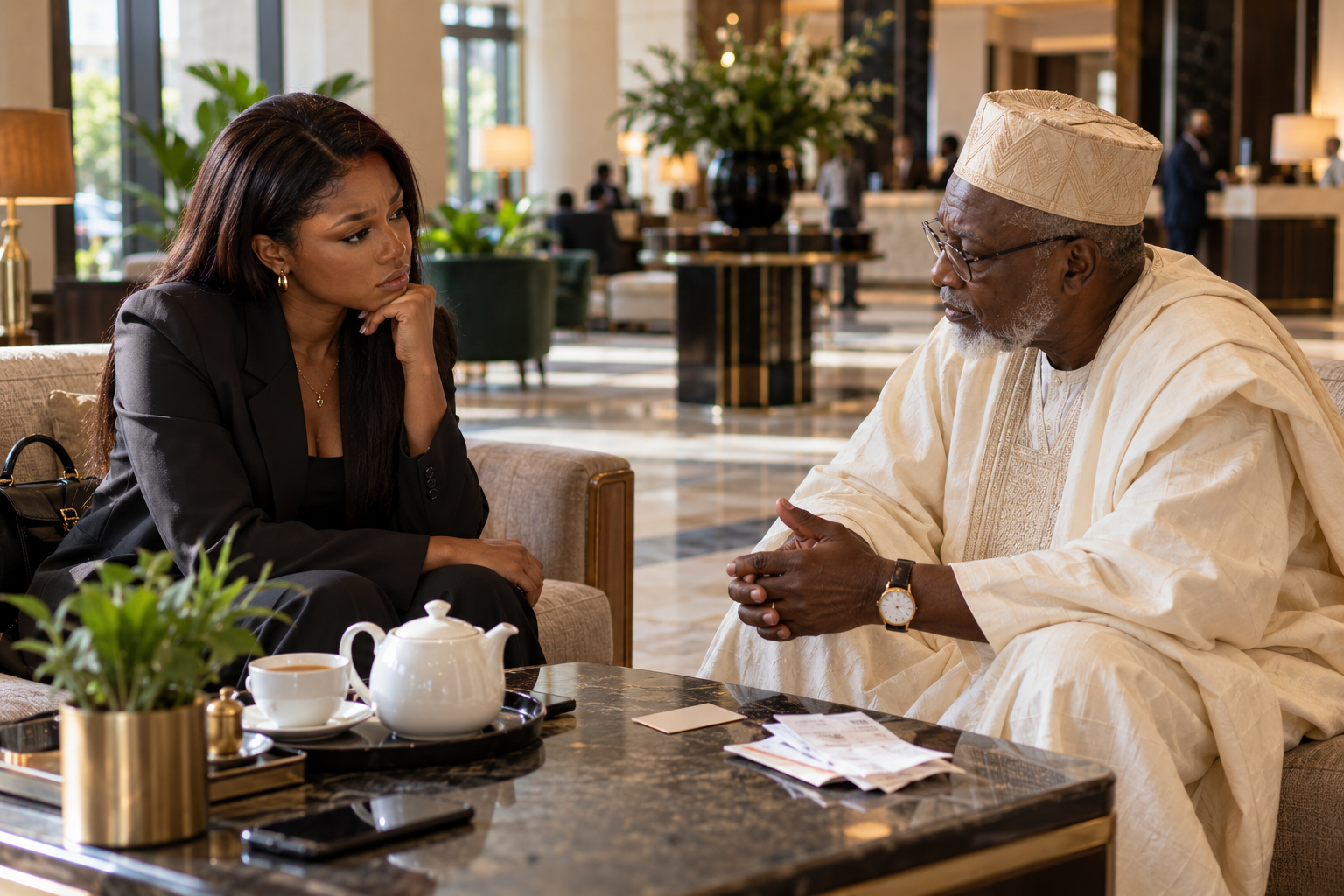
Someone in Our Flat Eats My Soup, and I Have Now Launched a Full Investigation

Someone in Our Flat Eats My Soup, and I Have Now Launched a Full Investigation

I cooked a pot of egusi soup on Sunday evening. Good egusi, with stockfish, ponmo, and the kind of smoked fish that makes the whole corridor smell like heaven. I portioned it into four containers, labelled them with masking tape, and put them in the fridge. Monday to Thursday, I thought. A quiet week of dignity. On Tuesday morning, there were three containers. I counted again. I am not a stupid woman. I have an engineering degree. I stood in front of the fridge in my bonnet and slippers and stared at the shelf like a person trying to will a missing child back into existence. Four containers had gone in. Three were there. “Maybe I miscounted,” I said to nobody. On Wednesday, there were two. By Thursday, I had a pot of stew, a bowl of rice, and a single container of egusi with a suspicious dent in the side, like someone had dug into it with a spoon and tried to push it back. I live in a three bedroom flat in Yaba with two women, Nneka and Folasade. We have been together for fourteen months. We split the rent, we split the data, and we have an unwritten treaty about who buys detergent. We have never fought over food. We have shared plantain, cried over the same series, and once survived a power outage by eating cold beans from the pot with a ladle. But now, someone was stealing my soup. I decided to approach the matter scientifically. On Thursday night, I placed a strip of masking tape across the lid of the container. I wrote the time on it. 10:15 p.m. I put a hair tie on the shelf at an angle only I would recognise. I made a mental map of where the containers sat. Then I went to bed and lay awake, listening for footsteps like a very small, very annoyed detective. At 2:07 a.m. I heard the fridge door open. I did not move. I held my breath. I heard a spoon against plastic. A soft, satisfied chewing. A sigh of contentment so deep I almost felt bad. Slowly, I crept out of my room. The kitchen light was off, but the fridge cast a dim glow across the floor. A figure stood in front of it, hunched slightly, eating from a container with total concentration. I flicked on the light. “AH!” the figure shouted. “AH!” I shouted back. It was Nneka. She was wearing a shirt that said “BE KIND,” holding my container in one hand and a spoon in the other. There was a thin trail of palm oil on her chin. Her eyes were wide and horrified, like a deer caught in the headlights of a very specific betrayal. “It’s not what you think,” she said. “You are eating my egusi.” “I know. I know.” She put the container down. “I was going to replace it.” “Nneka. You have eaten two and a half containers. You do not even like egusi!” “That is what I thought!” She threw her hands up. “I do not! Or I did not! Then you cooked it on Sunday and the smell came under my door and I could not sleep, and the next morning I told myself I would only try a spoon. Just one spoon. And then it was a whole container, and now I think about your soup at my desk at work. I think about it in the shower. I dream about it. Please, I am so sorry.” I stared at her. Behind me, I heard a door open, and Folasade appeared in her wrapper, squinting. “What is happening?” she asked. “Nneka is the soup thief.” Folasade looked at Nneka, then at the container, then at me. A strange expression crossed her face. She said, very slowly, “Oh. So it was not me.” “What do you mean it was not you?” Nneka and I both turned to look at her. Folasade shifted her weight, suddenly fascinated by the tiles. “I may have had a spoon on Monday night,” she said. “Or two. But I assumed it was extra. You always cook so much. And I only took from the second container.” “Which container did Nneka take from?” “The first,” said Nneka. “And the third,” said Folasade. “And the fourth,” said Nneka. There was a long silence in the kitchen, broken only by the humming of the fridge. “So between the two of you,” I said, “you have eaten an entire pot of egusi soup that I made with my own hands, and I was investigating like it was a murder case.” “Technically, yes,” said Folasade. “And you did not ask?” “We did not want to disturb you.” I began to laugh. I could not help it. It started as a snort, then became a full wheeze, and then I was leaning against the counter with tears running down my face while two grown women stood barefoot in the kitchen, looking guilty and slightly proud. “I put a hair tie on the shelf!” I gasped. Nneka picked it up from the fridge. “I wondered what this was.” “I used masking tape!” “We thought it was a decoration,” Folasade said. We sat on the kitchen floor at 2:30 in the morning and ate what was left of the egusi with three spoons from the same container, passing it around like a sacred object. We agreed on new rules. Everyone labels their food. Everyone asks before taking. If you must steal, you replace. I made another pot on Saturday. Larger this time. I called it the Peace Treaty. Nneka wrote a note and stuck it on the fridge: “Egusi is a gift from God. Thank you, Amaka.” Folasade drew a small crown beside my name. Last week, someone ate my bread. I will not name names. But I have taken to hiding a loaf in my wardrobe. Tell us in the comments. Who is the food thief in your home?Read full story
I cooked a pot of egusi soup on Sunday evening. Good egusi, with stockfish, ponmo, and the kind of smoked fish that makes the whole corridor smell like heaven. I portioned it into four containers, labelled them with masking tape, and put them in the fridge. Monday to Thursday, I thought. A quiet week of dignity. On Tuesday morning, there were three containers. I counted again. I am not a stupid woman. I have an engineering degree. I stood in front of the fridge in my bonnet and slippers and stared at the shelf like a person trying to will a missing child back into existence. Four containers had gone in. Three were there. “Maybe I miscounted,” I said to nobody. On Wednesday, there were two. By Thursday, I had a pot of stew, a bowl of rice, and a single container of egusi with a suspicious dent in the side, like someone had dug into it with a spoon and tried to push it back. I live in a three bedroom flat in Yaba with two women, Nneka and Folasade. We have been together for fourteen months. We split the rent, we split the data, and we have an unwritten treaty about who buys detergent. We have never fought over food. We have shared plantain, cried over the same series, and once survived a power outage by eating cold beans from the pot with a ladle. But now, someone was stealing my soup. I decided to approach the matter scientifically. On Thursday night, I placed a strip of masking tape across the lid of the container. I wrote the time on it. 10:15 p.m. I put a hair tie on the shelf at an angle only I would recognise. I made a mental map of where the containers sat. Then I went to bed and lay awake, listening for footsteps like a very small, very annoyed detective. At 2:07 a.m. I heard the fridge door open. I did not move. I held my breath. I heard a spoon against plastic. A soft, satisfied chewing. A sigh of contentment so deep I almost felt bad. Slowly, I crept out of my room. The kitchen light was off, but the fridge cast a dim glow across the floor. A figure stood in front of it, hunched slightly, eating from a container with total concentration. I flicked on the light. “AH!” the figure shouted. “AH!” I shouted back. It was Nneka. She was wearing a shirt that said “BE KIND,” holding my container in one hand and a spoon in the other. There was a thin trail of palm oil on her chin. Her eyes were wide and horrified, like a deer caught in the headlights of a very specific betrayal. “It’s not what you think,” she said. “You are eating my egusi.” “I know. I know.” She put the container down. “I was going to replace it.” “Nneka. You have eaten two and a half containers. You do not even like egusi!” “That is what I thought!” She threw her hands up. “I do not! Or I did not! Then you cooked it on Sunday and the smell came under my door and I could not sleep, and the next morning I told myself I would only try a spoon. Just one spoon. And then it was a whole container, and now I think about your soup at my desk at work. I think about it in the shower. I dream about it. Please, I am so sorry.” I stared at her. Behind me, I heard a door open, and Folasade appeared in her wrapper, squinting. “What is happening?” she asked. “Nneka is the soup thief.” Folasade looked at Nneka, then at the container, then at me. A strange expression crossed her face. She said, very slowly, “Oh. So it was not me.” “What do you mean it was not you?” Nneka and I both turned to look at her. Folasade shifted her weight, suddenly fascinated by the tiles. “I may have had a spoon on Monday night,” she said. “Or two. But I assumed it was extra. You always cook so much. And I only took from the second container.” “Which container did Nneka take from?” “The first,” said Nneka. “And the third,” said Folasade. “And the fourth,” said Nneka. There was a long silence in the kitchen, broken only by the humming of the fridge. “So between the two of you,” I said, “you have eaten an entire pot of egusi soup that I made with my own hands, and I was investigating like it was a murder case.” “Technically, yes,” said Folasade. “And you did not ask?” “We did not want to disturb you.” I began to laugh. I could not help it. It started as a snort, then became a full wheeze, and then I was leaning against the counter with tears running down my face while two grown women stood barefoot in the kitchen, looking guilty and slightly proud. “I put a hair tie on the shelf!” I gasped. Nneka picked it up from the fridge. “I wondered what this was.” “I used masking tape!” “We thought it was a decoration,” Folasade said. We sat on the kitchen floor at 2:30 in the morning and ate what was left of the egusi with three spoons from the same container, passing it around like a sacred object. We agreed on new rules. Everyone labels their food. Everyone asks before taking. If you must steal, you replace. I made another pot on Saturday. Larger this time. I called it the Peace Treaty. Nneka wrote a note and stuck it on the fridge: “Egusi is a gift from God. Thank you, Amaka.” Folasade drew a small crown beside my name. Last week, someone ate my bread. I will not name names. But I have taken to hiding a loaf in my wardrobe. Tell us in the comments. Who is the food thief in your home?

11/3/2026

I Went Back to School at Thirty Four, and on Day One a Student Asked If I Was the Lecturer

I Went Back to School at Thirty Four, and on Day One a Student Asked If I Was the Lecturer

“Excuse me, Ma. Are you the lecturer for ECO 101?” I was standing in a corridor of the faculty building at 7:45 a.m. with a new notebook, a pen I had bought for the occasion, and a bladder that had stopped cooperating from nerves. The question came from a girl of about nineteen, wearing a hoodie that said “Gen Z Energy.” She held her phone in one hand and a timetable in the other, and she was looking at me with a mixture of respect and anxiety. “No,” I said. “I am a student.” Her face did something complicated. “Oh. Sorry, Ma. You just look… you know… settled.” “I am thirty four,” I said. “Oh.” She nodded slowly. “That is cool.” I thanked her. I walked into the lecture hall, found a seat at the back, and sat down with the dignity of a woman who had decided that if she was going to feel ridiculous, she would at least do it politely. Let me explain how I got there. I left school at nineteen with a diploma in business administration, because my father had died and my mother needed me to work. I got a job at a bank in Ikeja, then a better one at a logistics firm, and eventually became an operations coordinator at a company I will not name. I was good at it. I paid my siblings’ fees. I paid for my mother’s treatment. I told myself that the degree I had never finished was a luxury, the sort of thing for people with fewer responsibilities. But the feeling never left. It stayed in the corner of every room I entered. It came out in meetings, when younger colleagues with degrees from good universities moved past me on the ladder. It came out in the brief, polite pause of an interviewer reading my CV. It came out on nights when I lay awake and felt that my life was a house with one room missing. Last year, my youngest sister graduated from university. I sat in the hall, clapping, proud of her. When the vice chancellor said, “I confer upon you,” I felt something shift in my chest. Not envy, exactly. More like recognition. That night I opened my laptop and applied for a part time degree programme in Economics at a university in Lagos. It was a flexible evening and weekend course for working adults. I filled the form in forty minutes. I hit send before my courage could change its mind. The acceptance letter arrived six weeks later. I read it standing in my kitchen, and I cried into a tin of sardines. The first month was brutal. I had forgotten how to study. I had forgotten how to write an essay. I sat in a lecture on macroeconomics and realised I was the only person in the room not taking notes on a phone. The lecturer, a calm man named Dr Eze, wrote a graph on the board and said, “Any questions?” I raised my hand without thinking. “Yes, Ma?” “What do you mean by marginal utility?” I saw several heads turn, and for a moment I wanted to disappear. Then Dr Eze nodded and said, “Excellent question. Let me explain it with an example.” He spent ten minutes on it, patiently, and at the end a boy in the front row turned around and whispered, “Thanks, Ma. I did not understand either.” That became my role. The woman who asked the questions that everyone else was afraid of. I was too old to be embarrassed, and too hungry to pretend. The younger students were kind. They called me “Aunty” until I asked them to stop, and then they called me “Mummy” as a joke. They taught me how to use the library’s online portal. They shared notes. A girl named Zainab, nineteen years old and fiercely intelligent, started inviting me to study sessions on Saturday afternoons. We ate groundnuts and argued about inflation. I taught them things too. How to manage a budget. How to talk to a difficult supervisor. How to survive on four hours of sleep. One boy asked me, shyly, how I balanced work and school, and I told him the truth. “Badly. But I do it anyway.” There were bad days. Many. I fell asleep in a lecture after a twelve hour shift. I missed a deadline and got a grade I was ashamed of. I stood in the car park one evening with my bag and my tiredness and thought, what am I doing? I am too old for this. My mother called that night. She had no idea what I was feeling. She said, “My daughter, I just wanted to tell you. I told the women at church that you are in university. They said, ‘At her age?’ I said, ‘Yes, at her age.’ And they went quiet.” I laughed so hard I had to sit on the kerb. I am now in my second year. My grades are good. I recently presented a group project on inflation in Nigeria, and when the lecturer asked who had led the research, three of my groupmates pointed at me at once. I do not know where this will take me. Maybe a promotion. Maybe a new career. Maybe nothing but a certificate on a wall and the satisfaction of closing a door I had left open for fifteen years. But last Friday, a first year student stopped me on campus. She was shy and nervous, clutching a folder to her chest. “Excuse me, Ma. Are you the one they call Mummy? Zainab said you could help with registration.” I smiled. “Yes, my dear,” I said. “Come. Let me show you.” Tell us in the comments. Is it ever too late to go back for the thing you left behind?Read full story
“Excuse me, Ma. Are you the lecturer for ECO 101?” I was standing in a corridor of the faculty building at 7:45 a.m. with a new notebook, a pen I had bought for the occasion, and a bladder that had stopped cooperating from nerves. The question came from a girl of about nineteen, wearing a hoodie that said “Gen Z Energy.” She held her phone in one hand and a timetable in the other, and she was looking at me with a mixture of respect and anxiety. “No,” I said. “I am a student.” Her face did something complicated. “Oh. Sorry, Ma. You just look… you know… settled.” “I am thirty four,” I said. “Oh.” She nodded slowly. “That is cool.” I thanked her. I walked into the lecture hall, found a seat at the back, and sat down with the dignity of a woman who had decided that if she was going to feel ridiculous, she would at least do it politely. Let me explain how I got there. I left school at nineteen with a diploma in business administration, because my father had died and my mother needed me to work. I got a job at a bank in Ikeja, then a better one at a logistics firm, and eventually became an operations coordinator at a company I will not name. I was good at it. I paid my siblings’ fees. I paid for my mother’s treatment. I told myself that the degree I had never finished was a luxury, the sort of thing for people with fewer responsibilities. But the feeling never left. It stayed in the corner of every room I entered. It came out in meetings, when younger colleagues with degrees from good universities moved past me on the ladder. It came out in the brief, polite pause of an interviewer reading my CV. It came out on nights when I lay awake and felt that my life was a house with one room missing. Last year, my youngest sister graduated from university. I sat in the hall, clapping, proud of her. When the vice chancellor said, “I confer upon you,” I felt something shift in my chest. Not envy, exactly. More like recognition. That night I opened my laptop and applied for a part time degree programme in Economics at a university in Lagos. It was a flexible evening and weekend course for working adults. I filled the form in forty minutes. I hit send before my courage could change its mind. The acceptance letter arrived six weeks later. I read it standing in my kitchen, and I cried into a tin of sardines. The first month was brutal. I had forgotten how to study. I had forgotten how to write an essay. I sat in a lecture on macroeconomics and realised I was the only person in the room not taking notes on a phone. The lecturer, a calm man named Dr Eze, wrote a graph on the board and said, “Any questions?” I raised my hand without thinking. “Yes, Ma?” “What do you mean by marginal utility?” I saw several heads turn, and for a moment I wanted to disappear. Then Dr Eze nodded and said, “Excellent question. Let me explain it with an example.” He spent ten minutes on it, patiently, and at the end a boy in the front row turned around and whispered, “Thanks, Ma. I did not understand either.” That became my role. The woman who asked the questions that everyone else was afraid of. I was too old to be embarrassed, and too hungry to pretend. The younger students were kind. They called me “Aunty” until I asked them to stop, and then they called me “Mummy” as a joke. They taught me how to use the library’s online portal. They shared notes. A girl named Zainab, nineteen years old and fiercely intelligent, started inviting me to study sessions on Saturday afternoons. We ate groundnuts and argued about inflation. I taught them things too. How to manage a budget. How to talk to a difficult supervisor. How to survive on four hours of sleep. One boy asked me, shyly, how I balanced work and school, and I told him the truth. “Badly. But I do it anyway.” There were bad days. Many. I fell asleep in a lecture after a twelve hour shift. I missed a deadline and got a grade I was ashamed of. I stood in the car park one evening with my bag and my tiredness and thought, what am I doing? I am too old for this. My mother called that night. She had no idea what I was feeling. She said, “My daughter, I just wanted to tell you. I told the women at church that you are in university. They said, ‘At her age?’ I said, ‘Yes, at her age.’ And they went quiet.” I laughed so hard I had to sit on the kerb. I am now in my second year. My grades are good. I recently presented a group project on inflation in Nigeria, and when the lecturer asked who had led the research, three of my groupmates pointed at me at once. I do not know where this will take me. Maybe a promotion. Maybe a new career. Maybe nothing but a certificate on a wall and the satisfaction of closing a door I had left open for fifteen years. But last Friday, a first year student stopped me on campus. She was shy and nervous, clutching a folder to her chest. “Excuse me, Ma. Are you the one they call Mummy? Zainab said you could help with registration.” I smiled. “Yes, my dear,” I said. “Come. Let me show you.” Tell us in the comments. Is it ever too late to go back for the thing you left behind?

11/2/2026

My Father Let Go of the Bicycle Seat Ten Seconds Before I Noticed, and Last Month I Did the Same for My Daughter

My Father Let Go of the Bicycle Seat Ten Seconds Before I Noticed, and Last Month I Did the Same for My Daughter

I was nine years old when my father taught me to ride a bicycle. It was a green Raleigh with a rusty bell, and it was the only thing in our compound in Ibadan that belonged to him alone. He took me to the football field behind the primary school on a Saturday evening. The ground was uneven and the grass was patchy, but the light was beautiful. I remember the colour of it: honey, with a touch of orange. I climbed onto the saddle, and he stood behind me with both hands gripping the seat. “Pedal,” he said. “I have you.” I pedalled. The wheels wobbled. I leaned left. He corrected me. I leaned right. He corrected me again. I could feel his hand under the seat, firm and steady, and I remember thinking that nothing bad could happen as long as it stayed there. “Look ahead, not down,” he kept saying. “The bicycle goes where you look.” We went around the field four times. Five. My legs hurt. My heart pounded. At some point, I stopped being afraid. I did not notice when. Then I heard his voice, far away. “You are doing it! You are doing it, Tunde!” He was not behind me. He was twenty metres back, standing in the middle of the field with both arms in the air, laughing and clapping like a boy at a football match. He had let go of the seat ten seconds earlier, and I had not noticed. I had been riding alone. I screamed. I wobbled. I crashed spectacularly into a bush. He ran across the field to find me with grass in my hair and a scraped elbow, and I was laughing so hard I could not stand up. That is my favourite memory of my father. I have thought about it more than any other. He was not a man who said “I love you.” He worked six days a week at a government office and came home tired. He believed in discipline and punctuality, and he did not hug much. But on that field, with the sun going down, he gave me something he could not say in words. He died fourteen months ago. Quietly, in his sleep, at seventy one. The doctors said it was his heart. The funeral was in Ibadan, and the whole street came. I carried the casket with my uncles and did not cry until I opened the small storeroom at the back of the compound a week later, to sort his things, and found the Raleigh. It was covered in dust and cobwebs. The tyres were flat. The bell had rusted completely. But it was there, leaning against the wall exactly where he had parked it, as though he might come back for a ride. I brought it to Lagos in the boot of my car. I did not know what to do with it. For months it sat in my garage, wrapped in an old sheet. In September, my daughter Tomiwa turned six. She had asked for a bicycle all year, and I finally bought her a small one, pink with white tassels on the handlebars. I assembled it myself in the driveway. She stood beside me in a helmet two sizes too big, bouncing on her toes. “Daddy, can I ride now? Can I ride now?” “Soon.” I stood there with the screwdriver in my hand, and I realised my chest was tight. I went into the garage, pulled the sheet off the Raleigh, and looked at it for a long time. That Saturday evening, I took Tomiwa to the park near our estate. It was quiet. The sky was turning that same honey colour, with the same touch of orange, and for a moment I felt dizzy, as though two evenings had folded into one. She climbed onto the saddle. I crouched beside her and put both my hands on the seat. “Pedal,” I said. “I have you.” She pedalled. She wobbled. She leaned left, and I corrected her. She leaned right, and I corrected her again. I heard my own voice saying words that were not mine. “Look ahead, not down. The bicycle goes where you look.” We went around the path once. Twice. She giggled. She shrieked. She asked me to go faster. I jogged beside her, my hands under the seat, my heart pounding in a way that had nothing to do with running. And at some point, I did something I had not planned. I let go. I did not push. I did not shout. I simply opened my hands, slowly, and stepped back. She kept pedalling, her small legs working, her tassels streaming. I stood there and watched her roll away from me down the path. “Daddy!” she called, not turning her head. “I am doing it!” “I know,” I said. My voice cracked. I put my hands in the air, the way my father did. I was laughing. I was crying. A woman walking her dog looked at me and smiled with understanding. Tomiwa rode the whole path, crashed gently into a hedge, and came out of it giggling with a leaf in her hair. I ran over, scooped her up, and held her for a very long time. When we got home, I took the Raleigh out of the garage. Over the next two weeks, I replaced the tyres, oiled the chain, and polished the frame. I kept the old rusted bell, because I could not bear to throw it away. Last Sunday, Tomiwa and I rode together around the estate. Her pink bicycle, my father’s green one. She called out, “Look, Daddy, I’m faster than you!” And I looked ahead, not down. Tell us in the comments. What is the best lesson someone taught you without saying a word?Read full story
I was nine years old when my father taught me to ride a bicycle. It was a green Raleigh with a rusty bell, and it was the only thing in our compound in Ibadan that belonged to him alone. He took me to the football field behind the primary school on a Saturday evening. The ground was uneven and the grass was patchy, but the light was beautiful. I remember the colour of it: honey, with a touch of orange. I climbed onto the saddle, and he stood behind me with both hands gripping the seat. “Pedal,” he said. “I have you.” I pedalled. The wheels wobbled. I leaned left. He corrected me. I leaned right. He corrected me again. I could feel his hand under the seat, firm and steady, and I remember thinking that nothing bad could happen as long as it stayed there. “Look ahead, not down,” he kept saying. “The bicycle goes where you look.” We went around the field four times. Five. My legs hurt. My heart pounded. At some point, I stopped being afraid. I did not notice when. Then I heard his voice, far away. “You are doing it! You are doing it, Tunde!” He was not behind me. He was twenty metres back, standing in the middle of the field with both arms in the air, laughing and clapping like a boy at a football match. He had let go of the seat ten seconds earlier, and I had not noticed. I had been riding alone. I screamed. I wobbled. I crashed spectacularly into a bush. He ran across the field to find me with grass in my hair and a scraped elbow, and I was laughing so hard I could not stand up. That is my favourite memory of my father. I have thought about it more than any other. He was not a man who said “I love you.” He worked six days a week at a government office and came home tired. He believed in discipline and punctuality, and he did not hug much. But on that field, with the sun going down, he gave me something he could not say in words. He died fourteen months ago. Quietly, in his sleep, at seventy one. The doctors said it was his heart. The funeral was in Ibadan, and the whole street came. I carried the casket with my uncles and did not cry until I opened the small storeroom at the back of the compound a week later, to sort his things, and found the Raleigh. It was covered in dust and cobwebs. The tyres were flat. The bell had rusted completely. But it was there, leaning against the wall exactly where he had parked it, as though he might come back for a ride. I brought it to Lagos in the boot of my car. I did not know what to do with it. For months it sat in my garage, wrapped in an old sheet. In September, my daughter Tomiwa turned six. She had asked for a bicycle all year, and I finally bought her a small one, pink with white tassels on the handlebars. I assembled it myself in the driveway. She stood beside me in a helmet two sizes too big, bouncing on her toes. “Daddy, can I ride now? Can I ride now?” “Soon.” I stood there with the screwdriver in my hand, and I realised my chest was tight. I went into the garage, pulled the sheet off the Raleigh, and looked at it for a long time. That Saturday evening, I took Tomiwa to the park near our estate. It was quiet. The sky was turning that same honey colour, with the same touch of orange, and for a moment I felt dizzy, as though two evenings had folded into one. She climbed onto the saddle. I crouched beside her and put both my hands on the seat. “Pedal,” I said. “I have you.” She pedalled. She wobbled. She leaned left, and I corrected her. She leaned right, and I corrected her again. I heard my own voice saying words that were not mine. “Look ahead, not down. The bicycle goes where you look.” We went around the path once. Twice. She giggled. She shrieked. She asked me to go faster. I jogged beside her, my hands under the seat, my heart pounding in a way that had nothing to do with running. And at some point, I did something I had not planned. I let go. I did not push. I did not shout. I simply opened my hands, slowly, and stepped back. She kept pedalling, her small legs working, her tassels streaming. I stood there and watched her roll away from me down the path. “Daddy!” she called, not turning her head. “I am doing it!” “I know,” I said. My voice cracked. I put my hands in the air, the way my father did. I was laughing. I was crying. A woman walking her dog looked at me and smiled with understanding. Tomiwa rode the whole path, crashed gently into a hedge, and came out of it giggling with a leaf in her hair. I ran over, scooped her up, and held her for a very long time. When we got home, I took the Raleigh out of the garage. Over the next two weeks, I replaced the tyres, oiled the chain, and polished the frame. I kept the old rusted bell, because I could not bear to throw it away. Last Sunday, Tomiwa and I rode together around the estate. Her pink bicycle, my father’s green one. She called out, “Look, Daddy, I’m faster than you!” And I looked ahead, not down. Tell us in the comments. What is the best lesson someone taught you without saying a word?

11/2/2026

I Got a Light Bill for a Flat I Had Not Slept in for Two Months

I Got a Light Bill for a Flat I Had Not Slept in for Two Months

The bill was for sixty one thousand, four hundred naira. For one month. For a one bedroom flat in Gbagada where I had not slept in sixty three days. I was away on a work posting in Port Harcourt. I had switched off every socket before I left. I had unplugged the fridge, turned off the water heater, and even covered the television with a sheet, which in hindsight was probably unnecessary. The flat should have used almost nothing. The text message arrived on a Tuesday. “Dear customer, your outstanding balance is N61,400. Pay to avoid disconnection.” I read it in a hotel room at nine in the evening, and I said a word that I will not repeat here. I called the customer care line. A very polite woman said, “Madam, please hold.” I held for forty minutes. Then the call ended. I called back. Another polite woman. “Madam, I will escalate your complaint. You will receive a call in forty eight hours.” Nobody called. When I came home the following Monday, I found a notice stuck to my door. It said that unless I paid within seven days, my meter would be disconnected. The notice was stamped, signed, and dated, and I remember being struck by the efficiency. I could not reach anyone by phone for a week, but they had managed to print and deliver a threat. So on Tuesday morning I went to the electricity company’s district office in person. I would like to describe the experience, but I am not sure I can. Imagine a room the size of a school classroom. Add two hundred people. Add one working fan. Add a security officer who asks everyone whether they have an appointment, and a screen that displays numbers that never seem to move. I took a ticket. It said 214. The screen said 37. At 2:15 p.m., after four hours and a plate of rice I bought from a woman outside, my number was finally called. I walked to a counter where a young man in a pressed shirt asked, without looking up, “Meter number?” I gave it to him. He typed. He frowned. He typed again. “Madam, according to the system, your meter shows a reading of four thousand, eight hundred units for last month.” “That is impossible. I was not in the flat.” “The system does not lie, Ma.” “The system is wrong.” He looked up, finally. He was perhaps twenty six. He had tired eyes and a fake smile. He lowered his voice. “Ma, between us, this thing happens a lot. The estimated billing, the meter reading, sometimes the data just goes wrong. But to fix it, you will need to bring a letter, a copy of your last three bills, and an application form. And you will need to come back on Thursday to see the supervisor.” “Thursday.” “Yes, Ma.” I came back on Thursday. The supervisor was on leave. I came back on Monday. The supervisor had left for a meeting. I came back on Wednesday. The supervisor was at his desk, and he was a large and genial man who looked like he enjoyed lunch. He read my letter, nodded sympathetically, and said, “Madam, we will look into it. But you know, these things take time. In the meantime, to avoid disconnection, you can pay a small amount.” I said, “How small?” He smiled. “Twenty thousand, for goodwill.” I stared at him. I have a rule that I do not shout in government offices, because it never works. So I took a breath and said, as pleasantly as I could, “Sir, are you asking me to pay a bribe?” His smile did not move. “Madam, I am only suggesting a way to make life easier.” “Thank you,” I said. “I will take the harder way.” I went home. That night I did something I had never done. I wrote an email to the company’s head office. I wrote it as clearly as I could. I included the dates of my travel, my boarding passes, my hotel receipts, the three bills, and a photograph of the meter showing the real reading, which was thirty one units. I copied the regulator’s complaints desk. I posted a short, polite summary on social media, tagged the company, and went to sleep. By 8 a.m. the next day, I had a phone call. Not from customer care. From a regional manager. He was apologetic. He said my case had been “flagged,” and that the district supervisor in question would be reviewed. He asked for my meter number and my address. By lunchtime, my account balance was adjusted to eleven hundred naira. I am telling this story not to boast, but because I know I was lucky. I had the time, the proof, and the platform. Most people in that waiting room did not. Most of them were retirees, market women, young fathers on their only afternoon off. Some of them would pay the twenty thousand because it was cheaper than a month of lost work. The woman who sat next to me during that first four hour wait told me she had been coming for three months about a similar problem. She had a folder as thick as a dictionary. She gave me a sachet of pure water and said, “My dear, you are young. You will get tired too.” I did not feel young. I felt furious. Yesterday I walked past the district office on the way to the market. The queue was still outside. I stopped and, without really thinking, handed one of my printed email templates to a man standing in line. “If your bill is wrong,” I said, “write down the dates, the readings, and the evidence. Send it to head office and copy the regulator. Take pictures of your meter.” He looked at me like I was handing him a ticket to Dubai. Tell us in the comments. Have you ever fought a bill you knew was wrong?Read full story
The bill was for sixty one thousand, four hundred naira. For one month. For a one bedroom flat in Gbagada where I had not slept in sixty three days. I was away on a work posting in Port Harcourt. I had switched off every socket before I left. I had unplugged the fridge, turned off the water heater, and even covered the television with a sheet, which in hindsight was probably unnecessary. The flat should have used almost nothing. The text message arrived on a Tuesday. “Dear customer, your outstanding balance is N61,400. Pay to avoid disconnection.” I read it in a hotel room at nine in the evening, and I said a word that I will not repeat here. I called the customer care line. A very polite woman said, “Madam, please hold.” I held for forty minutes. Then the call ended. I called back. Another polite woman. “Madam, I will escalate your complaint. You will receive a call in forty eight hours.” Nobody called. When I came home the following Monday, I found a notice stuck to my door. It said that unless I paid within seven days, my meter would be disconnected. The notice was stamped, signed, and dated, and I remember being struck by the efficiency. I could not reach anyone by phone for a week, but they had managed to print and deliver a threat. So on Tuesday morning I went to the electricity company’s district office in person. I would like to describe the experience, but I am not sure I can. Imagine a room the size of a school classroom. Add two hundred people. Add one working fan. Add a security officer who asks everyone whether they have an appointment, and a screen that displays numbers that never seem to move. I took a ticket. It said 214. The screen said 37. At 2:15 p.m., after four hours and a plate of rice I bought from a woman outside, my number was finally called. I walked to a counter where a young man in a pressed shirt asked, without looking up, “Meter number?” I gave it to him. He typed. He frowned. He typed again. “Madam, according to the system, your meter shows a reading of four thousand, eight hundred units for last month.” “That is impossible. I was not in the flat.” “The system does not lie, Ma.” “The system is wrong.” He looked up, finally. He was perhaps twenty six. He had tired eyes and a fake smile. He lowered his voice. “Ma, between us, this thing happens a lot. The estimated billing, the meter reading, sometimes the data just goes wrong. But to fix it, you will need to bring a letter, a copy of your last three bills, and an application form. And you will need to come back on Thursday to see the supervisor.” “Thursday.” “Yes, Ma.” I came back on Thursday. The supervisor was on leave. I came back on Monday. The supervisor had left for a meeting. I came back on Wednesday. The supervisor was at his desk, and he was a large and genial man who looked like he enjoyed lunch. He read my letter, nodded sympathetically, and said, “Madam, we will look into it. But you know, these things take time. In the meantime, to avoid disconnection, you can pay a small amount.” I said, “How small?” He smiled. “Twenty thousand, for goodwill.” I stared at him. I have a rule that I do not shout in government offices, because it never works. So I took a breath and said, as pleasantly as I could, “Sir, are you asking me to pay a bribe?” His smile did not move. “Madam, I am only suggesting a way to make life easier.” “Thank you,” I said. “I will take the harder way.” I went home. That night I did something I had never done. I wrote an email to the company’s head office. I wrote it as clearly as I could. I included the dates of my travel, my boarding passes, my hotel receipts, the three bills, and a photograph of the meter showing the real reading, which was thirty one units. I copied the regulator’s complaints desk. I posted a short, polite summary on social media, tagged the company, and went to sleep. By 8 a.m. the next day, I had a phone call. Not from customer care. From a regional manager. He was apologetic. He said my case had been “flagged,” and that the district supervisor in question would be reviewed. He asked for my meter number and my address. By lunchtime, my account balance was adjusted to eleven hundred naira. I am telling this story not to boast, but because I know I was lucky. I had the time, the proof, and the platform. Most people in that waiting room did not. Most of them were retirees, market women, young fathers on their only afternoon off. Some of them would pay the twenty thousand because it was cheaper than a month of lost work. The woman who sat next to me during that first four hour wait told me she had been coming for three months about a similar problem. She had a folder as thick as a dictionary. She gave me a sachet of pure water and said, “My dear, you are young. You will get tired too.” I did not feel young. I felt furious. Yesterday I walked past the district office on the way to the market. The queue was still outside. I stopped and, without really thinking, handed one of my printed email templates to a man standing in line. “If your bill is wrong,” I said, “write down the dates, the readings, and the evidence. Send it to head office and copy the regulator. Take pictures of your meter.” He looked at me like I was handing him a ticket to Dubai. Tell us in the comments. Have you ever fought a bill you knew was wrong?

10/30/2026
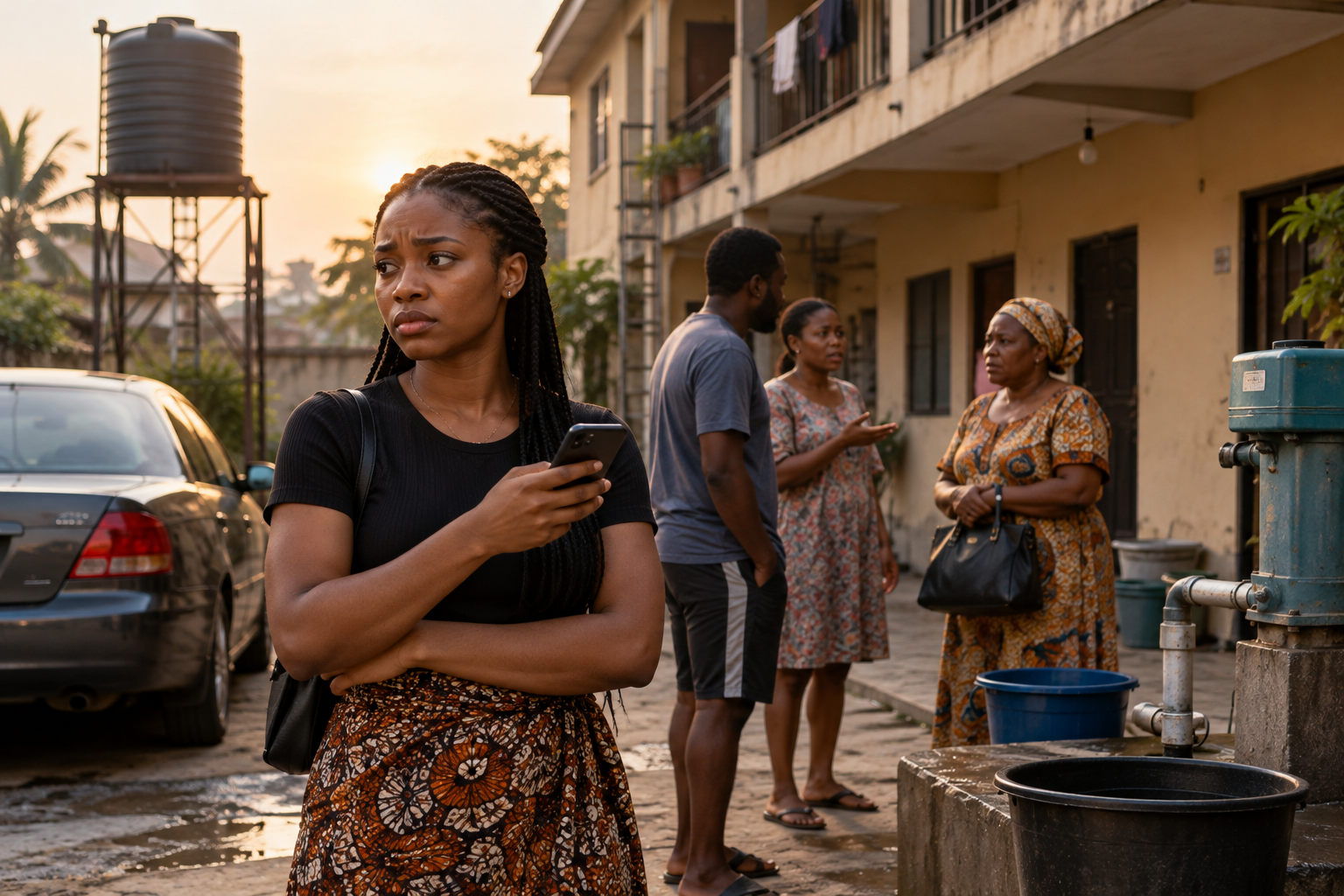
I Argued With a Danfo Conductor Over Fifty Naira, and the Whole Bus Became My Jury

I Argued With a Danfo Conductor Over Fifty Naira, and the Whole Bus Became My Jury

I want to begin by saying that I am not a petty man. I have given money to beggars. I have waited an hour for a friend without complaining. I once let a stranger have the last seat on a bus, even though I had been standing since Ojota. I am, by any reasonable standard, a patient and generous person. But on Monday morning, a danfo conductor owed me fifty naira, and I was prepared to die on that hill. It started at 7:20 a.m. at the Oshodi bus stop. I was late for a meeting. I climbed into a yellow bus bound for Yaba with the usual shove and elbow, found a spot on the second bench, and squeezed in between a woman with a basket of fish and a man reading a newspaper from the previous week. The conductor, a lean fellow with a grey cap and the energy of a man who had been awake since 4 a.m., came down the aisle collecting fares. “Yaba! Yaba! Three hundred and fifty!” I handed him four hundred naira. He nodded, tucked the notes into a roll between his fingers, and moved on. Ten minutes later, the bus began to empty at Mushin. Ten more and we were approaching Yaba, and I leaned forward and said, politely, “Oga, my change.” He did not turn. I tried again. “Oga conductor. My fifty naira.” He half turned, with the expression of a man who had heard this a thousand times. “Which fifty?” “The fifty you owe me. I gave you four hundred. The fare is three fifty.” “No be so. You gave me three fifty.” “I did not.” “You did.” “I gave you four hundred!” This is the moment where a sensible person lets it go. I understand that. But in Lagos, fifty naira is not just fifty naira. It is a principle. It is a bottle of water. It is the last piece of respect a city has to give you before it takes everything else. The woman with the basket shifted, interested. The man with the old newspaper lowered it. Up front, the driver looked at us in his mirror. “Oga,” the conductor said, spreading his hands, “I swear. You gave me three fifty. Ask anybody.” “I am asking everybody,” I said. And, to my own surprise, I turned to the bus. “Ladies and gentlemen. I gave this man four hundred naira. The fare is three fifty. He is now claiming I paid exact. Who saw?” Nobody answered at first. Then the fish woman said, in a voice that carried across the whole bus, “I saw him give four hundred.” I have never loved a stranger more. “Madam, you did not see anything,” the conductor said, mildly offended. “I have two eyes, my brother. I saw it.” A young man in the back row added, “Pay him his change. Is it a big thing?” “Is it not a big thing for him, then?” the conductor shot back. “Fifty naira! Because of fifty naira he is calling the whole bus!” “Because it is fifty naira you should pay it,” a schoolgirl said, without looking up from her phone. Now the bus was fully engaged. A debate had broken out. One camp said the conductor was cheating, and the other said I was being “too Lagos” about the whole thing. A woman in a gele pointed out that if everyone argued about fifty naira, nobody would reach work. A man in a suit said, quite seriously, that principles were the foundation of civilisation. An old woman near the door muttered a prayer for all of us. I turned to the conductor and, for the first time, actually looked at him. He was tired. His shirt had a rip at the shoulder, held together with a safety pin. His shoes were two different shades of brown. He looked about forty, but his hands looked sixty. He was staring at the road with a jaw clenched like a fist. I thought about my own morning. A hot shower. A breakfast I did not rush. A salary at the end of the month with my name on it. “Oga,” I said, more quietly. “How much do you pay the owner of this bus every day?” He blinked. The question surprised him. “Eight thousand,” he said at last. “Before I even touch a kobo.” “And the driver?” “Ah. The driver and I share what is left after fuel and police.” Somebody in the bus whistled low. The man with the newspaper said, “God.” I looked at the fifty naira in my head, the whole imaginary weight of it. It was the price of nothing. And it was the difference between this man eating lunch and not eating lunch. “Keep the fifty,” I said. “What?” “Keep it. I do not want it. I just wanted somebody to say I was right.” The conductor stared at me. Then, to my astonishment, he began to laugh. It was a loud, rolling laugh, from the stomach, and it was contagious. The fish woman started. The schoolgirl looked up for the first time. The man in the suit chuckled into his hand. In ten seconds the whole bus was shaking. “Oga, you are right,” the conductor said, wiping his eyes. “You are right. I owe you fifty naira. The man gave me four hundred.” He pulled the roll of notes from between his fingers and, with great ceremony, handed me a crisp fifty. “I told you to keep it,” I said. “No, no. Take it. I will not be the conductor who stole fifty naira from a man who defended his honour in front of everybody.” He grinned. “Take it. And tomorrow, God willing, you will pay exact.” I took it. And at the next stop, as I climbed down, he pressed something into my other hand. It was a small, warm bag of groundnuts. I walked into my meeting seven minutes late, smelling faintly of fish and smoke, and I was greeted by a manager who looked at my watch and my face and said, “Are you all right?” “Fine,” I said. “I just won an argument.” I eat groundnuts every morning now. And when I board a danfo, I pay exact. Tell us in the comments. What is the pettiest thing you have ever argued over?Read full story
I want to begin by saying that I am not a petty man. I have given money to beggars. I have waited an hour for a friend without complaining. I once let a stranger have the last seat on a bus, even though I had been standing since Ojota. I am, by any reasonable standard, a patient and generous person. But on Monday morning, a danfo conductor owed me fifty naira, and I was prepared to die on that hill. It started at 7:20 a.m. at the Oshodi bus stop. I was late for a meeting. I climbed into a yellow bus bound for Yaba with the usual shove and elbow, found a spot on the second bench, and squeezed in between a woman with a basket of fish and a man reading a newspaper from the previous week. The conductor, a lean fellow with a grey cap and the energy of a man who had been awake since 4 a.m., came down the aisle collecting fares. “Yaba! Yaba! Three hundred and fifty!” I handed him four hundred naira. He nodded, tucked the notes into a roll between his fingers, and moved on. Ten minutes later, the bus began to empty at Mushin. Ten more and we were approaching Yaba, and I leaned forward and said, politely, “Oga, my change.” He did not turn. I tried again. “Oga conductor. My fifty naira.” He half turned, with the expression of a man who had heard this a thousand times. “Which fifty?” “The fifty you owe me. I gave you four hundred. The fare is three fifty.” “No be so. You gave me three fifty.” “I did not.” “You did.” “I gave you four hundred!” This is the moment where a sensible person lets it go. I understand that. But in Lagos, fifty naira is not just fifty naira. It is a principle. It is a bottle of water. It is the last piece of respect a city has to give you before it takes everything else. The woman with the basket shifted, interested. The man with the old newspaper lowered it. Up front, the driver looked at us in his mirror. “Oga,” the conductor said, spreading his hands, “I swear. You gave me three fifty. Ask anybody.” “I am asking everybody,” I said. And, to my own surprise, I turned to the bus. “Ladies and gentlemen. I gave this man four hundred naira. The fare is three fifty. He is now claiming I paid exact. Who saw?” Nobody answered at first. Then the fish woman said, in a voice that carried across the whole bus, “I saw him give four hundred.” I have never loved a stranger more. “Madam, you did not see anything,” the conductor said, mildly offended. “I have two eyes, my brother. I saw it.” A young man in the back row added, “Pay him his change. Is it a big thing?” “Is it not a big thing for him, then?” the conductor shot back. “Fifty naira! Because of fifty naira he is calling the whole bus!” “Because it is fifty naira you should pay it,” a schoolgirl said, without looking up from her phone. Now the bus was fully engaged. A debate had broken out. One camp said the conductor was cheating, and the other said I was being “too Lagos” about the whole thing. A woman in a gele pointed out that if everyone argued about fifty naira, nobody would reach work. A man in a suit said, quite seriously, that principles were the foundation of civilisation. An old woman near the door muttered a prayer for all of us. I turned to the conductor and, for the first time, actually looked at him. He was tired. His shirt had a rip at the shoulder, held together with a safety pin. His shoes were two different shades of brown. He looked about forty, but his hands looked sixty. He was staring at the road with a jaw clenched like a fist. I thought about my own morning. A hot shower. A breakfast I did not rush. A salary at the end of the month with my name on it. “Oga,” I said, more quietly. “How much do you pay the owner of this bus every day?” He blinked. The question surprised him. “Eight thousand,” he said at last. “Before I even touch a kobo.” “And the driver?” “Ah. The driver and I share what is left after fuel and police.” Somebody in the bus whistled low. The man with the newspaper said, “God.” I looked at the fifty naira in my head, the whole imaginary weight of it. It was the price of nothing. And it was the difference between this man eating lunch and not eating lunch. “Keep the fifty,” I said. “What?” “Keep it. I do not want it. I just wanted somebody to say I was right.” The conductor stared at me. Then, to my astonishment, he began to laugh. It was a loud, rolling laugh, from the stomach, and it was contagious. The fish woman started. The schoolgirl looked up for the first time. The man in the suit chuckled into his hand. In ten seconds the whole bus was shaking. “Oga, you are right,” the conductor said, wiping his eyes. “You are right. I owe you fifty naira. The man gave me four hundred.” He pulled the roll of notes from between his fingers and, with great ceremony, handed me a crisp fifty. “I told you to keep it,” I said. “No, no. Take it. I will not be the conductor who stole fifty naira from a man who defended his honour in front of everybody.” He grinned. “Take it. And tomorrow, God willing, you will pay exact.” I took it. And at the next stop, as I climbed down, he pressed something into my other hand. It was a small, warm bag of groundnuts. I walked into my meeting seven minutes late, smelling faintly of fish and smoke, and I was greeted by a manager who looked at my watch and my face and said, “Are you all right?” “Fine,” I said. “I just won an argument.” I eat groundnuts every morning now. And when I board a danfo, I pay exact. Tell us in the comments. What is the pettiest thing you have ever argued over?

10/29/2026
My Best Friend Is Getting Married, and I Learned From the Invitation That I Am Not Her Maid of Honour

PINCHED

My Best Friend Is Getting Married, and I Learned From the Invitation That I Am Not Her Maid of Honour

When we were fifteen, Titi and I made a pact on the back steps of our school hostel in Abeokuta. It was written on the inside cover of a mathematics textbook, in blue ink, and signed by both of us: “Whoever marries first, the other will be Maid of Honour. No arguments.” We were serious. We stamped it with a thumbprint. We laughed about it for years. Last Tuesday, a courier delivered a cream envelope to my flat in Surulere. It had gold edges and my name written in beautiful handwriting. I knew what it was before I opened it. Titi had been engaged for five months, and I had been waiting for this card with the excitement of someone who has been waiting half her life. I read it standing at the door. The couple’s names. The date, a Saturday in December. The venue, a hall in Lekki. And at the bottom, in a small italic font, a section called “THE BRIDAL PARTY.” Six names. I read them slowly. Maid of Honour: Dami Adeyinka. I did not know a Dami Adeyinka. I sat down on the floor of my own hallway. I know that sounds dramatic. But my knees simply stopped holding me up. I called Titi’s phone. It rang out. I called again, and it rang out again. At last I sent a message: “Congrats on the invite, it is gorgeous! Who is Dami?” She replied two hours later: “Hey! Dami is from work. We got really close this year. Hope you can come!” Hope you can come. I want to be fair here. I am not a child. I know friendships change. I know that adult life moves people into different cities, different careers, different circles. Titi lives in Lagos Island now and works at a bank. I teach in a secondary school in Surulere and have not been to a party in four years. We used to speak every day. Then it became every week. Then every month. I had told myself this was normal, that our bond was so deep it did not need constant tending. But a pact is a pact, I thought. Even a silly one. I called my cousin Yetunde that night. She is the most practical person I know. She listened and then said, “Ronke, when last did you ask Titi how she was doing? Really, not just ‘how far’?” I opened my mouth to defend myself and found nothing inside it. The truth was that Titi had gone through a lot over the past two years. Her father had been unwell. She had changed jobs twice. She had got engaged to a man I had met exactly twice, both times briefly, at birthday parties. I had told her I was happy for her, and I was. But I had not asked what she needed. I had not called her at night. I had not shown up at her door with food. I had let the distance grow, and I had called it adulthood. And Dami, whoever Dami was, had been there. I decided to go to the wedding. Not out of duty, but out of a stubborn belief that friendships like ours should not end with a seating chart. I bought a gele. I booked a tailor. I wrote a card, then tore it up, then wrote another. On the morning of the wedding I arrived early. The hall was bright with white and gold flowers. Titi was in a side room being dressed, and the door was open. I stood there for a moment and watched her. She wore a gown the colour of old pearls. A woman I assumed was Dami was fixing her veil. They were laughing about something. Titi saw me in the mirror. Her face crumpled, and then she was across the room, her arms around my neck, her veil crushed between us. “You came,” she said. “I was so scared you wouldn’t.” “Why wouldn’t I come?” I said, hurt creeping into my voice. She pulled back and held my hands. Her eyes were wet. “Because I did not know how to tell you. Ronke, I was scared. You have always been my person. I was afraid that if I asked you to stand next to me, you would see all the things I was not sure about, and you would tell me the truth.” I stared at her. “I love him,” she went on. “I do. But I have been so anxious. And Dami never asks questions. She just says everything will be fine and passes me the next thing. And I thought, I just need to get through the day, and then I can call Ronke and tell her everything. But I kept putting it off.” I did not know what to say. I thought about the pact, and the thumbprint, and the ink on the maths textbook. I thought about all the times I had been proud of her for being strong. “You do not have to get through this alone,” I said. “I know.” She was crying now. “I know. I just did not know how to start.” The ceremony was lovely. I sat in the second row, next to a cousin of the groom who kept offering me tissues. When Titi walked down the aisle, she turned her head slightly towards me and mouthed, “Thank you.” I mouthed back, “Always.” At the reception, Dami found me near the cake table. She was warm and a bit awkward. She said, “I have heard so much about you. Titi never stops talking about her friend from school.” I nearly dropped my plate. At the end of the night, Titi found me again. She pressed something into my hand. It was the old maths textbook, worn and soft at the edges. Inside the cover, under our signatures, she had written a new line in gold pen: “Owing you a thousand conversations. Starting tomorrow.” I am writing this on Thursday. She has called me twice today. I do not think the friendship is back to what it was. I do not think it should be. We are different women now. But I think it may be better, because this time we are both paying attention. Tell us in the comments. Have you ever grown apart from someone you thought you would never lose?Read full story
When we were fifteen, Titi and I made a pact on the back steps of our school hostel in Abeokuta. It was written on the inside cover of a mathematics textbook, in blue ink, and signed by both of us: “Whoever marries first, the other will be Maid of Honour. No arguments.” We were serious. We stamped it with a thumbprint. We laughed about it for years. Last Tuesday, a courier delivered a cream envelope to my flat in Surulere. It had gold edges and my name written in beautiful handwriting. I knew what it was before I opened it. Titi had been engaged for five months, and I had been waiting for this card with the excitement of someone who has been waiting half her life. I read it standing at the door. The couple’s names. The date, a Saturday in December. The venue, a hall in Lekki. And at the bottom, in a small italic font, a section called “THE BRIDAL PARTY.” Six names. I read them slowly. Maid of Honour: Dami Adeyinka. I did not know a Dami Adeyinka. I sat down on the floor of my own hallway. I know that sounds dramatic. But my knees simply stopped holding me up. I called Titi’s phone. It rang out. I called again, and it rang out again. At last I sent a message: “Congrats on the invite, it is gorgeous! Who is Dami?” She replied two hours later: “Hey! Dami is from work. We got really close this year. Hope you can come!” Hope you can come. I want to be fair here. I am not a child. I know friendships change. I know that adult life moves people into different cities, different careers, different circles. Titi lives in Lagos Island now and works at a bank. I teach in a secondary school in Surulere and have not been to a party in four years. We used to speak every day. Then it became every week. Then every month. I had told myself this was normal, that our bond was so deep it did not need constant tending. But a pact is a pact, I thought. Even a silly one. I called my cousin Yetunde that night. She is the most practical person I know. She listened and then said, “Ronke, when last did you ask Titi how she was doing? Really, not just ‘how far’?” I opened my mouth to defend myself and found nothing inside it. The truth was that Titi had gone through a lot over the past two years. Her father had been unwell. She had changed jobs twice. She had got engaged to a man I had met exactly twice, both times briefly, at birthday parties. I had told her I was happy for her, and I was. But I had not asked what she needed. I had not called her at night. I had not shown up at her door with food. I had let the distance grow, and I had called it adulthood. And Dami, whoever Dami was, had been there. I decided to go to the wedding. Not out of duty, but out of a stubborn belief that friendships like ours should not end with a seating chart. I bought a gele. I booked a tailor. I wrote a card, then tore it up, then wrote another. On the morning of the wedding I arrived early. The hall was bright with white and gold flowers. Titi was in a side room being dressed, and the door was open. I stood there for a moment and watched her. She wore a gown the colour of old pearls. A woman I assumed was Dami was fixing her veil. They were laughing about something. Titi saw me in the mirror. Her face crumpled, and then she was across the room, her arms around my neck, her veil crushed between us. “You came,” she said. “I was so scared you wouldn’t.” “Why wouldn’t I come?” I said, hurt creeping into my voice. She pulled back and held my hands. Her eyes were wet. “Because I did not know how to tell you. Ronke, I was scared. You have always been my person. I was afraid that if I asked you to stand next to me, you would see all the things I was not sure about, and you would tell me the truth.” I stared at her. “I love him,” she went on. “I do. But I have been so anxious. And Dami never asks questions. She just says everything will be fine and passes me the next thing. And I thought, I just need to get through the day, and then I can call Ronke and tell her everything. But I kept putting it off.” I did not know what to say. I thought about the pact, and the thumbprint, and the ink on the maths textbook. I thought about all the times I had been proud of her for being strong. “You do not have to get through this alone,” I said. “I know.” She was crying now. “I know. I just did not know how to start.” The ceremony was lovely. I sat in the second row, next to a cousin of the groom who kept offering me tissues. When Titi walked down the aisle, she turned her head slightly towards me and mouthed, “Thank you.” I mouthed back, “Always.” At the reception, Dami found me near the cake table. She was warm and a bit awkward. She said, “I have heard so much about you. Titi never stops talking about her friend from school.” I nearly dropped my plate. At the end of the night, Titi found me again. She pressed something into my hand. It was the old maths textbook, worn and soft at the edges. Inside the cover, under our signatures, she had written a new line in gold pen: “Owing you a thousand conversations. Starting tomorrow.” I am writing this on Thursday. She has called me twice today. I do not think the friendship is back to what it was. I do not think it should be. We are different women now. But I think it may be better, because this time we are both paying attention. Tell us in the comments. Have you ever grown apart from someone you thought you would never lose?

10/28/2026

My Date and I Were on Our First Drink When Our Mothers Walked Into the Same Restaurant

My Date and I Were on Our First Drink When Our Mothers Walked Into the Same Restaurant

My date and I were exactly six minutes into our first drink when my mother and his mother walked through the restaurant door, saw each other, screamed, and hugged. I am not exaggerating. I have never seen two women move that fast. One second, I was telling a man named Kelechi that I enjoyed hiking, which was a lie I had prepared for the occasion. The next, a wall of sound came from the entrance of the restaurant, and my mother’s voice cut through the air like a bell. “NKEM! Is that you? Ah ah, Nkem Okoye!” We both turned slowly. Kelechi’s face was the face of a man who has just seen his own coffin. “Is that your mother?” I asked. “Is that yours?” he whispered. Neither of us answered. We did not need to. Let me back up. Kelechi and I had matched on a dating app three weeks earlier. His profile said he was a civil engineer, thirty one, liked jazz and suya, and “wants to meet someone who laughs easily.” I laughed at the suya joke he made in his first message, and we had been chatting ever since. He was funny without trying too hard. He asked proper questions. He once sent me a voice note of his neighbour’s rooster arguing with a generator, and I replayed it four times. We agreed to meet on a Saturday at a small restaurant in Lekki. Neutral ground. Public place. A sensible start. I told no one, because I was thirty and sick of being asked about my love life by every aunty at every wedding. I chose a blue dress. I put on the good earrings. I arrived at 6:30 p.m., nervous, and he stood up when I came in, which is a small thing that moved me more than it should have. He was taller than his pictures. We ordered drinks. We said hello. We laughed. Then my mother arrived. What I did not know, what neither of us knew, was that our mothers had been best friends at university in Nsukka in the nineties. They had lost touch after graduation, when one moved to Port Harcourt and the other to Enugu, and neither had a working phone number for years. According to the screaming, they had last seen each other at a wedding in 1998. And now, by a coincidence worthy of a terrible Nollywood film, they had both decided to have a quiet Saturday dinner at the same restaurant, at the same time, with their respective husbands out of town. “Chinwe! My Chinwe!” my mother screamed. “You haven’t aged!” “Nkem, you liar!” His mother’s laugh was so loud the waiters stopped. They hugged for what felt like a full minute. Then my mother turned, still holding her friend’s hands, and scanned the restaurant. Her eyes landed on me. “Ah! Ada! What are you doing here?” I smiled the smile of a woman who is going to move to another country. “Hello, Mummy.” His mother turned too. “Kelechi? My son, what are you doing here?” Kelechi stood up so fast that his chair scraped the floor. “Mummy! Good evening.” The silence that followed was complete. Two mothers looked at two children. Two children looked at two drinks. Somewhere in the kitchen, a pot clattered. My mother figured it out first. I know because I saw her eyes widen, then narrow, then do the quick mental arithmetic that mothers do when they sense a wedding. “Wait,” she said slowly. “Are you two… on a date?” “No,” I said. “Yes,” said Kelechi, at exactly the same time. His mother put a hand over her mouth. My mother clutched her chest. And then, to my absolute horror, both of them began to cry. “Chinwe,” my mother whispered, “do you know how long I have been praying?” “For what?” Chinwe asked. “For this! For my daughter to meet a good man!” “And I for my son to meet a good woman!” Chinwe laughed. “God is wonderful!” Kelechi and I sat down slowly, like two people in a hostage situation. Our mothers pulled up chairs at our table. They ordered more food without asking us. They talked over our heads about Nsukka and hostel rice and a lecturer named Dr Ogbu who had once thrown a book at a student. They were thrilled. They interrupted each other. They asked us questions about our jobs, our salaries and our “intentions,” in the casual tone of people who already knew the answers. I looked at Kelechi. He looked at me. Then he leaned slightly towards me and whispered, “I swear I did not plan this.” “I know,” I whispered back. “I can tell. Nobody could plan this.” It was the funniest, most mortifying evening of my life. But somewhere around the second plate of jollof, I noticed something. Kelechi was laughing. Not the polite laugh I had heard on the phone, but a real one, the kind that makes your shoulders shake. And I was laughing too. When the bill came, both mothers fought over it, and Chinwe won. As we stood outside waiting for our rides, my mother pulled me aside and said, “He is a good one, Ada.” “Mummy, it is our first date.” “It is your first date with a man whose mother I have known for thirty years. That is almost a reference.” Kelechi and I have been together for eight months now. We tell the story at every gathering. Our mothers tell it differently. In their version, they arranged the whole thing through prayer. I do not argue. Some blessings should be allowed to belong to whoever believes in them. Tell us in the comments. What is the most embarrassing thing that has happened on a date?Read full story
My date and I were exactly six minutes into our first drink when my mother and his mother walked through the restaurant door, saw each other, screamed, and hugged. I am not exaggerating. I have never seen two women move that fast. One second, I was telling a man named Kelechi that I enjoyed hiking, which was a lie I had prepared for the occasion. The next, a wall of sound came from the entrance of the restaurant, and my mother’s voice cut through the air like a bell. “NKEM! Is that you? Ah ah, Nkem Okoye!” We both turned slowly. Kelechi’s face was the face of a man who has just seen his own coffin. “Is that your mother?” I asked. “Is that yours?” he whispered. Neither of us answered. We did not need to. Let me back up. Kelechi and I had matched on a dating app three weeks earlier. His profile said he was a civil engineer, thirty one, liked jazz and suya, and “wants to meet someone who laughs easily.” I laughed at the suya joke he made in his first message, and we had been chatting ever since. He was funny without trying too hard. He asked proper questions. He once sent me a voice note of his neighbour’s rooster arguing with a generator, and I replayed it four times. We agreed to meet on a Saturday at a small restaurant in Lekki. Neutral ground. Public place. A sensible start. I told no one, because I was thirty and sick of being asked about my love life by every aunty at every wedding. I chose a blue dress. I put on the good earrings. I arrived at 6:30 p.m., nervous, and he stood up when I came in, which is a small thing that moved me more than it should have. He was taller than his pictures. We ordered drinks. We said hello. We laughed. Then my mother arrived. What I did not know, what neither of us knew, was that our mothers had been best friends at university in Nsukka in the nineties. They had lost touch after graduation, when one moved to Port Harcourt and the other to Enugu, and neither had a working phone number for years. According to the screaming, they had last seen each other at a wedding in 1998. And now, by a coincidence worthy of a terrible Nollywood film, they had both decided to have a quiet Saturday dinner at the same restaurant, at the same time, with their respective husbands out of town. “Chinwe! My Chinwe!” my mother screamed. “You haven’t aged!” “Nkem, you liar!” His mother’s laugh was so loud the waiters stopped. They hugged for what felt like a full minute. Then my mother turned, still holding her friend’s hands, and scanned the restaurant. Her eyes landed on me. “Ah! Ada! What are you doing here?” I smiled the smile of a woman who is going to move to another country. “Hello, Mummy.” His mother turned too. “Kelechi? My son, what are you doing here?” Kelechi stood up so fast that his chair scraped the floor. “Mummy! Good evening.” The silence that followed was complete. Two mothers looked at two children. Two children looked at two drinks. Somewhere in the kitchen, a pot clattered. My mother figured it out first. I know because I saw her eyes widen, then narrow, then do the quick mental arithmetic that mothers do when they sense a wedding. “Wait,” she said slowly. “Are you two… on a date?” “No,” I said. “Yes,” said Kelechi, at exactly the same time. His mother put a hand over her mouth. My mother clutched her chest. And then, to my absolute horror, both of them began to cry. “Chinwe,” my mother whispered, “do you know how long I have been praying?” “For what?” Chinwe asked. “For this! For my daughter to meet a good man!” “And I for my son to meet a good woman!” Chinwe laughed. “God is wonderful!” Kelechi and I sat down slowly, like two people in a hostage situation. Our mothers pulled up chairs at our table. They ordered more food without asking us. They talked over our heads about Nsukka and hostel rice and a lecturer named Dr Ogbu who had once thrown a book at a student. They were thrilled. They interrupted each other. They asked us questions about our jobs, our salaries and our “intentions,” in the casual tone of people who already knew the answers. I looked at Kelechi. He looked at me. Then he leaned slightly towards me and whispered, “I swear I did not plan this.” “I know,” I whispered back. “I can tell. Nobody could plan this.” It was the funniest, most mortifying evening of my life. But somewhere around the second plate of jollof, I noticed something. Kelechi was laughing. Not the polite laugh I had heard on the phone, but a real one, the kind that makes your shoulders shake. And I was laughing too. When the bill came, both mothers fought over it, and Chinwe won. As we stood outside waiting for our rides, my mother pulled me aside and said, “He is a good one, Ada.” “Mummy, it is our first date.” “It is your first date with a man whose mother I have known for thirty years. That is almost a reference.” Kelechi and I have been together for eight months now. We tell the story at every gathering. Our mothers tell it differently. In their version, they arranged the whole thing through prayer. I do not argue. Some blessings should be allowed to belong to whoever believes in them. Tell us in the comments. What is the most embarrassing thing that has happened on a date?

10/27/2026

My Boss Replied to My Resignation With One Word, and I Spent the Night Trying to Decode It

My Boss Replied to My Resignation With One Word, and I Spent the Night Trying to Decode It

I wrote my resignation email on a Sunday night at 10:48 p.m., and I read it forty three times before I pressed send. It was seven lines long. I had rewritten it so often that it was almost entirely made of the word “grateful.” I thanked my boss, Mr Adesanya, for the opportunity. I thanked the team for their support. I said my last day would be 30 days from the date of the email, and I offered to help with the handover. I did not say why I was leaving, because the truth was messy: I was tired, underpaid, and no longer recognised the person I had become at that company. I pressed send, closed the laptop, and lay on my bed with my heart in my throat. At 11:02 p.m., my phone buzzed. His reply appeared on the lock screen. “Noted.” That was all. One word. Not “Thank you.” Not “Sorry to see you go.” Not even “Received.” Just “Noted,” in the flat grey font of a man who had read a hundred emails that day and was not feeling generous. I sat up in bed. I read it again. And then my brain, which had spent four years calming itself with spreadsheets, started to generate theories. Maybe he was angry. Maybe he was relieved. Maybe he had been waiting for me to resign for months and was quietly planning my replacement. Maybe “Noted” was a corporate word for “I am furious and will deal with this in the morning.” Maybe he had typed a longer reply and deleted it. Maybe he was drunk. Maybe he was on a flight and typed it quickly. Maybe he was dead, and his phone had been hacked. By midnight I had written three possible responses, all of which sounded like a person apologising for existing. By 1 a.m., I had texted my friend Ifeoma, who replied with a long voice note that said, essentially, “Girl, go to sleep. It means ‘noted.’” I did not go to sleep. I thought about everything instead. I thought about the day I started, when I wore a blazer too big for me and Mr Adesanya told me, “You have good instincts.” I thought about the years when I worked late and he sent me a plate of rice from the canteen without being asked. I thought about the Friday he praised my presentation in front of the whole team, and the Monday he forgot my name in a meeting. I thought about the salary that had not moved in two years. I thought about the colleague who was promoted over me because he “had more presence.” I thought about my mother’s question, asked gently every December: “Are you happy there?” And I realised that I was not really worried about the word “Noted.” I was worried about what it meant to be leaving a place that had shaped me, however unevenly. At 3 a.m., I got up and made tea. I stood at the window of my one bedroom flat in Yaba and watched a generator light flicker in the building across the street. A man was loading a bag of rice onto a keke. A woman was sweeping her doorstep in the dark. And it occurred to me that nobody out there was thinking about my resignation. Not Mr Adesanya, not the man with the rice, not the sweeping woman. The world had not noticed. The sun was still coming up. That thought was not sad. It was oddly freeing. In the morning I walked into the office with my head high and my stomach in knots. Mr Adesanya was at his desk, typing. He looked up when I came in and said, “Good morning, Funmi. Can you come see me at ten?” At ten, I went in. He closed the door. He gestured to the chair. “I got your email,” he said. “I know. You replied.” He frowned. “Did I? Oh. Yes. I was in a hotel room, trying to read on my phone. I did not know what to say.” He rubbed his forehead. “Funmi, I have been in this business for twenty five years. I have seen people resign for a better salary, for a different city, for a baby, for a bad boss. I do not know why you are resigning. I would like to.” I took a deep breath, the sort you take before diving into a swimming pool. And I told him. Not everything. Not the bitterness. But the central truth: that I had been doing a bigger job than my title and my pay for a long time, and that I had stopped believing the company could see it. He listened, and he did not interrupt. When I finished, he said, “That is fair. And I am sorry. I should have noticed.” I left the company three weeks later. There was no dramatic counter offer. No tears. Just a cake in the canteen and a card signed by twenty people. He gave me a firm handshake and said, “Do not be a stranger.” I started a freelance job in January. The first two months were frightening. I learned to chase invoices and to say no to clients who offered “exposure.” But I also learned that the person I had been before that company was still there, waiting. I still think about that one word. “Noted.” It taught me something I did not expect. Sometimes the silence is not rejection. Sometimes it is a person who does not yet know how to answer. And sometimes the bravest thing you can do is walk into the room anyway and let the conversation begin. Tell us in the comments. Have you ever resigned from a job you loved and hated at the same time?Read full story
I wrote my resignation email on a Sunday night at 10:48 p.m., and I read it forty three times before I pressed send. It was seven lines long. I had rewritten it so often that it was almost entirely made of the word “grateful.” I thanked my boss, Mr Adesanya, for the opportunity. I thanked the team for their support. I said my last day would be 30 days from the date of the email, and I offered to help with the handover. I did not say why I was leaving, because the truth was messy: I was tired, underpaid, and no longer recognised the person I had become at that company. I pressed send, closed the laptop, and lay on my bed with my heart in my throat. At 11:02 p.m., my phone buzzed. His reply appeared on the lock screen. “Noted.” That was all. One word. Not “Thank you.” Not “Sorry to see you go.” Not even “Received.” Just “Noted,” in the flat grey font of a man who had read a hundred emails that day and was not feeling generous. I sat up in bed. I read it again. And then my brain, which had spent four years calming itself with spreadsheets, started to generate theories. Maybe he was angry. Maybe he was relieved. Maybe he had been waiting for me to resign for months and was quietly planning my replacement. Maybe “Noted” was a corporate word for “I am furious and will deal with this in the morning.” Maybe he had typed a longer reply and deleted it. Maybe he was drunk. Maybe he was on a flight and typed it quickly. Maybe he was dead, and his phone had been hacked. By midnight I had written three possible responses, all of which sounded like a person apologising for existing. By 1 a.m., I had texted my friend Ifeoma, who replied with a long voice note that said, essentially, “Girl, go to sleep. It means ‘noted.’” I did not go to sleep. I thought about everything instead. I thought about the day I started, when I wore a blazer too big for me and Mr Adesanya told me, “You have good instincts.” I thought about the years when I worked late and he sent me a plate of rice from the canteen without being asked. I thought about the Friday he praised my presentation in front of the whole team, and the Monday he forgot my name in a meeting. I thought about the salary that had not moved in two years. I thought about the colleague who was promoted over me because he “had more presence.” I thought about my mother’s question, asked gently every December: “Are you happy there?” And I realised that I was not really worried about the word “Noted.” I was worried about what it meant to be leaving a place that had shaped me, however unevenly. At 3 a.m., I got up and made tea. I stood at the window of my one bedroom flat in Yaba and watched a generator light flicker in the building across the street. A man was loading a bag of rice onto a keke. A woman was sweeping her doorstep in the dark. And it occurred to me that nobody out there was thinking about my resignation. Not Mr Adesanya, not the man with the rice, not the sweeping woman. The world had not noticed. The sun was still coming up. That thought was not sad. It was oddly freeing. In the morning I walked into the office with my head high and my stomach in knots. Mr Adesanya was at his desk, typing. He looked up when I came in and said, “Good morning, Funmi. Can you come see me at ten?” At ten, I went in. He closed the door. He gestured to the chair. “I got your email,” he said. “I know. You replied.” He frowned. “Did I? Oh. Yes. I was in a hotel room, trying to read on my phone. I did not know what to say.” He rubbed his forehead. “Funmi, I have been in this business for twenty five years. I have seen people resign for a better salary, for a different city, for a baby, for a bad boss. I do not know why you are resigning. I would like to.” I took a deep breath, the sort you take before diving into a swimming pool. And I told him. Not everything. Not the bitterness. But the central truth: that I had been doing a bigger job than my title and my pay for a long time, and that I had stopped believing the company could see it. He listened, and he did not interrupt. When I finished, he said, “That is fair. And I am sorry. I should have noticed.” I left the company three weeks later. There was no dramatic counter offer. No tears. Just a cake in the canteen and a card signed by twenty people. He gave me a firm handshake and said, “Do not be a stranger.” I started a freelance job in January. The first two months were frightening. I learned to chase invoices and to say no to clients who offered “exposure.” But I also learned that the person I had been before that company was still there, waiting. I still think about that one word. “Noted.” It taught me something I did not expect. Sometimes the silence is not rejection. Sometimes it is a person who does not yet know how to answer. And sometimes the bravest thing you can do is walk into the room anyway and let the conversation begin. Tell us in the comments. Have you ever resigned from a job you loved and hated at the same time?

10/26/2026

I Stopped Lending Money to Friends After One Urgent Twenty Thousand, and I Do Not Regret It

I Stopped Lending Money to Friends After One Urgent Twenty Thousand, and I Do Not Regret It

Emeka called me on a Tuesday night at 9:40 p.m. with the voice of a man standing at the edge of a cliff. “Bro,” he said. “I am in serious trouble. I need twenty thousand naira. By tomorrow morning. I will pay you back on Friday. I swear.” I have known Emeka for eleven years. We met in a secondary school hostel when we were fourteen. He was the boy who shared his provisions with everyone. He sat with me when my father died. At my younger sister’s wedding, he carried chairs for four hours without being asked. So I did not hesitate. I opened my banking app and sent the money before he had finished explaining. “Thank you, thank you, God bless you,” he said. “You have saved my life.” I felt good about it for about three days. On Friday morning, I did not hear from him. I told myself it was early. On Saturday, I sent a message that said, “Hope all is well, bro?” and he replied with a thumbs up. On Sunday, I saw his Instagram story. He was at a club in Lekki, dressed in white, holding a bottle with sparklers in it, surrounded by people laughing. The caption said, “We outside.” I stared at the screen for a long time. Then I locked my phone and went to buy bread, because I did not know what else to do with my hands. I want to be fair to Emeka. I do not know what was in his head. Maybe the trouble was real and the party was a distraction. Maybe he had a job he did not tell me about. Maybe the twenty thousand was never meant to rescue a life, only a weekend. I will never know, because when I finally asked him, three weeks later, he said, “Bro, you know how things are,” and changed the subject. What bothered me was not the money. Twenty thousand naira is not nothing, but I have lost more on a bad phone. What bothered me was how easily the friendship folded under it. In eleven years, I had never questioned him. And at the first moment I wanted an honest answer, he treated me as if I was being unreasonable for asking. I told my cousin Dapo about it over rice and stew one evening. He listened with the look of a man who had been through the same thing. “Everyone has an Emeka,” he said. “It is just a question of when.” After that, I began to notice how many people in my life had a similar story. A colleague at work had lent five hundred thousand naira to a man he called his brother, and the man vanished, and the colleague ended up sleeping on his office floor for a month because he could not pay rent. My neighbour had lent money to a church member who later accused him of “bringing a spirit of poverty.” A woman I knew from my building had lent her sister the money for school fees and watched the sister buy a car. Money, I realised, has a way of finding the truth in a relationship. It does not always destroy it, but it tests whether the foundation is solid or only painted. So I made a rule. I will not lend money to friends. I will give what I can afford to lose, and I will not expect it back. If someone needs a thousand naira for transport, they can have it. If someone needs fifty thousand, I will send what I can and call it a gift. If I cannot give it comfortably, I will say so. It sounds cold when I write it down. In practice, it has been freeing. A few weeks ago, my friend Tobi called me for ten thousand. I sent five and said, “This is what I can do. Do not return it.” He was quiet. Then he said, “Thank you for not making it complicated.” Two weeks later, he showed up at my door with a bag of oranges and a bottle of zobo. He said it was “interest.” We both knew it was not interest. It was respect. Emeka and I are not as close as before. We talk at Christmas. He sent me a birthday message in August with three emojis and no apology. Last month, I got an alert from his account: five thousand naira. The description said, “Small small.” I looked at it for a while. I did not reply. Then I wrote, “Thanks, bro. Be well.” And I meant it. I used to think the sign of a good friend was how freely I lent. I now think the sign of a good friend is how honestly we can talk when money is involved. Can I say no and still be your friend? Can you say “I cannot pay on Friday” without hiding? Can we sit in the same room afterwards and eat the same food? If the answer is yes, the friendship is real. If the answer is no, I would rather know early. I still hold the memory of that night, though. The cliff voice. The words “you have saved my life.” I sometimes wonder if I was foolish to believe him, or only human. I think I was human. And I think the lesson cost me twenty thousand naira, which, as lessons go, is cheap. Tell us in the comments. Would you have lent him the money?Read full story
Emeka called me on a Tuesday night at 9:40 p.m. with the voice of a man standing at the edge of a cliff. “Bro,” he said. “I am in serious trouble. I need twenty thousand naira. By tomorrow morning. I will pay you back on Friday. I swear.” I have known Emeka for eleven years. We met in a secondary school hostel when we were fourteen. He was the boy who shared his provisions with everyone. He sat with me when my father died. At my younger sister’s wedding, he carried chairs for four hours without being asked. So I did not hesitate. I opened my banking app and sent the money before he had finished explaining. “Thank you, thank you, God bless you,” he said. “You have saved my life.” I felt good about it for about three days. On Friday morning, I did not hear from him. I told myself it was early. On Saturday, I sent a message that said, “Hope all is well, bro?” and he replied with a thumbs up. On Sunday, I saw his Instagram story. He was at a club in Lekki, dressed in white, holding a bottle with sparklers in it, surrounded by people laughing. The caption said, “We outside.” I stared at the screen for a long time. Then I locked my phone and went to buy bread, because I did not know what else to do with my hands. I want to be fair to Emeka. I do not know what was in his head. Maybe the trouble was real and the party was a distraction. Maybe he had a job he did not tell me about. Maybe the twenty thousand was never meant to rescue a life, only a weekend. I will never know, because when I finally asked him, three weeks later, he said, “Bro, you know how things are,” and changed the subject. What bothered me was not the money. Twenty thousand naira is not nothing, but I have lost more on a bad phone. What bothered me was how easily the friendship folded under it. In eleven years, I had never questioned him. And at the first moment I wanted an honest answer, he treated me as if I was being unreasonable for asking. I told my cousin Dapo about it over rice and stew one evening. He listened with the look of a man who had been through the same thing. “Everyone has an Emeka,” he said. “It is just a question of when.” After that, I began to notice how many people in my life had a similar story. A colleague at work had lent five hundred thousand naira to a man he called his brother, and the man vanished, and the colleague ended up sleeping on his office floor for a month because he could not pay rent. My neighbour had lent money to a church member who later accused him of “bringing a spirit of poverty.” A woman I knew from my building had lent her sister the money for school fees and watched the sister buy a car. Money, I realised, has a way of finding the truth in a relationship. It does not always destroy it, but it tests whether the foundation is solid or only painted. So I made a rule. I will not lend money to friends. I will give what I can afford to lose, and I will not expect it back. If someone needs a thousand naira for transport, they can have it. If someone needs fifty thousand, I will send what I can and call it a gift. If I cannot give it comfortably, I will say so. It sounds cold when I write it down. In practice, it has been freeing. A few weeks ago, my friend Tobi called me for ten thousand. I sent five and said, “This is what I can do. Do not return it.” He was quiet. Then he said, “Thank you for not making it complicated.” Two weeks later, he showed up at my door with a bag of oranges and a bottle of zobo. He said it was “interest.” We both knew it was not interest. It was respect. Emeka and I are not as close as before. We talk at Christmas. He sent me a birthday message in August with three emojis and no apology. Last month, I got an alert from his account: five thousand naira. The description said, “Small small.” I looked at it for a while. I did not reply. Then I wrote, “Thanks, bro. Be well.” And I meant it. I used to think the sign of a good friend was how freely I lent. I now think the sign of a good friend is how honestly we can talk when money is involved. Can I say no and still be your friend? Can you say “I cannot pay on Friday” without hiding? Can we sit in the same room afterwards and eat the same food? If the answer is yes, the friendship is real. If the answer is no, I would rather know early. I still hold the memory of that night, though. The cliff voice. The words “you have saved my life.” I sometimes wonder if I was foolish to believe him, or only human. I think I was human. And I think the lesson cost me twenty thousand naira, which, as lessons go, is cheap. Tell us in the comments. Would you have lent him the money?

10/26/2026

I Found My School Fees Receipts in My Mother's Trunk, and the Name on Them Was a Cooperative Society

I Found My School Fees Receipts in My Mother's Trunk, and the Name on Them Was a Cooperative Society

My mother has always told me that school fees “come from God.” For nineteen years, I believed her. I believed her through primary school in Mushin, where she sold roasted corn at the junction in front of our compound. I believed her through the Federal Government college in Ijebu, where I was one of the few children whose boarding fees were always paid on time. I believed her through four years of university in Ife, when I came home every holiday to find food on the table and a face that told me nothing. When I got my first job, she cried and said, “God has done it.” I let her say it. I had no reason to doubt. Two weeks ago, my mother was admitted to a small private hospital in Ikorodu with severe malaria and a blood pressure reading the nurse would not say out loud. I was in Abuja when my sister called. I took the first bus I could find, a night bus that smelled of old foam and diesel, and arrived at the hospital at 5 a.m. with the sun still not up. She was asleep. A drip stand stood next to her bed, and her left hand was bruised from the cannula. She looked smaller than she had in December, and I stood at the foot of the bed with my bag still on my shoulder, trying to remember when her wrapper had turned grey at the edges. The doctor was a patient man who spoke gently. He said she was “exhausted, not just sick.” He asked how long she had been working twelve hour days. I said I did not know that she did. He looked at me with a face I will not forget and said, “Madam, your mother has been running on very little for a long time.” My sister Bimbo and I took turns sitting with her. On the third day, Bimbo went home to wash and sleep, and my mother asked me to bring her small metal trunk from the house. “There is a blue file in it. The doctor will need my old card.” So I went. The house in Mushin had the same smell: a mixture of palm oil, camphor and old paper. The trunk sat at the foot of her bed under a pile of wrappers. I lifted the lid and found, under the hospital card, a brown envelope that I recognised from nowhere. Inside the envelope were receipts. Dozens of them. I did not understand at first. They were small, printed on thin paper, stamped with a faded blue stamp that read “Mushin Market Women Cooperative Thrift Society.” The dates went back nineteen years. Each receipt recorded a payment. Five hundred naira. One thousand. Two thousand. Eight thousand in a December when I must have been in my second year. Under the receipts, I found a thin booklet with her handwriting on the front: “OLUWASEUN, LOAN BOOK.” On every page, in neat columns, were deductions. Principal. Interest. Balance. The last entry was dated three weeks earlier. The balance read one hundred and twelve thousand naira. My mother had been borrowing from her cooperative to pay for my education since the day I entered secondary school. When one loan was nearly finished, she took another. When the interest piled, she sold roasted corn for longer hours, then began selling boiled groundnuts in the evenings, then took a second spot near the new bus stop at the end of our street. She had been paying for my life in small, unglamorous instalments, and she had never once mentioned it. I sat on the edge of her bed and read the booklet from the first page to the last. I do not know how long it took. When I finished, the room had gone dark and the only light was the blue glow of my phone. I carried the trunk back to the hospital. She was awake, sipping water from a plastic cup, and when she saw the envelope in my hands her whole face changed. “Seun,” she said softly. “Put that away.” “Mama.” My voice came out broken. “You told me God paid my fees.” “He did,” she said. “He sent me a cooperative.” I laughed and cried at the same time, which is a terrible thing to do in a hospital room. She reached for my hand. She said she had not wanted me to feel guilty. She said I had enough pressure from university and then from work. She said a child should not be asked to carry a debt that began before she could read. “You would have worked yourself sick trying to repay it,” she said. “I was not going to let that happen.” “But you are the one who got sick,” I said. She shrugged, a small movement under the hospital blanket. “A mother’s body is built for it.” I wanted to argue. I wanted to say that no body is built for nineteen years of quiet sacrifice. But my mother is not a woman who responds to speeches. She responds to action. So the next morning, I went to the cooperative office in Mushin with the loan book. The secretary, a woman with kind eyes and a ledger as thick as a Bible, found my mother’s file in under a minute. “Ah, Mama Seun,” she said. “A faithful member. Never missed a month.” I paid the one hundred and twelve thousand naira from my savings and my last salary. The woman wrote “CLOSED” across the page in red ink and stamped it with the faded blue stamp. She handed the booklet back to me and said, “She was always so proud of you, you know. She used to bring pictures of your results and pass them around.” I took the booklet to the hospital. My mother looked at the word “CLOSED” for a very long time. Then she turned her face to the wall, and her shoulders shook, and I held her until the nurse came in to change the drip. She was discharged on Friday. She scolded me all the way home. “You have wasted your money,” she said. “That was your rent.” “That was yours, Mama,” I said. “I was just late with it.” The booklet sits in my bedroom now, next to my certificate. I have decided it will be framed. Tell us in the comments. What did your parents carry that you only discovered later?Read full story
My mother has always told me that school fees “come from God.” For nineteen years, I believed her. I believed her through primary school in Mushin, where she sold roasted corn at the junction in front of our compound. I believed her through the Federal Government college in Ijebu, where I was one of the few children whose boarding fees were always paid on time. I believed her through four years of university in Ife, when I came home every holiday to find food on the table and a face that told me nothing. When I got my first job, she cried and said, “God has done it.” I let her say it. I had no reason to doubt. Two weeks ago, my mother was admitted to a small private hospital in Ikorodu with severe malaria and a blood pressure reading the nurse would not say out loud. I was in Abuja when my sister called. I took the first bus I could find, a night bus that smelled of old foam and diesel, and arrived at the hospital at 5 a.m. with the sun still not up. She was asleep. A drip stand stood next to her bed, and her left hand was bruised from the cannula. She looked smaller than she had in December, and I stood at the foot of the bed with my bag still on my shoulder, trying to remember when her wrapper had turned grey at the edges. The doctor was a patient man who spoke gently. He said she was “exhausted, not just sick.” He asked how long she had been working twelve hour days. I said I did not know that she did. He looked at me with a face I will not forget and said, “Madam, your mother has been running on very little for a long time.” My sister Bimbo and I took turns sitting with her. On the third day, Bimbo went home to wash and sleep, and my mother asked me to bring her small metal trunk from the house. “There is a blue file in it. The doctor will need my old card.” So I went. The house in Mushin had the same smell: a mixture of palm oil, camphor and old paper. The trunk sat at the foot of her bed under a pile of wrappers. I lifted the lid and found, under the hospital card, a brown envelope that I recognised from nowhere. Inside the envelope were receipts. Dozens of them. I did not understand at first. They were small, printed on thin paper, stamped with a faded blue stamp that read “Mushin Market Women Cooperative Thrift Society.” The dates went back nineteen years. Each receipt recorded a payment. Five hundred naira. One thousand. Two thousand. Eight thousand in a December when I must have been in my second year. Under the receipts, I found a thin booklet with her handwriting on the front: “OLUWASEUN, LOAN BOOK.” On every page, in neat columns, were deductions. Principal. Interest. Balance. The last entry was dated three weeks earlier. The balance read one hundred and twelve thousand naira. My mother had been borrowing from her cooperative to pay for my education since the day I entered secondary school. When one loan was nearly finished, she took another. When the interest piled, she sold roasted corn for longer hours, then began selling boiled groundnuts in the evenings, then took a second spot near the new bus stop at the end of our street. She had been paying for my life in small, unglamorous instalments, and she had never once mentioned it. I sat on the edge of her bed and read the booklet from the first page to the last. I do not know how long it took. When I finished, the room had gone dark and the only light was the blue glow of my phone. I carried the trunk back to the hospital. She was awake, sipping water from a plastic cup, and when she saw the envelope in my hands her whole face changed. “Seun,” she said softly. “Put that away.” “Mama.” My voice came out broken. “You told me God paid my fees.” “He did,” she said. “He sent me a cooperative.” I laughed and cried at the same time, which is a terrible thing to do in a hospital room. She reached for my hand. She said she had not wanted me to feel guilty. She said I had enough pressure from university and then from work. She said a child should not be asked to carry a debt that began before she could read. “You would have worked yourself sick trying to repay it,” she said. “I was not going to let that happen.” “But you are the one who got sick,” I said. She shrugged, a small movement under the hospital blanket. “A mother’s body is built for it.” I wanted to argue. I wanted to say that no body is built for nineteen years of quiet sacrifice. But my mother is not a woman who responds to speeches. She responds to action. So the next morning, I went to the cooperative office in Mushin with the loan book. The secretary, a woman with kind eyes and a ledger as thick as a Bible, found my mother’s file in under a minute. “Ah, Mama Seun,” she said. “A faithful member. Never missed a month.” I paid the one hundred and twelve thousand naira from my savings and my last salary. The woman wrote “CLOSED” across the page in red ink and stamped it with the faded blue stamp. She handed the booklet back to me and said, “She was always so proud of you, you know. She used to bring pictures of your results and pass them around.” I took the booklet to the hospital. My mother looked at the word “CLOSED” for a very long time. Then she turned her face to the wall, and her shoulders shook, and I held her until the nurse came in to change the drip. She was discharged on Friday. She scolded me all the way home. “You have wasted your money,” she said. “That was your rent.” “That was yours, Mama,” I said. “I was just late with it.” The booklet sits in my bedroom now, next to my certificate. I have decided it will be framed. Tell us in the comments. What did your parents carry that you only discovered later?

10/23/2026

My First Salary After Seven Months Without Work Lasted Three Days, and None of It Was Spent on Me

My First Salary After Seven Months Without Work Lasted Three Days, and None of It Was Spent on Me

The alert came in at 4:47 p.m. on a Thursday. One hundred and eighty five thousand naira. I was sitting in the staff canteen of my new office in Ikeja, holding a spoon of rice halfway to my mouth, and I read the message three times to make sure I was not dreaming. For seven months, I had been dreaming of that message. I wrote the date in my head. I pictured myself buying the black sandals I had seen in a shop in Yaba, a pair of reading glasses, and one proper meal at a restaurant with a tablecloth. I had a list. It lived in the notes app on my phone, titled “WHEN SALARY COMES.” I looked at the list in the canteen and felt something I can only describe as peace. By Friday morning, the list was dead. It started with my mother. She called at 7:15 a.m., which is not an unusual hour, but her voice was careful. “My daughter, congratulations. I heard from your aunt that you were paid.” I had told no one. I had told my aunt, who had told my mother, who had apparently told the whole street. Mama said the electricity bill had piled up for four months and the prepaid meter had finally been disconnected. “It is only twelve thousand,” she said. “But if you cannot, it is fine.” I sent her twelve thousand and a pinch of guilt for having hesitated. At nine, my younger brother Seyi sent a message. His school fees were due. “The balance is twenty eight thousand, Sis. They said he cannot write exam on Monday.” I paid it. I did not ask whether he had told me about the deadline earlier, because I knew he had, and I knew I had been in no position to answer. At eleven, my uncle called from Ogun State. Now my uncle is a good man. He paid for my secondary school textbooks, and I have never forgotten it. He said, “I do not want to disturb you, but your cousin Bola needs something small for her apprenticeship, just ten thousand.” Ten thousand is not small when you earned your first salary yesterday. But it is also not nothing, and he had put his money into my future when I had nothing to give back. Then came the debts. During the seven months, I had borrowed. It was not dramatic. A bit from my friend Nneka for data. A bit from the woman at the provisions shop who allowed me to take noodles and pay later. A bit from my neighbour, who gave me five thousand once when I told her I needed to attend an interview and had no transport. I wrote everything in a notebook, because I was ashamed and because I believed in paying back. By Friday afternoon I had paid fourteen thousand to Nneka, six thousand to the shop, and five thousand to the neighbour, who cried a little and said she had never expected it back. By Saturday, I had sent another twenty thousand to a pastor friend whose church was building a small clinic. I had given five thousand to a young man who sold pure water on my street and had been kind to me when I was walking home with no money for a bus. I had bought food for the house because the fridge was empty, and I had cried a bit in the market when I realised I could afford chicken. On Sunday evening, I opened my banking app and looked at the balance. Sixty one thousand naira remained. I thought about the list. I stared at the black sandals in the shop window on my way back from the market, and I walked past. Then I did something I am proud of. I took ten thousand naira out of the sixty one and moved it into a savings account I had opened a year earlier and never touched. I named the account “NEXT TIME.” Then I felt stupid, because the next time was thirty days away and I already knew how it would go. I want to be honest about this. I did not feel robbed. I felt stretched. Everyone who asked me for money had a good reason. Every one of them had helped me, in some way, when I was at my lowest. And at the same time, I had worked seven months in silence to be able to say, “This money is mine,” and it was gone before I could say it. On Monday, I went to work. At lunch, I walked to a small bakery near the office and bought one meat pie and a bottle of cold Fanta. It cost seven hundred and fifty naira. I sat on a plastic chair outside, in the shade, and ate it slowly. A woman at the next table was eating the same thing. She looked at me, smiled, and said, “First salary?” I nearly dropped the pie. “How did you know?” “You are eating like someone who just remembered she is a person,” she said. I laughed so hard I got pastry in my throat. I am three salaries in now. I still send money home. I still pay Seyi’s fees, and I still chase my own debts, which are almost gone. But on the last day of every month I buy myself one small thing before anyone else calls me. A pair of socks. A mango. Once, a bar of the soap I like. Last month, it was the black sandals. I put them on in the shop and stood in front of the mirror. They were a little tight at the toe. I bought them anyway. My mother called that evening. “My daughter, what did you buy?” I said, “Something for me, Mama.” She was quiet. Then she said, “Good. About time.” Tell us in the comments. Who gets your salary first?Read full story
The alert came in at 4:47 p.m. on a Thursday. One hundred and eighty five thousand naira. I was sitting in the staff canteen of my new office in Ikeja, holding a spoon of rice halfway to my mouth, and I read the message three times to make sure I was not dreaming. For seven months, I had been dreaming of that message. I wrote the date in my head. I pictured myself buying the black sandals I had seen in a shop in Yaba, a pair of reading glasses, and one proper meal at a restaurant with a tablecloth. I had a list. It lived in the notes app on my phone, titled “WHEN SALARY COMES.” I looked at the list in the canteen and felt something I can only describe as peace. By Friday morning, the list was dead. It started with my mother. She called at 7:15 a.m., which is not an unusual hour, but her voice was careful. “My daughter, congratulations. I heard from your aunt that you were paid.” I had told no one. I had told my aunt, who had told my mother, who had apparently told the whole street. Mama said the electricity bill had piled up for four months and the prepaid meter had finally been disconnected. “It is only twelve thousand,” she said. “But if you cannot, it is fine.” I sent her twelve thousand and a pinch of guilt for having hesitated. At nine, my younger brother Seyi sent a message. His school fees were due. “The balance is twenty eight thousand, Sis. They said he cannot write exam on Monday.” I paid it. I did not ask whether he had told me about the deadline earlier, because I knew he had, and I knew I had been in no position to answer. At eleven, my uncle called from Ogun State. Now my uncle is a good man. He paid for my secondary school textbooks, and I have never forgotten it. He said, “I do not want to disturb you, but your cousin Bola needs something small for her apprenticeship, just ten thousand.” Ten thousand is not small when you earned your first salary yesterday. But it is also not nothing, and he had put his money into my future when I had nothing to give back. Then came the debts. During the seven months, I had borrowed. It was not dramatic. A bit from my friend Nneka for data. A bit from the woman at the provisions shop who allowed me to take noodles and pay later. A bit from my neighbour, who gave me five thousand once when I told her I needed to attend an interview and had no transport. I wrote everything in a notebook, because I was ashamed and because I believed in paying back. By Friday afternoon I had paid fourteen thousand to Nneka, six thousand to the shop, and five thousand to the neighbour, who cried a little and said she had never expected it back. By Saturday, I had sent another twenty thousand to a pastor friend whose church was building a small clinic. I had given five thousand to a young man who sold pure water on my street and had been kind to me when I was walking home with no money for a bus. I had bought food for the house because the fridge was empty, and I had cried a bit in the market when I realised I could afford chicken. On Sunday evening, I opened my banking app and looked at the balance. Sixty one thousand naira remained. I thought about the list. I stared at the black sandals in the shop window on my way back from the market, and I walked past. Then I did something I am proud of. I took ten thousand naira out of the sixty one and moved it into a savings account I had opened a year earlier and never touched. I named the account “NEXT TIME.” Then I felt stupid, because the next time was thirty days away and I already knew how it would go. I want to be honest about this. I did not feel robbed. I felt stretched. Everyone who asked me for money had a good reason. Every one of them had helped me, in some way, when I was at my lowest. And at the same time, I had worked seven months in silence to be able to say, “This money is mine,” and it was gone before I could say it. On Monday, I went to work. At lunch, I walked to a small bakery near the office and bought one meat pie and a bottle of cold Fanta. It cost seven hundred and fifty naira. I sat on a plastic chair outside, in the shade, and ate it slowly. A woman at the next table was eating the same thing. She looked at me, smiled, and said, “First salary?” I nearly dropped the pie. “How did you know?” “You are eating like someone who just remembered she is a person,” she said. I laughed so hard I got pastry in my throat. I am three salaries in now. I still send money home. I still pay Seyi’s fees, and I still chase my own debts, which are almost gone. But on the last day of every month I buy myself one small thing before anyone else calls me. A pair of socks. A mango. Once, a bar of the soap I like. Last month, it was the black sandals. I put them on in the shop and stood in front of the mirror. They were a little tight at the toe. I bought them anyway. My mother called that evening. “My daughter, what did you buy?” I said, “Something for me, Mama.” She was quiet. Then she said, “Good. About time.” Tell us in the comments. Who gets your salary first?

10/23/2026

A Wrong Number Added Me to a Wedding Family Group, and Now I Have Been Given a Role

PINCHED

A Wrong Number Added Me to a Wedding Family Group, and Now I Have Been Given a Role

At 6:12 on a Monday morning, a woman I have never met added me to a WhatsApp group called OMOTOSHO FAMILY WEDDING COMMITTEE (FINAL FINAL), and I have not been able to leave since. I did what any reasonable person would do. I typed, “Good morning, I think you have the wrong number.” Four people reacted with a thumbs up. Someone sent a voice note of a woman singing. Then a message popped up from a contact saved as Aunty Folake: “Dayo, don’t start. Everybody has seen your message. We are not ready for jokes this early.” I am not Dayo. My name is Kunle. I have never been to Ibadan. I do not know any Omotoshos. I tried again. “Ma, I am not Dayo. Please check the number.” This time Aunty Folake replied with a single line that I have thought about every day since: “Dayo, so you have changed your number and now you are pretending you don’t know us?” Truthfully, I did not know how to answer that. Over the next three days I tried to leave the group eleven times. The group, it turned out, was an administrator’s playground. I could not exit without Aunty Folake’s permission, and Aunty Folake had decided I was Dayo, a cousin who had “japa’d to Canada and forgot his people.” Every time I protested, someone else would add, “Dayo you have always been dramatic.” A man called Uncle Gbenga sent me a voice note of four minutes that began with the words, “Young man, listen to me carefully.” By Wednesday, I understood two things. First, nobody in this group was going to believe me. Second, I was weirdly invested in the wedding. The bride was called Tolani, the groom was called Chuka, and the entire family had been fighting for two weeks about whether the souvenirs should be hand fans or small potted plants. Aunty Folake wanted fans. A cousin named Bimpe said fans were “so 2015.” The group had two hundred and twelve messages on the topic by the time I joined, and my phone had been vibrating like a trapped bee. I am a graphic designer. I cannot help myself. On Wednesday night I opened my laptop and, purely out of boredom, sketched a souvenir idea: a small card in the bride’s colours, with a seed packet attached so guests could plant something at home. I dropped it into the group at 11 p.m. with the caption, “Just a thought. I am not Dayo.” The group went silent for six minutes. Then Aunty Folake wrote, “SEE! This is why I always say Dayo has the sense in this family.” Bimpe sent three crying emojis. Uncle Gbenga called me, and when I told him it was a wrong number he said, “Of course, of course,” in the voice of a man who had not listened to a word. So I stopped fighting. If I was going to be Dayo, I would be a useful one. For nine days I ran the souvenir committee out of my bedroom in Surulere. I called a printer in Yaba. I argued with a seed supplier. I learned that the bride was allergic to one flower and that the groom’s mother wanted her name printed in gold, not yellow, “because yellow is cheap.” I spoke to Aunty Folake every night. She told me about her late husband, her knees, and the time she had to carry a goat across a flooded road in 1989. I told her nothing about myself, because I was Dayo, and Dayo apparently lived in Canada and worked in “computers.” Two days before the wedding, Aunty Folake called me. “Dayo,” she said, “I have been meaning to say something.” My heart dropped. I thought she had finally found out. “I know you have been shy about coming back. But your uncles have asked me to say that nobody is angry with you. Come home. Come for the wedding. Come and sit with your people.” I do not know what came over me. Maybe it was the way she said it. Maybe it was the loneliness of a Saturday in Lagos with nothing in the fridge. I said, “Ma, I will be there.” She sent me the address. She told me to wear the green and gold aso ebi, which she said had already been “kept aside for me.” I picked it up from a tailor in Ikeja who looked at me as if I was lying to everyone, which, to be fair, I was. I arrived at the wedding in Ibadan at 11 a.m., early, so I could make sure the souvenirs were set. They were beautiful. Two hundred little cards with seed packets, arranged in baskets with ribbons. Guests were already picking them up and smiling. A woman near the entrance held one up and said to her friend, “Who thought of this? Genius.” Then a large hand landed on my shoulder, and Aunty Folake turned me around and pulled me into a hug that smelled like Dettol and expensive perfume. “My Dayo,” she said. “The one who saved the souvenirs.” I had practised an apology on the drive. It disappeared completely. Behind her, across the hall, a tall man in the same green and gold had just walked through the door with a suitcase and a look of pure confusion. The real Dayo. He had flown in that morning from Toronto. He looked at the baskets, then at me, then at Aunty Folake, who was now telling a cousin that “Dayo has been with us for weeks.” He walked over slowly. He put his hand out. “Hi,” he said. “I am Dayo. Who are you?” Aunty Folake looked at him. She looked at me. She looked at him again. For one long second, the whole hall seemed to hold its breath. “Ah,” she said at last. “So you are two.” Dayo started laughing, and then I started laughing, and then half of the family joined in without knowing why. Aunty Folake seated both of us at the family table and told us to eat. She said she would deal with us later. It is four months now. I am still in the group. Last week, Chuka and Tolani asked me to design their first anniversary card. Aunty Folake calls me “Dayo number two.” The real Dayo and I have a standing arrangement on Sundays: he sends me jollof rice recipes from Canada, and I send him pictures of Lagos traffic. I never found out how the number got mixed up. I have decided I do not want to know. Tell us in the comments. Would you have stayed in the group?Read full story
At 6:12 on a Monday morning, a woman I have never met added me to a WhatsApp group called OMOTOSHO FAMILY WEDDING COMMITTEE (FINAL FINAL), and I have not been able to leave since. I did what any reasonable person would do. I typed, “Good morning, I think you have the wrong number.” Four people reacted with a thumbs up. Someone sent a voice note of a woman singing. Then a message popped up from a contact saved as Aunty Folake: “Dayo, don’t start. Everybody has seen your message. We are not ready for jokes this early.” I am not Dayo. My name is Kunle. I have never been to Ibadan. I do not know any Omotoshos. I tried again. “Ma, I am not Dayo. Please check the number.” This time Aunty Folake replied with a single line that I have thought about every day since: “Dayo, so you have changed your number and now you are pretending you don’t know us?” Truthfully, I did not know how to answer that. Over the next three days I tried to leave the group eleven times. The group, it turned out, was an administrator’s playground. I could not exit without Aunty Folake’s permission, and Aunty Folake had decided I was Dayo, a cousin who had “japa’d to Canada and forgot his people.” Every time I protested, someone else would add, “Dayo you have always been dramatic.” A man called Uncle Gbenga sent me a voice note of four minutes that began with the words, “Young man, listen to me carefully.” By Wednesday, I understood two things. First, nobody in this group was going to believe me. Second, I was weirdly invested in the wedding. The bride was called Tolani, the groom was called Chuka, and the entire family had been fighting for two weeks about whether the souvenirs should be hand fans or small potted plants. Aunty Folake wanted fans. A cousin named Bimpe said fans were “so 2015.” The group had two hundred and twelve messages on the topic by the time I joined, and my phone had been vibrating like a trapped bee. I am a graphic designer. I cannot help myself. On Wednesday night I opened my laptop and, purely out of boredom, sketched a souvenir idea: a small card in the bride’s colours, with a seed packet attached so guests could plant something at home. I dropped it into the group at 11 p.m. with the caption, “Just a thought. I am not Dayo.” The group went silent for six minutes. Then Aunty Folake wrote, “SEE! This is why I always say Dayo has the sense in this family.” Bimpe sent three crying emojis. Uncle Gbenga called me, and when I told him it was a wrong number he said, “Of course, of course,” in the voice of a man who had not listened to a word. So I stopped fighting. If I was going to be Dayo, I would be a useful one. For nine days I ran the souvenir committee out of my bedroom in Surulere. I called a printer in Yaba. I argued with a seed supplier. I learned that the bride was allergic to one flower and that the groom’s mother wanted her name printed in gold, not yellow, “because yellow is cheap.” I spoke to Aunty Folake every night. She told me about her late husband, her knees, and the time she had to carry a goat across a flooded road in 1989. I told her nothing about myself, because I was Dayo, and Dayo apparently lived in Canada and worked in “computers.” Two days before the wedding, Aunty Folake called me. “Dayo,” she said, “I have been meaning to say something.” My heart dropped. I thought she had finally found out. “I know you have been shy about coming back. But your uncles have asked me to say that nobody is angry with you. Come home. Come for the wedding. Come and sit with your people.” I do not know what came over me. Maybe it was the way she said it. Maybe it was the loneliness of a Saturday in Lagos with nothing in the fridge. I said, “Ma, I will be there.” She sent me the address. She told me to wear the green and gold aso ebi, which she said had already been “kept aside for me.” I picked it up from a tailor in Ikeja who looked at me as if I was lying to everyone, which, to be fair, I was. I arrived at the wedding in Ibadan at 11 a.m., early, so I could make sure the souvenirs were set. They were beautiful. Two hundred little cards with seed packets, arranged in baskets with ribbons. Guests were already picking them up and smiling. A woman near the entrance held one up and said to her friend, “Who thought of this? Genius.” Then a large hand landed on my shoulder, and Aunty Folake turned me around and pulled me into a hug that smelled like Dettol and expensive perfume. “My Dayo,” she said. “The one who saved the souvenirs.” I had practised an apology on the drive. It disappeared completely. Behind her, across the hall, a tall man in the same green and gold had just walked through the door with a suitcase and a look of pure confusion. The real Dayo. He had flown in that morning from Toronto. He looked at the baskets, then at me, then at Aunty Folake, who was now telling a cousin that “Dayo has been with us for weeks.” He walked over slowly. He put his hand out. “Hi,” he said. “I am Dayo. Who are you?” Aunty Folake looked at him. She looked at me. She looked at him again. For one long second, the whole hall seemed to hold its breath. “Ah,” she said at last. “So you are two.” Dayo started laughing, and then I started laughing, and then half of the family joined in without knowing why. Aunty Folake seated both of us at the family table and told us to eat. She said she would deal with us later. It is four months now. I am still in the group. Last week, Chuka and Tolani asked me to design their first anniversary card. Aunty Folake calls me “Dayo number two.” The real Dayo and I have a standing arrangement on Sundays: he sends me jollof rice recipes from Canada, and I send him pictures of Lagos traffic. I never found out how the number got mixed up. I have decided I do not want to know. Tell us in the comments. Would you have stayed in the group?

10/22/2026

I Walked Out of a Billionaire's House at 3 a.m. and Got Into a Keke With a Stranger

PINCHED

I Walked Out of a Billionaire's House at 3 a.m. and Got Into a Keke With a Stranger

I left my husband’s house at 3 a.m. with a handbag, a phone on four percent battery, and eleven thousand naira I had hidden inside an empty sanitary pad box for two years. I did not take the car. I did not take the driver. I did not take one piece of the jewellery he had hung on me over the years like price tags in a shop window. I walked down the drive in flat shoes, told the security man I needed some air, and he looked at me the way you look at someone who has finally made up her mind. He opened the small gate and did not say a word. Before I tell you about the keke, you need to know what I was leaving, because people only ever ask about the money. From the outside, my marriage looked like the pictures. Seven years. A house in Ikoyi with a gate that took a full minute to open. A husband whom the newspapers called a billionaire, who owned buildings in three states and was photographed at every charity dinner with his hand on the small of my back. People told me I was lucky so many times that I started saying it myself, the way you repeat a sentence until it sounds true. Nobody photographed the rest. He never raised his voice at parties. At home, he corrected me. How I held my fork. How I pronounced certain words. Which of my friends were “not at my level.” Slowly my friends stopped being invited, and then they stopped calling, because a woman who is always unavailable is a woman people give up on. My phone was linked to his. My allowance arrived on the first of every month, and I had to account for it, receipt by receipt, at his desk, while he sighed over the numbers as though I were a staff member who had disappointed him. When he was angry, he went silent. Once it lasted four days. He walked past me in the corridor as if I were furniture. Then he would return, warm and generous, with a bracelet, and the bracelet was a bill I paid with an apology for something I never understood I had done. In front of guests he liked to joke that I “could not survive one week without him.” People laughed. I laughed too. That is the part nobody warns you about: you learn to laugh at yourself before they can. I told myself it was not abuse because he had never hit me. I said it so often it became a rule. Then one Thursday night, at a dinner I had planned for his business partners, I corrected him on a date. A small thing, in front of everyone. Later, in our bedroom, he took hold of my arm and squeezed until my fingers went numb. He took my phone and locked the door from the outside. In the morning there were four dark marks above my elbow, and he stood in the doorway and said, very calmly, “Look what you make me do.” I stood in the bathroom staring at those marks, and I understood that the rule I had made for myself was already broken. I did not leave that day. Leaving is not one decision. It is a hundred small ones. Where will I sleep? How will I eat? Who will believe me, when everyone has seen the photographs? I waited eleven more days. On the twelfth night I woke at 2:30 a.m. and knew. At the junction outside the estate, a yellow keke napep was parked with its lights off, and the driver was asleep with his head on the handlebar. I stood there for almost five minutes, not knowing where to go. My cousin Bunmi lived in Surulere and was not picking up, because it was the middle of the night and my phone was dying. When I finally tapped the metal frame, the man woke with a jump. “Madam, sorry, sorry. I was just resting small. I have finished my last trip.” He was about thirty, thin, in a faded football jersey, with a pair of slippers that had seen better years. His name was Segun. I said I needed to go to Surulere. He looked at my face, then at my dress, then at my face again. There were a hundred questions he could have asked. Why is a woman dressed like this standing alone at this hour? Where is her husband? Is she in trouble? He asked none of them. “Climb in, Madam,” he said. “I will take you.” He drove the whole way with the radio off. He slowed down for every pothole, which in a keke is an act of real kindness, because a keke feels every one. Somewhere along the empty road, he said without turning round, “Madam, your phone is almost finished. There is a power bank under the seat, with a cable.” I had not realised I was shaking until I tried to plug it in. Bunmi did not answer until almost five. Segun parked outside her gate and switched off the engine, and he stayed there with me the entire time, not coming close, not leaving. When she finally opened the door, I tried to pay him. The fare was two thousand five hundred naira. I handed him a five thousand note, and he counted out change from his own pocket, in small, crumpled notes, until I stopped him. It was only later that I understood what he had done. I was an obviously desperate woman at 3 a.m. He could have charged me ten times that and I would have paid it. He charged me the price of an ordinary morning. Before I went in, he tore a corner off a piece of paper and wrote his number on it. “If you ever need to go anywhere at night and you do not want to explain yourself to anybody,” he said, “call me.” The next fourteen months were uglier than any night in that house. His mother phoned to tell me that “every marriage has problems.” His lawyers sent letters in heavy cream envelopes. Rumours started that I was unwell, that I had had a breakdown, that I had been “seeing someone.” My cards stopped working. I lived in Bunmi’s spare room and slept on a mattress on the floor. I had a degree in accounting that I had never used, because my husband had told me early on that no wife of his would work. I started doing the books for three small shops in Surulere, paid weekly, mostly in cash. A friend of a friend recommended a lawyer, a quiet woman in her fifties who looked at the marks the clinic had photographed on my arm and said, “Write everything down. Dates, times, what he said.” I bought a school notebook. By the end it was nearly full. Three weeks in, I called Segun. My lawyer’s office was in Ikoyi, and I could not make myself take a taxi to that side of town alone. He came in a clean shirt. He waited three hours outside the building, and when I came out, there was a bottle of cold water on the back seat and a small packet of roasted plantain wrapped in newspaper. That became the pattern. Court days, he drove me. On the morning of the hearing that mattered most, I asked him to park right at the front gate, in full view of anyone who cared to look, and I stepped out of a yellow keke in my best dress and walked up the steps with my head high. When I came out, he was standing next to the keke with his hands folded in front of him, like a man waiting for the end of a church service. I did not need him to say anything. I could not tell you the day I started loving him. I can tell you the day I noticed. He had a bad cold, a terrible one, and still showed up at 5 a.m. for a hearing. I was furious with him. “You should be in bed,” I said. And I realised my anger had the exact shape of fear, the kind you only feel about someone you are afraid to lose. One afternoon, I finally asked him why, on that first night, he had not asked me anything. He thought for a while. “My mother stayed in a house like that for twenty years,” he said. “By the time she left, she did not talk much. I know what a woman looks like when she is deciding. You do not ask her questions. You just carry her where she wants to go.” I cried in the back seat of his keke for ten minutes, and he turned off the engine and looked straight ahead, giving me the privacy of a closed door. I told him who my husband was in March. I assumed he knew, but he had never mentioned it, never googled me, never looked at me any differently. He went quiet for a long time. Then he said, “Madam, that is a lot of money to walk away from. And I am a man who does not even own the keke I drive. I pay the owner every single day before I keep a kobo. What do I have to offer you?” “At 3 a.m., you offered me exactly what I needed,” I said, “and you asked for nothing.” The reactions came fast. My father did not speak to me for a month. “A billionaire,” he said at last, “and you choose a keke driver?” The friends from my old life, the same ones who had called me lucky, disappeared first. Someone recognised me in the back of his keke and posted a photograph with a caption that I will not repeat. I read the comments until 2 a.m. and then put my phone down, because I realised I had spent seven years living by other people’s opinions and had no appetite for more. I want to be honest about what this life is, because it is not a fairy tale. We live in a two room flat in Mushin, where the generator does not always have fuel. I pay half the rent. I have a job at a small accounting firm now, and I do the books for Segun’s side hustle on weekends. He is saving to buy his own keke, and I am saving with him. We argue about money, the way ordinary people do, and about whose turn it is to buy bread. The difference is that after an argument, nobody goes silent for four days. When he is wrong, he says so. When I am wrong, I have never once been punished for it. Last month we signed at the registry. Fourteen guests. Jollof rice from Bunmi’s kitchen. His mother, who left that house years ago, held my face in both her hands and said, “Thank you for coming into my son’s life.” I did not know what to say, so I said nothing, and she understood. Last Saturday I climbed into the back seat of his keke, the way I did that first night. He glanced at me in the mirror, turned the music down, and asked, “Madam, where to?” I said, “Home.” The word did not catch in my throat. People ask if I regret leaving the money. I have never once missed that house. I miss the years. Tell us in the comments. What would you have done?Read full story
I left my husband’s house at 3 a.m. with a handbag, a phone on four percent battery, and eleven thousand naira I had hidden inside an empty sanitary pad box for two years. I did not take the car. I did not take the driver. I did not take one piece of the jewellery he had hung on me over the years like price tags in a shop window. I walked down the drive in flat shoes, told the security man I needed some air, and he looked at me the way you look at someone who has finally made up her mind. He opened the small gate and did not say a word. Before I tell you about the keke, you need to know what I was leaving, because people only ever ask about the money. From the outside, my marriage looked like the pictures. Seven years. A house in Ikoyi with a gate that took a full minute to open. A husband whom the newspapers called a billionaire, who owned buildings in three states and was photographed at every charity dinner with his hand on the small of my back. People told me I was lucky so many times that I started saying it myself, the way you repeat a sentence until it sounds true. Nobody photographed the rest. He never raised his voice at parties. At home, he corrected me. How I held my fork. How I pronounced certain words. Which of my friends were “not at my level.” Slowly my friends stopped being invited, and then they stopped calling, because a woman who is always unavailable is a woman people give up on. My phone was linked to his. My allowance arrived on the first of every month, and I had to account for it, receipt by receipt, at his desk, while he sighed over the numbers as though I were a staff member who had disappointed him. When he was angry, he went silent. Once it lasted four days. He walked past me in the corridor as if I were furniture. Then he would return, warm and generous, with a bracelet, and the bracelet was a bill I paid with an apology for something I never understood I had done. In front of guests he liked to joke that I “could not survive one week without him.” People laughed. I laughed too. That is the part nobody warns you about: you learn to laugh at yourself before they can. I told myself it was not abuse because he had never hit me. I said it so often it became a rule. Then one Thursday night, at a dinner I had planned for his business partners, I corrected him on a date. A small thing, in front of everyone. Later, in our bedroom, he took hold of my arm and squeezed until my fingers went numb. He took my phone and locked the door from the outside. In the morning there were four dark marks above my elbow, and he stood in the doorway and said, very calmly, “Look what you make me do.” I stood in the bathroom staring at those marks, and I understood that the rule I had made for myself was already broken. I did not leave that day. Leaving is not one decision. It is a hundred small ones. Where will I sleep? How will I eat? Who will believe me, when everyone has seen the photographs? I waited eleven more days. On the twelfth night I woke at 2:30 a.m. and knew. At the junction outside the estate, a yellow keke napep was parked with its lights off, and the driver was asleep with his head on the handlebar. I stood there for almost five minutes, not knowing where to go. My cousin Bunmi lived in Surulere and was not picking up, because it was the middle of the night and my phone was dying. When I finally tapped the metal frame, the man woke with a jump. “Madam, sorry, sorry. I was just resting small. I have finished my last trip.” He was about thirty, thin, in a faded football jersey, with a pair of slippers that had seen better years. His name was Segun. I said I needed to go to Surulere. He looked at my face, then at my dress, then at my face again. There were a hundred questions he could have asked. Why is a woman dressed like this standing alone at this hour? Where is her husband? Is she in trouble? He asked none of them. “Climb in, Madam,” he said. “I will take you.” He drove the whole way with the radio off. He slowed down for every pothole, which in a keke is an act of real kindness, because a keke feels every one. Somewhere along the empty road, he said without turning round, “Madam, your phone is almost finished. There is a power bank under the seat, with a cable.” I had not realised I was shaking until I tried to plug it in. Bunmi did not answer until almost five. Segun parked outside her gate and switched off the engine, and he stayed there with me the entire time, not coming close, not leaving. When she finally opened the door, I tried to pay him. The fare was two thousand five hundred naira. I handed him a five thousand note, and he counted out change from his own pocket, in small, crumpled notes, until I stopped him. It was only later that I understood what he had done. I was an obviously desperate woman at 3 a.m. He could have charged me ten times that and I would have paid it. He charged me the price of an ordinary morning. Before I went in, he tore a corner off a piece of paper and wrote his number on it. “If you ever need to go anywhere at night and you do not want to explain yourself to anybody,” he said, “call me.” The next fourteen months were uglier than any night in that house. His mother phoned to tell me that “every marriage has problems.” His lawyers sent letters in heavy cream envelopes. Rumours started that I was unwell, that I had had a breakdown, that I had been “seeing someone.” My cards stopped working. I lived in Bunmi’s spare room and slept on a mattress on the floor. I had a degree in accounting that I had never used, because my husband had told me early on that no wife of his would work. I started doing the books for three small shops in Surulere, paid weekly, mostly in cash. A friend of a friend recommended a lawyer, a quiet woman in her fifties who looked at the marks the clinic had photographed on my arm and said, “Write everything down. Dates, times, what he said.” I bought a school notebook. By the end it was nearly full. Three weeks in, I called Segun. My lawyer’s office was in Ikoyi, and I could not make myself take a taxi to that side of town alone. He came in a clean shirt. He waited three hours outside the building, and when I came out, there was a bottle of cold water on the back seat and a small packet of roasted plantain wrapped in newspaper. That became the pattern. Court days, he drove me. On the morning of the hearing that mattered most, I asked him to park right at the front gate, in full view of anyone who cared to look, and I stepped out of a yellow keke in my best dress and walked up the steps with my head high. When I came out, he was standing next to the keke with his hands folded in front of him, like a man waiting for the end of a church service. I did not need him to say anything. I could not tell you the day I started loving him. I can tell you the day I noticed. He had a bad cold, a terrible one, and still showed up at 5 a.m. for a hearing. I was furious with him. “You should be in bed,” I said. And I realised my anger had the exact shape of fear, the kind you only feel about someone you are afraid to lose. One afternoon, I finally asked him why, on that first night, he had not asked me anything. He thought for a while. “My mother stayed in a house like that for twenty years,” he said. “By the time she left, she did not talk much. I know what a woman looks like when she is deciding. You do not ask her questions. You just carry her where she wants to go.” I cried in the back seat of his keke for ten minutes, and he turned off the engine and looked straight ahead, giving me the privacy of a closed door. I told him who my husband was in March. I assumed he knew, but he had never mentioned it, never googled me, never looked at me any differently. He went quiet for a long time. Then he said, “Madam, that is a lot of money to walk away from. And I am a man who does not even own the keke I drive. I pay the owner every single day before I keep a kobo. What do I have to offer you?” “At 3 a.m., you offered me exactly what I needed,” I said, “and you asked for nothing.” The reactions came fast. My father did not speak to me for a month. “A billionaire,” he said at last, “and you choose a keke driver?” The friends from my old life, the same ones who had called me lucky, disappeared first. Someone recognised me in the back of his keke and posted a photograph with a caption that I will not repeat. I read the comments until 2 a.m. and then put my phone down, because I realised I had spent seven years living by other people’s opinions and had no appetite for more. I want to be honest about what this life is, because it is not a fairy tale. We live in a two room flat in Mushin, where the generator does not always have fuel. I pay half the rent. I have a job at a small accounting firm now, and I do the books for Segun’s side hustle on weekends. He is saving to buy his own keke, and I am saving with him. We argue about money, the way ordinary people do, and about whose turn it is to buy bread. The difference is that after an argument, nobody goes silent for four days. When he is wrong, he says so. When I am wrong, I have never once been punished for it. Last month we signed at the registry. Fourteen guests. Jollof rice from Bunmi’s kitchen. His mother, who left that house years ago, held my face in both her hands and said, “Thank you for coming into my son’s life.” I did not know what to say, so I said nothing, and she understood. Last Saturday I climbed into the back seat of his keke, the way I did that first night. He glanced at me in the mirror, turned the music down, and asked, “Madam, where to?” I said, “Home.” The word did not catch in my throat. People ask if I regret leaving the money. I have never once missed that house. I miss the years. Tell us in the comments. What would you have done?

10/20/2026

A Stranger Offered to Pay Off My Debt, No Strings

PINCHED

A Stranger Offered to Pay Off My Debt, No Strings

I owe three million, eight hundred thousand naira. I know the number the way you know your own phone number. It lives in my head and wakes me up at 3 a.m. It started with an events decor business. I am a decorator, or I was. For six years I did weddings, birthdays, and naming ceremonies around Lagos, mostly through word of mouth. Then a client cancelled a big job two days before the event, after I had already bought the flowers, the drapes, and paid my crew. I covered it with a loan app, planning to repay when the next payment came. The next payment came late. Then the interest came faster. Then I borrowed from a cooperative to clear the app, and then I borrowed from another app to pay the cooperative. That is how it happens, in case you have ever wondered. You do not fall into debt. You step down into it, one reasonable decision at a time, until the water is at your neck. Two weeks ago I was decorating an anniversary dinner in Ikoyi. Sixtieth wedding anniversary, a lovely couple, a hall full of family. I was on a ladder fixing a canopy of white roses when an older man, one of the guests, stopped to look at my work. He asked how long it had taken. We chatted briefly. He asked about my business and I gave him the polite version, the one where everything is fine. He did not say anything else. But when I was packing up, he found me by the exit. He introduced himself as Mr Hassan, handed me a card, and said, “I would like to speak with you. It is not about work.” I called him two days later because curiosity won. We met in a hotel lobby in Victoria Island, a public place, and I told myself I could leave anytime. He bought me tea. Then he said it plainly, as though he were discussing the weather. “I know you are in debt. I noticed how you counted every stem at the dinner, how you refused the extra plate of food. I have seen that look before. I would like to clear what you owe. All of it.” I laughed. I actually laughed, because it was absurd. A stranger, in a hotel, offering me nearly four million naira. He did not laugh. “No conditions,” he said. “No interest. No favours. I am in a position to do this and I would like to.” I asked why. He said, “Someone did the same for me, many years ago. I never got to thank him properly. This is how I do it.” I wanted to believe him. I still want to believe him. He was gentle and unhurried. He did not ask for my account number or my ID. He just gave me his number and told me to take my time. But I come from a place where nothing is free. I have heard stories. A man who “helps” a woman and then expects her to be grateful in ways she never agreed to. A “generous investor” who disappears after you sign something. A kind stranger who turns out to be anything but. Three ways this could go keep circling in my head. I could accept. Take the offer, clear the debt, and finally breathe. Imagine waking up on a Monday with no calls from lenders, no panic when my phone rings, no calculating which creditor to pay first. If he is who he says he is, I would be a fool to refuse. I would also owe him something I cannot name, and I do not know how I would carry that. I could refuse politely. Thank him, walk away, and keep chipping at the debt the hard way. That is the safe choice. It keeps my dignity intact and my conscience clean. It also means another two or three years of struggle, maybe more, maybe losing the business entirely. Pride has a price, and I am not sure I can afford it. Or I could test it. Ask for proof. A formal agreement, a transfer made directly to the lenders instead of to me, a witness. If he is genuine, he will not mind. If he minds, I will know. But a part of me worries that asking too many questions will insult a man who may truly be offering kindness. And what if the offer disappears the moment I doubt it? My mother thinks it is an answer to prayer. My friend Ngozi thinks it is a scam with a good costume. Both of them might be right. I do not have a way to know. Yesterday I sat in my one room apartment and counted my receipts again. Three million, eight hundred thousand. Mr Hassan’s card was on the table beside them, cream coloured, with just a name and a phone number. I looked at it for a long time. Then I looked at the receipts. Then I looked at the card again. Tell us in the comments. What would you have done?Read full story
I owe three million, eight hundred thousand naira. I know the number the way you know your own phone number. It lives in my head and wakes me up at 3 a.m. It started with an events decor business. I am a decorator, or I was. For six years I did weddings, birthdays, and naming ceremonies around Lagos, mostly through word of mouth. Then a client cancelled a big job two days before the event, after I had already bought the flowers, the drapes, and paid my crew. I covered it with a loan app, planning to repay when the next payment came. The next payment came late. Then the interest came faster. Then I borrowed from a cooperative to clear the app, and then I borrowed from another app to pay the cooperative. That is how it happens, in case you have ever wondered. You do not fall into debt. You step down into it, one reasonable decision at a time, until the water is at your neck. Two weeks ago I was decorating an anniversary dinner in Ikoyi. Sixtieth wedding anniversary, a lovely couple, a hall full of family. I was on a ladder fixing a canopy of white roses when an older man, one of the guests, stopped to look at my work. He asked how long it had taken. We chatted briefly. He asked about my business and I gave him the polite version, the one where everything is fine. He did not say anything else. But when I was packing up, he found me by the exit. He introduced himself as Mr Hassan, handed me a card, and said, “I would like to speak with you. It is not about work.” I called him two days later because curiosity won. We met in a hotel lobby in Victoria Island, a public place, and I told myself I could leave anytime. He bought me tea. Then he said it plainly, as though he were discussing the weather. “I know you are in debt. I noticed how you counted every stem at the dinner, how you refused the extra plate of food. I have seen that look before. I would like to clear what you owe. All of it.” I laughed. I actually laughed, because it was absurd. A stranger, in a hotel, offering me nearly four million naira. He did not laugh. “No conditions,” he said. “No interest. No favours. I am in a position to do this and I would like to.” I asked why. He said, “Someone did the same for me, many years ago. I never got to thank him properly. This is how I do it.” I wanted to believe him. I still want to believe him. He was gentle and unhurried. He did not ask for my account number or my ID. He just gave me his number and told me to take my time. But I come from a place where nothing is free. I have heard stories. A man who “helps” a woman and then expects her to be grateful in ways she never agreed to. A “generous investor” who disappears after you sign something. A kind stranger who turns out to be anything but. Three ways this could go keep circling in my head. I could accept. Take the offer, clear the debt, and finally breathe. Imagine waking up on a Monday with no calls from lenders, no panic when my phone rings, no calculating which creditor to pay first. If he is who he says he is, I would be a fool to refuse. I would also owe him something I cannot name, and I do not know how I would carry that. I could refuse politely. Thank him, walk away, and keep chipping at the debt the hard way. That is the safe choice. It keeps my dignity intact and my conscience clean. It also means another two or three years of struggle, maybe more, maybe losing the business entirely. Pride has a price, and I am not sure I can afford it. Or I could test it. Ask for proof. A formal agreement, a transfer made directly to the lenders instead of to me, a witness. If he is genuine, he will not mind. If he minds, I will know. But a part of me worries that asking too many questions will insult a man who may truly be offering kindness. And what if the offer disappears the moment I doubt it? My mother thinks it is an answer to prayer. My friend Ngozi thinks it is a scam with a good costume. Both of them might be right. I do not have a way to know. Yesterday I sat in my one room apartment and counted my receipts again. Three million, eight hundred thousand. Mr Hassan’s card was on the table beside them, cream coloured, with just a name and a phone number. I looked at it for a long time. Then I looked at the receipts. Then I looked at the card again. Tell us in the comments. What would you have done?

10/20/2026

My Coworker Presented My Work as Her Own, and Our Boss Loved It

PINCHED

My Coworker Presented My Work as Her Own, and Our Boss Loved It

I design products at a fintech company in Lekki. Six months ago, I proposed a research project to understand why users abandon our onboarding flow at the identity verification step. My manager said it was a nice idea and that I should “find the time.” I found the time. By which I mean evenings, weekends, and a lot of lunch breaks. I interviewed twenty three users. I sat on video calls with people who were tired, annoyed, or confused, and I listened. I cut and sorted their words into themes. I built a deck, forty slides, with a clear story: people do not drop off because the process is hard, they drop off because they do not trust what we do with their documents. I even drafted a redesign of the screen. Last Tuesday, at our all hands meeting, my coworker Bisi presented it. Not something similar. It. Same structure. Same quotes. Same chart I had spent a whole Saturday adjusting so the colours would be readable. The first slide had her name on it and the date. She stood at the front of the room in a nice blazer and said, “I have been looking into this for a while now, and what I found is really interesting.” I was sitting four rows back. I felt my face go still in that particular way, like a window closing. Bisi and I are not close, but we are friendly. Two months ago, she asked if she could “see what I was working on” because she was curious about the research process. I said of course and shared the folder. She said thank you. That was it. I looked around the room to see if anyone would notice. A few people nodded as the slides moved along. My manager, Mr Ibe, sat at the front with his arms folded and a small, satisfied smile. When she finished, he said, “This is exactly the kind of initiative we want to see. Great work, Bisi.” People clapped. I clapped too. I do not know why. My hands just did it, because that is what you do when everyone else is doing it, and because I was too stunned to know what else to do. Afterwards, in the corridor, Bisi caught my eye and gave me a small smile. It was not triumphant, not exactly. It was more like the look you give a person when you both know something and have silently agreed not to say it. Here is what is making me restless. Promotion discussions happen next month. Mr Ibe told our team that “visible impact” will matter. I had a quiet hope that this project might be my moment. I had pictured myself presenting it, getting that smile, hearing those words. Now those words belong to someone else, and the story of who did this work is being written without me. I have thought about it a few ways. I could go to Mr Ibe directly. Tell him, calmly, that the research was mine, show him the files with their timestamps, and ask him to correct the record. It is the honest thing. It also means standing in his office and accusing a colleague, in a company where Bisi is well liked and I am the quiet one. If he does not believe me, or does not want to believe me, I will have made an enemy and gained nothing. I could speak to Bisi first. Give her a chance to fix it herself. Maybe she was nervous, maybe she thought no one would mind, maybe she has some version of events in her head that makes this feel okay. That is the kinder route. But it also gives her time to prepare a story, and I would be handing her the advantage. Or I could say nothing and make sure that next time, nothing leaves my laptop until my name is on it. Let this one go. Pick my battles. Protect my peace. It sounds mature when I say it that way. But when I think about the Saturday I spent on that chart, it feels more like swallowing something sharp. What I did not expect was the loneliness of it. There is no one to tell who will not say, “Are you sure?” Or, “Maybe she did not mean it.” Or, “Just focus on your own work.” All of which may be true. None of which changes the fact that I recognised my own sentences in someone else’s mouth. Yesterday Bisi sent me a message. “Hey, I hope you are not upset about the presentation. I really appreciated your help with the research!” I have read it about fifteen times. I still have not replied. Tell us in the comments. What would you have done?Read full story
I design products at a fintech company in Lekki. Six months ago, I proposed a research project to understand why users abandon our onboarding flow at the identity verification step. My manager said it was a nice idea and that I should “find the time.” I found the time. By which I mean evenings, weekends, and a lot of lunch breaks. I interviewed twenty three users. I sat on video calls with people who were tired, annoyed, or confused, and I listened. I cut and sorted their words into themes. I built a deck, forty slides, with a clear story: people do not drop off because the process is hard, they drop off because they do not trust what we do with their documents. I even drafted a redesign of the screen. Last Tuesday, at our all hands meeting, my coworker Bisi presented it. Not something similar. It. Same structure. Same quotes. Same chart I had spent a whole Saturday adjusting so the colours would be readable. The first slide had her name on it and the date. She stood at the front of the room in a nice blazer and said, “I have been looking into this for a while now, and what I found is really interesting.” I was sitting four rows back. I felt my face go still in that particular way, like a window closing. Bisi and I are not close, but we are friendly. Two months ago, she asked if she could “see what I was working on” because she was curious about the research process. I said of course and shared the folder. She said thank you. That was it. I looked around the room to see if anyone would notice. A few people nodded as the slides moved along. My manager, Mr Ibe, sat at the front with his arms folded and a small, satisfied smile. When she finished, he said, “This is exactly the kind of initiative we want to see. Great work, Bisi.” People clapped. I clapped too. I do not know why. My hands just did it, because that is what you do when everyone else is doing it, and because I was too stunned to know what else to do. Afterwards, in the corridor, Bisi caught my eye and gave me a small smile. It was not triumphant, not exactly. It was more like the look you give a person when you both know something and have silently agreed not to say it. Here is what is making me restless. Promotion discussions happen next month. Mr Ibe told our team that “visible impact” will matter. I had a quiet hope that this project might be my moment. I had pictured myself presenting it, getting that smile, hearing those words. Now those words belong to someone else, and the story of who did this work is being written without me. I have thought about it a few ways. I could go to Mr Ibe directly. Tell him, calmly, that the research was mine, show him the files with their timestamps, and ask him to correct the record. It is the honest thing. It also means standing in his office and accusing a colleague, in a company where Bisi is well liked and I am the quiet one. If he does not believe me, or does not want to believe me, I will have made an enemy and gained nothing. I could speak to Bisi first. Give her a chance to fix it herself. Maybe she was nervous, maybe she thought no one would mind, maybe she has some version of events in her head that makes this feel okay. That is the kinder route. But it also gives her time to prepare a story, and I would be handing her the advantage. Or I could say nothing and make sure that next time, nothing leaves my laptop until my name is on it. Let this one go. Pick my battles. Protect my peace. It sounds mature when I say it that way. But when I think about the Saturday I spent on that chart, it feels more like swallowing something sharp. What I did not expect was the loneliness of it. There is no one to tell who will not say, “Are you sure?” Or, “Maybe she did not mean it.” Or, “Just focus on your own work.” All of which may be true. None of which changes the fact that I recognised my own sentences in someone else’s mouth. Yesterday Bisi sent me a message. “Hey, I hope you are not upset about the presentation. I really appreciated your help with the research!” I have read it about fifteen times. I still have not replied. Tell us in the comments. What would you have done?

10/19/2026

A Tool Now Writes Better Than Me, and I Write for a Living

PINCHED

A Tool Now Writes Better Than Me, and I Write for a Living

I have been a freelance copywriter for nine years. I started in Port Harcourt writing product descriptions for a woman who sold imported bags on Instagram. I now live in Abuja, work with clients in three countries, and earn a living that I built, line by line, from nothing. So it still feels strange to say what I am about to say. Last week, a client of four years sent me a draft that was not mine. His name is Tobias. He runs a mid sized wellness brand, and I have written most of his website, his emails, and his launch campaigns. We work well together. We have never met in person, but he sends me birthday messages and I send him jollof recipes. He is one of the good ones. The email came on a Thursday afternoon. Subject line: “Quick favour.” He had run a brief through an AI tool, he explained, just for fun, to see what would come out. He attached the result and wrote, “Honestly, it’s not bad. Could you take a pass at polishing it? Probably only needs a light edit. We can adjust the fee to reflect that.” I opened the attachment with the curiosity of a chef about to taste a competitor’s soup. I expected it to be flat, a bit robotic. I expected to feel superior. It was good. Not perfect, but good. The structure was clean. The hook worked. The tone was close to mine, close enough that if I had found it under a different name, I might have assumed I wrote it on a good day. I spent twenty minutes picking it apart, looking for the cracks, and found fewer than I wanted. I sat back in my chair and felt something I had not felt in nine years. I felt replaceable. I have heard people say that these tools “lack soul,” that they cannot truly understand a brand or tell a story that moves. I wanted to believe that. I told clients that. But I could not unsee what was in front of me. A draft that would have taken me a morning had arrived in seconds. The fee Tobias was suggesting, for “polishing,” was about a third of what I normally charge. I did not reply that day. I made tea. I scrolled. I called my sister, who works in accounting, and she said, “Well, they said the same thing about calculators.” Here are the choices I keep circling. I could take the job. Polish the draft, accept the lower rate, and stay in the room. If this is where the work is going, then maybe the smart move is to become the person who makes these drafts sing. Editing, shaping, directing. I would still be earning, still be useful, but I would also be training clients to see me as the finishing touch rather than the creator. I could refuse. Tell Tobias, politely, that I write from scratch and that my rate reflects the thinking, not the typing. That might be principled. It might also lose me a client I like, and quietly teach the other clients what a stand costs. Or I could do something different. Use the tool myself, openly, and make it part of my process. Sell strategy and voice instead of word count. Charge for judgement. Maybe that is the future, and maybe it is just a gentler way of describing a slow retreat. What bothers me most is not the money. It is the question underneath. If a machine can produce what I produce, what exactly have I been selling all these years? Words, or something else? And if it is something else, why can I not name it clearly when a client asks? Last night I opened a blank document and tried to write something for no one. No brief, no deadline. Just a paragraph about my grandmother’s kitchen in Okrika. It took me an hour. It was clumsy at first and then, around the fourth sentence, it was not. I read it back and felt a small, stubborn warmth. Then I wondered whether I would be able to tell, if someone showed me both versions, which one was mine. Tobias is still waiting for a reply. Tell us in the comments. What would you have done?Read full story
I have been a freelance copywriter for nine years. I started in Port Harcourt writing product descriptions for a woman who sold imported bags on Instagram. I now live in Abuja, work with clients in three countries, and earn a living that I built, line by line, from nothing. So it still feels strange to say what I am about to say. Last week, a client of four years sent me a draft that was not mine. His name is Tobias. He runs a mid sized wellness brand, and I have written most of his website, his emails, and his launch campaigns. We work well together. We have never met in person, but he sends me birthday messages and I send him jollof recipes. He is one of the good ones. The email came on a Thursday afternoon. Subject line: “Quick favour.” He had run a brief through an AI tool, he explained, just for fun, to see what would come out. He attached the result and wrote, “Honestly, it’s not bad. Could you take a pass at polishing it? Probably only needs a light edit. We can adjust the fee to reflect that.” I opened the attachment with the curiosity of a chef about to taste a competitor’s soup. I expected it to be flat, a bit robotic. I expected to feel superior. It was good. Not perfect, but good. The structure was clean. The hook worked. The tone was close to mine, close enough that if I had found it under a different name, I might have assumed I wrote it on a good day. I spent twenty minutes picking it apart, looking for the cracks, and found fewer than I wanted. I sat back in my chair and felt something I had not felt in nine years. I felt replaceable. I have heard people say that these tools “lack soul,” that they cannot truly understand a brand or tell a story that moves. I wanted to believe that. I told clients that. But I could not unsee what was in front of me. A draft that would have taken me a morning had arrived in seconds. The fee Tobias was suggesting, for “polishing,” was about a third of what I normally charge. I did not reply that day. I made tea. I scrolled. I called my sister, who works in accounting, and she said, “Well, they said the same thing about calculators.” Here are the choices I keep circling. I could take the job. Polish the draft, accept the lower rate, and stay in the room. If this is where the work is going, then maybe the smart move is to become the person who makes these drafts sing. Editing, shaping, directing. I would still be earning, still be useful, but I would also be training clients to see me as the finishing touch rather than the creator. I could refuse. Tell Tobias, politely, that I write from scratch and that my rate reflects the thinking, not the typing. That might be principled. It might also lose me a client I like, and quietly teach the other clients what a stand costs. Or I could do something different. Use the tool myself, openly, and make it part of my process. Sell strategy and voice instead of word count. Charge for judgement. Maybe that is the future, and maybe it is just a gentler way of describing a slow retreat. What bothers me most is not the money. It is the question underneath. If a machine can produce what I produce, what exactly have I been selling all these years? Words, or something else? And if it is something else, why can I not name it clearly when a client asks? Last night I opened a blank document and tried to write something for no one. No brief, no deadline. Just a paragraph about my grandmother’s kitchen in Okrika. It took me an hour. It was clumsy at first and then, around the fourth sentence, it was not. I read it back and felt a small, stubborn warmth. Then I wondered whether I would be able to tell, if someone showed me both versions, which one was mine. Tobias is still waiting for a reply. Tell us in the comments. What would you have done?

10/19/2026

I Won a Trip for Two, and the Only Person Who Can Come Is My Ex

PINCHED

I Won a Trip for Two, and the Only Person Who Can Come Is My Ex

Eight months ago, Seyi and I entered a competition we thought was a joke. A travel brand was running a couples giveaway on Instagram. You posted a photo together, tagged the page, and wrote about your best trip. First prize was a five night stay in Zanzibar, flights included, for two. We were still together then. We were happy, or I thought so. We posted a photo from a beach day in Lekki, both of us squinting at the sun, and I wrote a caption about how we had never been abroad together but planned to. We forgot about it within a day. People like us do not win things. Then in August, I got an email. I almost deleted it because the subject line looked like spam. “Congratulations, Dami and Seyi, you are our winners.” I read it standing in the middle of my kitchen, laughing out loud, and then I stopped laughing, because by then Seyi and I had been broken up for three months. I should explain that. It was not a clean break. We were together for three years. Then, in May, Seyi told me he “needed space to figure out what he wanted.” I said fine, because pride is a powerful thing. Two weeks later, a mutual friend showed me a photo of him at a birthday party with a girl I did not recognise, his hand on her back. He had not needed space. He had needed someone else. I deleted his number. I did not respond to the apology he sent a month later. I have not said his name aloud since June, to anyone, including my therapist, who has given up asking. And now there is a prize waiting for both of us. I read the terms three times, hoping for a loophole. The tickets are issued in two named passengers. Dami Adeleke and Seyi Bakare, exactly as we wrote in the entry. No substitutions allowed. Travel must be completed before the end of December. If either winner cannot travel, the prize is forfeited. Five nights in a beachfront hotel in Zanzibar. Worth, by my estimate, more money than I have ever spent on a holiday in my life. I have been trying to decide what kind of person I am. The kind who gives up a free holiday out of pride, or the kind who swallows pride for a good view? The truth is, I could go and be perfectly civil. We could split the room, keep to ourselves, send each other polite messages about breakfast times. People do this. I know divorced couples who still manage family holidays. It would be a trip, not a reunion. But I also know myself. I know that the first evening, when the sun starts to go down over that water and the cocktails arrive, I will remember why I fell for him in the first place. And I do not trust that. I do not trust the part of me that still checks whether his WhatsApp shows him as online. I have thought about it three ways. I could message him. One plain, careful message. Tell him about the prize, tell him the rules, and suggest we work out the logistics like adults. Maybe he would say no. Maybe he would say yes and make it awkward. Maybe he would say yes and make it painfully clear he has moved on, and I would have to sit across a table from that knowledge for five days. I could let it go. Let the email sit and expire. Tell myself it was never mine, that sometimes things that come tied to a person are better left alone. That is the dignified option, I think. It is also the one that leaves me staring at someone else’s beach photos in December, wondering what could have been. Or I could be petty. I could take the prize on my own and send him nothing. I looked into it, and I am not sure it is even possible, but a part of me enjoys the fantasy. I would walk into that hotel, say my name at the desk, and watch the receptionist look around for the second guest. I have not told my friends. I know exactly what they would say, and I do not trust any of their answers because they are all based on how much they dislike him. Last week I almost typed the message. I got as far as his name on the screen. Then my phone buzzed with a notification from the travel brand: “Your prize expires in 67 days.” I put the phone down. I picked it up again. Then I put it down. Tell us in the comments. What would you have done?Read full story
Eight months ago, Seyi and I entered a competition we thought was a joke. A travel brand was running a couples giveaway on Instagram. You posted a photo together, tagged the page, and wrote about your best trip. First prize was a five night stay in Zanzibar, flights included, for two. We were still together then. We were happy, or I thought so. We posted a photo from a beach day in Lekki, both of us squinting at the sun, and I wrote a caption about how we had never been abroad together but planned to. We forgot about it within a day. People like us do not win things. Then in August, I got an email. I almost deleted it because the subject line looked like spam. “Congratulations, Dami and Seyi, you are our winners.” I read it standing in the middle of my kitchen, laughing out loud, and then I stopped laughing, because by then Seyi and I had been broken up for three months. I should explain that. It was not a clean break. We were together for three years. Then, in May, Seyi told me he “needed space to figure out what he wanted.” I said fine, because pride is a powerful thing. Two weeks later, a mutual friend showed me a photo of him at a birthday party with a girl I did not recognise, his hand on her back. He had not needed space. He had needed someone else. I deleted his number. I did not respond to the apology he sent a month later. I have not said his name aloud since June, to anyone, including my therapist, who has given up asking. And now there is a prize waiting for both of us. I read the terms three times, hoping for a loophole. The tickets are issued in two named passengers. Dami Adeleke and Seyi Bakare, exactly as we wrote in the entry. No substitutions allowed. Travel must be completed before the end of December. If either winner cannot travel, the prize is forfeited. Five nights in a beachfront hotel in Zanzibar. Worth, by my estimate, more money than I have ever spent on a holiday in my life. I have been trying to decide what kind of person I am. The kind who gives up a free holiday out of pride, or the kind who swallows pride for a good view? The truth is, I could go and be perfectly civil. We could split the room, keep to ourselves, send each other polite messages about breakfast times. People do this. I know divorced couples who still manage family holidays. It would be a trip, not a reunion. But I also know myself. I know that the first evening, when the sun starts to go down over that water and the cocktails arrive, I will remember why I fell for him in the first place. And I do not trust that. I do not trust the part of me that still checks whether his WhatsApp shows him as online. I have thought about it three ways. I could message him. One plain, careful message. Tell him about the prize, tell him the rules, and suggest we work out the logistics like adults. Maybe he would say no. Maybe he would say yes and make it awkward. Maybe he would say yes and make it painfully clear he has moved on, and I would have to sit across a table from that knowledge for five days. I could let it go. Let the email sit and expire. Tell myself it was never mine, that sometimes things that come tied to a person are better left alone. That is the dignified option, I think. It is also the one that leaves me staring at someone else’s beach photos in December, wondering what could have been. Or I could be petty. I could take the prize on my own and send him nothing. I looked into it, and I am not sure it is even possible, but a part of me enjoys the fantasy. I would walk into that hotel, say my name at the desk, and watch the receptionist look around for the second guest. I have not told my friends. I know exactly what they would say, and I do not trust any of their answers because they are all based on how much they dislike him. Last week I almost typed the message. I got as far as his name on the screen. Then my phone buzzed with a notification from the travel brand: “Your prize expires in 67 days.” I put the phone down. I picked it up again. Then I put it down. Tell us in the comments. What would you have done?

10/19/2026

My Landlord Doubled My Rent Overnight and Gave Me Two Weeks

PINCHED

My Landlord Doubled My Rent Overnight and Gave Me Two Weeks

The voice note came in at 11:47 p.m. on a Tuesday. I know the exact time because I was already in bed, scrolling, and the notification lit up the whole room. It was from the agent who manages my building in Surulere. Forty seconds long. I almost left it until morning, but something told me not to. “Good evening, Madam Folake. Please, the landlord has asked me to inform all tenants that the rent will increase to one million, six hundred thousand naira for the new year. The notice period is two weeks. He says anybody who is not comfortable can leave. Thank you, ma.” I played it three times. Then I put the phone face down on my chest and stared at the ceiling. My rent right now is eight hundred thousand naira a year. I pay it in one go every January, which took me two years of saving to be able to do without borrowing. That figure was already the most expensive thing in my life. Now it had doubled, without discussion, without warning, and with the casual cruelty of a message sent after most people had gone to sleep. I am twenty seven. I work as a pharmacy technician at a private hospital in Yaba, and I earn enough to live carefully. I say carefully because every month is a calculation. Transport, data, my mother’s drugs, a little for emergencies, and then whatever is left goes into the account I have been building for this rent. A million six is not a number I can reach. Not in two weeks, not in two months. The next morning I went downstairs and found three neighbours already standing in the compound, talking in low voices. Mrs Okafor in flat two, a retired teacher who has lived here for eleven years, was gripping her handbag the way you do when you are trying not to cry in public. She told us the landlord had also stopped repairing the borehole and that the generator contribution had gone up as well. Everyone had a story. Everyone was angry. And everyone was waiting for somebody else to do something. By noon, someone had started a WhatsApp group. Twelve tenants. Three suggestions came up within an hour. The first was to refuse to pay the increase and see what he would do. The second was to organise and write to him collectively. The third, from a young man in flat six who works in an office, was to start looking elsewhere and not waste energy on a fight we could not win. I have been thinking about each of those since. If we refuse together, there is some strength in that. Twelve flats is not a small amount of money to lose. He might back down, at least partly. But he might not, and then twelve households would be in a standoff with a man who holds the keys. I do not have a spare room at my sister’s place. If it comes to eviction, I do not have anywhere to put my life. If I move, I take control of the one thing I can control. I stop waiting for a landlord to decide what my year looks like. But moving in Lagos is its own special kind of punishment. Agents want fees, legal fees, agreement fees, caution fees, and then a year in advance. Doubling my rent here might cost less than the cost of leaving. And if I just pay it, if I find the money by borrowing, or by cutting everything, then I teach him that it works. That one voice note at midnight is enough. That people like me will always find a way to absorb whatever is thrown at us because the alternative is worse. I hate that version of me. I also know I would be tempted by it, because at least it is certain. What I keep coming back to is the voice note itself. Not the number, not the notice. The tone. “Anybody who is not comfortable can leave.” As though the home I built, with my own money, my own curtains, my own slow savings, was something I could be asked to simply pick up and carry away. Mrs Okafor knocked on my door last night. She did not ask for anything. She just brought a bowl of rice and sat down on my sofa and said, “I have been in this flat since before you finished school. I do not know where I would go.” We ate in silence. This morning I opened my banking app and looked at my balance for a long time. Then I opened a property app, then closed it. Then I opened the group chat, where someone had written, “We need a decision by Friday.” I still do not know what mine is. Tell us in the comments. What would you have done?Read full story
The voice note came in at 11:47 p.m. on a Tuesday. I know the exact time because I was already in bed, scrolling, and the notification lit up the whole room. It was from the agent who manages my building in Surulere. Forty seconds long. I almost left it until morning, but something told me not to. “Good evening, Madam Folake. Please, the landlord has asked me to inform all tenants that the rent will increase to one million, six hundred thousand naira for the new year. The notice period is two weeks. He says anybody who is not comfortable can leave. Thank you, ma.” I played it three times. Then I put the phone face down on my chest and stared at the ceiling. My rent right now is eight hundred thousand naira a year. I pay it in one go every January, which took me two years of saving to be able to do without borrowing. That figure was already the most expensive thing in my life. Now it had doubled, without discussion, without warning, and with the casual cruelty of a message sent after most people had gone to sleep. I am twenty seven. I work as a pharmacy technician at a private hospital in Yaba, and I earn enough to live carefully. I say carefully because every month is a calculation. Transport, data, my mother’s drugs, a little for emergencies, and then whatever is left goes into the account I have been building for this rent. A million six is not a number I can reach. Not in two weeks, not in two months. The next morning I went downstairs and found three neighbours already standing in the compound, talking in low voices. Mrs Okafor in flat two, a retired teacher who has lived here for eleven years, was gripping her handbag the way you do when you are trying not to cry in public. She told us the landlord had also stopped repairing the borehole and that the generator contribution had gone up as well. Everyone had a story. Everyone was angry. And everyone was waiting for somebody else to do something. By noon, someone had started a WhatsApp group. Twelve tenants. Three suggestions came up within an hour. The first was to refuse to pay the increase and see what he would do. The second was to organise and write to him collectively. The third, from a young man in flat six who works in an office, was to start looking elsewhere and not waste energy on a fight we could not win. I have been thinking about each of those since. If we refuse together, there is some strength in that. Twelve flats is not a small amount of money to lose. He might back down, at least partly. But he might not, and then twelve households would be in a standoff with a man who holds the keys. I do not have a spare room at my sister’s place. If it comes to eviction, I do not have anywhere to put my life. If I move, I take control of the one thing I can control. I stop waiting for a landlord to decide what my year looks like. But moving in Lagos is its own special kind of punishment. Agents want fees, legal fees, agreement fees, caution fees, and then a year in advance. Doubling my rent here might cost less than the cost of leaving. And if I just pay it, if I find the money by borrowing, or by cutting everything, then I teach him that it works. That one voice note at midnight is enough. That people like me will always find a way to absorb whatever is thrown at us because the alternative is worse. I hate that version of me. I also know I would be tempted by it, because at least it is certain. What I keep coming back to is the voice note itself. Not the number, not the notice. The tone. “Anybody who is not comfortable can leave.” As though the home I built, with my own money, my own curtains, my own slow savings, was something I could be asked to simply pick up and carry away. Mrs Okafor knocked on my door last night. She did not ask for anything. She just brought a bowl of rice and sat down on my sofa and said, “I have been in this flat since before you finished school. I do not know where I would go.” We ate in silence. This morning I opened my banking app and looked at my balance for a long time. Then I opened a property app, then closed it. Then I opened the group chat, where someone had written, “We need a decision by Friday.” I still do not know what mine is. Tell us in the comments. What would you have done?

10/14/2026

My Father Left Me His Failing Shop, and Everyone Expects Me to Save It

PINCHED

My Father Left Me His Failing Shop, and Everyone Expects Me to Save It

My father sold electrical cables and fittings at Onitsha Main Market for thirty one years. People who knew him called him “Chief” even though he never took a title in his life. If you needed a wire gauge explained to you slowly and without making you feel foolish, you went to him. Contractors from as far as Awka would call him before they bought from anyone else. He died in July. Malaria that turned into something worse. Five days from the first headache to the funeral arrangements. I was in Lagos, writing code for a fintech company, and I made it home on the last night bus with a bag I had packed without thinking. What nobody told me during the burial, or the week after, or the eighth day prayers, was that the shop was in trouble. I found out the way you find out about most hard truths in my family, by overhearing it. My uncle Emeka was talking to my mother in the parlour, low voice, the one adults use when they believe the children have gone to bed. I am twenty nine years old. I was standing in the corridor in my socks. The shop owes suppliers roughly six million naira. Some of it has been overdue for over a year. There is stock in the store that nobody can account for. And my father, who never once let a bill go unpaid in my childhood, had apparently been borrowing from one supplier to pay another since the dollar went the way it did. I did not know any of this. In my head, the shop was a rock. It had paid for my university fees, my sister’s wedding, the generator, the roof. It never occurred to me that a rock could be quietly sinking. My uncle now runs the shop. He means well. But he has never run anything of this size, and he does what a worried man does, which is to cut every corner he can see. He has started buying cheaper cables from a supplier my father refused to deal with for years because of quality. Two of our old customers have already stopped calling. Four people work at the shop and every one of them looks at me when I walk in, like I have come to announce something. My mother has not said it directly, but I can feel what she wants. She wants me to come home. She wants me to leave Lagos and take over, because “a son is supposed to stand in his father’s place.” She says it softly, mixed in with other things, so that I cannot argue without sounding like I am arguing against my own father. And honestly, I understand her. I understand every one of them. The shop is my father’s name on a signboard. It is thirty one years of people trusting a man. But I also know what I would be coming back to. Six million naira in debt. A business model that depends on a market that is changing faster than anyone in it wants to admit. A town where I have not lived for ten years. And a career I built from nothing, in a city that took me a long time to learn, that I would be walking away from at the exact moment it is finally going well. I keep landing on three possibilities. The first is to go home, take on the shop and the debt, and try to turn it around. Learn the trade my father knew by heart. Maybe modernise it, put it online, find the contractors who still remember his name. I would be doing it for him, and for my mother, and for the four people who depend on that till every month. If it worked, it would be the proudest thing I have ever done. If it did not, I would have lost the business and the career together. The second is to stay in Lagos and fix it from a distance. Pay down the debt slowly from my salary, put someone trustworthy in charge, and visit every few weeks. It sounds sensible. But I know what absentee ownership does to a shop. I watched it happen to a neighbour’s business growing up. By the time you notice the rot, it is already in the walls. The third is the one nobody in my family wants to say out loud. Sell. Clear the debts, give the staff what they are owed, and let my father’s name rest with some dignity instead of watching it shrink. My mother would take it as a betrayal. My uncle would take it as an insult. I think it might even be the most responsible choice. But I cannot picture signing that paper without feeling like I am selling him too. Last Sunday after church my mother sat next to me and held my hand. She did not ask anything. She just said, “Your father was so proud of you, you know. He used to tell people his son builds the apps that move money.” I do not know whether she meant it as comfort or as pressure. I am not sure she knows either.Read full story
My father sold electrical cables and fittings at Onitsha Main Market for thirty one years. People who knew him called him “Chief” even though he never took a title in his life. If you needed a wire gauge explained to you slowly and without making you feel foolish, you went to him. Contractors from as far as Awka would call him before they bought from anyone else. He died in July. Malaria that turned into something worse. Five days from the first headache to the funeral arrangements. I was in Lagos, writing code for a fintech company, and I made it home on the last night bus with a bag I had packed without thinking. What nobody told me during the burial, or the week after, or the eighth day prayers, was that the shop was in trouble. I found out the way you find out about most hard truths in my family, by overhearing it. My uncle Emeka was talking to my mother in the parlour, low voice, the one adults use when they believe the children have gone to bed. I am twenty nine years old. I was standing in the corridor in my socks. The shop owes suppliers roughly six million naira. Some of it has been overdue for over a year. There is stock in the store that nobody can account for. And my father, who never once let a bill go unpaid in my childhood, had apparently been borrowing from one supplier to pay another since the dollar went the way it did. I did not know any of this. In my head, the shop was a rock. It had paid for my university fees, my sister’s wedding, the generator, the roof. It never occurred to me that a rock could be quietly sinking. My uncle now runs the shop. He means well. But he has never run anything of this size, and he does what a worried man does, which is to cut every corner he can see. He has started buying cheaper cables from a supplier my father refused to deal with for years because of quality. Two of our old customers have already stopped calling. Four people work at the shop and every one of them looks at me when I walk in, like I have come to announce something. My mother has not said it directly, but I can feel what she wants. She wants me to come home. She wants me to leave Lagos and take over, because “a son is supposed to stand in his father’s place.” She says it softly, mixed in with other things, so that I cannot argue without sounding like I am arguing against my own father. And honestly, I understand her. I understand every one of them. The shop is my father’s name on a signboard. It is thirty one years of people trusting a man. But I also know what I would be coming back to. Six million naira in debt. A business model that depends on a market that is changing faster than anyone in it wants to admit. A town where I have not lived for ten years. And a career I built from nothing, in a city that took me a long time to learn, that I would be walking away from at the exact moment it is finally going well. I keep landing on three possibilities. The first is to go home, take on the shop and the debt, and try to turn it around. Learn the trade my father knew by heart. Maybe modernise it, put it online, find the contractors who still remember his name. I would be doing it for him, and for my mother, and for the four people who depend on that till every month. If it worked, it would be the proudest thing I have ever done. If it did not, I would have lost the business and the career together. The second is to stay in Lagos and fix it from a distance. Pay down the debt slowly from my salary, put someone trustworthy in charge, and visit every few weeks. It sounds sensible. But I know what absentee ownership does to a shop. I watched it happen to a neighbour’s business growing up. By the time you notice the rot, it is already in the walls. The third is the one nobody in my family wants to say out loud. Sell. Clear the debts, give the staff what they are owed, and let my father’s name rest with some dignity instead of watching it shrink. My mother would take it as a betrayal. My uncle would take it as an insult. I think it might even be the most responsible choice. But I cannot picture signing that paper without feeling like I am selling him too. Last Sunday after church my mother sat next to me and held my hand. She did not ask anything. She just said, “Your father was so proud of you, you know. He used to tell people his son builds the apps that move money.” I do not know whether she meant it as comfort or as pressure. I am not sure she knows either.

10/14/2026

I Found Out My Job Is Being Automated, and My Boss Hasn't Told Me

PINCHED

I Found Out My Job Is Being Automated, and My Boss Hasn't Told Me

I work in operations at a logistics company in Ikeja. My official title is Senior Operations Analyst, which sounds more impressive than it is. In practice it means I am the person who turns a mountain of delivery data into a report that lands in my boss’s inbox every Monday at 8 a.m. I have done this for four years. I do it so well that people have stopped noticing it exists, which, I have learned, is both the goal and the problem. It started with a meeting invite I was not supposed to see. Someone in IT had shared a folder with the wrong group, and for about ten minutes on a Tuesday afternoon I had access to a deck called “Process Automation, Phase 2.” I opened it the way you open a message that is clearly not meant for you, with my heart already beating a little too fast. Slide six was titled “Headcount Impact.” Under it was a small table. Three roles, all in operations. The first was “Reporting and Data Consolidation.” That is my job. Not something like my job. My job, down to the weekly cadence. I closed the deck, reopened it to be sure, and then sat very still. Around me the office carried on. Somebody was arguing about the generator diesel budget. Somebody else was microwaving what smelled like yesterday’s jollof. I remember thinking how strange it was that nothing in the room had changed when everything in my life suddenly had. Here is the part that makes it harder. Our team has a junior analyst, Daniel, who is very good. Last month my boss asked me to “bring Daniel up to speed on the full reporting process.” I spent three weeks teaching him every shortcut I had built over four years. He took notes. He asked clever questions. He recently gave a demo to some people in management, and everyone said it was impressive. I now think I know what that demo was. I think I spent three weeks training the person who will make my job unnecessary. My boss, Mr Adebayo, has been nothing but kind to me. He covered for me when my mother was sick in Ilorin and I had to travel at short notice. He signed off on my leave without making me beg for it. He is not a villain. If I walked into his office tomorrow and asked him directly, I think he would tell me the truth, and the truth is exactly what scares me. Because once he says it out loud, it is no longer something I saw by accident. It becomes official, and I would have to start living inside it. So for the last nine days I have said nothing, and I have been doing the thing you do when you know something nobody else knows. I am too cheerful in meetings. I volunteer for things I would normally avoid. I check my own savings every morning like I am watching a sick relative. Rent is due in January. I send money home every month. There is no version of my life where a few months without a salary is just an inconvenience. I have thought about three ways this could go. The first is to go to Mr Adebayo and tell him what I saw. I would apologise for seeing it, then ask him to be honest with me. Maybe he would be relieved. Maybe he has been looking for a way to tell me and has not found the words. Maybe I would get a head start on a severance conversation, or a transfer to another role that nobody has mentioned yet. But there is also a chance I would hear that the folder was shared by mistake, that none of it is final, and that I should not worry. And then I would have to carry the knowledge that he lied to me, or that I had created a problem that did not need to exist. The second is to say nothing and start quietly looking. Update my CV after work, message two or three people I trust, keep my head down and keep delivering that Monday report like nothing is wrong. That feels safer. It also feels like I am treating a man who has been good to me as an opponent, and I do not like who that makes me. The third is the one I think about at night. I tell Daniel. He is my friend. I trained him. I do not know whether he is one of the three names on that table, or whether he is the reason my line is there at all. I keep imagining telling him and watching his face to see what it does. And I keep imagining not telling him and finding out later that he knew all along. What I cannot get away from is how ordinary all of this looks from the outside. Nobody is shouting. Nobody has been fired. There is no villain and no clear moment where I can say, this is where it went wrong. There is just a slide, a table, and a Monday report I am still sending out on time. Yesterday, Mr Adebayo stopped at my desk and said, “Your report this week was perfect, as always. I do not know what we would do without you.” I smiled and said thank you. I have been thinking about that sentence ever since. Tell us in the comments. What would you have done?Read full story
I work in operations at a logistics company in Ikeja. My official title is Senior Operations Analyst, which sounds more impressive than it is. In practice it means I am the person who turns a mountain of delivery data into a report that lands in my boss’s inbox every Monday at 8 a.m. I have done this for four years. I do it so well that people have stopped noticing it exists, which, I have learned, is both the goal and the problem. It started with a meeting invite I was not supposed to see. Someone in IT had shared a folder with the wrong group, and for about ten minutes on a Tuesday afternoon I had access to a deck called “Process Automation, Phase 2.” I opened it the way you open a message that is clearly not meant for you, with my heart already beating a little too fast. Slide six was titled “Headcount Impact.” Under it was a small table. Three roles, all in operations. The first was “Reporting and Data Consolidation.” That is my job. Not something like my job. My job, down to the weekly cadence. I closed the deck, reopened it to be sure, and then sat very still. Around me the office carried on. Somebody was arguing about the generator diesel budget. Somebody else was microwaving what smelled like yesterday’s jollof. I remember thinking how strange it was that nothing in the room had changed when everything in my life suddenly had. Here is the part that makes it harder. Our team has a junior analyst, Daniel, who is very good. Last month my boss asked me to “bring Daniel up to speed on the full reporting process.” I spent three weeks teaching him every shortcut I had built over four years. He took notes. He asked clever questions. He recently gave a demo to some people in management, and everyone said it was impressive. I now think I know what that demo was. I think I spent three weeks training the person who will make my job unnecessary. My boss, Mr Adebayo, has been nothing but kind to me. He covered for me when my mother was sick in Ilorin and I had to travel at short notice. He signed off on my leave without making me beg for it. He is not a villain. If I walked into his office tomorrow and asked him directly, I think he would tell me the truth, and the truth is exactly what scares me. Because once he says it out loud, it is no longer something I saw by accident. It becomes official, and I would have to start living inside it. So for the last nine days I have said nothing, and I have been doing the thing you do when you know something nobody else knows. I am too cheerful in meetings. I volunteer for things I would normally avoid. I check my own savings every morning like I am watching a sick relative. Rent is due in January. I send money home every month. There is no version of my life where a few months without a salary is just an inconvenience. I have thought about three ways this could go. The first is to go to Mr Adebayo and tell him what I saw. I would apologise for seeing it, then ask him to be honest with me. Maybe he would be relieved. Maybe he has been looking for a way to tell me and has not found the words. Maybe I would get a head start on a severance conversation, or a transfer to another role that nobody has mentioned yet. But there is also a chance I would hear that the folder was shared by mistake, that none of it is final, and that I should not worry. And then I would have to carry the knowledge that he lied to me, or that I had created a problem that did not need to exist. The second is to say nothing and start quietly looking. Update my CV after work, message two or three people I trust, keep my head down and keep delivering that Monday report like nothing is wrong. That feels safer. It also feels like I am treating a man who has been good to me as an opponent, and I do not like who that makes me. The third is the one I think about at night. I tell Daniel. He is my friend. I trained him. I do not know whether he is one of the three names on that table, or whether he is the reason my line is there at all. I keep imagining telling him and watching his face to see what it does. And I keep imagining not telling him and finding out later that he knew all along. What I cannot get away from is how ordinary all of this looks from the outside. Nobody is shouting. Nobody has been fired. There is no villain and no clear moment where I can say, this is where it went wrong. There is just a slide, a table, and a Monday report I am still sending out on time. Yesterday, Mr Adebayo stopped at my desk and said, “Your report this week was perfect, as always. I do not know what we would do without you.” I smiled and said thank you. I have been thinking about that sentence ever since. Tell us in the comments. What would you have done?

10/14/2026

My Best Friend Is Marrying My Ex, and She Wants Me as Her Chief Bridesmaid

PINCHED

My Best Friend Is Marrying My Ex, and She Wants Me as Her Chief Bridesmaid

Chidinma and I became friends in 200 level, when we were forced into the same project group. We hated the assignment, and somehow that bonded us faster than anything nice could have. By the end of that semester we were the kind of friends who show up uninvited with food when the other person is clearly not okay. Fifteen years later, that is still who we are. She held my hair back the night my first situationship ended in a bathroom stall at a mutual friend's birthday. She planned my 25th down to the seating chart and argued with a vendor over jollof rice pricing like her own money was on the line. When my dad was in the hospital last year, she was the one who sat with me till 4 a.m. Not my boyfriend at the time. Not my family. Her. That boyfriend was Tobi. We met through a cousin's wedding, funny enough, and dated for two years. It ended the way most two year relationships end, not with a bang, just a slow leak. I wanted marriage talk, a real plan, and he kept circling the topic without ever landing on it. I got tired of waiting to find out what "ready" would even look like for him, so I ended it. I cried for exactly one weekend, deleted his number, blocked him everywhere responsibly, and moved on the way strong people insist they can, which is to say slower than I told anyone. Chidinma knew him well. She had been in the friend group that absorbed him for those two years, so she had opinions, the way friends do. He was indecisive. He took forever to reply to texts even when he was clearly online. After we broke up she hated him a little on my behalf, the way best friends are basically contractually obligated to. I remember her saying, "Men will make you wait for a decision they already made in their head," and I laughed because it felt true. Eighteen months passed. Then came a mutual friend's engagement party. I was three plates of small chops deep, half listening to a conversation about somebody's wedding budget, when Chidinma walked in holding someone's hand. I clocked the height before I clocked the face. Something in my body already knew before my brain caught up. Then I saw the face, and it was Tobi. I have no idea what I did in the next few minutes. My brain was trying to reconcile two people who were not supposed to exist in the same sentence, let alone the same room, let alone holding hands in front of me at a party I now had to sit through for another three hours. I remember smiling at someone mid sentence and having absolutely no idea what they had just said to me. About twenty minutes later, Chidinma found me in the bathroom. She was already crying before she said a word, which told me she had known this moment was coming and had been dreading it. She said she had not gone looking for him, that they had run into each other at a mutual friend's thing, and that she almost did not tell me how serious it got because she was scared of exactly this. I was too stunned to process any of it, but I appreciated the honesty. We hugged. It was awkward in a way fifteen years of friendship had never been. The months after that were a slow, uncomfortable kind of normal, if that is even the word for it. The group chat where nobody said anything directly but everyone was clearly thinking the same thing. A few mutual events where I would see them together and suddenly become very interested in whatever food was on the table. Chidinma checking in more than usual, almost overcompensating. And then the invitation landed in my inbox. "Save the Date 💍." My stomach dropped through the floor, even though I had technically known it was coming. She asked me to be her Chief Bridesmaid a few days later. She came to my place to do it and would not do it over the phone. Her voice was small, in a way I have never heard from her before. She said she understood if it was too much, but she needed to ask, because not asking felt worse, like erasing fifteen years to spare me a decision. That was the part that actually got me. Not the wedding, and not even Tobi. It was her, sounding unsure of me for the first time in our whole friendship. I did not answer right away, which I think surprised both of us. I asked for time. She gave it without pushing, which I noticed and appreciated, because the old Chidinma would have needed an answer in the same conversation. Since then, I keep landing in three different places, depending on the day. Some days I think love does not move in straight lines. She did not steal anything. We were done long before she found him, and punishing her for falling for someone who happens to have history with me is its own kind of small. On those days I can picture myself at the altar in the lilac aso ebi, actually happy, giving the toast and meaning every word. Other days I think I will say yes because saying no feels petty and small, but every fitting for that bridesmaid dress will cost me something I do not say out loud. I can already see myself in the third row, doing the math on how long I have to stay before I can leave without it being a whole thing. And then some days I think some things do not need to be forgiven just because time has passed. I could tell her, gently, that I love her and I am happy for her, but I cannot stand up there and pretend a wound is a scar when it is still healing. Skip the wedding. Send a gift. Hope the friendship finds its way back once the dust settles, and accept that it might not. I have talked to a few people about it. My mum thinks I should go and be gracious, because "life is long and grudges are heavy." One of our mutual friends thinks I would be well within my right to sit this one out completely. Nobody has told me I am wrong for struggling with it, which almost makes it harder, because it means there genuinely is no clean answer here. Chidinma still says to take whatever time I need. She has not pushed once, which I keep noticing, because it is not like her. I think she knows exactly how much she is asking. So I do not know yet which way I will go. That is the honest answer. I do not think there is a version of this where somebody does not lose a little something, and that is what makes it so hard to just pick one and be done with it. Tell us in the comments. What would you have done?Read full story
Chidinma and I became friends in 200 level, when we were forced into the same project group. We hated the assignment, and somehow that bonded us faster than anything nice could have. By the end of that semester we were the kind of friends who show up uninvited with food when the other person is clearly not okay. Fifteen years later, that is still who we are. She held my hair back the night my first situationship ended in a bathroom stall at a mutual friend's birthday. She planned my 25th down to the seating chart and argued with a vendor over jollof rice pricing like her own money was on the line. When my dad was in the hospital last year, she was the one who sat with me till 4 a.m. Not my boyfriend at the time. Not my family. Her. That boyfriend was Tobi. We met through a cousin's wedding, funny enough, and dated for two years. It ended the way most two year relationships end, not with a bang, just a slow leak. I wanted marriage talk, a real plan, and he kept circling the topic without ever landing on it. I got tired of waiting to find out what "ready" would even look like for him, so I ended it. I cried for exactly one weekend, deleted his number, blocked him everywhere responsibly, and moved on the way strong people insist they can, which is to say slower than I told anyone. Chidinma knew him well. She had been in the friend group that absorbed him for those two years, so she had opinions, the way friends do. He was indecisive. He took forever to reply to texts even when he was clearly online. After we broke up she hated him a little on my behalf, the way best friends are basically contractually obligated to. I remember her saying, "Men will make you wait for a decision they already made in their head," and I laughed because it felt true. Eighteen months passed. Then came a mutual friend's engagement party. I was three plates of small chops deep, half listening to a conversation about somebody's wedding budget, when Chidinma walked in holding someone's hand. I clocked the height before I clocked the face. Something in my body already knew before my brain caught up. Then I saw the face, and it was Tobi. I have no idea what I did in the next few minutes. My brain was trying to reconcile two people who were not supposed to exist in the same sentence, let alone the same room, let alone holding hands in front of me at a party I now had to sit through for another three hours. I remember smiling at someone mid sentence and having absolutely no idea what they had just said to me. About twenty minutes later, Chidinma found me in the bathroom. She was already crying before she said a word, which told me she had known this moment was coming and had been dreading it. She said she had not gone looking for him, that they had run into each other at a mutual friend's thing, and that she almost did not tell me how serious it got because she was scared of exactly this. I was too stunned to process any of it, but I appreciated the honesty. We hugged. It was awkward in a way fifteen years of friendship had never been. The months after that were a slow, uncomfortable kind of normal, if that is even the word for it. The group chat where nobody said anything directly but everyone was clearly thinking the same thing. A few mutual events where I would see them together and suddenly become very interested in whatever food was on the table. Chidinma checking in more than usual, almost overcompensating. And then the invitation landed in my inbox. "Save the Date 💍." My stomach dropped through the floor, even though I had technically known it was coming. She asked me to be her Chief Bridesmaid a few days later. She came to my place to do it and would not do it over the phone. Her voice was small, in a way I have never heard from her before. She said she understood if it was too much, but she needed to ask, because not asking felt worse, like erasing fifteen years to spare me a decision. That was the part that actually got me. Not the wedding, and not even Tobi. It was her, sounding unsure of me for the first time in our whole friendship. I did not answer right away, which I think surprised both of us. I asked for time. She gave it without pushing, which I noticed and appreciated, because the old Chidinma would have needed an answer in the same conversation. Since then, I keep landing in three different places, depending on the day. Some days I think love does not move in straight lines. She did not steal anything. We were done long before she found him, and punishing her for falling for someone who happens to have history with me is its own kind of small. On those days I can picture myself at the altar in the lilac aso ebi, actually happy, giving the toast and meaning every word. Other days I think I will say yes because saying no feels petty and small, but every fitting for that bridesmaid dress will cost me something I do not say out loud. I can already see myself in the third row, doing the math on how long I have to stay before I can leave without it being a whole thing. And then some days I think some things do not need to be forgiven just because time has passed. I could tell her, gently, that I love her and I am happy for her, but I cannot stand up there and pretend a wound is a scar when it is still healing. Skip the wedding. Send a gift. Hope the friendship finds its way back once the dust settles, and accept that it might not. I have talked to a few people about it. My mum thinks I should go and be gracious, because "life is long and grudges are heavy." One of our mutual friends thinks I would be well within my right to sit this one out completely. Nobody has told me I am wrong for struggling with it, which almost makes it harder, because it means there genuinely is no clean answer here. Chidinma still says to take whatever time I need. She has not pushed once, which I keep noticing, because it is not like her. I think she knows exactly how much she is asking. So I do not know yet which way I will go. That is the honest answer. I do not think there is a version of this where somebody does not lose a little something, and that is what makes it so hard to just pick one and be done with it. Tell us in the comments. What would you have done?

9/29/2026

Eleven Years On The Same Corner — an authentic story from Lagos, Nigeria

Voices · Lagos, Nigeria

Eleven Years On The Same Corner

I started with one tray. People said the corner was too small for a business. The corner was never the business — the people passing were.

By Mama Ify Okonkwo · 18,400 reads

I Taught Myself To Weave From My Grandmother's Hands — an authentic story from Bonwire, Ghana

Craft · Bonwire, Ghana

I Taught Myself To Weave From My Grandmother's Hands

She never explained a single pattern. She just let me sit close enough to watch, for four years, until my hands knew before my head did.

By Kwame Boateng · 12,250 reads

Latest stories

My Mother's Recipe Book Is A Migration Record — an authentic story from Dakar, Senegal

Culture · Dakar, Senegal

My Mother's Recipe Book Is A Migration Record

Every crossed-out ingredient is a border. Every substitution is a year we could not get home.

By Amina Diallo · 6,110 reads

We Built A Football Pitch Out Of A Rubbish Dump — an authentic story from Nairobi, Kenya

Sport · Nairobi, Kenya

We Built A Football Pitch Out Of A Rubbish Dump

It took the estate two years, nine arguments with the council and one very stubborn retired coach.

By Daniel Mwangi · 7,420 reads

The Night Bus To Kano Taught Me To Listen — an authentic story from Kano, Nigeria

Voices · Kano, Nigeria

The Night Bus To Kano Taught Me To Listen

Fourteen hours, no phone battery, one stranger's whole life. I have never had a better interview and I was not even a journalist.

By Zainab Haruna · 9,800 reads

I Taught Myself To Weave From My Grandmother's Hands — an authentic story from Bonwire, Ghana

Craft · Bonwire, Ghana

I Taught Myself To Weave From My Grandmother's Hands

She never explained a single pattern. She just let me sit close enough to watch, for four years, until my hands knew before my head did.

By Kwame Boateng · 12,250 reads

Eleven Years On The Same Corner — an authentic story from Lagos, Nigeria

Voices · Lagos, Nigeria

Eleven Years On The Same Corner

I started with one tray. People said the corner was too small for a business. The corner was never the business — the people passing were.

By Mama Ify Okonkwo · 18,400 reads

Most read

  1. 1

    Eleven Years On The Same Corner

    Mama Ify Okonkwo · Lagos, Nigeria · 18,400 reads

  2. 2

    I Taught Myself To Weave From My Grandmother's Hands

    Kwame Boateng · Bonwire, Ghana · 12,250 reads

  3. 3

    The Night Bus To Kano Taught Me To Listen

    Zainab Haruna · Kano, Nigeria · 9,800 reads

  4. 4

    We Built A Football Pitch Out Of A Rubbish Dump

    Daniel Mwangi · Nairobi, Kenya · 7,420 reads

  5. 5

    My Mother's Recipe Book Is A Migration Record

    Amina Diallo · Dakar, Senegal · 6,110 reads

Stories by category

  • Voices · Lagos, Nigeria

    Eleven Years On The Same Corner

    By Mama Ify Okonkwo

  • Craft · Bonwire, Ghana

    I Taught Myself To Weave From My Grandmother's Hands

    By Kwame Boateng

  • Voices · Kano, Nigeria

    The Night Bus To Kano Taught Me To Listen

    By Zainab Haruna

  • Sport · Nairobi, Kenya

    We Built A Football Pitch Out Of A Rubbish Dump

    By Daniel Mwangi

  • Culture · Dakar, Senegal

    My Mother's Recipe Book Is A Migration Record

    By Amina Diallo

Submit your story

Editors moderate every submission before publication. You will move through Submitted → Under Review → Approved → Published and we contact you before anything goes live.

Please sign in first — we attach every story to an account so editors can reach you.

Sign in

PINCHED | Culture

Art, food, weddings, royalty, people, living.

All of Culture →