Who Owns a Story Once It Leaves the Room?
A clip travels further than the person who made it. Credit, consent and payment rarely travel with it.
Choose your narrator
In short
Ownership of a story rests with the person who made it, but online it effectively rests with whoever can prove authorship and collect payment. Timestamped publication, visible credit and a payment link attached to the work are what convert moral ownership into paid ownership.
- The gap:
- Attribution travels worse than the file it is attached to
- What holds up:
- A timestamped published original on a site the maker controls
- What pays:
- A payment route attached to the work itself, not to the platform it landed on
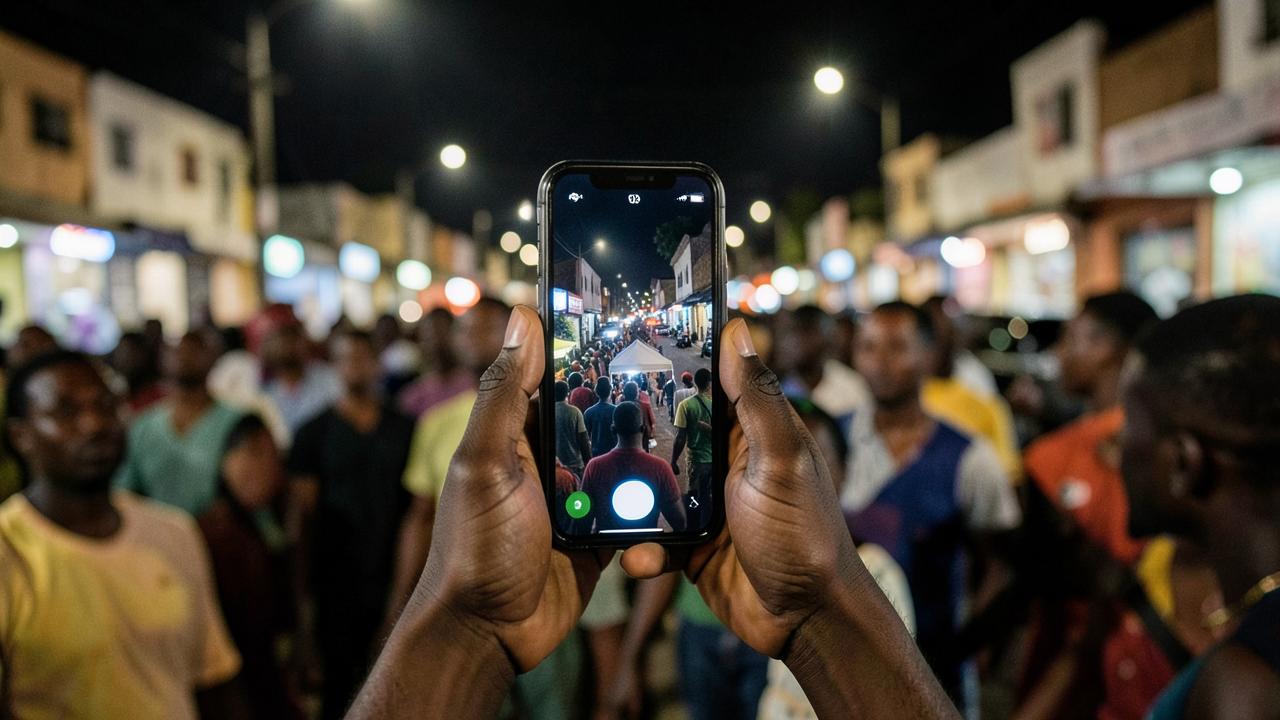
A story leaves the room faster than the person who told it. By the time a maker in Lagos wakes up, the clip has been re-uploaded in Nairobi, captioned in Accra, and monetised by an account in a country the maker has never visited. The work travelled. The name did not.
Three things get separated
Credit, consent and payment start out attached to a piece of work and come apart the moment it moves. Credit is the first to go, because a crop removes it in one gesture. Consent goes next, because the person filmed in a market never agreed to appear in an argument about their country. Payment goes last and most quietly, since the money simply lands somewhere else.
The proof problem
Ownership is not usually the disputed part. Most makers do own what they made. The problem is that ownership only means something you can demonstrate quickly and cheaply. A published original, on a site the maker controls, carrying a byline and a date, settles arguments that a screenshot cannot.
This is unglamorous work and it is the difference between a maker who is credited and one who is merely known to have been robbed.
Consent is a craft question, not a legal one
Filming a stranger in public is often permitted. Publishing them into a fight they did not choose is a decision the maker makes alone. The habit worth keeping is simple: if the person in the frame would be surprised by where the frame ended up, ask them first.
What actually returns the money
Chasing re-uploads is a full-time job with poor pay. The more durable answer is to make the original the destination — the fullest version, the context, the person behind it, and a way to pay them one tap away. A clip that travels then works as advertising for a home the maker owns.
Stories will keep leaving the room. The task is to make sure they leave with a return address.
- authentic storytelling
- creator economy
- african culture
- credit
- content monetization
Tip: highlight any line in the story to turn that line into a share card.
Frequently asked
- Who legally owns a story or clip?
- Generally the person who created it, from the moment it is fixed in a recorded form. The difficulty is not the law but proving authorship and enforcing it across borders and platforms.
- How can a creator protect a story before publishing?
- Publish the original on a site they control with a clear timestamp and byline, keep the raw files and any consent from people featured, and attach a payment route to the work itself.