The 10 Best New Zealand Sights and Landmarks to Visit in 2026 as an African
From Milford Sound's fiords to Hobbiton's Shire, here's exactly where to go, what it costs, and when to visit New Zealand's best landmarks in 2026.
Choose your narrator
In short
The best New Zealand landmarks to visit in 2026 include Milford Sound, the Hobbiton Movie Set, Waitomo Glowworm Caves, the Tongariro Alpine Crossing, Sky Tower, Rotorua's geothermal valley, Franz Josef Glacier, Lake Tekapo, Bay of Islands, Cathedral Cove, and Queenstown.
- Desk:
- adventure
- Format:
- article
- Author:
- Praise_writes
Whether you're settling into New Zealand through work, or simply planning the trip of a lifetime, this country rewards the effort of getting there. Here are the 10 best New Zealand landmarks worth building a 2026 itinerary around.
New Zealand remains one of the more expensive long-haul destinations from Africa, which makes planning around the sights that actually justify the trip worth the extra research.
This list mixes natural wonders, film-tourism icons, and adventure hubs, spread across both islands, so you can prioritize based on how much time and budget you actually have.

1. Milford Sound, Fiordland National Park
Often called the eighth wonder of the world, Milford Sound is a dramatic fiord carved by glaciers, framed by cliffs that rise straight out of the water and waterfalls that cascade down them after rain, which is often.
Rudyard Kipling once described it as the eighth wonder of the world after visiting in the 1890s, and more than a century later, the description still holds up.
Location: Fiordland National Park, South Island
Best way to see it: a scenic cruise, most run 1.5 to 2 hours and include wildlife spotting, seals, dolphins, and penguins in season
Cost: cruises typically start around NZD $90–$150 per adult
Best time to visit: year-round, though summer (December–February) offers the calmest weather

2. Hobbiton Movie Set, Matamata
For anyone who grew up on The Lord of the Rings and The Hobbit, this is the closest thing to walking into Middle-earth for real. The set sits on a working sheep farm and can only be visited on a guided tour.
Location: Matamata, North Island, about 2 hours from Auckland
Cost: the standard Movie Set Tour costs NZD $130 for adults as of April 2026, with pricier options like the Evening Banquet Tour running up to NZD $240
Duration: roughly 2.5 hours, ending with a drink at the Green Dragon Inn
Booking tip: tours sell out well in advance, especially December to February, book ahead

3. Waitomo Glowworm Caves
An underground cave system lit entirely by thousands of native glowworms clinging to the ceiling, best experienced by boat, gliding silently beneath what looks like a starlit sky underground.
Location: Waitomo, North Island, often combined with a Hobbiton day trip
Cost: entry runs approximately NZD $79–$81 per adult
Good to know: photography inside the glowworm grotto is typically not allowed, to protect the glowworms from light disturbance

4. Tongariro Alpine Crossing
Regularly ranked among the best single-day hikes in the world, this 19.4-kilometre volcanic crossing takes you past emerald lakes, active craters, and the peak that played Mount Doom in the Lord of the Rings films.
Location: Tongariro National Park, central North Island
Duration: 6 to 8 hours, one-way, requiring a shuttle back to your starting point
Fitness level: moderate to challenging, this is a full day of hiking, not a casual walk
Best time to visit: late spring through early autumn (October–April), for safer, more predictable conditions

5. Sky Tower, Auckland
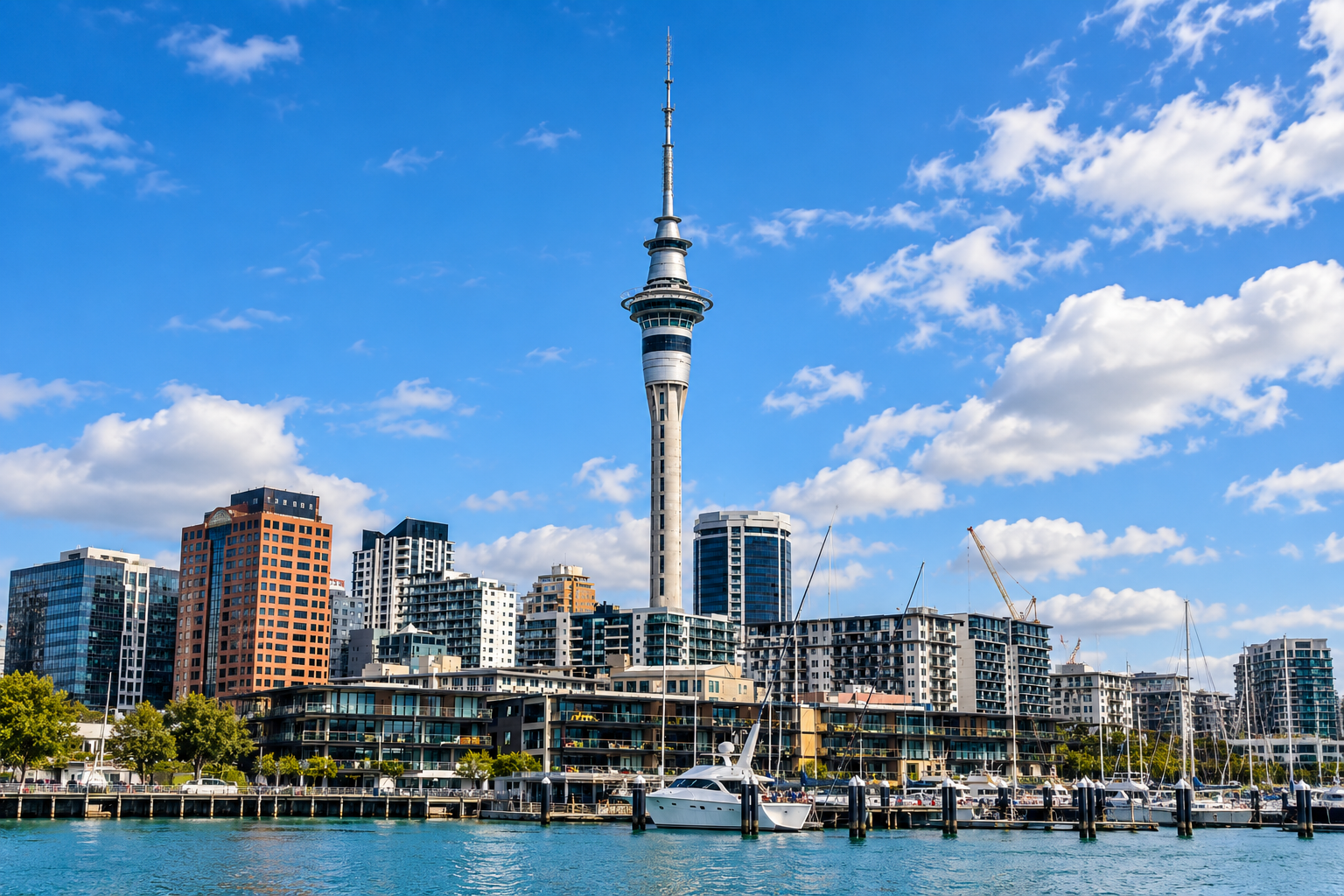
At 328 metres, the Sky Tower is the tallest structure in the Southern Hemisphere, offering panoramic views across Auckland's harbour, and for the genuinely brave, a SkyJump or SkyWalk around the outside of the tower itself.
Location: central Auckland, easily reachable on foot from most city hotels
Cost: observation deck entry typically runs NZD $35–$40 per adult
Extra experiences: SkyJump (a controlled base jump) and SkyWalk (a harnessed walk around the tower's edge) cost extra, and both book up on clear days

6. Rotorua Geothermal Valley
Rotorua sits on some of the most active geothermal land on Earth, bubbling mud pools, geysers, and steaming volcanic craters alongside deep Māori cultural experiences, from traditional hāngī feasts to cultural performances.
Location: Rotorua, central North Island
Must-see spot: Te Puia or Wai-O-Tapu, both offering geysers and colourful geothermal pools
Cost: geothermal park entry generally runs NZD $55–$85 per adult, depending on the site and package
Good to know: the sulphur smell is real and unavoidable, most visitors adjust within the first hour

7. Franz Josef Glacier
One of the most accessible glaciers in the world, sitting unusually close to sea level and surrounded by rainforest, a genuinely rare combination anywhere on Earth.
Location: West Coast, South Island
How to experience it: scenic helicopter tours with a snow landing are the most popular option, since the glacier has retreated significantly and walking access is now limited
Cost: helicopter glacier tours typically start around NZD $300–$450 per person
8. Lake Tekapo and the Aoraki Mackenzie Dark Sky Reserve
By day, Lake Tekapo's turquoise water framed by the Southern Alps is one of New Zealand's most photographed views.
By night, it sits inside one of the largest International Dark Sky Reserves on the planet, making for genuinely spectacular stargazing.
Location: Mackenzie Basin, South Island
Best activity: a guided stargazing tour at the Mt John Observatory, running roughly NZD $180–$200 per adult
Best time to visit: clear winter nights (June–August) typically offer the sharpest stargazing, though the reserve is active year-round
9. Bay of Islands and Cathedral Cove
The Bay of Islands offers subtropical beaches, dolphin cruises, and rich Māori and colonial history, while nearby Cathedral Cove's dramatic sea arch has become one of New Zealand's most photographed coastal landmarks.
Location: Northland (Bay of Islands) and Coromandel Peninsula (Cathedral Cove), North Island
How to reach Cathedral Cove: a scenic walking track, or by boat/kayak for a different angle on the arch
Cost: Bay of Islands cruises typically run NZD $100–$150; Cathedral Cove's walking track itself is free
10. Queenstown and the Remarkables
New Zealand's self-declared adventure capital, framed by the jagged Remarkables mountain range, this is where bungee jumping was commercially invented and where skiing, jet boating, and hiking all sit within a short drive of each other.
Location: Otago, South Island
Signature activity: the Kawarau Bridge Bungy, the original commercial bungee jump site, or a Shotover Jet boat ride for something less committal
Best time to visit: June–September for skiing, December–February for hiking and water activities
Planning Your Trip: A Few Practical Notes
Most of these landmarks are spread across both the North and South Islands, so realistically, seeing all 10 in one trip means budgeting at least 2 to 3 weeks, plus a domestic flight or two between islands.
Renting a car remains the most flexible way to move between sights not directly served by tour buses.
If you're relocating rather than just visiting, it's worth knowing that these landmarks are genuinely accessible on a working income once you're settled, most Kiwis treat weekend road trips to spots like Rotorua or Lake Tekapo as normal, not once-in-a-lifetime splurges.
Booking ahead matters more in New Zealand than in many destinations, since several of these experiences, Hobbiton tours, Milford Sound cruises, and Franz Josef helicopter flights especially, operate with limited daily capacity and sell out during peak season (December through February, New Zealand's summer).
Shoulder seasons, March–May and September–November, offer a solid balance of good weather and thinner crowds.
Whether this list is your bucket-list trip or the highlight reel waiting for you after relocating, New Zealand's landmarks earn the hype.
And if the plan is to actually build a life there rather than just visit, you can read more on other ways you can move to New Zealand.
Frequently Asked Questions
1. What is the most famous landmark in New Zealand?
Milford Sound is generally considered New Zealand's most iconic natural landmark, while Hobbiton is the most visited film-related attraction in the country.
2. How many days do you need to see New Zealand's top sights?
To comfortably cover most of the landmarks on this list across both islands, plan for at least 14 to 21 days, including travel time between the North and South Islands.
3. Is New Zealand expensive to visit?
It's on the pricier end for international travel, entry fees, tours, and accommodation add up quickly, though budgeting NZD $150–$250 per day covering activities, food, and transport is realistic for most travellers.
4. Do I need a visa to visit New Zealand from Africa?
Visa requirements vary by nationality. Most African travellers will need to apply for a visitor visa in advance, so check current requirements directly with Immigration New Zealand before booking flights.
- New Zealand Landmarks
- Milford Sound
- Hobbiton
- New Zealand Travel Guide
- New Zealand for Africans
Tip: highlight any line in the story to turn that line into a share card.
Frequently asked
- What is “The 10 Best New Zealand Sights and Landmarks to Visit in 2026 as an African” about?
- Whether you're settling into New Zealand through work, or simply planning the trip of a lifetime, this country rewards the effort of getting there. Here are the 10 best New Zealand landmarks worth building a 2026… From Milford Sound's fiords to Hobbiton's Shire, here's exactly where to go, what it…
- Who covers adventure on PINCHED?
- Praise_writes reports this piece for the PINCHED adventure desk.
- Where can I read “The 10 Best New Zealand Sights and Landmarks to Visit in 2026 as an African”?
- Read it in full at https://staypinched.site/read/whether-you-re-settling-into-new-zealand-through-work-or-simply-planning-the.