What It's Like to Stand in a Forest That's Been Worshipped In for 600 Years
For six centuries, the Osun-Osogbo Sacred Grove has remained a place where faith, tradition and community meet, drawing thousands into a forest that is still lived in, prayed in and fiercely protected.
Choose your narrator
In short
Standing in the Osun-Osogbo Sacred Grove feels like being in a place where faith, tradition, and community have converged for 600 years, offering a profound sense of history and devotion still actively practiced.
- Desk:
- adventure
- Format:
- article
- Author:
- Eniola Unfiltered
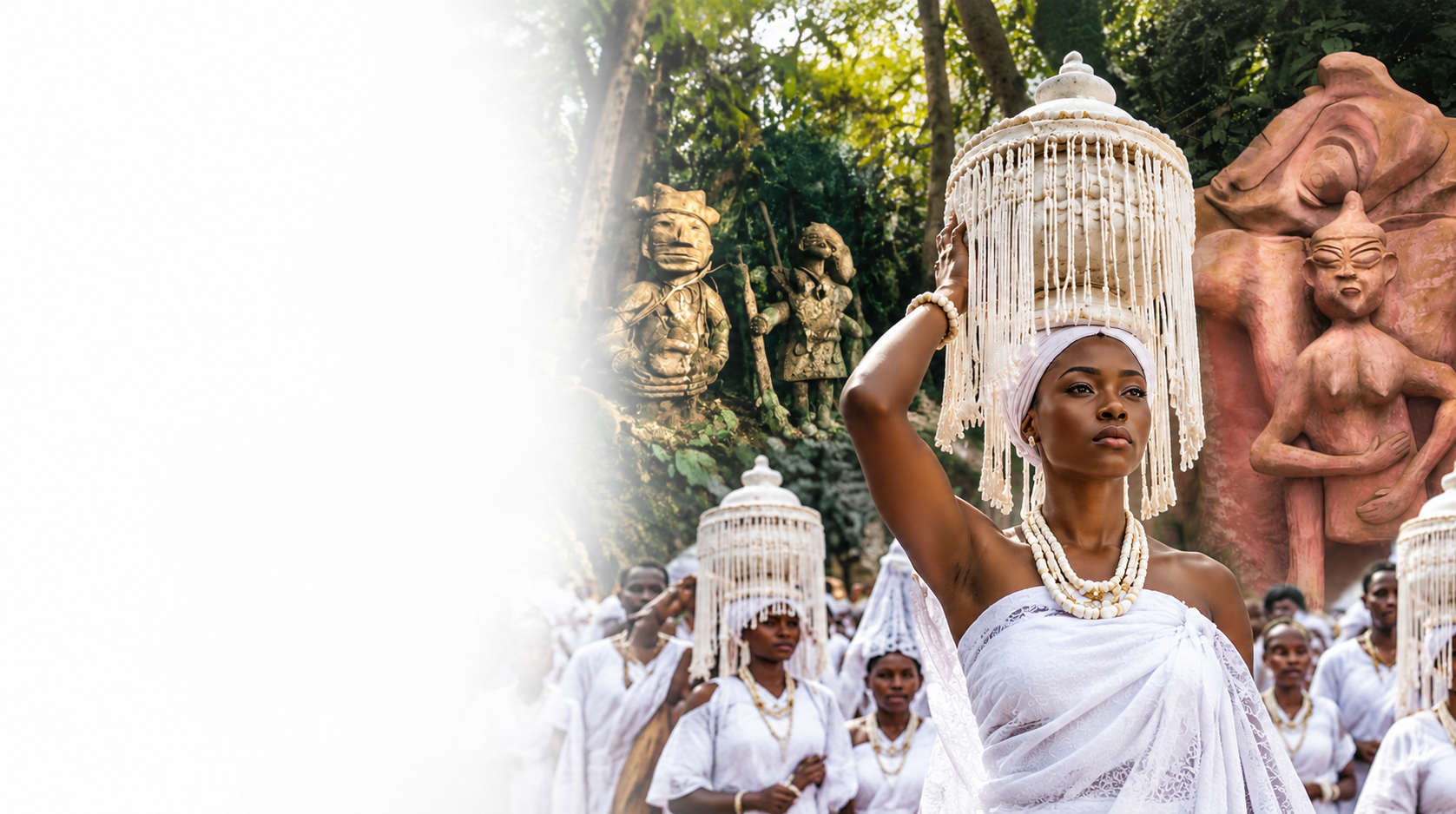
Picture it. Drums first, somewhere past the edge of town. Then smoke, and something frying. Then white, everywhere, on shoulders and heads and babies strapped to backs, until it feels like the whole town agreed on something without telling anyone else. Nobody really explains it to you in advance. You just follow the crowd, the way people here do every year, and end up at the mouth of a forest that has been standing, and been prayed in, for six hundred years.
This is Osogbo, in Osun State, during the two weeks a year when it stops being just a town and becomes something closer to a pilgrimage site.
The Grove Doesn't Explain Itself
On an ordinary day, the Osun-Osogbo Sacred Grove is quiet in the way old forests are quiet: thick canopy, a river moving somewhere close, sculptures half-swallowed by moss that look like they grew there rather than were built. Some of them were shaped by an Austrian woman named Susanne Wenger, who came here once and never really left, spending most of her life restoring shrines and carving new ones into the grove until it became hard to say where the old tradition stopped and her devotion to it began.
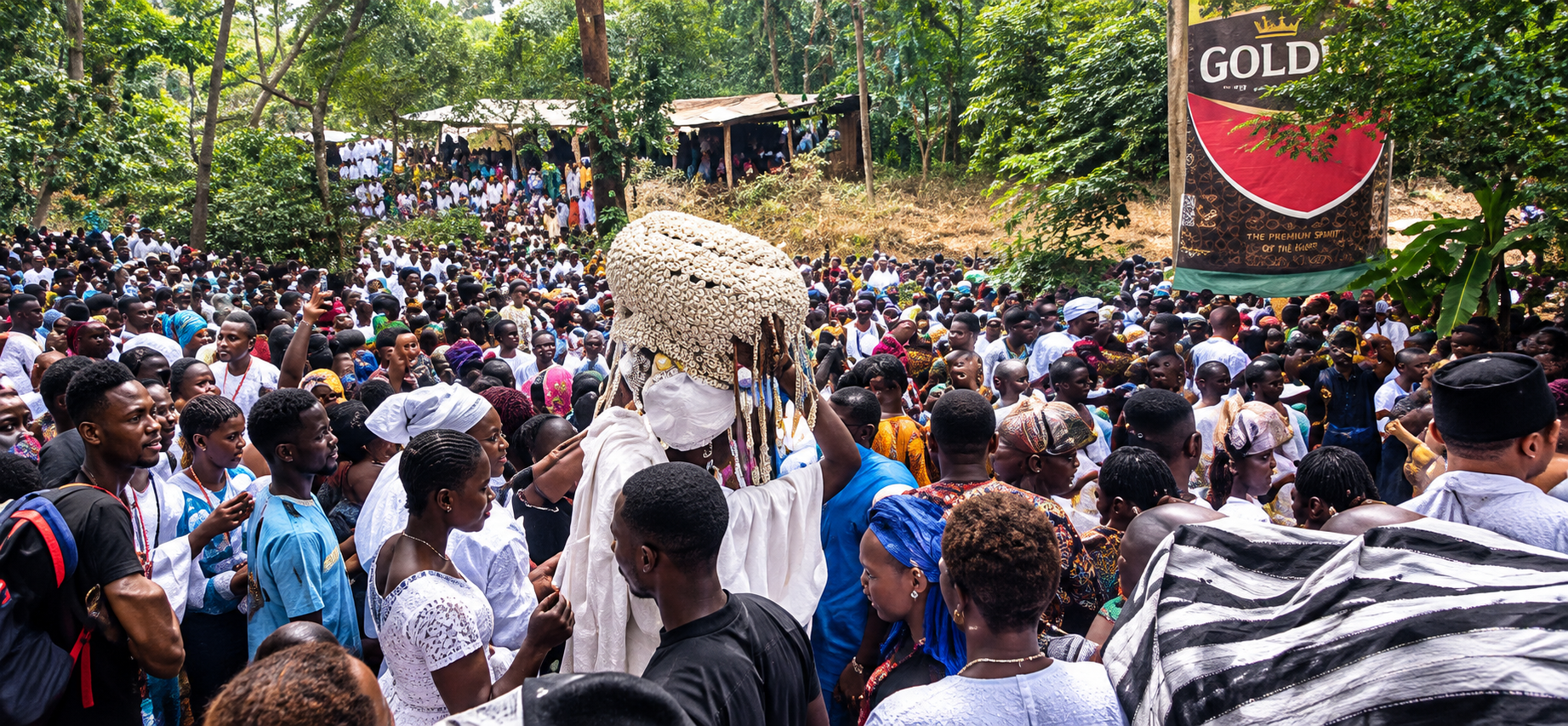
Nobody hands visitors a plaque explaining any of this. People who've walked through it describe simply feeling it, that this isn't a park someone maintains for tourists. It's a place people still actually pray. That part is easy to underestimate until you understand what almost didn't survive. In 2005, UNESCO named the grove a World Heritage Site, one of the last true sacred forests left in Yoruba country, because almost everywhere else, forests like this quietly disappeared under decades of roads and development. This one didn't, though it came close. By the 1950s, protection around it had weakened and the grove fell into real disrepair. It came back because people decided it mattered enough to fight for.
The Girl Carrying the Calabash
Ask anyone who's attended what they remember most, and it's rarely the crowd size or the drumming, though both are enormous. It's almost always the Arugba. She's young, unmarried, chosen from royal lineage, and on the festival's final day she carries a heavy, covered calabash on her head for the entire walk from the palace to the riverbank deep inside the grove. Inside it, offerings from the whole community. Around her, priestesses, and a crowd so dense the ground itself disappears from view.
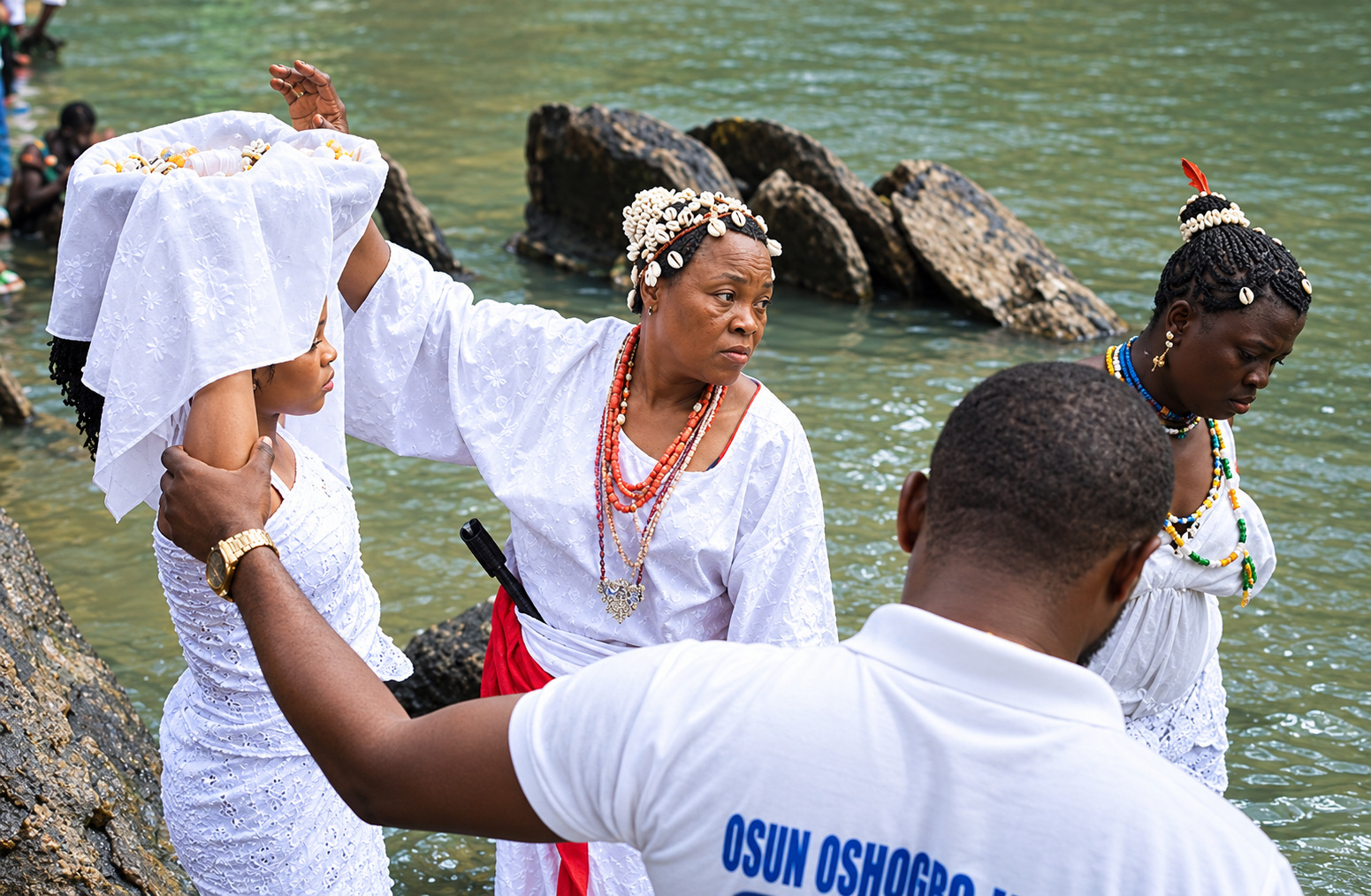
There's an old story behind why she walks: a pact between a hunter, Olutimehin, and Osun, the river goddess this whole town takes its name from. The festival exists to renew that pact, year after year, an agreement nobody alive today made but everybody still shows up for. Those who've witnessed the procession describe something hard to explain afterward. It doesn't read as performance. By every account, her expression isn't that of someone being watched. It's someone doing something that matters, whether or not anyone is there to see it.
What the Day Actually Involves
Nobody arrives late. By sunrise the town is already moving: drummers out, pilgrims in white heading toward the grove before the heat sets in, street vendors arranging food, beads and fabric like they've done it every year of their lives, because most of them have. Anyone hoping to see anything up close is there before eight. By mid-morning the crowd has real weight to it, not chaotic, just full, the kind of full where people stop moving at their own pace and start moving with everyone else instead. This year's festival ran from the 27th of July to the 7th of August, closing on a Friday with a finale that reportedly drew more than half a million people: locals, returnees from the diaspora, curious travelers, content creators with cameras, all of it at once. The theme was “Preserving Heritage, Inspiring the Future,” a line that could easily be skimmed past on a poster, until you understand it's exactly what's playing out inside the grove.
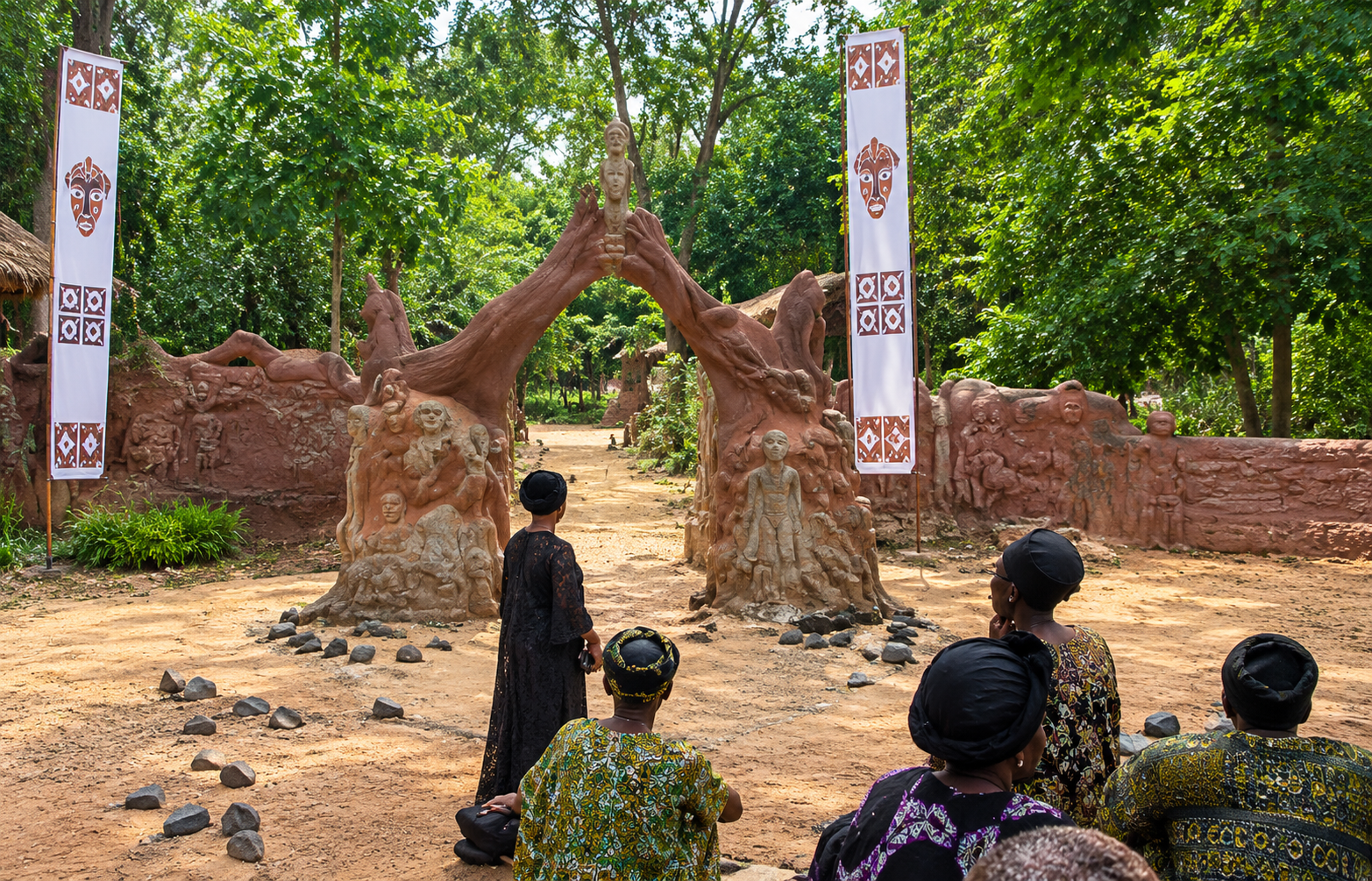
Attendees don't need to practice Yoruba traditional religion to be there. Nobody checks at the entrance. But almost everyone who's gone says the same thing: this isn't a show performed for visitors. Modest dress and a quiet voice near the shrines go a long way. The day moves at its own pace, regardless of anyone's plans.
If You're Thinking About Going Next Year
Most visitors arrive by road, Lagos, Ibadan, Akure, Ilorin, Abeokuta, Abuja, all connected by bus or private car, so build in more travel time than seems necessary. Rooms in Osogbo fill up fast during festival week, so accommodation is worth sorting early rather than hoping something opens up. And a couple of quiet days before the finale help, time to eat properly, walk the grove while it's calmer, let the town's rhythm settle in before the crowd arrives. Because the finale is unforgettable, by every account. But it's the days around it, the smoke, the white fabric, the sound of drums drifting in from somewhere you can't quite place, that people say actually stay with them longest.
Been to Osun-Osogbo, or is it somewhere you'd want to experience once?
- Osun
- Oshogbo
- Drum
- Festival
- African forest
Tip: highlight any line in the story to turn that line into a share card.
Frequently asked
- What is “What It's Like to Stand in a Forest That's Been Worshipped In for 600 Years” about?
- For six centuries, the Osun-Osogbo Sacred Grove has remained a place where faith, tradition and community meet, drawing thousands into a forest that is still lived in, prayed in and fiercely protected. Picture it.
- Who covers adventure on PINCHED?
- Eniola Unfiltered reports this piece for the PINCHED adventure desk.
- Where can I read “What It's Like to Stand in a Forest That's Been Worshipped In for 600 Years”?
- Read it in full at https://staypinched.site/read/what-it-s-like-to-stand-in-a-forest-that-s-been-worshipped-in-for-600-years.