My Mother Wanted Aso Oke Only. His Family Wanted Everything Else.
The first sign that our wedding would not be simple came on a Sunday afternoon in my mother’s sitting room in Surulere. My aunt put down her plate of rice and asked a question nobody had prepared for.
Choose your narrator
In short
Give each family one whole part of the weekend to own, instead of a small piece of everything. Write the plan down with names beside each item, and ask each side only to share the date and the guest count.
- Desk:
- lifestyle
- Format:
- article
- Author:
- Eniola Unfiltered
“So who is cooking for the traditional?”
Tunde and I had been engaged for four months. We thought we had done the hard part. He had knelt in a restaurant in Victoria Island, I had cried, his sister had filmed it badly, and we had posted it. Now our families were meeting properly for the first time, eleven relatives from my side and six from his, and my aunt’s question opened something that stayed open for the next seven months.
My mother is from Abeokuta. She believes a wedding is the traditional ceremony. The white wedding, to her, is a party you hold afterwards if you must. She had been picturing my engagement day since I was a child: the aso oke in matching colours, the introduction, the list read aloud, the bride’s price negotiation with all its theatre, the family dancing in. She had already chosen her gele.
Tunde’s mother is from Nnewi. She believes a wedding is the church and the reception. She wanted five hundred guests, a cake taller than the groom, a live band, and the bride in a gown that would be talked about in her women’s meeting for a year. The traditional, she said kindly, could be short, because “people get tired.”
I watched my mother’s face when she heard the words “short” and “tired” in the same sentence. I have known that face all my life. I knew we were in trouble.
The first month: we tried to be diplomatic
Tunde and I agreed on one rule early. We would not let either mother feel she had lost. That sounded wise. In practice it meant we agreed to everything, so by the end of the first month we had a plan for three days, nine hundred guests, two caterers who had never met, and a budget that made Tunde go quiet in the car.
I cried in the bathroom at work. Not because anyone was unkind. Both mothers were lovely to me, separately. The trouble was that each one loved me so completely that she wanted the wedding to be hers, and neither could see it.
The spreadsheet
The turning point was my younger cousin, Kemi, who works in operations at a logistics company. She sat us both down one Saturday with a laptop and said, “Nobody is wrong. You just do not have a plan with names on it.”
She built a spreadsheet. Every item of the weekend went in a row: venue, food, drinks, aso oke, gele, photographer, MC, church, rings, transport for elders, who prostrates and when. Next to each row she put a column called “Whose heart is in this?” and asked each mother to mark the rows that mattered to her most.
My mother marked fourteen rows. They were all in the traditional ceremony.
His mother marked eleven. They were all in the church and the reception.
Only two rows had marks from both: the guest list and the money. Everything else could simply be given.
I will never forget the evening we showed them. We did not present it as a compromise. We said, “Mummy, you will run the traditional completely. Mama Tunde, you will run the white wedding completely. You decide. We will only ask you to tell each other the date and the number of guests.”
My mother looked at the sheet for a long time. Then she said, quietly, “Even the food?”
“Even the food,” I said.
What each of them did with the room we gave them
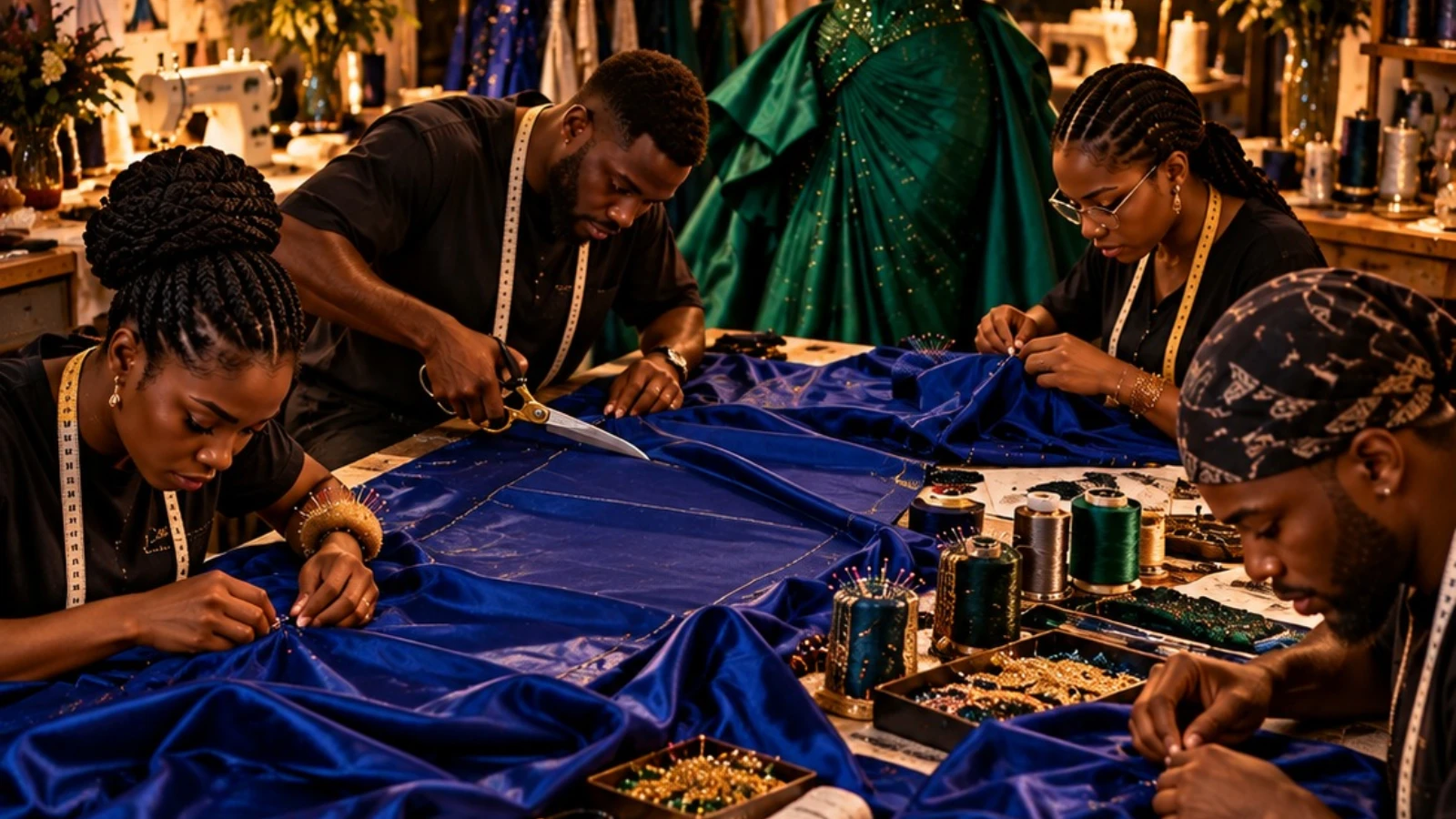
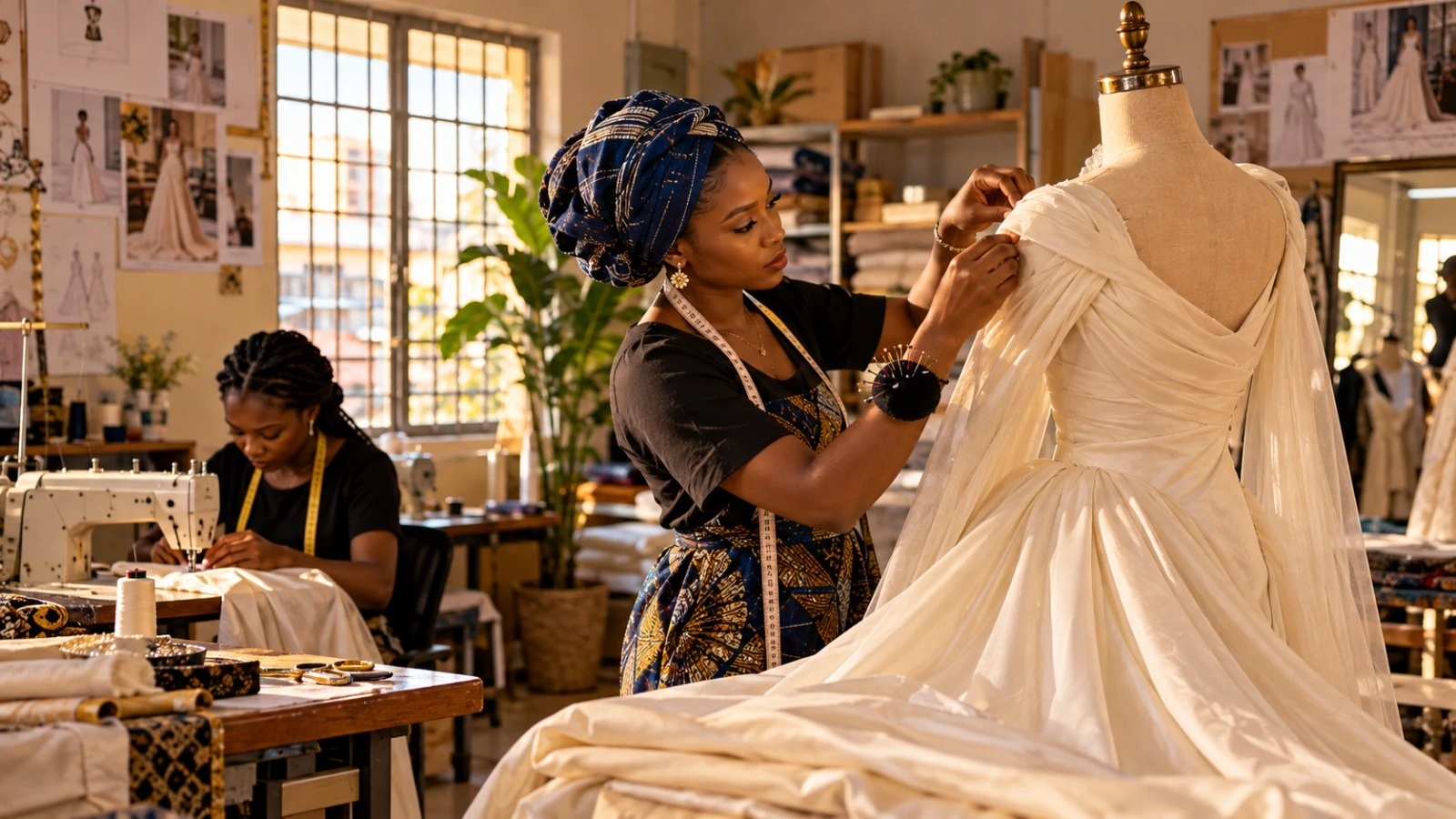
My mother went to work like a general. She chose the aso oke herself: deep indigo and gold, with the groom’s side in a slightly lighter blue so the two families would look like one painting. She booked the Alaga Iduro, the master of ceremonies, a woman she had known for twenty years. She wrote the engagement list on paper with her own hand and rehearsed the reading with my aunt at the dining table.
His mother, to my surprise, became more gracious the more control she had. She met the caterers, tasted every dish, and sent my mother a message the week before the traditional: “I have asked our caterer to prepare a pot of ofe onugbu for your guests too. I hope that is fine.” My mother, who does not smile easily, smiled for a full minute.
Then something happened that none of us planned. At the traditional, when the groom’s family arrived, Tunde’s father stepped forward and prostrated fully in front of my mother’s brothers. He did it without being asked, slowly, in his agbada, in front of two hundred people. My uncle, who negotiates the bride price for a living and had planned to make it difficult, stopped mid sentence and helped him up.
The room changed after that. The teasing became warmer. The list was read, the price was “paid” to loud cheering, and my mother cried openly when I came out in my indigo and gold, which I had been told she would not do because she does not like being seen.
The white wedding
Two days later, in a hall in Lekki, the cake was indeed taller than Tunde. His mother had arranged a band that played highlife, and my mother, in a gown she had not planned to wear, was the first person on the floor.
I will not pretend the weekend was perfect. The generator failed during the first dance and the caterers argued in the corridor. A cousin I had not seen in nine years told me my gown was “brave.” There was a moment, near midnight, when I took off my shoes in the bridal room and thought only that I wanted my bed.
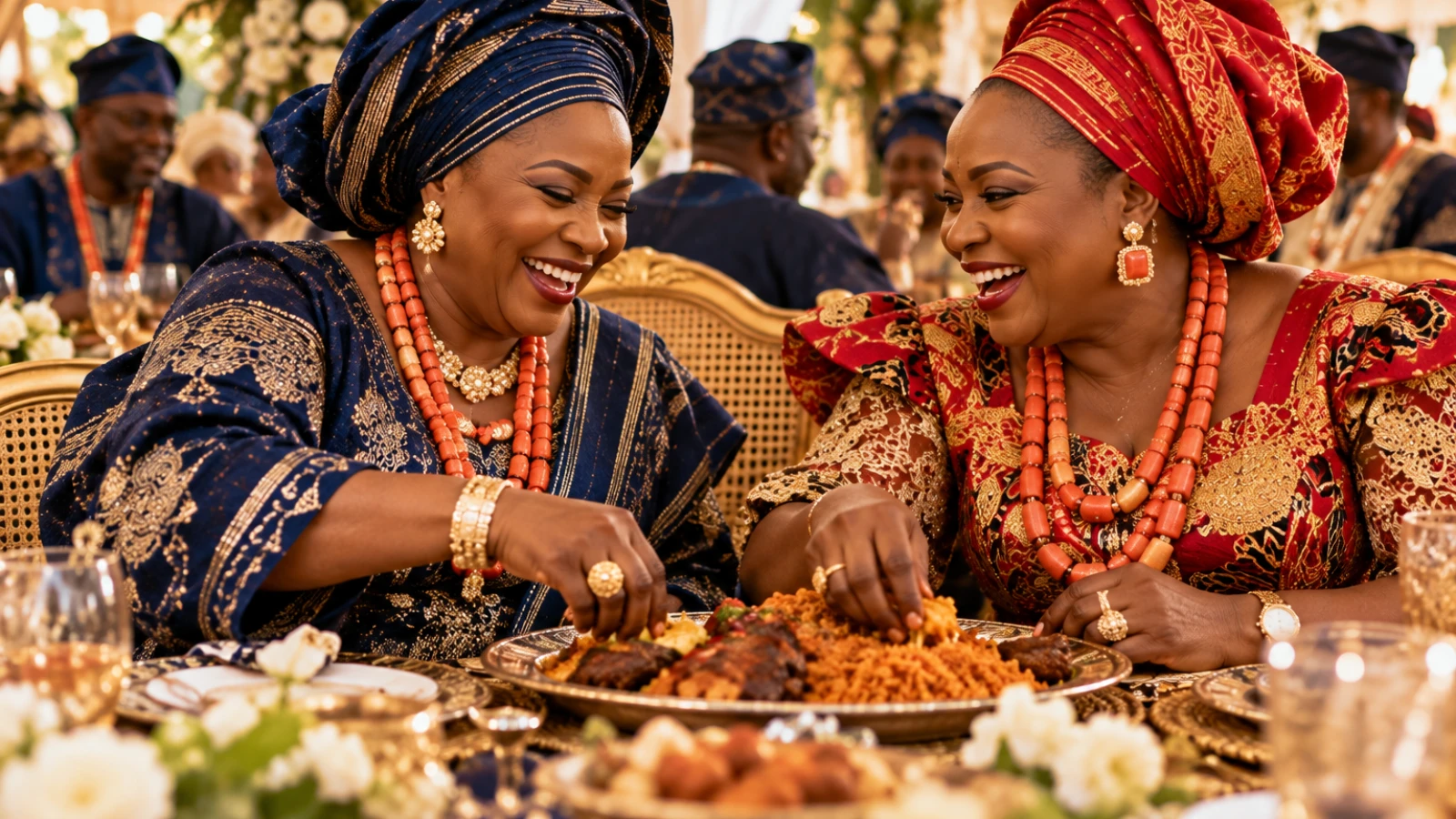
But when I walked back into the hall, my mother and Tunde’s mother were sitting together at the family table, shoulders touching, sharing one plate of jollof and laughing at something I could not hear.
What I would tell another bride
Do not try to give everyone a piece of everything. It leaves everyone with crumbs. Give each person a whole thing they can own, and ask them only to tell each other what they are doing.
Write the plan down with names beside it. Love hates ambiguity. A spreadsheet looks cold, but it is the warmest thing we did, because it showed each mother that her heart was seen.
And keep one small thing for yourselves. Ours was ten quiet minutes after the traditional, behind the tent, when Tunde and I sat on a plastic chair, still in our aso oke, and ate a single piece of puff puff from a stranger’s tray. Nobody photographed it. It is my favourite part of the whole weekend.
- Wedding
- Vows
- Love
- Aso ebi
Tip: highlight any line in the story to turn that line into a share card.
Frequently asked
- What is “My Mother Wanted Aso Oke Only. His Family Wanted Everything Else.” about?
- The first sign that our wedding would not be simple came on a Sunday afternoon in my mother’s sitting room in Surulere. My aunt put down her plate of rice and asked a question nobody had prepared for.
- Who covers lifestyle on PINCHED?
- Eniola Unfiltered reports this piece for the PINCHED lifestyle desk.
- Where can I read “My Mother Wanted Aso Oke Only. His Family Wanted Everything Else.”?
- Read it in full at https://staypinched.site/read/two-families-one-wedding-aso-oke-and-white-wedding.