The Calling He Never Chose: Wendy Imasuen and the Making of a Theatre Media Artist
An unexpected university admission became the first step in Wendy Imasuen’s journey into filmmaking. What began with disappointment would eventually lead to a career behind some of Nollywood’s biggest box-office successes—and a childhood shaped by watching his cousin, Lancelot Imasuen, on television.
Choose your narrator

In short
An unexpected university admission became the first step in Wendy Imasuen’s journey into filmmaking. What began with disappointment would eventually lead to a career behind some of Nollywood’s biggest box-office successes—and a childhood shaped by watching his cousin, Lancelot Imasuen, on television.
- Desk:
- film
- Format:
- article
- Author:
- Mary Anja
When admission results came out and he saw his name listed for the course at Ambrose Alli University, he was discouraged, even upset. It wasn't the path he had planned for himself.
But four years later, that unplanned course had become the foundation for a career that would put his name behind some of Nollywood's biggest box-office hits, from Omo Ghetto: The Saga to Everybody Loves Jenifa.
But his journey into producing films did not begin with a plan to become a producer.
It started with watching his cousin on television.
Wendy's introduction to filmmaking was a very personal one.
His cousin, Lancelot Oduwa Imasuen, is a renowned Nollywood director. Growing up in Benin City, Wendy would watch him on television with his parents and younger siblings.
At the time, Lancelot Imasuen was acting for the Bendel Broadcasting Service, now known as the Edo Broadcasting Service.
On Sundays, the family would sit together and watch him.
That was Wendy's first real exposure to the world of film.
Then another experience made him even more curious about performance and the arts.
His family attended New Benin Baptist Church in Benin, and during one Easter Sunday service, Wendy watched another of his cousins take part in a performance depicting the crucifixion of Jesus.
After the performance, Wendy noticed how people gathered around him, applauding and celebrating what they had just watched.
It was a simple experience, but it stayed with him.
“My interest for art, as it were, began to grow,” he recalls.
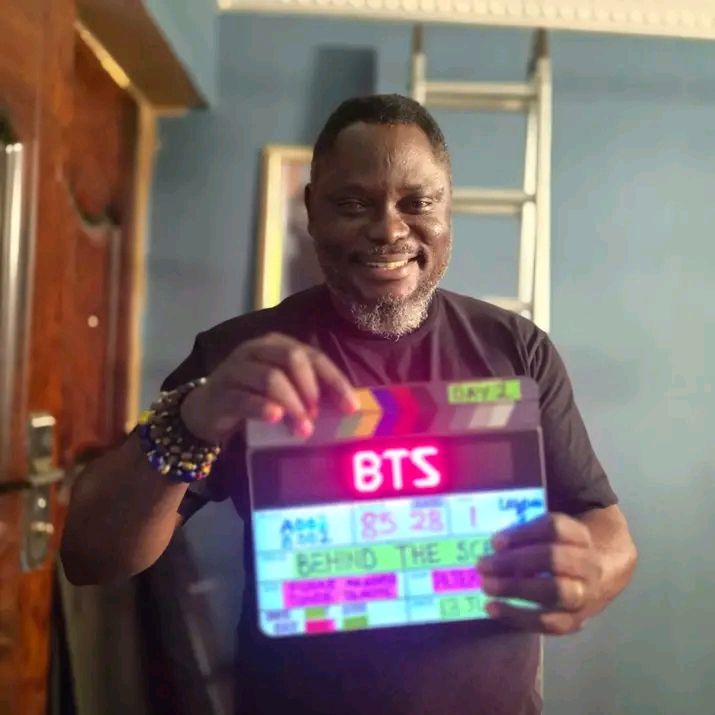
Still, filmmaking was not something Wendy had planned as a career.
When he got into university, his name appeared as number two on the list for Theatre Media Arts at Ambrose Alli University in Edo State, he was not happy about it, was not what he wanted to study. It was not what he had planned for himself.
But he eventually spent four years studying Theatre Media Arts.
The student film that changed his mind
While in university, Wendy slowly began to realise that he was actually good at what he was studying.
Around his 300 level, his set travelled to the Nigerian Film Institute in Jos for an outreach programme.
There, they were introduced to cinematography and other elements of filmmaking.
They were also asked to make a film.
For some reason, everyone in his set decided that Wendy should direct theirs.
He had never directed a film before.
He describes himself at the time as naïve, but he took on the responsibility anyway.
Then something happened that changed the way he saw himself.
The film won an award at the first Nigerian Student Film Festival in Jos in 2005.
For Wendy, that recognition was more than just an award.
It gave him confidence.
For the first time, he began to see himself as someone who could actually make films.
He had found something he wanted to pursue.
The banking job he never wanted
Wendy's belief in following his passion is not something he simply tells other people.
It is something he has practised himself.
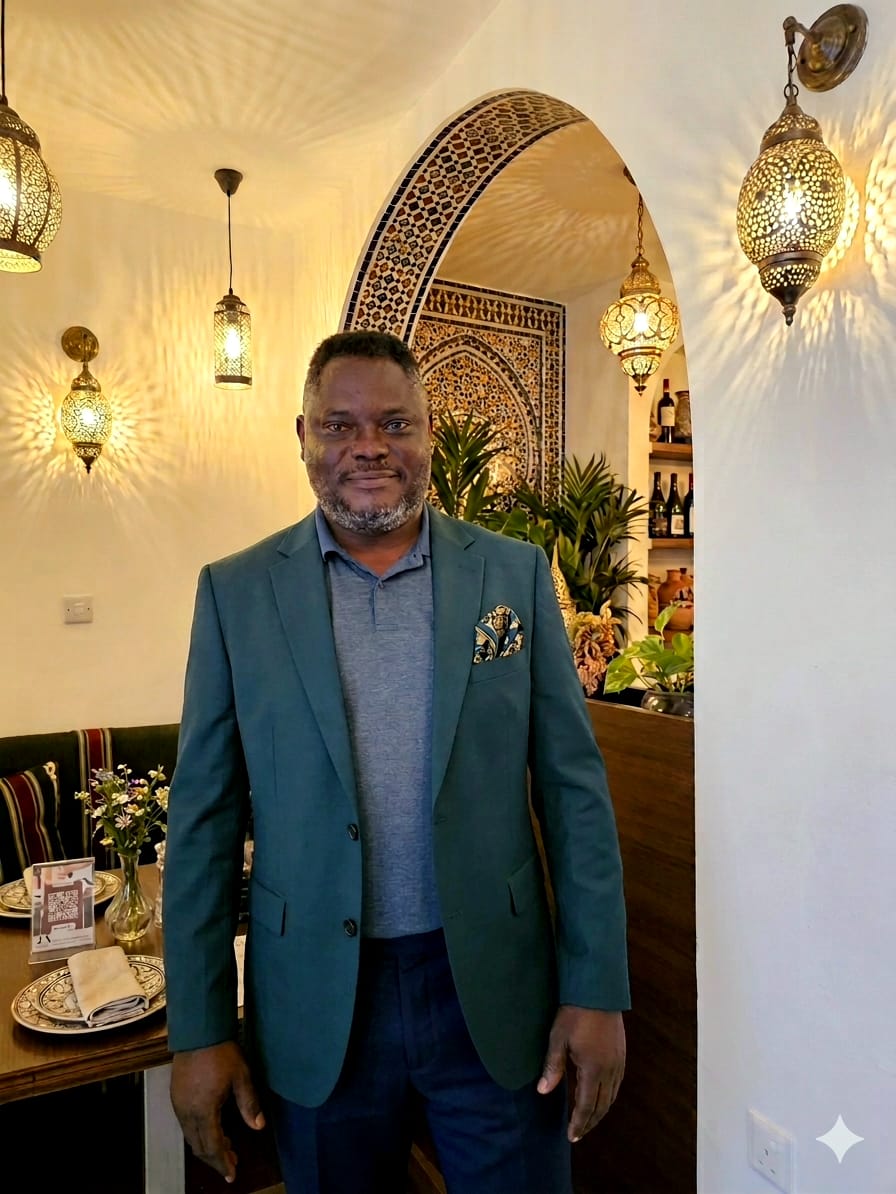
In 2007, after his convocation, he was awarded Best Graduate Student from the Faculty of Arts.
A bank reached out to him and invited him for an interview.
The interview lasted ten days.
He answered their questions and eventually got to the point where one of the interviewers asked if he had any questions for them.
He did.
He asked whether they would rather have a job that gave them money but made them unhappy or one that fed their soul, aligned with their passion and made them happy for the rest of their lives.
They chose the latter.
And Wendy then told them something they probably did not expect to hear.
He had attended the interview simply for the experience.
He did not want to become a banker.
He wanted to make films.
He wanted to be a filmmaker.
The interviewers asked if he was sure.
They asked whether he thought he might regret the decision years later.
He was sure.
Almost two decades later, he is still in the industry.
Learning from Lancelot Imasuen
After Wendy graduated, his elder sister contacted Lancelot Imasuen, who was already making a name for himself in Nollywood.
At the time, Lancelot Imasuen had directed successful films such as Isakaba and Behind Closed Doors, so he asked Wendy to come to Lagos.
So, in 2006, Wendy travelled from Benin to Lagos.
What followed became one of the most important learning periods of his career.
Lancelot Imasuen taught him different aspects of filmmaking, including scriptwriting.
Wendy began writing scripts.
He also started managing productions.
Whenever Lancelot Imasuen was directing, he would push Wendy into the role of production manager.
This was how he began learning the practical side of filmmaking.
It was no longer just about watching films or learning theory in school. He was now on set, managing people, coordinating productions and learning what it actually took to bring a film together.
Lancelot Imasuen also kept telling him something he never forgot.
He would tell him that he would be great.
That he would manage millions.
That he would manage people.
Those words stayed with him as he continued working.
One of the biggest projects he worked on with Lancelot Imasuen was Invasion 1897, where he served as production manager.
All these experiences, he says, prepared him for the work he would eventually do as a producer.
When Funke Akindele noticed his work
Another major turning point came when a marketer known as Onyeze came to Benin to make a film.
Funke Akindele was one of the actors cast in the production.
Wendy was working as the production manager.
He was simply doing his job — coordinating things, solving problems and making sure the production was running properly.
But Funke noticed him.
According to Wendy, she kept telling members of the crew that she liked the way he worked.
She liked how he coordinated things.
She liked how he handled his responsibilities.
And she wanted to work with him.
The crew eventually told Wendy what Funke had been saying.
This was around 2008.
The opportunity eventually came.
Funke invited him to Lagos, and in 2010, he travelled to work with her on a Yoruba film.
Years later, in 2016, she invited him again to manage the first season of Industreet.
Then, in 2019, she invited him to Lagos permanently to work with her.
That became the beginning of a working relationship that would change the direction of Wendy's career.
From production manager to producer
When Wendy started working with Funke in 2019, he initially worked as a production manager.
He worked on productions including Jenifa's Diary, Industreet and Catfish, among others.
Then, in 2020, Funke told him it was time for him to step up.
She encouraged him to move into producing.
That was how Wendy's journey as a producer began.
And when he talks about his career today, he does not separate his success from the opportunity Funke gave him.
“I cannot tell my story as a successful producer without her,” he says.
She pushed him.
She encouraged him.
Most importantly, she gave him the opportunity to prove himself.
One of the major projects that followed was Omo Ghetto: The Saga.
Wendy produced the film, and it became a major box-office success.
According to him, the film made over ₦600 million at the box office.
Suddenly, his phone would not stop ringing.
People were calling and asking:
How did you do it?
How did you achieve this?
His name was now being mentioned among some of the top producers in Nigeria.
For Wendy, it was a moment of gratitude.
He credits God, Funke Akindele and her then-husband, JJC Skillz, for the opportunity.
Since then, his producing credits with Funke have included Omo Ghetto: The Saga, She Must Be Obeyed, Battle on Buka Street, Everybody Loves Jenifa and Behind the Scenes.

He says working with Funke has been a beautiful experience.
But it is also one that requires you to always be alert.
“You can't close your eyes working with her. You can't sit working with her. You need to be on your toes 24/7.”
And perhaps that is part of what has helped him grow.
So, what exactly does a producer do?
One thing that became clear from speaking with Wendy is that there are several roles involved in getting a film made, and they do not all mean the same thing.
He has worked as a production manager, line producer, associate producer and producer, so he explained how the roles differ.
A production manager is responsible for the day-to-day activities of a production.
That means making sure the practical side of the production is working.
Are there enough meals?
Is there water on set?
Are crew members comfortable in their hotels?
Are the production buses available?
Is everyone being transported properly?
Are there production challenges that need to be resolved?
The production manager is basically making sure the everyday running of the production does not fall apart.
The line producer also deals with the day-to-day running of a production, but the responsibilities extend further into finance, logistics and operations.
According to him, the line producer is heavily involved in hiring cast and crew, working with the budget, handling finances and logistics, planning the production schedule and making sure the production does not spend beyond what has been approved.
The line producer also works with the assistant directors, or ADs, on scheduling.
The associate producer works within that structure, while the producer sits above the other production roles.
Wendy describes the structure as the production manager at the bottom, the associate producer above the production manager, the line producer above the associate producer and the producer at the top.
Together, they make up the production team.
But for Wendy, the producer has the broadest responsibility.
“The producer is the production.”
The producer is involved from the very beginning.
Before the script is even conceptualised, the producer is already involved.
After the script has been written, the producer remains involved.
The producer may hire the line producer and give the overall direction for the production.
For Wendy, producing is about being involved from A to Z.
And that is exactly why it is the role he enjoys the most.
“Everybody loves power”
When asked which of the roles he has worked in he enjoys the most, Wendy did not hesitate.
His explanation was simple.
“Everybody loves power.”
But there is more to the joke.
Wendy enjoys being involved from the beginning.
He wants to be there before the story is fully developed. He wants to know what is happening, monitor the process, manage people, hire people, move people and make sure the production runs smoothly.
He enjoys having that level of involvement.
For him, producing means being part of the story from the moment the idea comes up until the finished film gets to the audience.
The biggest challenge may come after production
When we think about the challenges of filmmaking, we often think about getting money to shoot, dealing with weather, managing actors and equipment or trying to keep a production on schedule.
Wendy agrees that financing is a major challenge.
But for him, one of the biggest problems can come after the film has already been made.
Distribution.
“When you're on set, it's like a jamboree.”
Everyone comes to set.
They work.
They have fun.
They shoot the film.
Then they leave.
The actors move on to their next production. The crew members move on to their next job.
But the producer remains with the film.
And then comes the question:
Where does this film go?
Does it go to the cinema?
Netflix?
Prime Video?
YouTube?

For Wendy, distribution is one of the biggest challenges producers face because films can be made and still struggle to reach audiences if the producer cannot secure a distribution platform.
That is why he does not believe distribution should be treated as an afterthought.
For him, the conversation should start while the story is still an idea.
While developing the story, he is already thinking about the platforms that might accept it.
He believes producers should be sending letters and proposals to distribution platforms even before production begins.
They should explain the story, the proposed release date and how they intend to release it.
Because making a good movie is only part of the job.
People still have to see it.
“The success of every movie is that the movie is out there for people to get to see it.”
This is why Wendy does not want to finish filming, complete editing and only then start thinking about distribution.
He would rather have a distribution plan before production begins.
And it is not always easy.
You can get rejected.
Then try again.
Get another rejection.
Try again.
Sometimes you simply have to keep trying until someone finally says yes.
Wendy admits that it can be frustrating.
There is also another reality producers face.
Once actors and crew members finish a film, they move on.
They have been paid and are already working on something else.
The producer, however, may still be dealing with the unfinished business of getting that film onto a platform.
Nobody necessarily calls to ask what happened to the film.
But once the film finally comes out, everybody starts celebrating it as “our film.”
That, Wendy says, is one of the realities of being a producer.
Two decades later, Nollywood looks very different
Wendy has been in the industry for almost two decades, so he has seen Nollywood change considerably.
And he believes the changes have been significant.
The crew has improved.
Equipment has improved.
Technology has improved.
The technical quality of Nigerian films has improved.
He points to editing, sound, cinematography, graphics and picture quality as areas where technology has made a major difference.
But he also gives credit to the people behind the technology.
Crew members, he says, have embraced the changes and improved their skills alongside the equipment.
The industry has also grown commercially.
When Wendy first entered Nollywood, there were far fewer actors who owned cars.
There were fewer directors with houses.
It was possible to count the number of producers who owned cars.
Today, that has changed.
Actors now own estates.
Even people working as production assistants can own cars.
For him, that shows that the financial rewards of working in the industry have improved.
The industry itself has also become much bigger.
More people are coming into Nollywood.
More people are earning from it.
And according to Wendy, there are people shooting films somewhere in Nigeria almost every second.
Some are shooting for Netflix.
Some are shooting for cinemas.
Others are making content for YouTube.
The industry has expanded across different platforms.
But one of the changes he is most excited about is Nollywood's growing international reach.
It is no longer just about Nigerians abroad watching Nigerian films on YouTube.
Nollywood films are now being shown in cinemas in the United Kingdom, Canada, the United States and other parts of Europe.
For Wendy, that is something worth celebrating.
Nigerian films are reaching global audiences.
And he believes the industry will continue to improve.
Wendy's ambitions are not limited to mainstream film production.
He also created Wendy TV, a YouTube channel he describes as his retirement plan.
His vision is simple.
Eventually, he wants to step away from the demanding world of mainstream productions and make smaller films for himself.
When he retires, Wendy wants to make his own films and release them through Wendy TV.
His advice to young filmmakers
Wendy's advice to young people entering filmmaking is simple:
Stay true to yourself.
He describes Nollywood as a funny place and warns young people not to assume everyone around them is their friend.
Instead, he says they should remain focused on why they entered the industry in the first place.
If you are an actor, remember why you became an actor.
If you are a crew member, remember why you chose that department.
Know why you are there.
And stay committed to it.
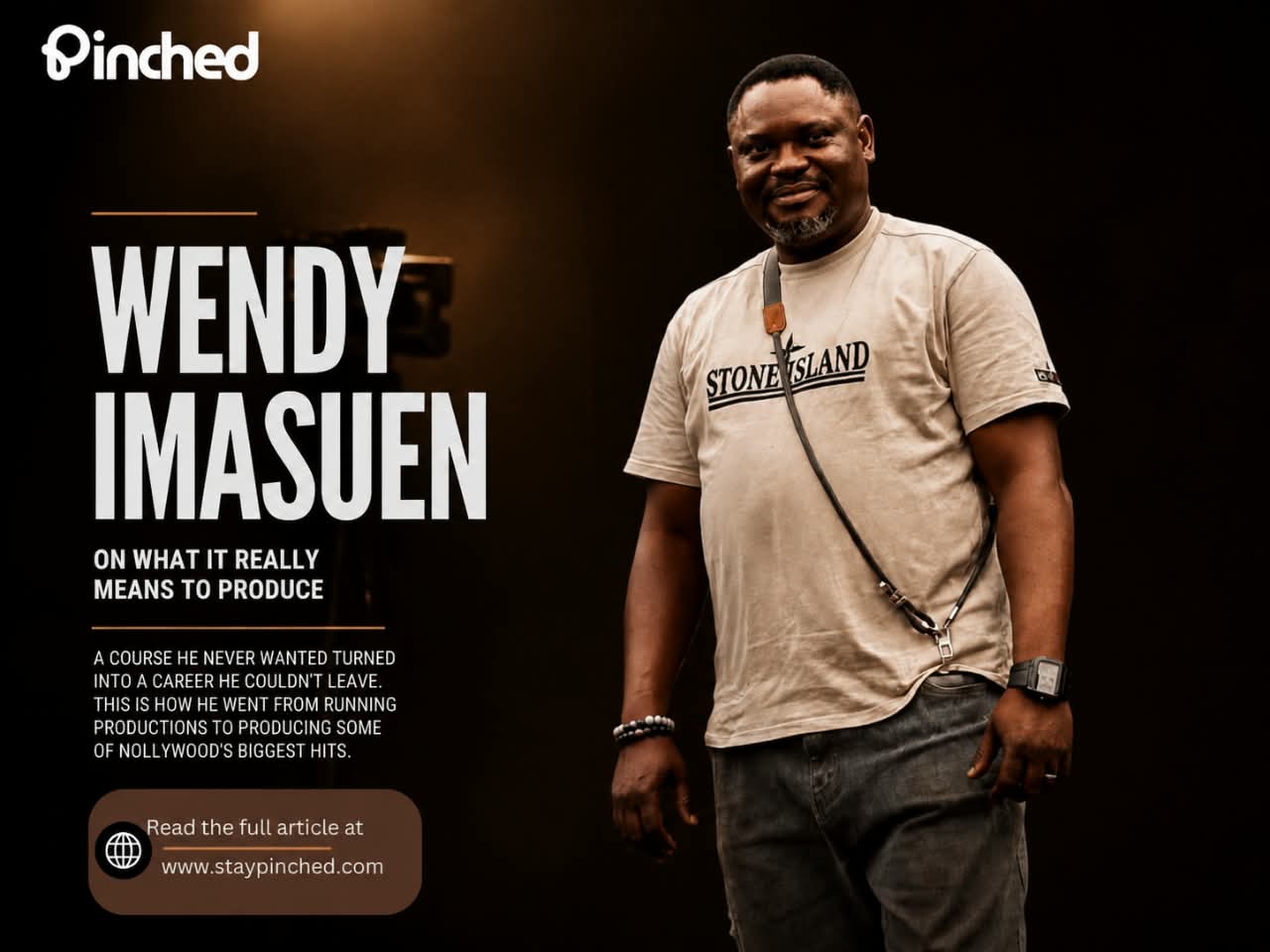
He believes one of the biggest mistakes young people can make is allowing their circumstances to distract them from their passion.
There will be disappointments.
There will be difficult seasons.
There will be times when it looks like everyone around you is succeeding while you are still waiting.
But Wendy's advice is to remain steadfast.
“Your time must come.”
If your passion is lighting, stay with lighting.
If your passion is sound, stay with sound.
If your passion is directing, keep directing.
If your passion is producing, keep producing.
Eventually, people will notice the work you have been doing.
For Wendy, his own career is proof of that.
He started from production management.
He learnt from others.
He worked his way through different roles.
He eventually became a producer.
And today, his name is attached to some of the biggest productions in Nollywood.
What does Wendy want to be remembered for?
After everything he has achieved, Wendy's idea of legacy is not just about the number of films he has produced.
There are two things he wants people to remember.
The first is his openness.
If he says yes, he means yes.
If he says no, he means no.
He also wants to be known as someone who treats people fairly.
He says he does not cheat people because he believes strongly in karma.
If he negotiates an amount with someone, he wants that person to receive what they agreed on.
He does not want to inflate the amount elsewhere in a budget simply to benefit himself.
He also believes in giving everyone a level playing field.
He does not want to marginalise people or look down on anyone because of their position on a production.
The second part of his legacy is his work.
He wants his filmography to speak for him.
He points to the success of the films he has produced and the fact that he has worked consistently with Funke Akindele for years.
For him, it would not make sense to work with someone like Funke, who he describes as extremely particular about her work, and not bring his own best to the table.
He describes her as a perfectionist who wants things done properly.
And he sees her as one of the people who pushed and motivated him to become the producer he is today.
So, when people talk about Nollywood and Nigerian cinema years from now, Wendy wants his name to be part of that conversation.
He wants his work to have made enough of an impact that people can look back and remember what he contributed.
And he is not slowing down yet
Despite having a retirement plan, Wendy is still very much in the middle of his filmmaking journey.
Staying until your time comes
Wendy Imasuen's story is not just about becoming a successful producer.
It is about how a career can grow from places you never expected.
There is still a lot he wants to do.
There are personal stories sitting in his archive.
There is a breast cancer film inspired by his aunt that he still hopes to make.
There is Wendy TV, waiting for the retirement years he imagines for himself.
There are upcoming cinema projects.
There is a Netflix series.
And there are still many more stories to tell.
But perhaps the most important thing Wendy's story leaves behind is the advice he gives to young filmmakers.
You do not always know when your opportunity will come.
You do not always know which opportunity will change your career.
And sometimes, the thing you did not even want to study can become the foundation of the career you eventually love.
For Wendy, the important thing is to stay.
Stay focused.
Stay true to your passion.
Keep doing the work.
Because when your time finally comes, people will see all the years you spent preparing for it.
Tip: highlight any line in the story to turn that line into a share card.
Frequently asked
- What is “The Calling He Never Chose: Wendy Imasuen and the Making of a Theatre Media Artist” about?
- An unexpected university admission became the first step in Wendy Imasuen’s journey into filmmaking. What began with disappointment would eventually lead to a career behind some of Nollywood’s biggest box-office successes—and a childhood shaped by watching his cousin, Lancelot Imasuen, on…
- Who covers film on PINCHED?
- Mary Anja reports this piece for the PINCHED film desk.
- Where can I read “The Calling He Never Chose: Wendy Imasuen and the Making of a Theatre Media Artist”?
- Read it in full at https://staypinched.lovable.app/read/the-calling-he-never-chose-wendy-imasuen-and-the-making-of-a-theatre-media-artis.