Is Women's Football Finally Getting the Attention It's Earned in Nigeria?
The Super Falcons just had their worst tournament ever. The domestic league just signed a broadcast deal. Both are true, and that's the story.
Choose your narrator
In short
Nigerian women's football is getting more attention in 2026, but unevenly, the domestic NWFL is growing through a new broadcast deal and league expansion, while the Super Falcons just suffered their worst-ever WAFCON finish, missing the semi-finals and a World Cup spot for the first time in history.
- Desk:
- on the sport
- Format:
- article
- Author:
- Praise_writes
Two things are true about Nigerian women's football, and they don't agree with each other.
The Super Falcons just suffered the worst tournament finish in their history. At the same time, the domestic league just signed a national broadcast deal and expanded its structure.
So which is it, is the attention finally real, or just louder noise around the same old problems?
The honest answer sits somewhere between the two, and untangling it means looking at what actually happened on the pitch in Morocco, and what's been quietly building at home while nobody was watching as closely.
A Historic Collapse: The Super Falcons' Worst-Ever WAFCON
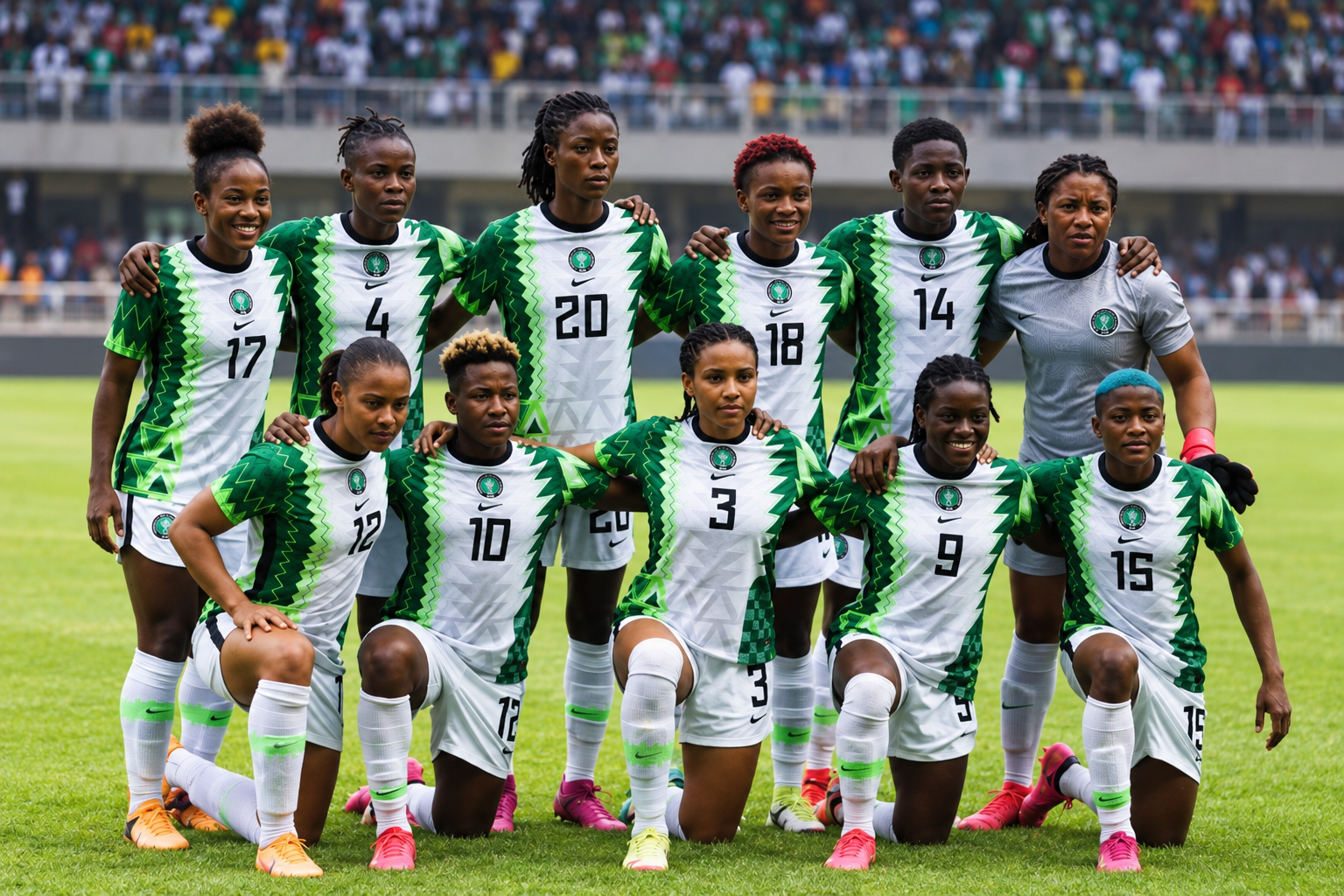
Nigeria's Super Falcons are the most decorated team in Women's Africa Cup of Nations (WAFCON) history, 10 titles, and had never missed a semi-final in the competition's entire history.
That record ended in August 2026 when Nigeria failed to reach the semi-finals for the first time ever, and as a direct result, failed to qualify for the FIFA Women's World Cup for the first time in the nation's history.
Cameroon went on to win their first-ever WAFCON title, beating debutants Malawi in the final, a symbolic changing of the guard in African women's football that landed directly on Nigeria's worst tournament on record.
How It Happened: From a Shock Opening Loss to Cameroon Heartbreak
The tournament started badly and never fully recovered.
Nigeria lost their opening group match to debutants Malawi, a result nobody saw coming. They responded with a dominant 6-2 win over Egypt to scrape into the quarter-finals but finished second in their group behind Malawi on goal difference.
The quarter-final against Cameroon ended the run. A 19th-minute goal from Myriam Nyadjou was enough, with Cameroon's goalkeeper making eight saves to hold off a Nigerian side that dominated possession but couldn't convert it.
The 1-0 defeat ended Nigeria's automatic World Cup qualification hopes in a single afternoon.
"The NFF Was Not Ready": The Criticism That Followed
The reaction from Nigerian football stakeholders was blunt. Sports investment executive Wale Salami said that the Super Falcons "did not have a single warm-up match before the tournament," adding that the federation "was not ready for this competition at all."
Analyst Ifeoluwa Leo pointed out that Nigeria conceded the most goals of any quarter-finalist, and lost to Malawi by the widest margin they'd conceded in a single WAFCON match in the tournament's history.
The criticism wasn't really about talent. It was about preparation, and it echoed a familiar complaint in Nigerian sports: elite performers being sent into major tournaments without the camping, warm-up fixtures, or logistical support that rival federations routinely provide.
The Other Side: Real Investment Is Actually Happening
Here's where the story gets more complicated.
Away from the national team, Nigeria's domestic women's game has picked up genuine momentum. The Nigeria Women Football League (NWFL) signed a broadcast partnership with StarTimes to bring league matches to a wider audience, part of what NWFL chairperson Nkechi Obi called a mission to "showcase the talent in women's football."
The league has also expanded structurally, the 2026 NWFL Nationwide Competition grew its third tier to a 12-club tournament in Aba, and the top-flight Super Six finals moved to Port Harcourt for the first time, drawing what organisers described as a passionate local football community.
The league champion now earns a direct route into the WAFU-B Women's Champions League qualifiers, giving domestic clubs continental stakes they didn't used to have.
Nigeria Invented This League, Then Fell Behind
There's a layer to this that makes the current moment sting more.
Nigeria was the pioneer of women's club football in Africa, organising the continent's first known women's league back in the 1970s through pioneer clubs like Jegede Babes and Ufuoma Babes.
Nigeria won the first five African Women's Championships in a row and reached the 1999 Women's World Cup quarter-finals.
Since then, Morocco, South Africa, and increasingly DR Congo have caught up in investment and infrastructure, even as Nigeria kept winning on raw talent alone. The 2026 WAFCON campaign is arguably the first time that talent gap alone wasn't enough to paper over the investment gap.
The Bigger Picture: African Women's Football Is Catching Up to Nigeria
The 2026 WAFCON was the biggest edition in the tournament's history, expanding to 16 teams for the first time, up from 12, with a record $2 million prize on the line.
Debutants Malawi and Cape Verde both made their first appearances, and Malawi went all the way to the final.
That kind of depth didn't exist a decade ago. Countries that used to be routine wins for Nigeria are now investing seriously in their women's programmes, which means Nigeria's old cushion, raw talent alone being enough to out-class less-funded opponents, is shrinking fast.
Cameroon's first-ever title is the clearest evidence yet that the rest of the continent has stopped waiting for Nigeria to slip.
So, Is the Attention Real, or Just Optics?
Both readings hold up, honestly. A national broadcast deal, league expansion, and a new continental qualification pathway are not nothing, they're the infrastructure pieces that were missing for years, as flagged as far back as a 2017 NWFL sponsorship dispute.
But none of that reached the national team when it mattered most.
A federation that couldn't organise a single warm-up fixture before a title defence isn't a federation that has closed the gap, it's one where visibility at the league level hasn't yet translated into resourcing at the top.
What Would Actually Close the Gap
Funded camping and warm-up fixtures before every major tournament, non-negotiable, not optional
Continued and expanded broadcast investment at both NWFL and Super Falcons level, building on the StarTimes deal rather than treating it as a one-off
Salary and bonus parity discussions addressed proactively, not only after public pressure
A clear grassroots-to-national pipeline, so league growth in Aba and Port Harcourt eventually shows up in the senior team's depth
None of these are radical asks.
Most are administrative basics that wealthier federations treat as standard operating procedure rather than a wish list, which is precisely why their absence stood out so sharply this time around.
The honest answer is that Nigerian women's football is getting more attention in 2026, just not evenly.
The league is growing but the national team's support system isn't keeping pace with it. Until those two things move together, moments like the Cameroon defeat will keep undercutting whatever progress happens off the pitch.
Frequently Asked Questions
1. Why did Nigeria miss the 2027 World Cup?
Nigeria lost 1-0 to Cameroon in the WAFCON 2026 quarter-final, and since only the four semi-finalists earned automatic World Cup qualification, the defeat ended their direct route. Nigeria can still qualify through a play-off route.
2. Has Nigeria ever missed the WAFCON semi-finals before?
No. The 2026 quarter-final exit was the first time in WAFCON history that the Super Falcons failed to reach the semi-finals.
3. Is Nigerian women's football league getting more investment?
Yes, at the domestic level. The NWFL signed a broadcast partnership with StarTimes and expanded its competition structure in 2026, including a new 12-club third-tier tournament and a continental qualification route through the WAFU-B Women's Champions League.
4. Who won WAFCON 2026?
Cameroon won their first-ever WAFCON title, defeating debutants Malawi in the final, after eliminating Nigeria in the quarter-finals.
5. Can Nigeria still qualify for the 2027 World Cup?
Yes, though the path is harder. Having missed automatic qualification as a quarter-final loser, Nigeria now enters a play-off route alongside the other three eliminated quarter-finalists, with the winner advancing to inter-confederation play-offs for a place in Brazil.
6. What is the NWFL and how is it different from the Super Falcons?
The Nigeria Women Football League (NWFL) is the domestic club league system, separate from the Super Falcons national team. Clubs like Bayelsa Queens, Rivers Angels, and Edo Queens compete in the NWFL, while the Super Falcons represent Nigeria internationally, often drawing players from these same domestic clubs.
Tip: highlight any line in the story to turn that line into a share card.
Frequently asked
- What is “Is Women's Football Finally Getting the Attention It's Earned in Nigeria?” about?
- Two things are true about Nigerian women's football , and they don't agree with each other. The Super Falcons just suffered the worst tournament finish in their history.
- Who covers on the sport on PINCHED?
- Praise_writes reports this piece for the PINCHED on the sport desk.
- Where can I read “Is Women's Football Finally Getting the Attention It's Earned in Nigeria?”?
- Read it in full at https://staypinched.site/read/is-women-s-football-finally-getting-the-attention-it-s-earned-in-nigeria.