Inside the Argungu International Fishing Festival: The River Festival Born From a Peace Treaty
A 1934 peace treaty between two rival kingdoms turned into Nigeria's most famous river festival, and after years of disruption, it's back.
Choose your narrator
In short
The Argungu International Fishing Festival is an annual four-day event held in Argungu, Kebbi State, Nigeria, where thousands of fishermen compete to catch the largest fish from the Matan Fada River using only traditional nets, calabash gourds, and bare hands.
- Desk:
- culture
- Format:
- article
- Author:
- Praise_write
Every year, thousands of people run into a river at the sound of a single horn, armed with nothing but hand-woven nets, calabash gourds, and bare hands.
This is called the Argungu International Fishing Festival, one of Nigeria's oldest cultural events, and one that started life not as entertainment, but as a peace treaty.
Held annually in Kebbi State, northwestern Nigeria, the festival turns the Matan Fada River into the stage for a four-day fishing competition, wrestling bouts, canoe regattas, and enough spectacle to pull in visitors from as far as Niger, Chad, and Togo.
What Is the Argungu International Fishing Festival?
The Argungu Fishing Festival is an annual four-day event held in Argungu town, Kebbi State, where thousands of fishermen compete to catch the largest fish using only traditional handmade nets, calabash floats, and raw hands, no rods, no modern equipment.
The 2026 edition marked the 61st edition of the festival, a milestone for an event that has survived war, suspension, and years of security disruption to keep returning to the same stretch of river.
The Peace Accord That Started It All
The festival was first staged in 1934 by Muhammadu Sama, the traditional ruler of Argungu, as a peace accord with Sultan Hassan Dan Mu'azu of Sokoto, marking the end of decades of hostility between the Sokoto Caliphate and the Kebbi Kingdom.
Fishing on the river, once contested territory between the two, became an annual symbol of reconciliation rather than conflict.
What began as a local peace ritual gradually grew into a national cultural asset, with wrestling, archery, and equestrian displays added over the decades, transforming a single-day fishing contest into a week of Sahelian heritage on display.
Ahead of the 2026 edition, Kebbi State's Deputy Governor and chairman of the festival's planning committee, Senator Umar Abubakar Tafida, described the event, as reported by the Voice of Nigeria, as a showcase of the festival's rich heritage and national significance to both Nigeria and the wider world, with both federal and state governments reaffirming their commitment to hosting it going forward.
How the Festival Actually Works
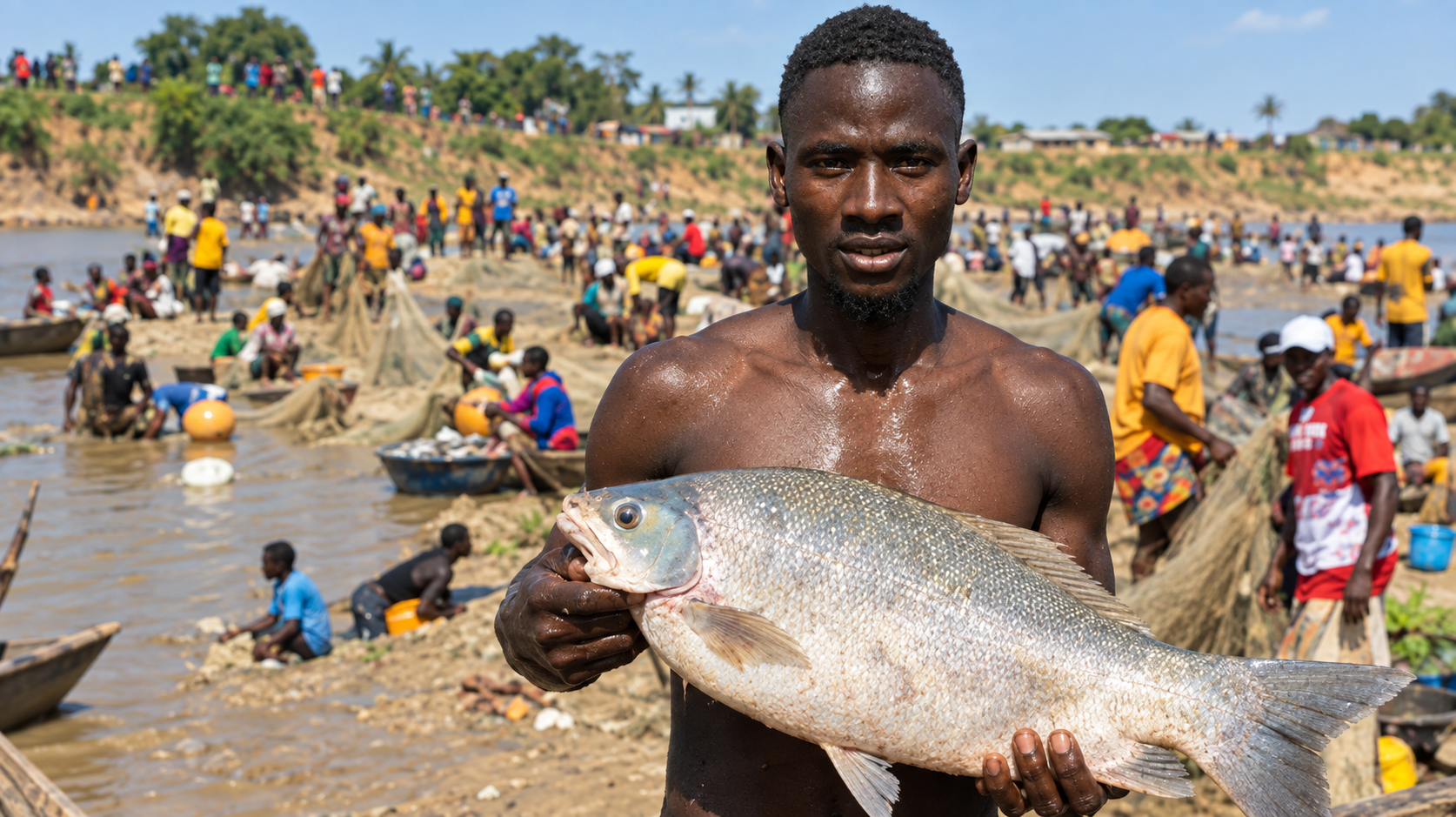
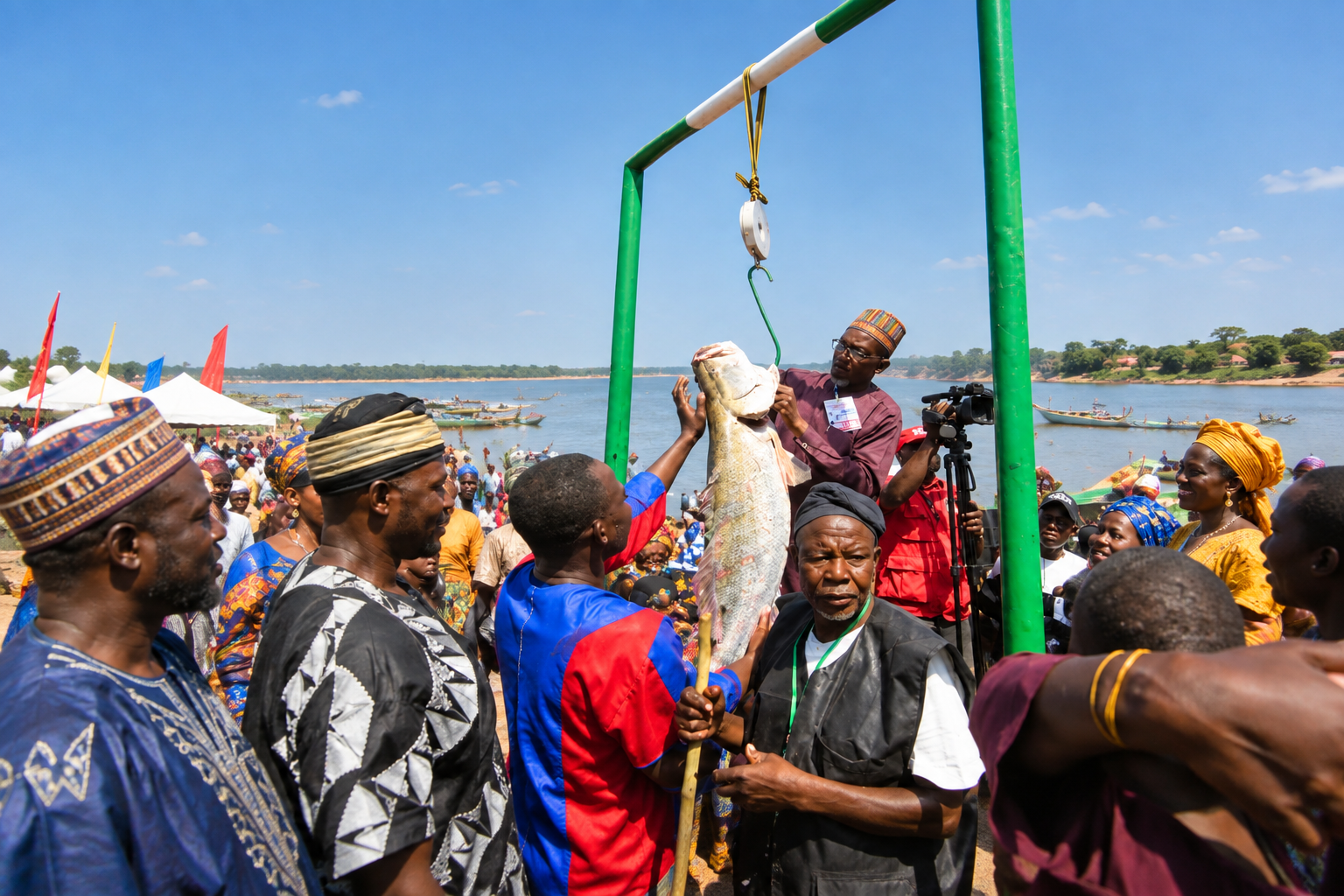
At the sound of a traditional horn, thousands of competitors surge into the shallow, silted waters of the Matan Fada River at once. It's chaotic by design, competitors are given roughly 45 minutes to catch the biggest fish possible using only:
Hand-woven fishing nets
Calabash gourds, used both as floats and scoops
Bare hands, for anyone willing to wrestle a fish directly out of the water
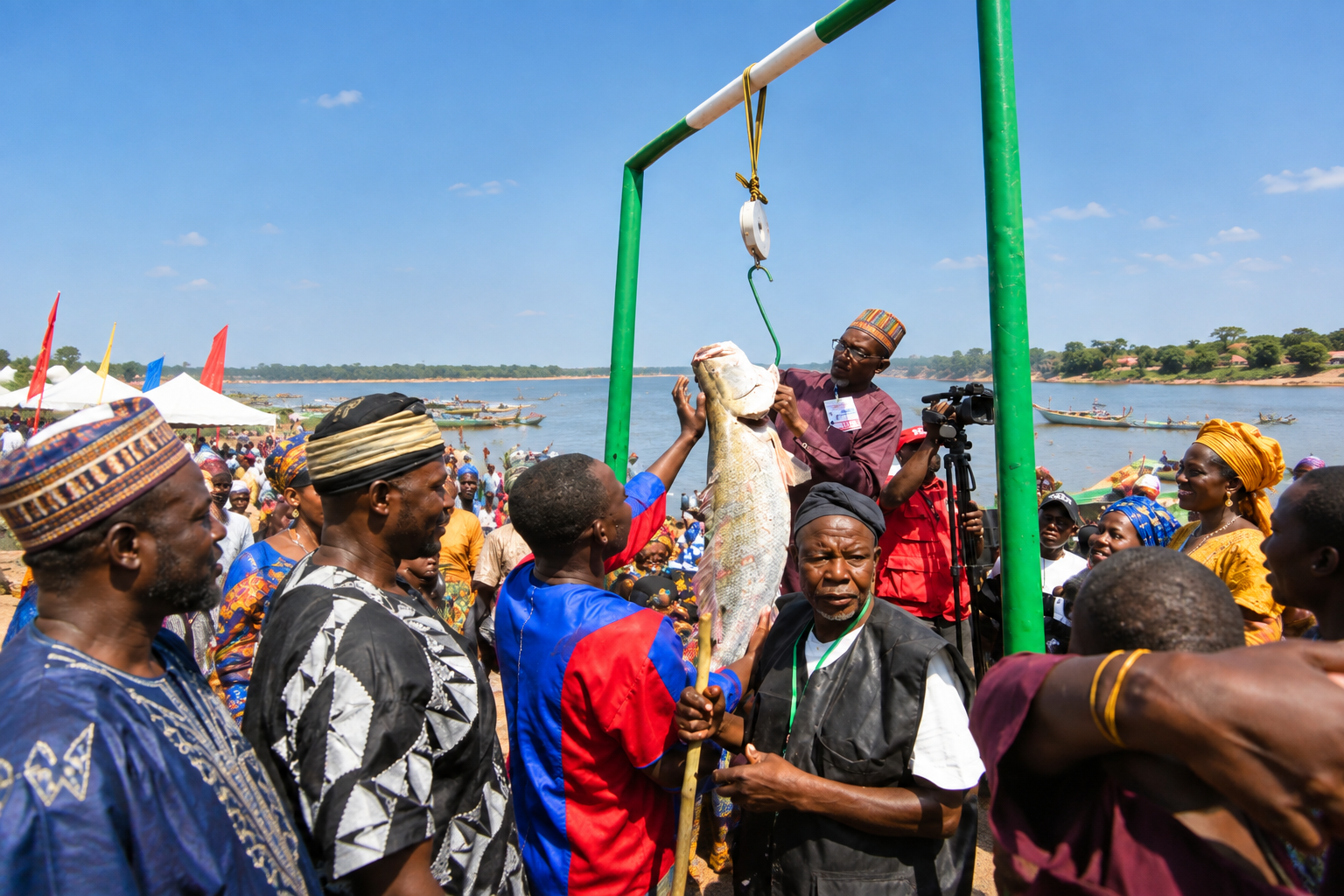
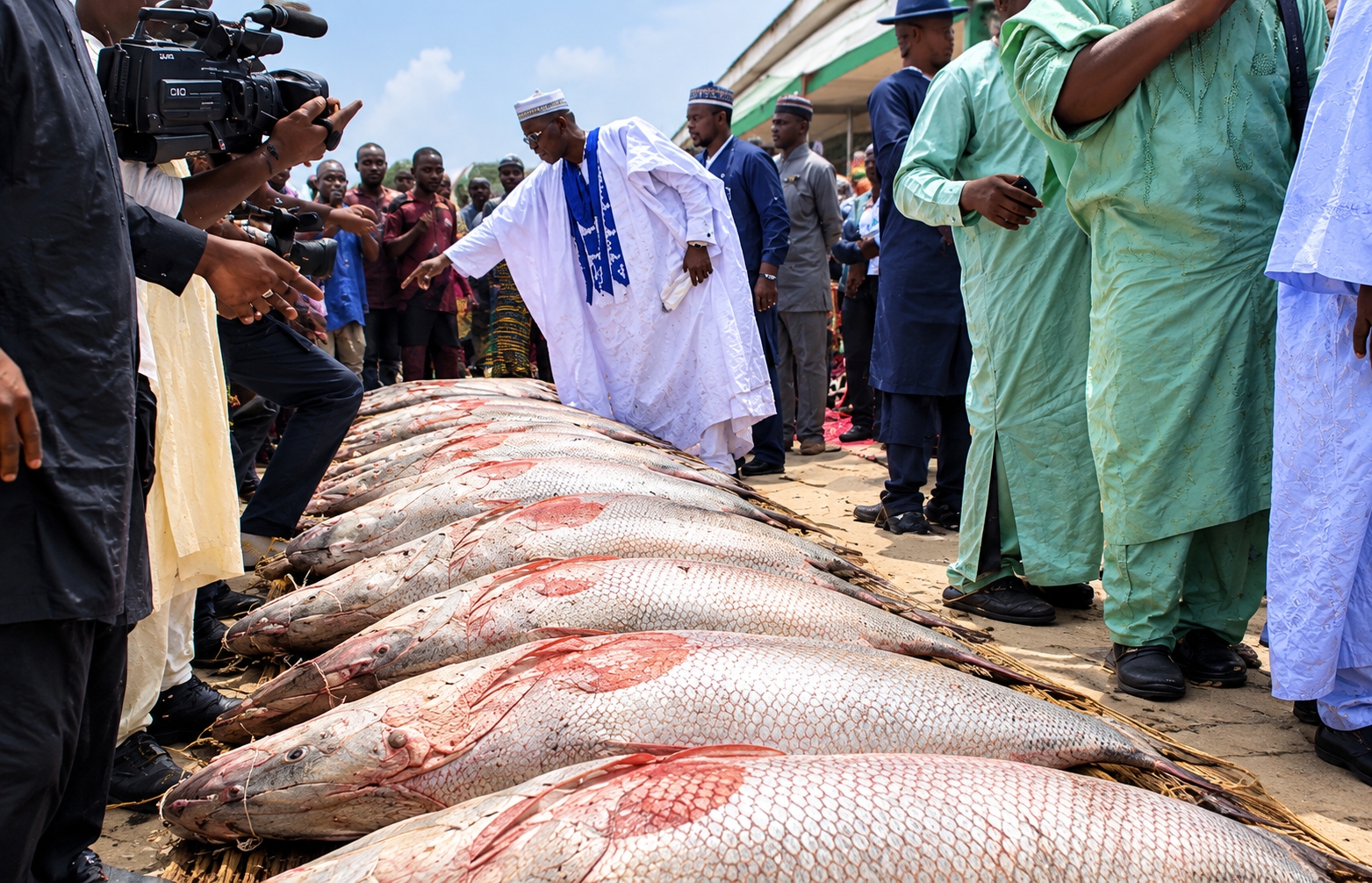
Officials weigh every notable catch on the riverbank as it comes in, and the fisherman with the heaviest fish by the end of the window takes the top prize.
The 2026 Comeback After Years of Disruption
The 2026 edition mattered for a reason beyond tradition.
The festival returned after a six-year hiatus caused by insecurity in northwestern Nigeria's Kebbi state, a region that has faced serious security challenges in recent years.
Held from February 11 to 14, 2026, the festival drew thousands of participants, including women and children, who defied 39-degree heat to take part, alongside fishermen from Niger, Chad, and Togo. Nigeria's President Bola Tinubu attended the grand finale in person, a signal of how much national weight the event now carries.
Organisers described the 2026 edition as one of the fullest realisations of the festival in years, though attendance still sat below the event's historic peaks, held under noticeably heightened security.
Who Won, and What They Took Home
This year's headline catch belonged to Abubakar Usman, a fisherman from Maiyama Local Government Area in Kebbi, whose 59-kilogram catch, heavier than a standard bag of rice, was the largest of the festival. His prize: two brand new Toyota vehicles and a ₦1 million cash award.
How the Prizes Have Changed Over Time
The scale of the prize says something about how far the festival has come.
At the 1975 edition, the champion walked away with a trophy and a motorcycle, prizes that reflected the realities of that era. Half a century later, the reward has scaled into vehicles and cash, even as the spirit of the competition, and the horn-blast start, has stayed exactly the same.
Not every competitor left with a prize, and that was never really the point for most of them.
One fisherman, Aliyu Muhammadu, put it simply after the festival, saying he was thankful just to bring something home to feed his family, a reminder that behind the spectacle, this is still a livelihood event for thousands of ordinary fishermen.
More Than Fishing: The Cultural Program Around It
The fishing competition is the headline, but the festival has grown into a broader cultural showcase held alongside it, including:
Traditional wrestling bouts between competitors from different regions
Canoe regattas raced along the same river used for the fishing contest
Archery contests showcasing traditional Hausa and Fulani weaponry
Equestrian displays, horseback showcases tied to the region's Sahelian heritage
A temporary riverside market also springs up during the festival, where hundreds of smaller catches are sold, injecting short-term income into the local economy well beyond the prize money itself.
Why the Festival Almost Disappeared
The hiatus wasn't a minor scheduling gap.
Northwestern Nigeria, including Kebbi State, has spent years dealing with banditry and armed group activity that made large public gatherings genuinely risky to organise. A festival that pulls thousands of people into open riverbanks is a difficult thing to secure at the best of times, and for a stretch of years, the risk outweighed the tradition.
That the 2026 edition happened at all, with a sitting president in attendance, reflects a deliberate decision by both federal and Kebbi State authorities to treat the festival's return as a signal of stabilising security in the region, not just a cultural event.
Planning a Visit: What to Know Before You Go
If you are considering attending in person rather than just reading about it, a few practical details matter more than the excitement of the fishing itself.
Timing — the festival runs for four days, usually in February, so exact dates shift slightly year to year and are worth confirming with Kebbi State's tourism board closer to the date
Location — Argungu town sits in Kebbi State, reachable by road from Birnin Kebbi, the state capital, which has its own airport with domestic flight connections
Security — given the region's recent history, checking current travel advisories before planning a trip is not optional, this is a genuinely different risk profile from, say, a Lagos event
Heat — temperatures during the 2026 edition hit 39 degrees Celsius, so sun protection and hydration matter more than most visitors expect
For those not attending in person, the festival's biggest moments, the horn blast, the mass river entry, and the final weigh-in, are usually covered heavily by Nigerian broadcasters and widely shared on social media the same day.
For a festival that began as a peace treaty between two rival kingdoms, Argungu has quietly become one of Nigeria's clearest examples of turning history into a living tradition, one that a single horn blast, and a river full of fish, brings back to life every year.
Frequently Asked Questions
1. Where is the Argungu Fishing Festival held?
The festival is held on the Matan Fada River in Argungu town, Kebbi State, in northwestern Nigeria.
2. When does the Argungu Fishing Festival take place?
It typically runs for four days in February or early March each year. The 2026 edition ran from February 11 to 14.
3. Who can take part in the festival?
The fishing competition is open to registered participants, mainly local and regional fishermen, though the festival itself draws thousands of spectators and competitors from Nigeria, Niger, Chad, and Togo.
4. Is the Argungu Fishing Festival still running after security concerns in the region?
Yes. After a multi-year hiatus caused by insecurity in Kebbi state, the festival returned in February 2026 for its 61st edition, held under heightened security.
5. What is the biggest fish ever caught at the festival?
Catch records vary by year and aren't always centrally documented, but the 2026 winning catch, a 59-kilogram fish, ranks among the heaviest publicly reported in the festival's recent history.
6. Why is it called an 'international' fishing festival?
The festival draws competitors and spectators from neighbouring countries, including Niger, Chad, and Togo, which is where the "international" in its full name, the Argungu International Fishing and Cultural Festival, comes from.
- Argungu Fishing Festival
- Kebbi State Nigeria
- Nigerian Cultural Festivals
- Matan Fada River
- Nigeria Tourism
Tip: highlight any line in the story to turn that line into a share card.
Frequently asked
- What is “Inside the Argungu International Fishing Festival: The River Festival Born From a Peace Treaty” about?
- A 1934 peace treaty between two rival kingdoms turned into Nigeria's most famous river festival, and after years of disruption, it's back. Every year, thousands of people run into a river at the sound of a single horn,… A 1934 peace treaty between two rival kingdoms turned into Nigeria's most…
- Who covers culture on PINCHED?
- Praise_write reports this piece for the PINCHED culture desk.
- Where can I read “Inside the Argungu International Fishing Festival: The River Festival Born From a Peace Treaty”?
- Read it in full at https://staypinched.site/read/inside-the-argungu-international-fishing-festival-the-river-festival-born-from.