How Spider-Man Became Bigger Than a Movie: The Business of Building a Global Cultural Phenomenon
Choose your narrator

In short
More than six decades after his comic-book debut, Spider-Man has become something far more valuable than a successful movie character. He has become a cultural asset with an audience that keeps renewing itself.
- Desk:
- film
- Format:
- article
- Author:
More than six decades after his comic-book debut, Spider-Man has become something far more valuable than a successful movie character. He has become a cultural asset with an audience that keeps renewing itself.
More than six decades after his comic-book debut, Spider-Man has become something far more valuable than a successful movie character. He has become a cultural asset with an audience that keeps renewing itself.
There is something unusual about the arrival of a new Spider-Man film. For most movies, the marketing campaign has to begin by telling people that the film exists, showing them enough to become interested and persuading them to buy a ticket when it reaches cinemas. Spider-Man does not need that introduction. By the time a new film is announced, the audience is already waiting.
That was evident with Spider-Man: Brand New Day, directed by Destin Daniel Cretton and starring Tom Holland as Peter Parker, alongside Zendaya as MJ, Sadie Sink as Jean Grey, Jacob Batalon as Ned Leeds, Jon Bernthal as Frank Castle and Mark Ruffalo as Bruce Banner. The cast also includes Liza Colón-Zayas as Detective Jean DeWolff, Tramell Tillman as William “Bill” Metzger, Michael Mando as Mac Gargan, Marisa Tomei as May Parker, Naomi Watts as E.V. and Marvin Jones III as Tombstone.
The film arrived on July 31, 2026, with a premise that takes Peter Parker into a markedly different stage of his life. The world no longer remembers him, he is living largely on his own and fighting crime full-time, while changes to his abilities introduce another layer of uncertainty.
But long before audiences could judge the film itself, they were already discussing it.
That is the real business story behind Spider-Man.
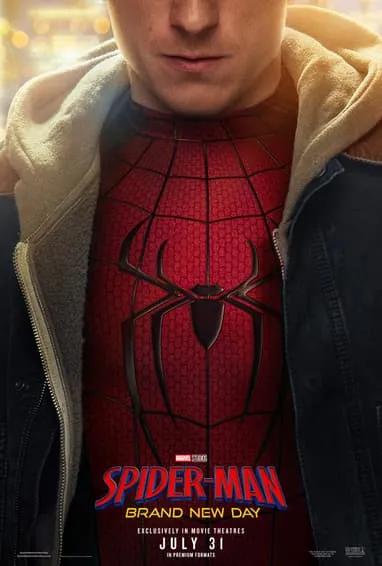
Spiderman Brand New Day Movie Poster- Marvel.
A NEW FILM DOES NOT HAVE TO BUILD ITS AUDIENCE FROM SCRATCH
Spider-Man first appeared in Marvel Comics in 1962. More than six decades later, the character remains recognisable even to people who have never read a Spider-Man comic. Several generations have encountered him through comics, television, animation, video games, merchandise and cinema.
That history gives every new Spider-Man production something that most films have to spend years trying to establish:
recognition.
The audience already knows Peter Parker. It knows what Spider-Man represents. It has seen different actors play the character, from Tobey Maguire and Andrew Garfield to Tom Holland, and each generation has developed its own relationship with him.
That makes the commercial proposition fundamentally different from launching an entirely new property.
A new character has to persuade people to care. Spider-Man begins with people who already care and then has to give them a reason to return.
Brand New Day does that by changing the circumstances around a familiar character. Peter is older, more isolated and increasingly defined by his life as Spider-Man, while the people who once formed his personal world have been pushed out of reach.
The filmmakers are not introducing Spider-Man to audiences again. They are asking audiences to reconsider a character they believe they already know.
That is a considerably more valuable proposition.
WHEN THE AUDIENCE STARTS DOING THE MARKETING
The other extraordinary advantage of Spider-Man is the behaviour of its audience.
Fans do not simply watch the trailers and wait for opening day. They discuss casting announcements, analyse footage, debate theories, compare different versions of the character and speculate about what the filmmakers have chosen not to reveal.
A trailer becomes content in its own right.
One person watches it and shares it with a friend. Another produces a theory about a particular scene. Someone else disputes that theory. A publication reports on the discussion, and the audience then debates the article.
The original piece of marketing travels far beyond its initial placement.
At that point, the studio is no longer carrying the entire promotional burden. The audience has become part of the distribution system.
That is one of the most difficult things for a company to manufacture because it depends on genuine interest. People have to care enough about the subject to voluntarily continue the conversation.
Spider-Man has been accumulating that interest for generations.
THE VALUE OF NOT TELLING THE AUDIENCE EVERYTHING
There is another reason the franchise remains so effective: mystery.
The most useful trailers do not necessarily explain the entire story. They create enough information for audiences to understand the world while leaving enough unanswered questions to keep them looking for the next piece.
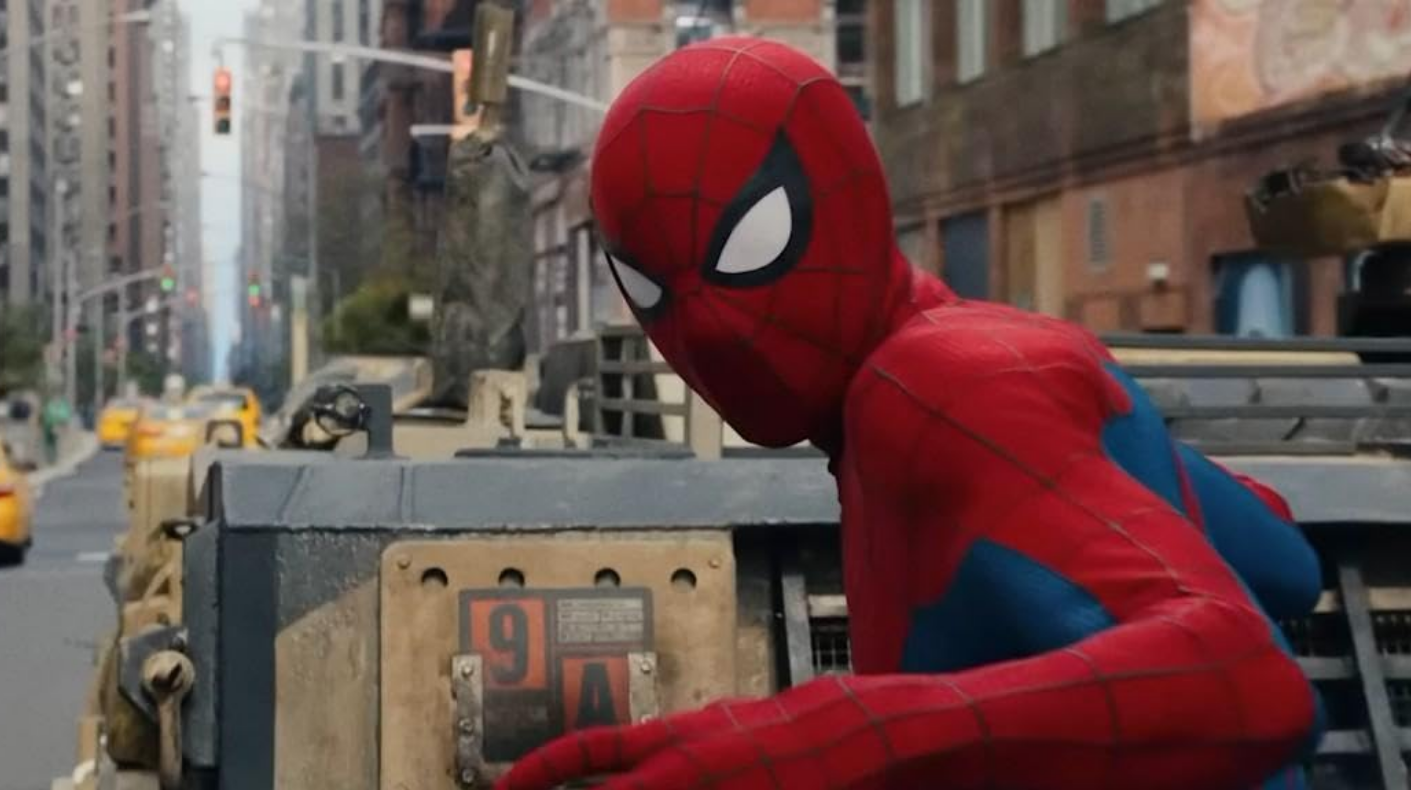
Brand New Day offers plenty of those questions. Why is Peter changing? What is happening to his powers? Who exactly represents the new threat? What do the film's unusual combinations of characters mean for the direction of the story?
Those questions have value because curiosity keeps a conversation alive.
The audience begins searching for information, watching interviews, examining trailers again and following theories from other fans. What could have been a two-minute promotional video becomes a continuing stream of attention.
That is a very different proposition from simply buying advertising space.
SPIDER-MAN IS BIGGER THAN THE CINEMA
The commercial strength of Spider-Man also comes from the fact that the character exists far beyond any individual film.
Games, animation, publishing, merchandise, licensing, television and other forms of entertainment all reinforce the same intellectual property. A successful film can introduce the character to another generation while renewing interest among people who have known him for years.
This is why major entertainment companies place such enormous value on intellectual property.
A successful film generates revenue.
A successful intellectual property can generate repeated attention across different markets and over a much longer period.
Spider-Man's greatest asset is therefore not any single actor, director or movie. It is the accumulated relationship between the character and his audience.
That relationship allows the franchise to change without losing its identity.
The actors change. The filmmakers change. The technology changes. The tone changes. Peter Parker himself grows older.
Yet audiences still recognise Spider-Man.
That balance between familiarity and reinvention is one of the reasons the character has remained commercially relevant for so long.
THE LESSON FOR AFRICAN CINEMA
This is where the Spider-Man story becomes particularly relevant to Africa.
African filmmakers are producing increasingly ambitious work, but the challenge does not end when the film is completed. A good film still needs an audience, and finding that audience requires more than securing a cinema date or uploading a trailer to social media.
A filmmaker may have an excellent story but lack the machinery to create anticipation around it. Another may secure distribution but struggle to generate sufficient public interest to sustain the release. A third may receive international recognition without having the commercial infrastructure to turn that attention into a lasting audience.
Spider-Man offers a useful contrast.
The release is treated as an event. The audience is prepared for it. The characters remain part of public conversation. The marketing creates anticipation, while the history of the franchise provides the emotional foundation.
African filmmakers do not need Hollywood's budgets to learn from this. What they need is a stronger understanding of the relationship between content and audience.
There is a difference between making a good film and making people feel that they need to see it.
That difference is often where the commercial battle is won or lost.
WHEN A CHARACTER BECOMES CULTURE
Spider-Man's greatest achievement may therefore have little to do with the performance of any individual movie.
It is the fact that the character has become part of the cultural vocabulary.
People who have never read a comic know the name. They recognise the costume. They understand the basic story. They can encounter a new Spider-Man film decades after the character was created and immediately understand why its arrival matters.
That kind of recognition cannot be created through one advertising campaign.
It is accumulated over time — story by story, film by film, generation by generation.
And that is what makes Brand New Day more than another superhero release. It is another test of whether an audience built over more than sixty years is still interested in following Peter Parker into another chapter.
The remarkable thing is that Spider-Man no longer has to convince the world that he exists.
The world is already paying attention.
The challenge — and the extraordinary business achievement — is giving that audience a reason to keep asking the same question every generation eventually asks.
- Spiderman
Tip: highlight any line in the story to turn that line into a share card.
Frequently asked
- What is “How Spider-Man Became Bigger Than a Movie: The Business of Building a Global Cultural Phenomenon” about?
- More than six decades after his comic-book debut, Spider-Man has become something far more valuable than a successful movie character. He has become a cultural asset with an audience that keeps renewing itself.
- Who covers film on PINCHED?
- reports this piece for the PINCHED film desk.
- Where can I read “How Spider-Man Became Bigger Than a Movie: The Business of Building a Global Cultural Phenomenon”?
- Read it in full at https://staypinched.lovable.app/read/how-spider-man-became-bigger-than-a-movie-the-business-of-building-a-global-cult.