Nigerian Beaches Locals Don't Want Tourists to Find
From boat-only islands off Lagos harbour to the longest beach in West Africa, these are the spots Nigerians go when they want the ocean without the crowd.
Choose your narrator
In short
The quietest Nigerian beaches, Tarkwa Bay, Ilashe, and Eleko in Lagos, plus Ibeno Beach in Akwa Ibom, stay uncrowded mainly because they require a boat ride or a deliberate drive to reach, which naturally filters out casual tourist traffic.
- Desk:
- adventure
- Format:
- article
- Author:
- Praise_writes
Every Nigerian has a beach they don't post to Instagram. Not because it's a secret in the conspiracy sense, but because the moment a quiet stretch of sand gets discovered, it stops being quiet. These hidden Nigerian beaches survive on exactly that kind of discretion, and locals would honestly prefer this article didn't exist.
Too late.
Here's where Nigerians actually go when they want the ocean without the crowd, from boat-only islands off Lagos harbour to the longest stretch of sand in all of West Africa, updated for 2026 with real travel costs and access routes.
Why Some Nigerian Beaches Stay Off the Tourist Radar
It usually comes down to access.
The beaches on this list aren't secret because nobody knows about them, they're protected by the simple inconvenience of getting there. No road access, a boat ride required, or a location far enough from the city that only people already in the know bother making the trip. That built-in filter is exactly what keeps them liveable.
There's also a cultural layer to it. Many of these communities are working fishing settlements first and tourist destinations second, and locals have learned that too much attention tends to change a place faster than it improves it, bringing about more litter, more noise, and less of the calm that made the beach worth visiting in the first place.
Word of mouth, not marketing, is usually how these spots stay known within Nigeria at all.

Tarkwa Bay, Lagos: The Island You Can Only Reach by Boat
Tarkwa Bay is an artificial, sheltered beach near Lagos harbour, and its biggest defence against overcrowding is that there's no road in. You reach it by a 15 to 20 minute boat ride from jetties like Marina, CMS, or Tarzan Jetty in Victoria Island, passing cargo ships and fishing canoes on the way.
Because the bay sits protected behind a harbour wall, the water stays calmer than most Atlantic-facing Lagos beaches, making it one of the few spots genuinely safe for swimming, and increasingly a base for Nigeria's small but growing surf culture.
Boat rides run roughly ₦1,500 to ₦3,000 per person, with an entry fee of around ₦500.

Ilashe Beach, Lagos: Where Lagos's Quiet Money Disappears To
Ilashe sits on a peninsula between the Lagos Lagoon and the Atlantic Ocean, reachable by a roughly 15 to 25 minute boat ride from Ikoyi, Victoria Island, or Apapa. Unlike Tarkwa Bay's surf-and-cabana crowd, Ilashe leans quieter and more private, its shoreline dotted with beach houses owned by wealthy Nigerians and expatriates using it as a personal hideout.
The local fishing community continues its daily rhythm largely undisturbed by visitors, and coconut groves line the approach road, shading arrivals as sand slowly replaces road underfoot. It's less a party beach than a genuine disappearing act from the city.

Eleko Beach, Lagos: The Quieter Alternative an Hour From Lekki
Eleko Beach sits about an hour's drive from Lekki Phase One, and unlike its more crowded neighbours, it stays notably cleaner and less packed. Bamboo huts line the shore, fresh seafood, crab, fish, lobster, gets grilled to order, and activities range from horse riding to kayaking for anyone who wants more than just sand and sun.
What sets Eleko apart is simply that it requires a deliberate drive rather than a quick hop from the city centre, which naturally filters out the casual day-trip crowd that floods Lagos's more accessible beaches on weekends.

Ibeno Beach, Akwa Ibom: The Longest Beach in West Africa Nobody Talks About
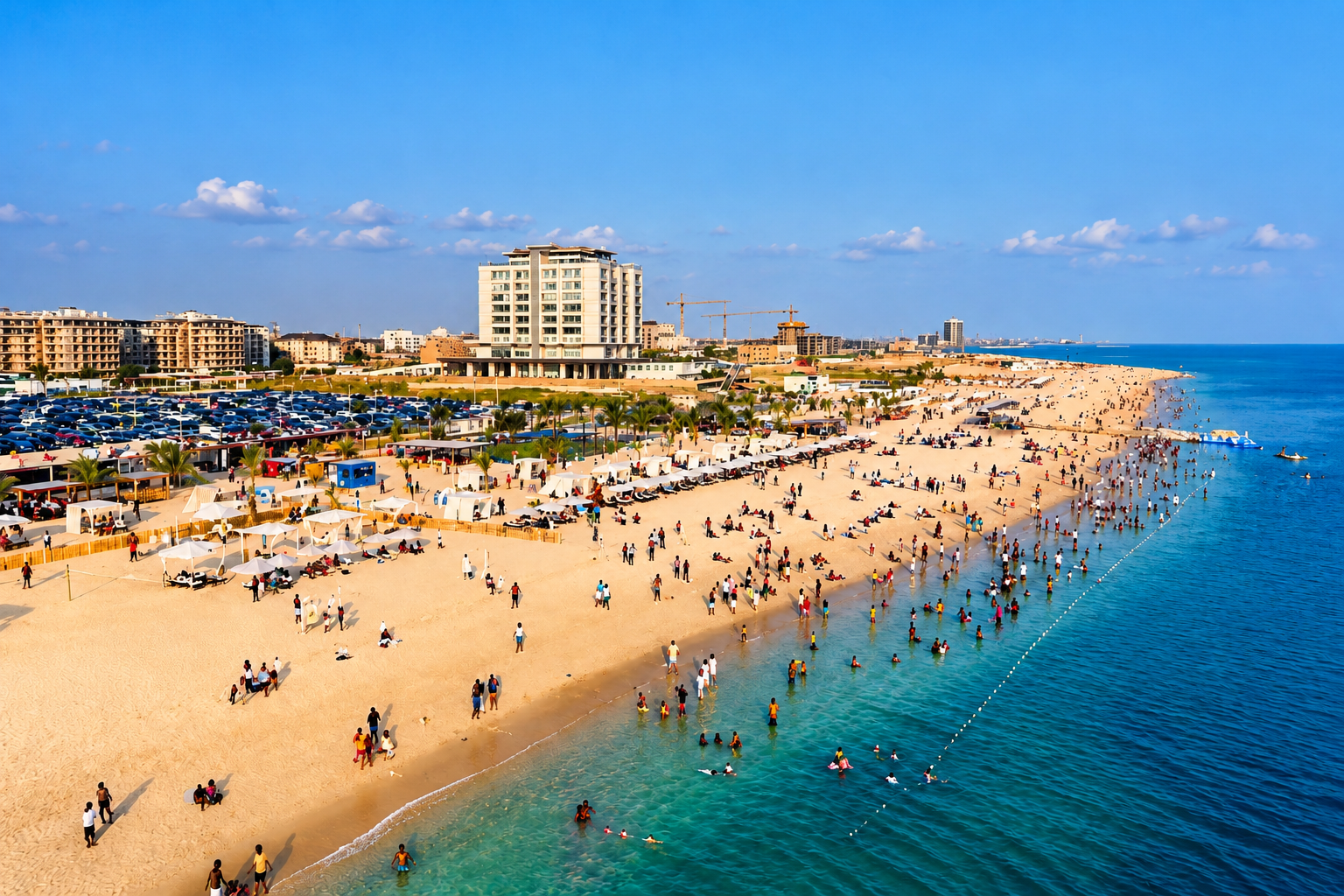
This is the one that should be famous and isn't. Ibeno Beach stretches roughly 30 to 45 kilometres along the Atlantic coastline of Akwa Ibom State, making it, by most accounts, the longest sand beach in West Africa. Yet outside Akwa Ibom itself, most Nigerians couldn't point to it on a map.
Ibeno is also a working beach, home to one of Nigeria's largest fishing settlements, with the local economy shaped as much by ExxonMobil's presence as by tourism. Every December 26th, the beach hosts a large annual beach party that briefly turns this quiet stretch of sand into one of the busiest spots on the southeastern coast, before it returns to its usual calm.
Honourable Mention: Snake Island and the Badagry Coastline
West of Lagos, along the Badagry axis, a scattering of smaller, largely unmarketed beach communities sit along the same coastline as the historic Point of No Return. Snake Island, technically an industrial and shipping zone rather than a resort, still borders quiet stretches of shoreline used informally by nearby fishing communities, off the radar mostly because there's no reason for a casual tourist to end up there in the first place.
It's not a polished destination the way Tarkwa Bay or Ilashe are, but it rounds out just how much of Lagos's coastline sits genuinely unbothered by tourism.
How to Actually Get to These Beaches
Tarkwa Bay — boat from Marina, CMS, or Tarzan Jetty (Victoria Island), roughly ₦1,500–₦3,000
Ilashe Beach — boat from Ikoyi, Victoria Island, or Apapa jetties, 15–25 minutes
Eleko Beach — roughly one hour's drive from Lekki Phase One by road
Ibeno Beach — flights into Uyo or Calabar, then road transfer to Ibeno, Akwa Ibom State
What to Know Before You Go
These beaches stay peaceful partly because visitors treat them with respect, not like a theme park. A few things worth keeping in mind:
Most of these communities depend on fishing, treat the local economy and daily life around you as real, not scenery
Boat travel on Lagos waterways is regulated, and authorities have enforced night travel bans following past accidents, so plan trips within daylight hours
Carry cash, entry fees and boat rides at spots like Tarkwa Bay are rarely card-friendly
Swimming conditions vary sharply, Tarkwa Bay's sheltered waters are calmer than the open Atlantic currents at Ilashe or Ibeno
Support local vendors directly, freshly grilled fish, coconut water, and boat rides from community operators are how these beaches actually sustain themselves
Best Time to Visit These Beaches
Nigeria's dry season, roughly November through March, offers the calmest seas and clearest skies across all four beaches, and it's also when Ibeno's famous December 26th beach party takes over the coastline for a day. Outside of that one date, weekday visits at any of these four spots tend to be dramatically quieter than weekends, when Lagos's beach-going crowd is off work and looking for exactly the kind of escape this list describes.
The rainy season, April through October, brings rougher Atlantic currents and less predictable boat travel, which is worth factoring in for Tarkwa Bay and Ilashe especially, since both trips depend entirely on calm water conditions to run smoothly.
The irony of writing this piece is obvious, the more people who read it, the less hidden these places stay. But for now, in 2026, these four still reward the trip with something increasingly rare on Nigeria's coastline: quiet.
Frequently Asked Questions
1. Which Lagos beach is the least crowded?
Ilashe Beach and Tarkwa Bay are generally considered the least crowded accessible options, largely because both require a boat ride, which naturally limits casual foot traffic.
2. Is Ibeno Beach really the longest in West Africa?
Multiple sources, including Wikipedia's own entry on the beach, describe Ibeno Beach as the longest sand beach in West Africa, stretching approximately 30 to 45 kilometres along Akwa Ibom's coastline.
3. How do you get to Tarkwa Bay without a private boat?
Public boats and banana boats run from jetties including Marina, CMS, and Fiki Marina, with fares typically between ₦500 and ₦3,000 depending on the operator and boat type.
4. Are these beaches safe for tourists?
Generally yes, though standard travel precautions apply, sticking to daylight boat travel, using established jetties, and being mindful of stronger currents at open-Atlantic beaches like Ilashe.
5. Can you stay overnight at Tarkwa Bay or Ilashe?
Yes, both offer overnight options, rented tents and beach huts at Tarkwa Bay, and private or commercial beach houses at Ilashe, for visitors who want to experience the quieter "magic hour" once the day-trip crowd has left.
- Hidden Nigerian Beaches
- Ilashe Beach
- Tarkwa Bay
- Ibeno Beach
- Lagos Beaches
Tip: highlight any line in the story to turn that line into a share card.
Frequently asked
- What is “Nigerian Beaches Locals Don't Want Tourists to Find” about?
- Every Nigerian has a beach they don't post to Instagram. Not because it's a secret in the conspiracy sense, but because the moment a quiet stretch of sand gets discovered, it stops being quiet.
- Who covers adventure on PINCHED?
- Praise_writes reports this piece for the PINCHED adventure desk.
- Where can I read “Nigerian Beaches Locals Don't Want Tourists to Find”?
- Read it in full at https://staypinched.site/read/every-nigerian-has-a-beach-they-don-t-post-to-instagram-not-because-it-s-a.