ASO-EBI: THE FABRIC THAT TURNS A NIGERIAN WEDDING INTO A UNIFORM OF BELONGING
Aso-ebi is more than the matching fabric worn to a Nigerian wedding. It is a visible language of family, friendship, status and belonging—one that turns relationships into something everyone in the room can see, even as a younger generation begins to question the social and financial cost of being part of the uniform.
Choose your narrator
In short
Aso-ebi is a matching fabric worn by groups at Nigerian celebrations, signifying belonging, family ties, and social status. It publicly declares a person's relationship to the celebrant.
- Desk:
- culture
- Format:
- article
- Author:
- Eniola Unfiltered
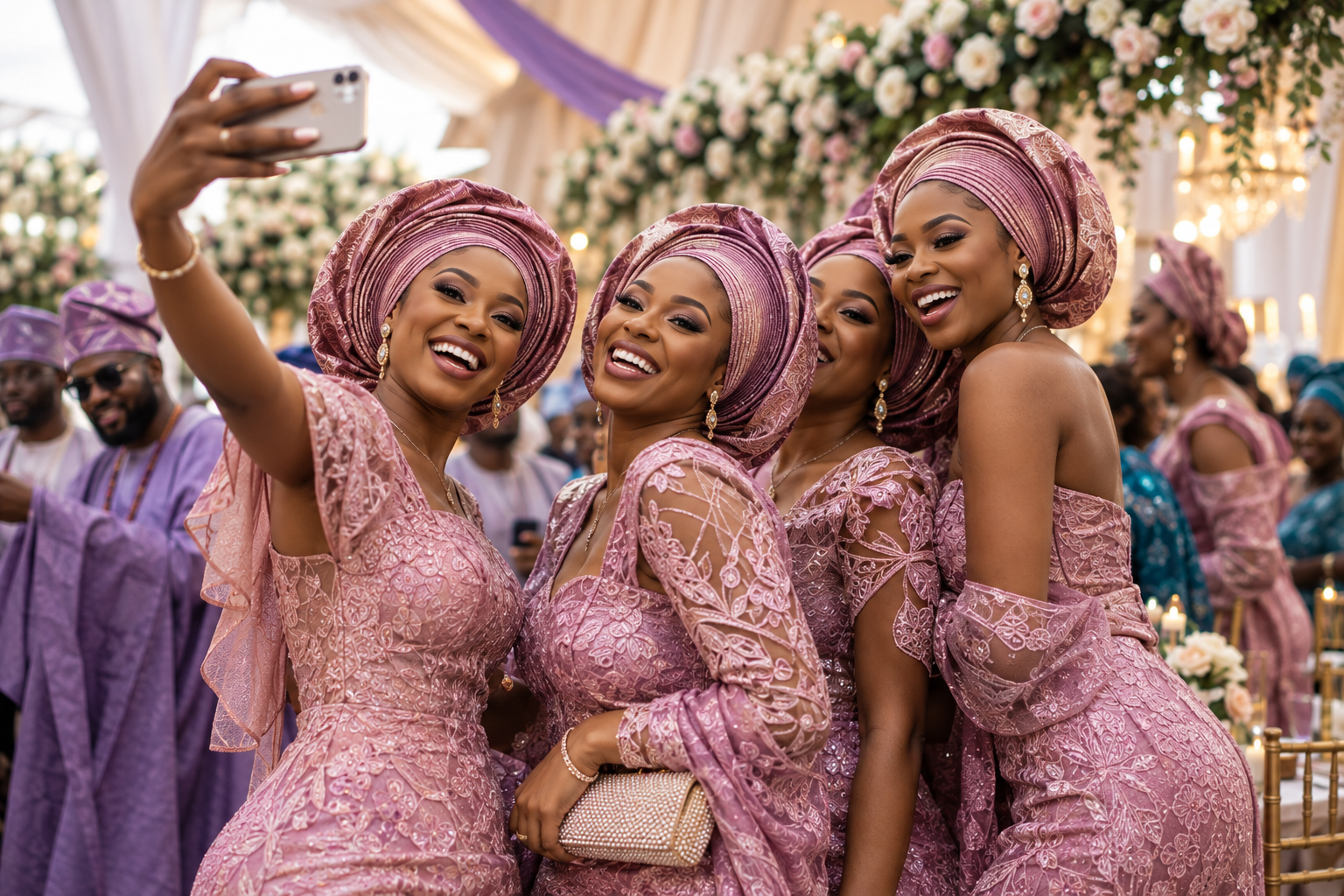
There is a moment at almost every Nigerian wedding when you can tell, just by looking at the crowd, who belongs to whom. Not by faces, not by where they are sitting, and certainly not because someone has handed you a seating chart. You can usually work it out by the fabric.
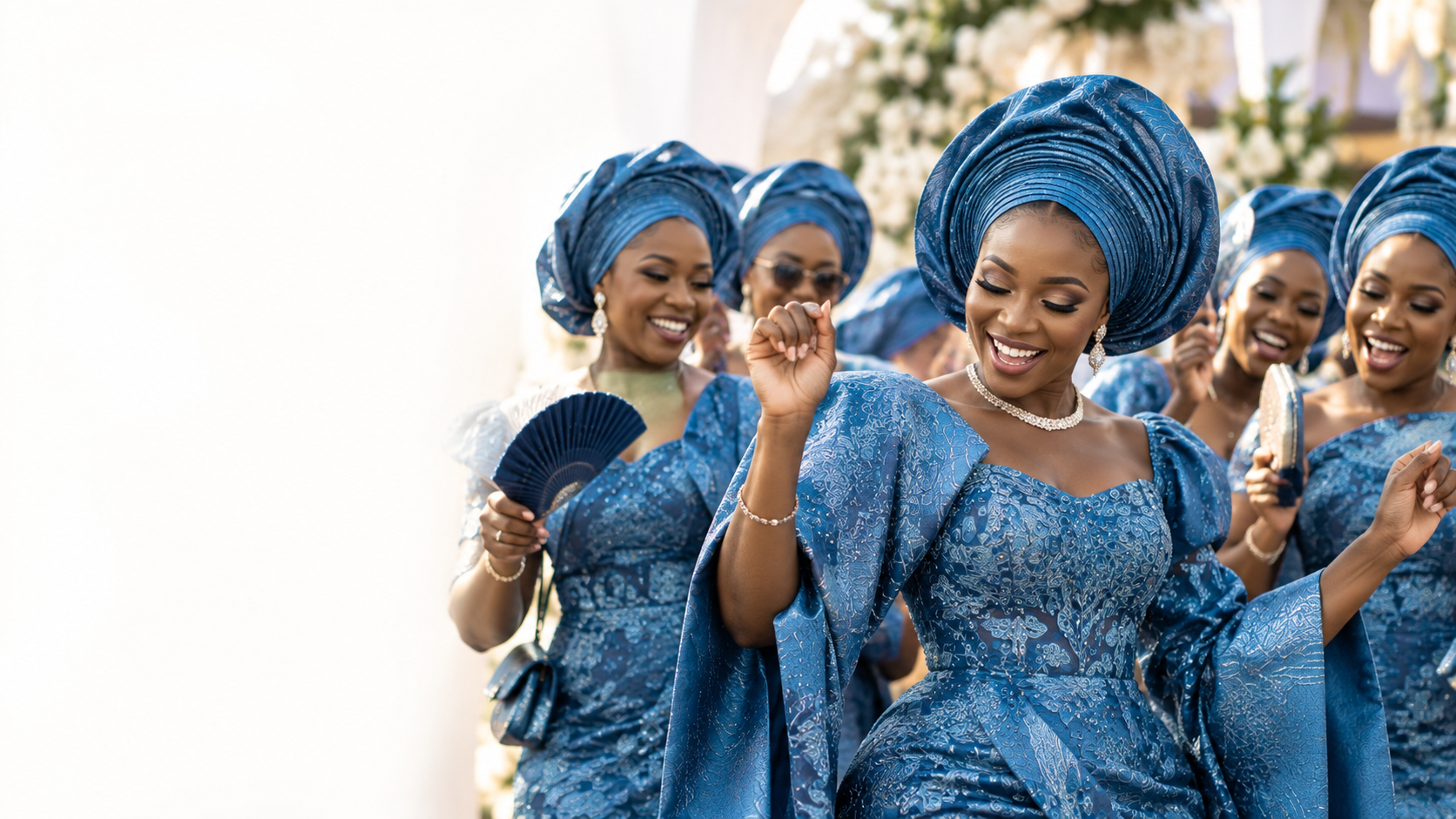
A block of matching lace gathered around the bride's side. A different colour entirely for the groom's family. Somewhere near the front, perhaps, a smaller cluster in a more expensive fabric: the close friends, the inner circle, the people who got the “premium” package. Across the room, another group may be wearing something different again.
You don't need anyone to explain it.
The cloth already told you everything.
That's aso-ebi. And if you've never had to explain it to someone outside Nigeria, it is harder than it sounds.
The easiest explanation is that aso-ebi is simply a dress code, where a group of people wears the same fabric to show support for the person being celebrated. That is true, but it undersells what is actually happening. In Nigerian social life, clothing can carry information that would otherwise require an introduction, and aso-ebi may be one of the clearest examples of that.
It is not simply fabric.
It is a uniform of belonging.
MORE THAN “MATCHING OUTFITS”
When you wear aso-ebi, you are not just choosing a colour for a wedding. You are publicly declaring, in front of everyone at that event, where you stand in relation to the person being celebrated.
Immediate family may have one fabric. Extended family may have another. Close friends may have their own. Colleagues might organise themselves separately, while the bridal party, groom's people or other inner circles receive yet another variation. Sometimes the distinctions are obvious; sometimes they are subtle enough that only people who understand the social dynamics of the occasion will notice them. But the code is there.
Someone who understands the room can often read your relationship to the celebrant from what you are wearing before you have said a single word. The fabric tells people which side you are on, what group you belong to and, sometimes, how close you are to the people at the centre of the celebration.
That is what makes aso-ebi so powerful.
And increasingly, it is also what makes it complicated.
Because belonging has a cost.
THE BILL NOBODY TALKS ABOUT OUT LOUD
Here's the part that does not make it into the wedding photographs: aso-ebi can be expensive, and it can be expensive in a way that quietly changes who gets to participate fully in a celebration.
A single wrapper of “good” lace can run into tens of thousands of naira before you have paid a tailor, before you have bought a gele, and before you have thought about the shoes, bag, jewellery or other accessories needed to complete the outfit.
Then there is the reality of the Nigerian social calendar.
One wedding becomes another. Then a birthday. A funeral. A naming ceremony. A thanksgiving. Another wedding.
The fabric changes, but the expectation can remain.
What begins as a gesture of support can therefore become a recurring expense, one that people have to factor into their budgets whether they particularly want to or not. For some, the decision to attend an event can eventually become a calculation between the desire to show up for someone and the cost of doing so properly.
And the financial pressure is only one part of it.
There is a quieter pressure underneath: the expectation itself.
At some events, turning up without the aso-ebi is nothing more than a fashion choice. At others, it can feel like a statement. Nobody may say that you do not support the celebrant because you did not buy the fabric, but social expectations do not always need to be spoken aloud to be understood.
Depending on the family, the gap between “I couldn't afford it” and “I didn't really show up for you” can be thinner than anyone likes to admit. This is the same tension that runs through the Owambe economy more broadly: celebration as joy and obligation, generosity and expense, community and cost. Aso-ebi is simply the most visible thread of it. Literally.
WHY IT STILL MEANS SOMETHING
And yet, for all the expense and pressure that can surround it, aso-ebi has not gone anywhere.
If anything, the aesthetics around it have become more elaborate.
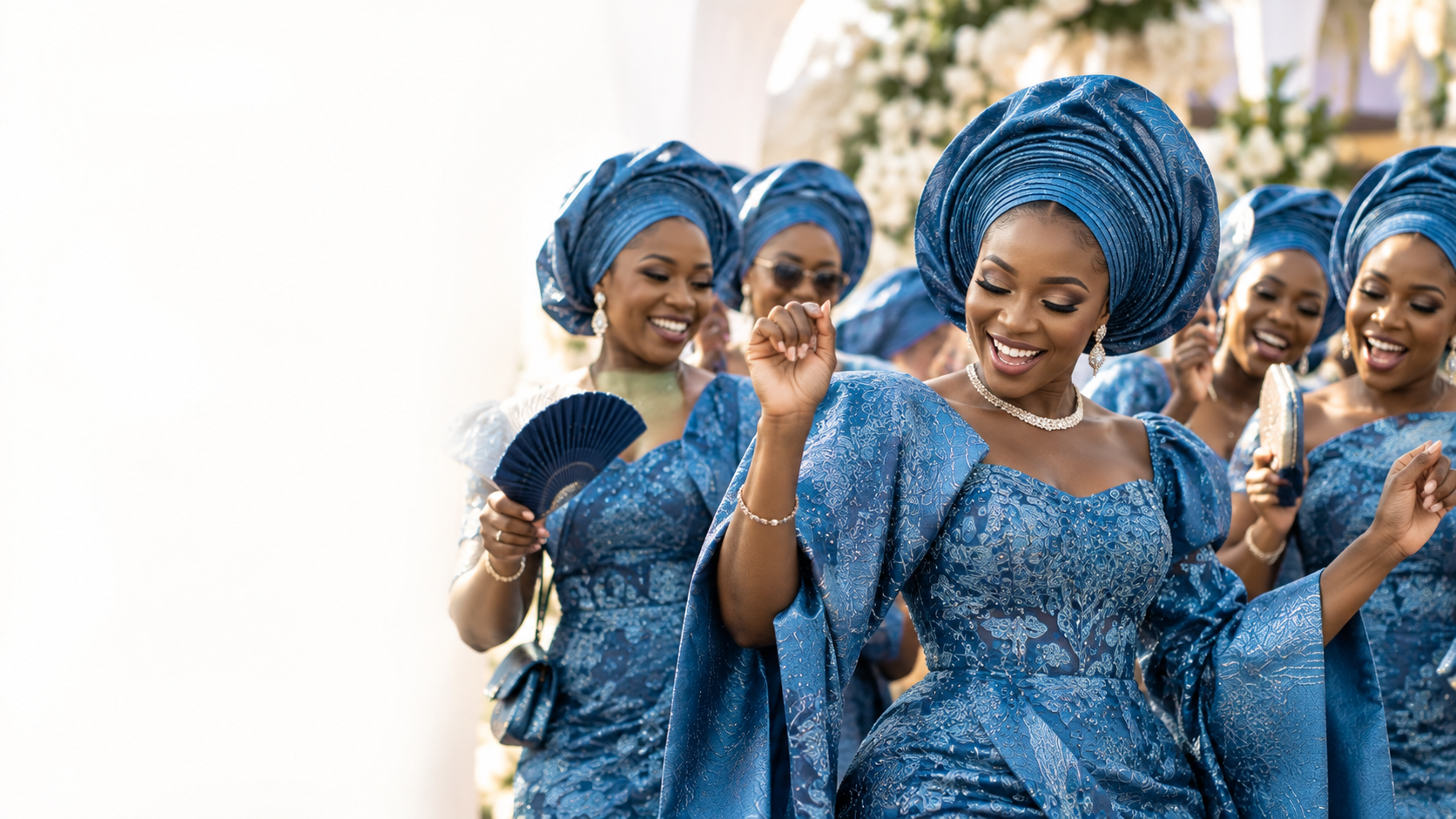
The tailoring is more ambitious. The styling is more creative. The gele has become an art form in its own right. And the emergence of social media has added another layer to the ritual, with aso-ebi reveal videos and photographs sometimes receiving almost as much attention online as the wedding itself. But underneath all of that is something much more enduring.
Aso-ebi makes a private celebration visibly, undeniably communal.
A wedding is technically the story of two people getting married, but Nigerian weddings have rarely belonged only to the couple. They belong to families, friendship groups, communities and the people who have travelled, spent money, danced, prayed, eaten and celebrated alongside them. Aso-ebi makes that collective presence visible.
When half the room is dressed like they are part of the same story, the celebration becomes something larger than the people at its centre. It becomes a family's day, a friend's day, sometimes an entire community's day. The fabric is doing quiet symbolic work that a guestbook never could. A guestbook can tell you who attended. Aso-ebi tells you who came as part of the story.
That is part of its power.
WHAT'S ACTUALLY CHANGING
Where things appear to be shifting is not necessarily in whether Nigerians value aso-ebi, but in how much of the tradition they are willing to accept without questioning it. A newer generation is increasingly comfortable remixing inherited traditions rather than simply preserving them exactly as they were handed down. For some, that means treating aso-ebi as optional rather than assumed. Some couples are dropping the tiered categories of fabric altogether. Some are putting limits on how much guests are expected to spend. Others are choosing more affordable materials, while some are skipping aso-ebi entirely and allowing guests to wear whatever they want. At a Nigerian wedding, that can still feel like a genuinely radical choice, depending on the family and the community involved. But there is another side to the change.
Younger Nigerians are also finding new ways to make aso-ebi their own. The tradition is increasingly being shaped by contemporary fashion, social media and individual expression. The fabric may be the same, but the finished looks can be dramatically different, with guests using tailoring, styling and accessories to put their own identity into something designed to make them look like part of a group. That tension is important.
Because perhaps the future of aso-ebi is not about choosing between tradition and change.
It is about deciding what is worth keeping.
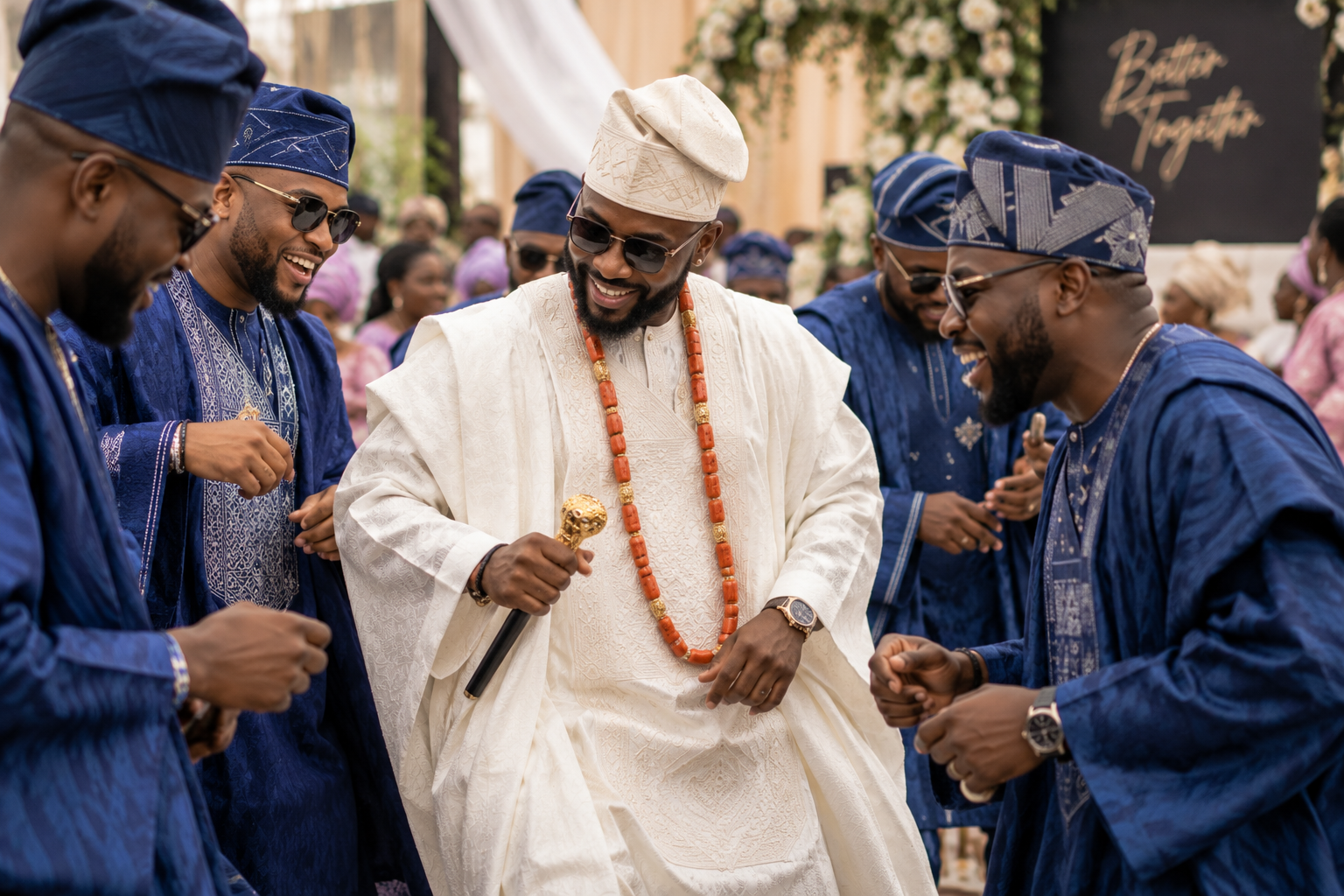
The sense of solidarity. The joy of showing up. The visual drama. The feeling of becoming part of something bigger than yourself.
And perhaps questioning the parts that have become more about pressure than participation.
It isn't that aso-ebi is dying. It is being renegotiated. The same thing is happening to many inherited traditions as younger Nigerians decide which parts still speak to them, which parts need to evolve and which parts they are willing to leave behind.
THE FABRIC UNDERNEATH THE FABRIC
That is what makes aso-ebi more interesting than a fashion trend. It is a visible record of Nigerian social life.
It tells us something about how we organise ourselves around important moments, how we distinguish family from friends, how we express loyalty and how much we are willing to spend to demonstrate that loyalty publicly.
It can be joyful and excessive at the same time. It can bring people together while placing pressure on the people who cannot afford to participate. It can make an individual feel part of a community while also creating visible distinctions between one group and another. None of those things cancel each other out.
They are all part of the tradition. And perhaps that is why aso-ebi has endured for so long. It has never been just about the fabric. The fabric is simply the thing everyone can see. Underneath it are relationships.
Underneath the relationships is community. And underneath the community is a very Nigerian instinct to show up for one another when something matters. Because that's really what aso-ebi has always been underneath the lace, the tailoring, the gele and the expense: a very public, very Nigerian way of answering one question.
Who's really here for you?
- Aso Ebi
- Nigerian Weddings
- Pinched Weddings
- Owambe
- Saturday weddings
- African Weddings
- Traditional Weddings
Tip: highlight any line in the story to turn that line into a share card.
Frequently asked
- What is “ASO-EBI: THE FABRIC THAT TURNS A NIGERIAN WEDDING INTO A UNIFORM OF BELONGING” about?
- Aso-ebi is more than the matching fabric worn to a Nigerian wedding. It is a visible language of family, friendship, status and belonging—one that turns relationships into something everyone in the room can see, even… Aso-ebi is more than the matching fabric worn to a Nigerian wedding.
- Who covers culture on PINCHED?
- Eniola Unfiltered reports this piece for the PINCHED culture desk.
- Where can I read “ASO-EBI: THE FABRIC THAT TURNS A NIGERIAN WEDDING INTO A UNIFORM OF BELONGING”?
- Read it in full at https://staypinched.site/read/aso-ebi-the-fabric-that-turns-a-nigerian-wedding-into-a-uniform-of-belonging.